As we go through the life given to us,
various triggers such as situations or special cases
that we could never have anticipated
can cause small or large changes in the body.
In particular, after women meet the person they love,
promise to spend their lives together,
and experience pregnancy and childbirth,
they may feel that their bodies have changed
from before.
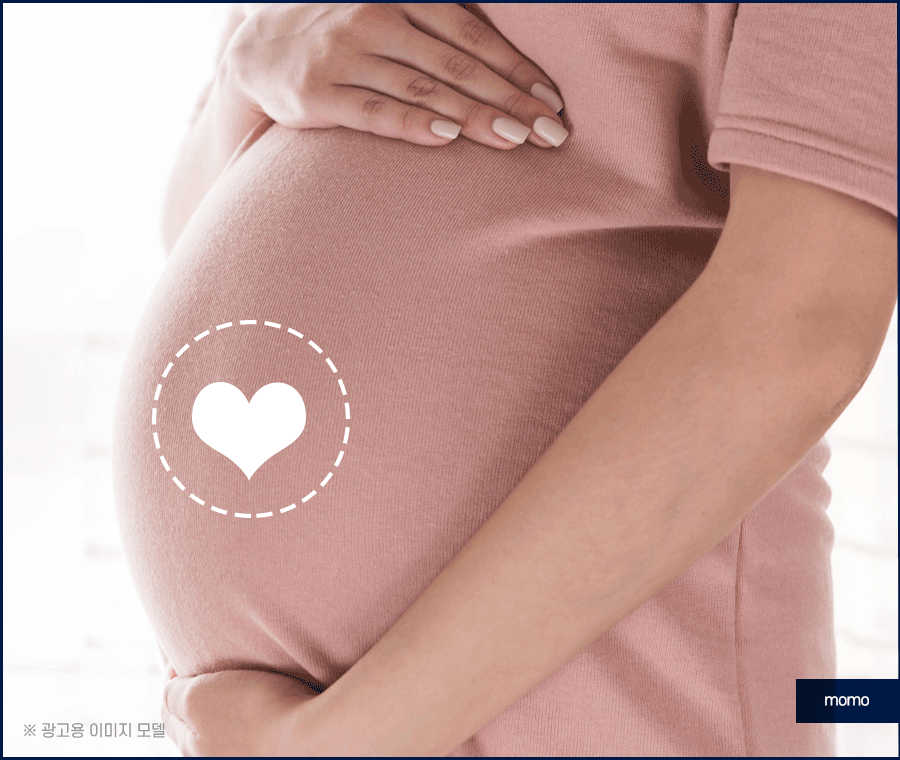
For example, after carrying a precious new life
in the womb for 10 months and finally giving birth,
the abdomen, which had been distended,
gradually returns to its original state over time,
and lochia, a discharge made up of blood,
detached mucus and cells from the uterine lining,
and bacteria, may continue for several days.
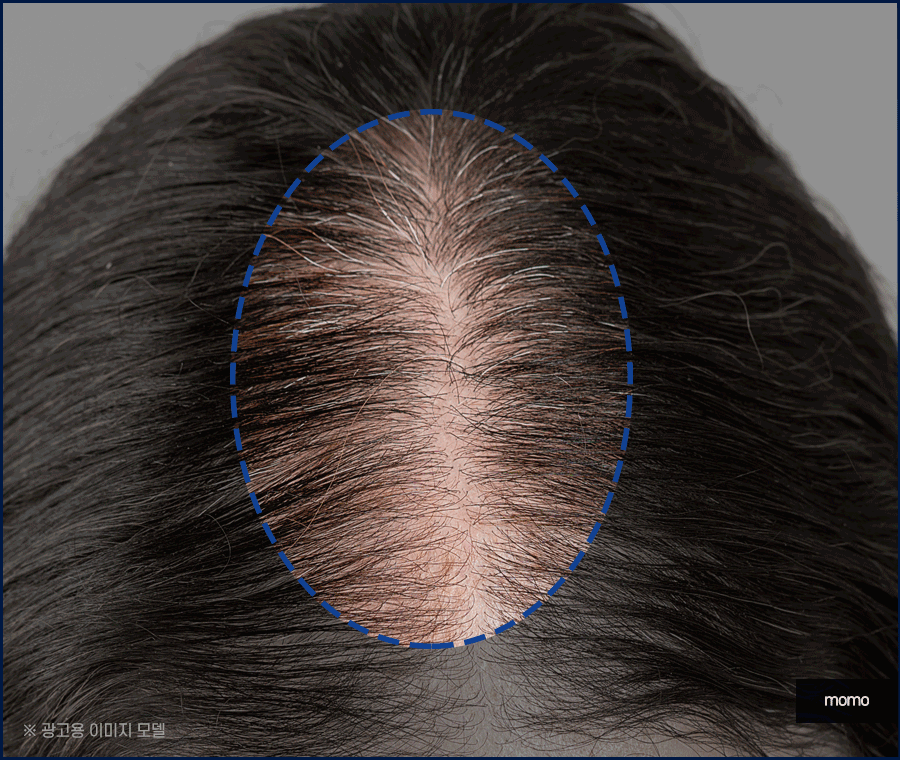
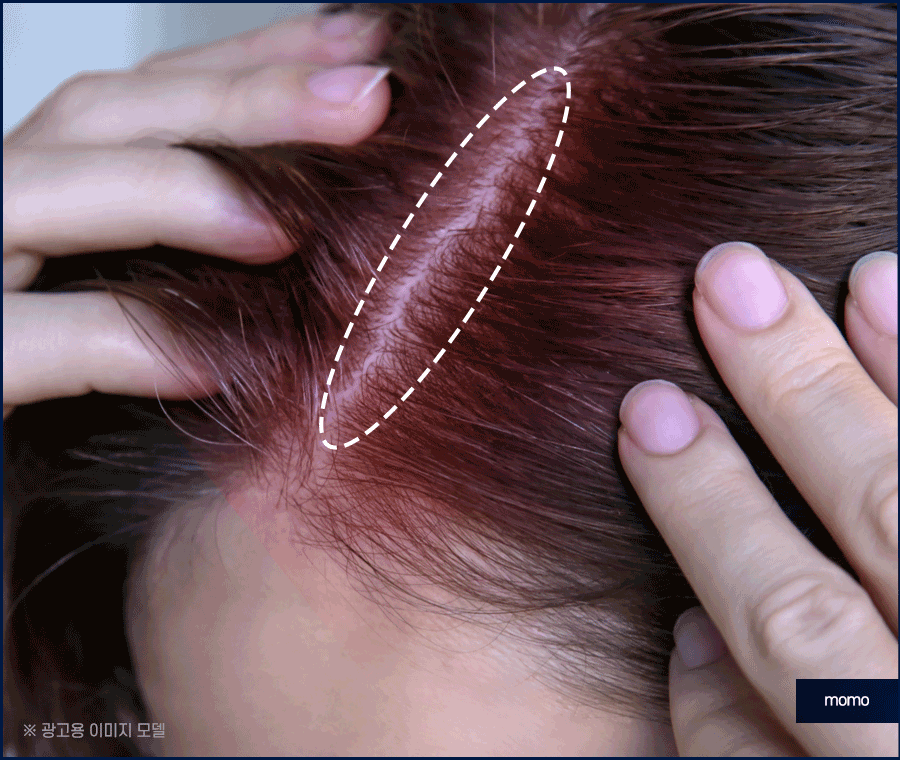
Among these changes, one that is fairly clearly observed
and noticeable enough to be bothersome is hair loss.
This hair shedding can end as a temporary symptom,
but when you see handfuls of hair falling out
every time you comb or shampoo,
many women cannot help but feel extremely anxious
and worried.
It would be fortunate if it appeared briefly and disappeared quickly,
but one reason it should not be taken lightly
or left without careful care is that hair loss may continue later,
and if the condition does not improve and worsens,
it can spread into a full-fledged condition
with a greater likelihood of affecting a wide area.
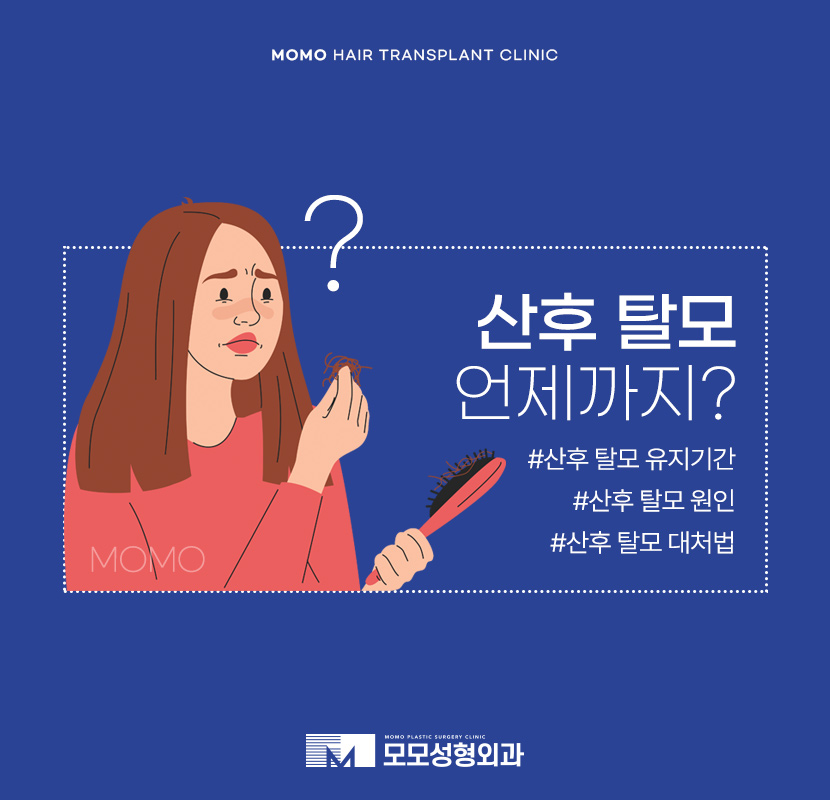
So it is important to look into how long postpartum hair loss lasts,
what its causes are, and what methods there are to manage it,
learn them in advance, and practice them consistently.
If you are wondering how long postpartum hair loss lasts,
it is advisable to first look at the related causes.
Hair loss during this period is a phenomenon that occurs
about 3 to 6 months after giving birth,
and the main cause is the sharp drop in the female hormone estrogen.
During pregnancy, estrogen levels rise,
which lengthens the hair growth phase and shortens the resting phase.
However, after giving birth, estrogen levels drop sharply,
which lengthens the resting phase again,
and eventually leads to hair shedding.
In addition, nutritional imbalance, stress,
and lack of sleep can also be factors that worsen
postpartum hair loss.
It can also be experienced by about one-third of mothers,
and the main symptom at this time is thinning and shedding of hair overall.
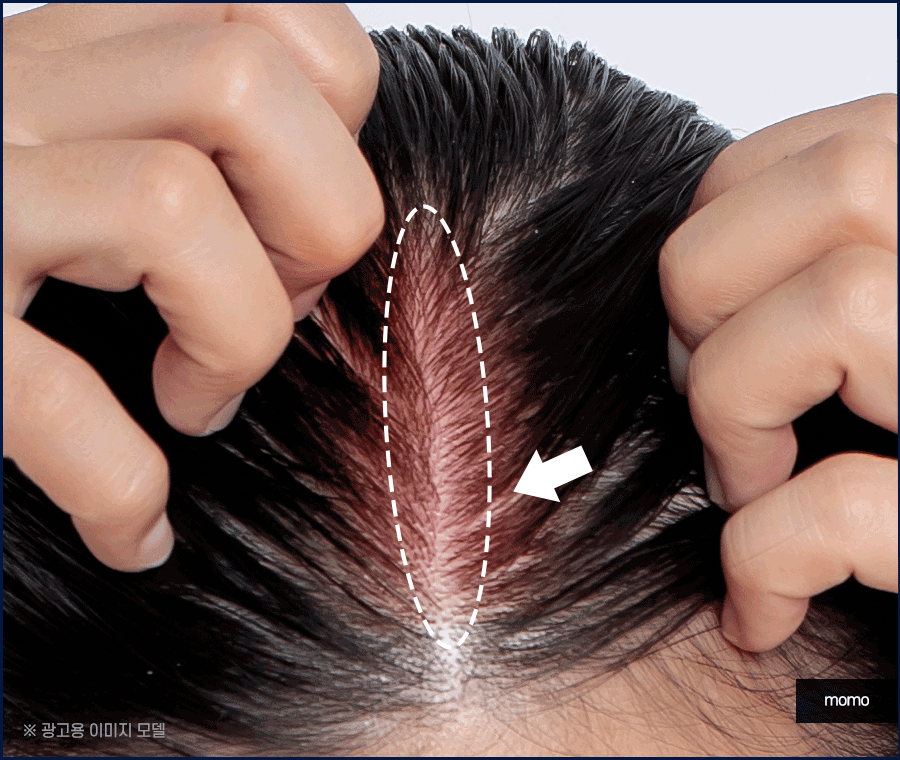
It is especially common on the crown, top of the head,
or hairline area, and 30 to 40 percent of the hair may fall out.
It is generally regarded as a temporary phenomenon.
Most cases recover naturally within 6 months to 1 year,
but if shedding continues or worsens even after a year,
there is a possibility that it has developed into a female-pattern condition.
Rather than only worrying about how long postpartum hair loss lasts,
it is advisable to visit a clinic immediately
to receive a professional diagnosis.
So, let me tell you how long postpartum hair loss continues.
As mentioned earlier, it gradually begins
6 months after giving birth and lasts for about 1 year,
but there are clear individual differences,
and it may last up to 2 years.
Therefore, after about a year, it may return to a normal state,
but in many cases, while taking care of a child all day long,
the symptoms of hair loss may continue
due to emotions and psychological factors such as depression,
essentially obsessive thoughts, and frustration.
Even in such cases, instead of fretting about how long postpartum hair loss will last,
it is important to visit a related medical facility
and receive a thorough consultation and diagnosis from the staff.
Because hair, which is also an important element of appearance,
may be lost due to the effects of pregnancy and childbirth,
postpartum depression, and other causes,
making it seem as though overall volume is decreasing,
rather than repeatedly worrying about whether the symptoms will continue,
it is better to look for practical ways to improve the condition.
Some people try to solve this by taking hair-loss medication.
Of course, it may speed up recovery a little,
but if you are breastfeeding,
these are medications that must absolutely not be taken.
So, rather than this kind of method,
it would be better to carry out care methods that can help through
a regular habit or routine that can be practiced in everyday life.
Even during busy daily life such as child-rearing,
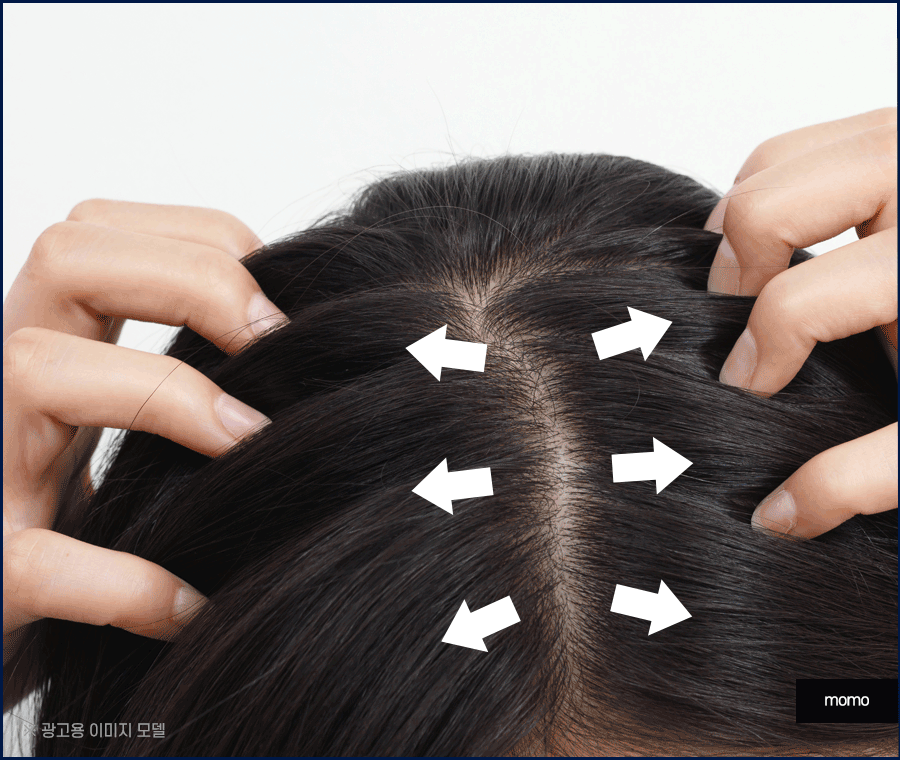
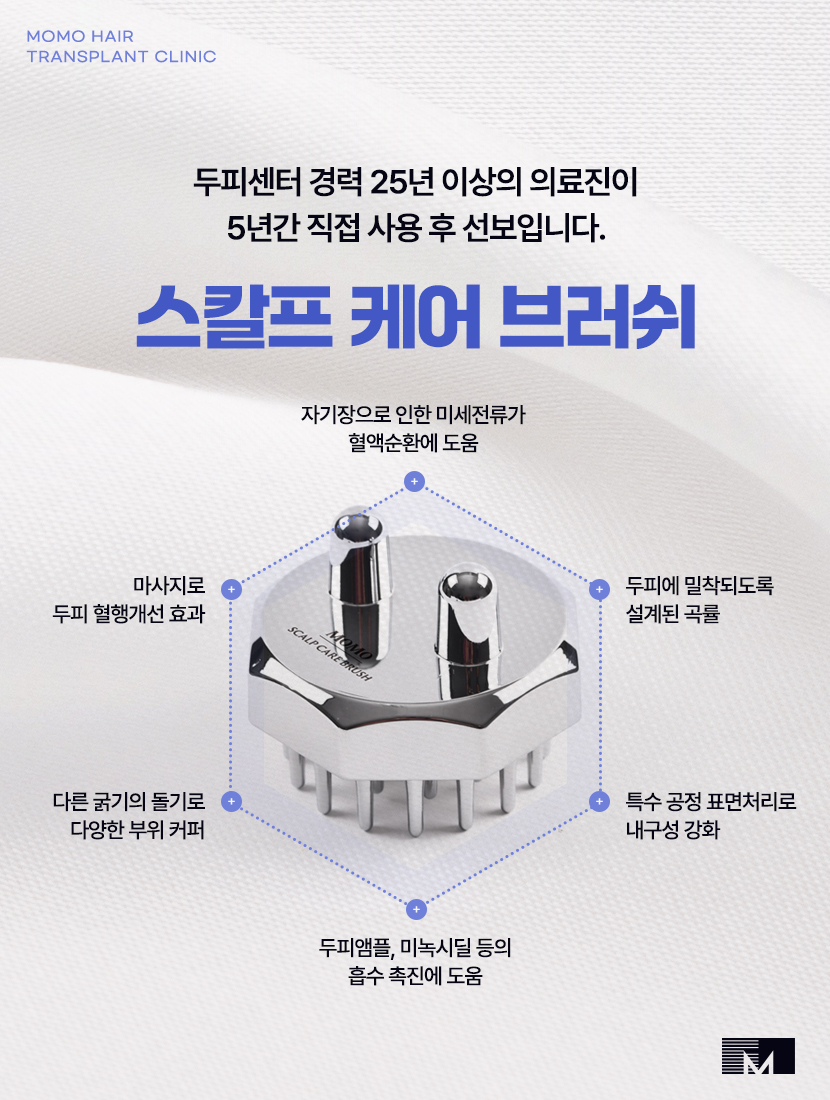
it is good to make time for a little scalp massage.
Doing it twice a day, once in the morning and once in the afternoon,
can be helpful.
However, since wet hair can have a negative effect,
if you gently massage the entire scalp after it is completely dry,
it can help with smooth blood circulation as well as waste removal.
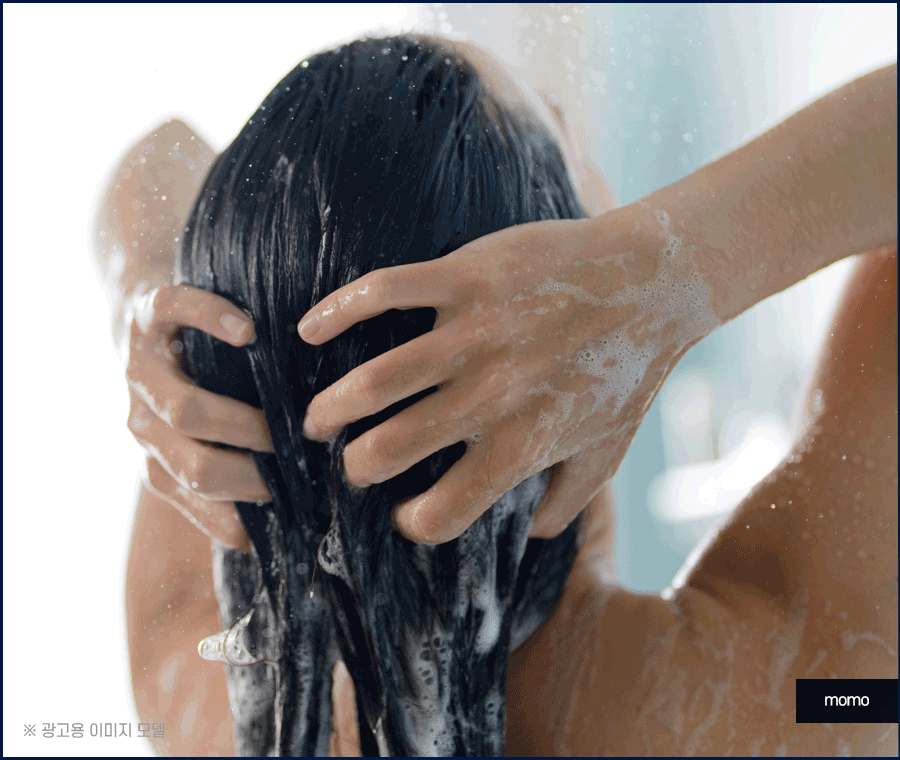
It can also be helpful to check how often you wash your hair.
If the scalp and hair are not clean,
the likelihood of problems may increase,
so it is better to gently comb tangled hair into place
and wash it thoroughly about once a day,
keeping to a frequency that suits your own scalp type.
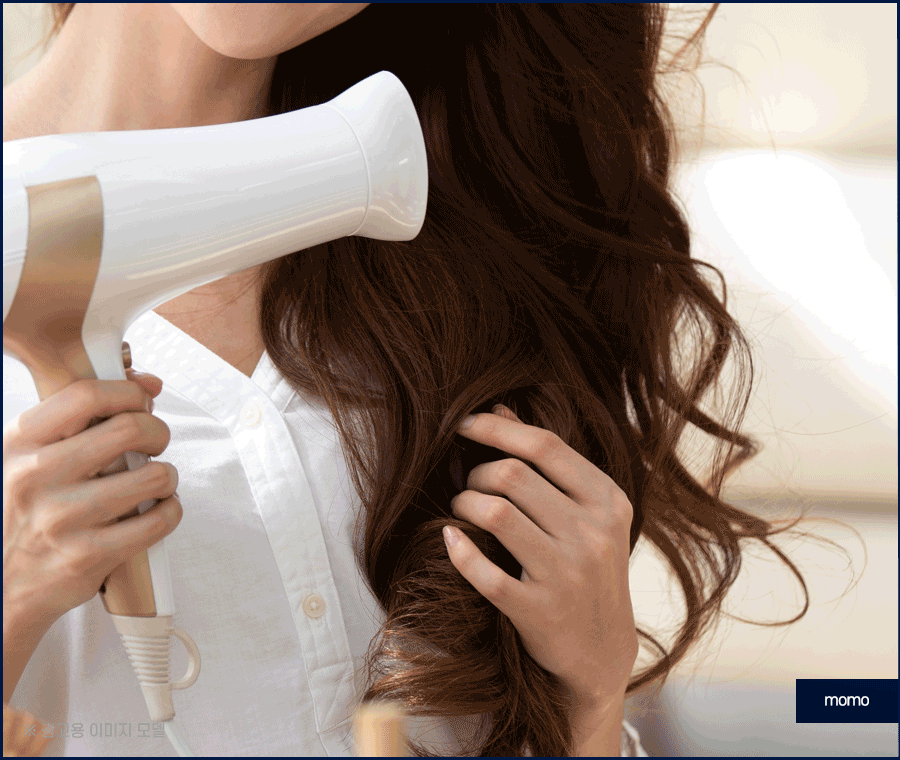
It is also advisable to use products with natural or mild ingredients
rather than those containing strong ingredients.
When washing and drying, it is good to check the temperature of the water and air.
Very hot temperatures should be avoided,
and it is important to keep consistently using lukewarm or cool water and air.
Also, if you need to tie your hair neatly,
tie it a little loosely so that strong stimulation
that puts pressure on the pores is not applied,
and you should also pay attention to eating meals centered on beneficial foods
or healthy foods.
At this time, you should manage your diet so that you can evenly consume
essential nutrients such as protein, carbohydrates, and vitamins.