Facial Fat Grafting Before and After
Why Satisfaction Differs
| Dr. Jang Uk’s Summary
Hello.
This is Obje Plastic Surgery.
When considering facial fat grafting,
the first thing most people look for is
before-and-after photos.
This is because they want to gauge
how much change is actually possible
and whether they can expect a similar result
for their own face.
But as you look through the photos,
you may notice that the results vary a lot from person to person,
and satisfaction seems to differ just as much.
With that vague sense of concern,
you may keep looking for more reviews,
but in many cases, it is still not clear
exactly why those differences happen,
or what criteria should be used to choose.
So today, we will go through
the three questions people most often ask
before facial fat grafting,
one by one.
If you read to the end,
you’ll be able to go beyond simply looking at before-and-after photos
and
judge more clearly
what kind of result you can expect.
Before and after facial fat grafting,
what makes the difference in results is OOO
The most important concept in facial fat grafting
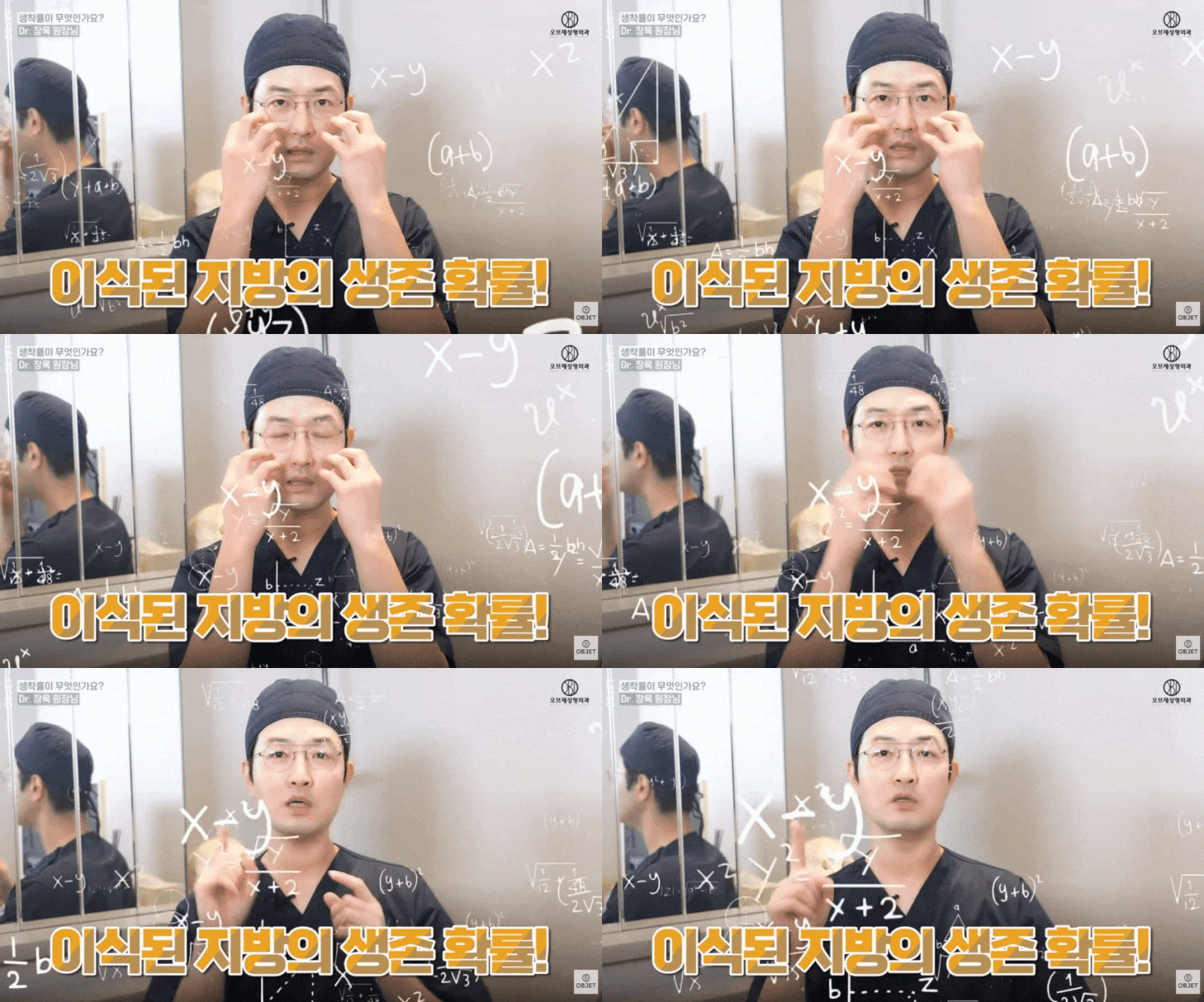
is the “survival rate.”
The survival rate refers to
how much of the fat taken from the thighs or abdomen
remains alive and settles in place
after being transplanted to the face.
The problem is that this survival rate
varies greatly from person to person.
For some people, 80–90% of the transplanted fat
remains in place,
while for others, only 10% remains
and the rest is absorbed.
The biggest influence on this difference
is each person’s individual constitution.
Even if the same amount and method are used,
the process of accepting the fat and supplying it with nutrients
depends on each person’s physical condition.
Factors such as blood circulation,
tissue elasticity,
and immune response work together,
but it is essentially impossible
to predict these accurately before surgery.
To address this,
Obje Plastic Surgery uses a two-stage grafting method.
After the first graft,
we assess the individual’s approximate survival rate,
and then add the needed amount
based on that in the second graft.
For example, if the survival rate after the first graft
is low at around 30%,
then a larger amount can be added
in the second stage.
On the other hand, if the survival rate is high at 80%,
then only a small amount may be added
or the second stage may not be performed at all.
By checking and adjusting according to each person’s response,
final satisfaction can be improved.
There are also two representative factors in daily life
that lower the survival rate,
and you should definitely keep them in mind.
The first is smoking.
When you smoke, blood vessels constrict,
which makes blood circulation less smooth.
Fat cells can only survive if they receive nutrients and oxygen
from the surrounding tissues,
but when blood circulation decreases,
this process does not happen properly.
In the end, the cells die because they do not receive enough nutrients,
and the survival rate drops significantly.
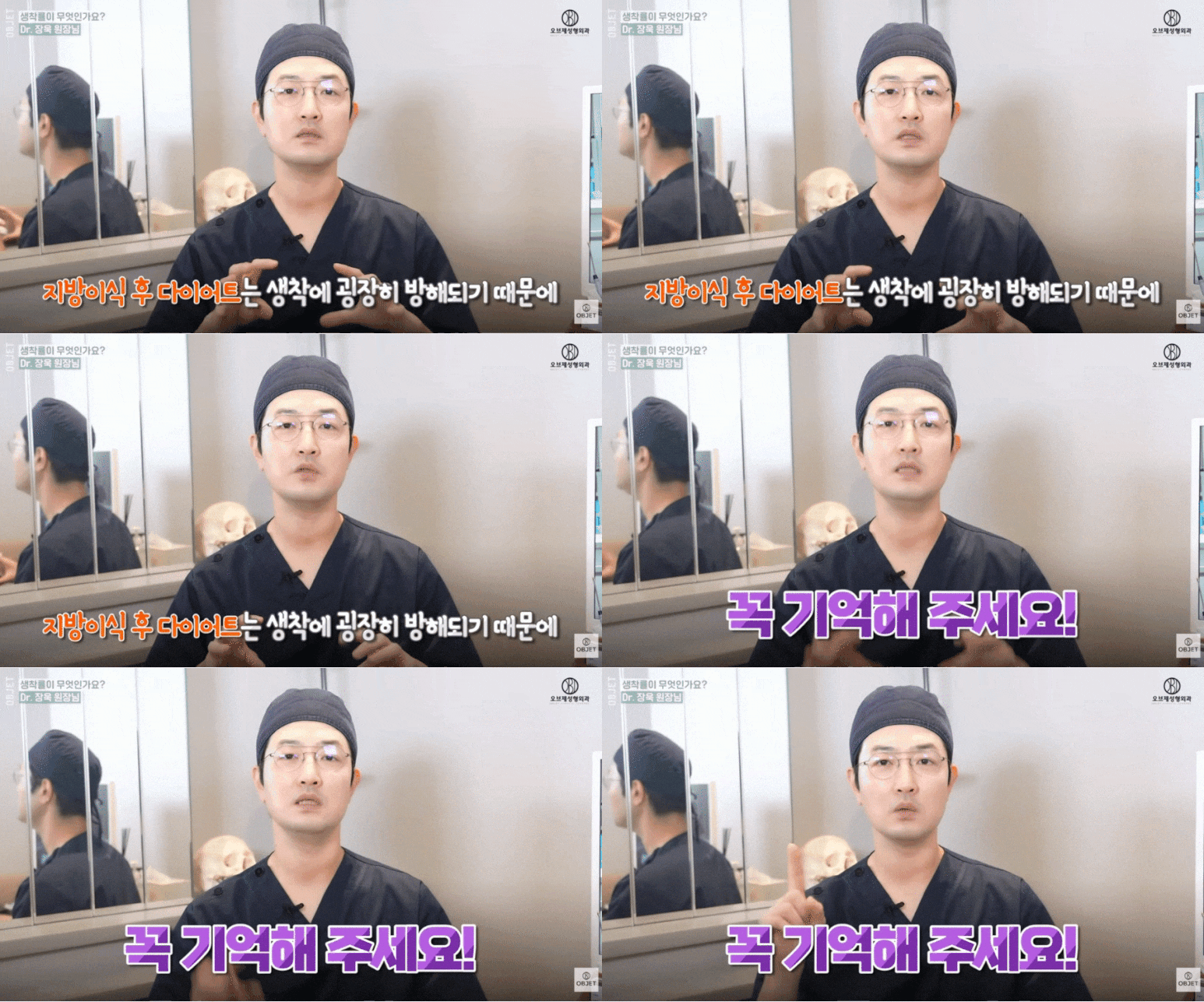
The second is dieting.
If weight loss occurs while the transplanted fat cells
have not yet fully settled,
there is a higher chance that they will be used as an energy source
and absorbed.
So before and after facial fat grafting,
it is important to maintain your weight
for at least about 3 months.
Before and after facial fat grafting,
is it true that the skin can become bumpy?
You may have heard that
fat grafting can make the skin bumpy at least once.
Usually, this expression is used to describe two phenomena.
One is a palpable lump,
and the other is visible unevenness.
These two differ in both cause and development process.
First, let’s look at the lump.
Fat cells are structures that contain oily components.
However, if some cells are damaged during the grafting process,
the oily components inside can leak out.
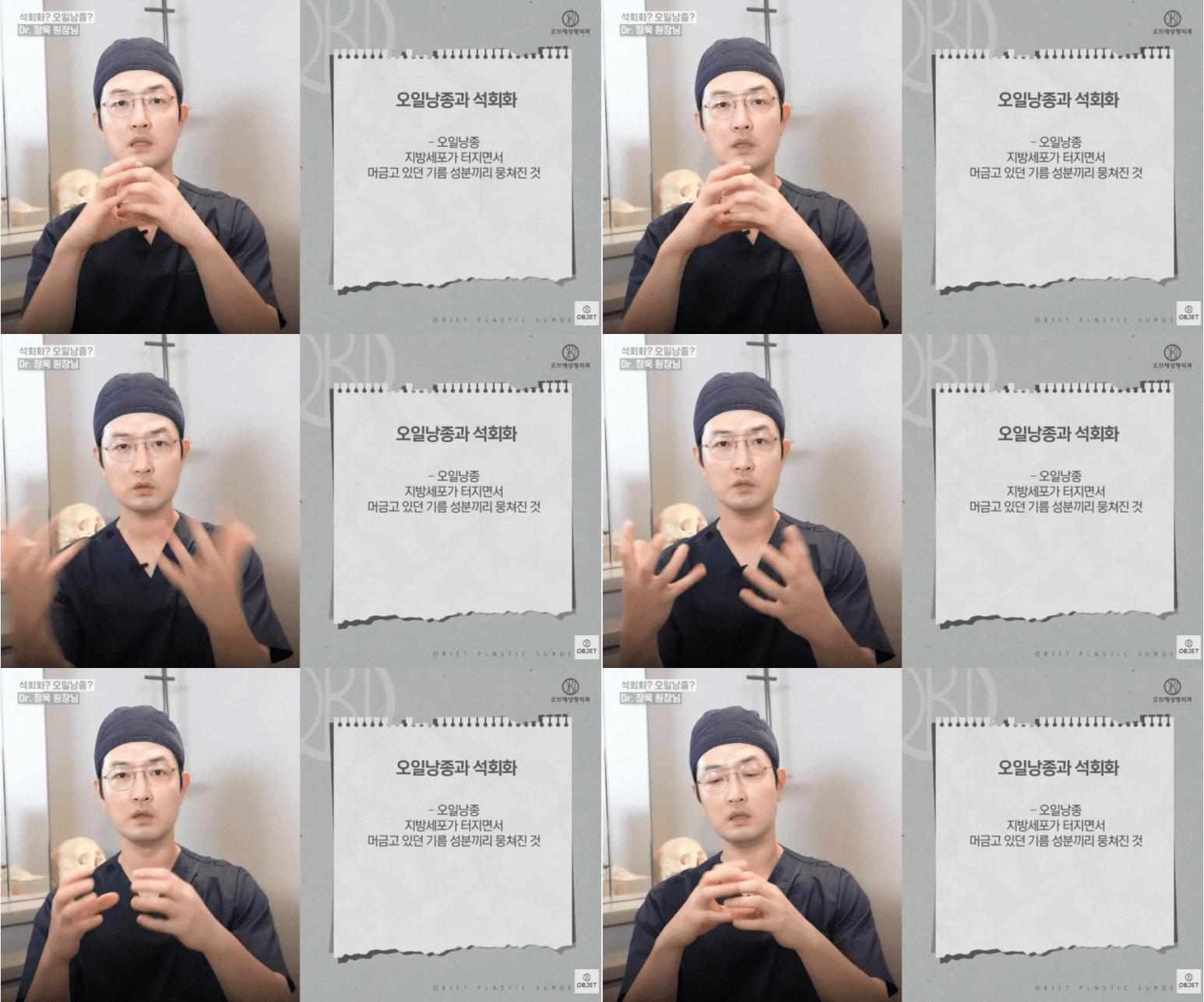
These oily components can clump together
and sometimes feel like small lumps.
This is medically called an oil cyst.
However, unlike what you may see on the internet,
this occurs very rarely in clinical practice.
Even if it does happen,
it can be addressed relatively simply in an outpatient setting
by draining the oily contents with a small needle.
What many people worry about even more
is the visible uneven surface.
In most cases, this happens when the fat has not been sufficiently refined
or when it has been placed too superficially.
Among the layers beneath the skin, fat needs to be placed at a specific depth
that is suitable for settling.
If it is placed too superficially,
it may not spread evenly,
and the skin surface can feel uneven.
These differences can become even more noticeable
depending on the area treated.
Areas such as the forehead or the upper cheekbone,
where the skin is relatively thick,
often do not have major problems even with general micro fat grafting.
However, the under-eye area is the thinnest skin area in the body.
So if the same method is used,
the chance of unevenness can be relatively higher.
For this reason, at Obje Plastic Surgery,
when treating areas with thin skin such as under the eyes,
a more delicate method called single-cell fat grafting is used.
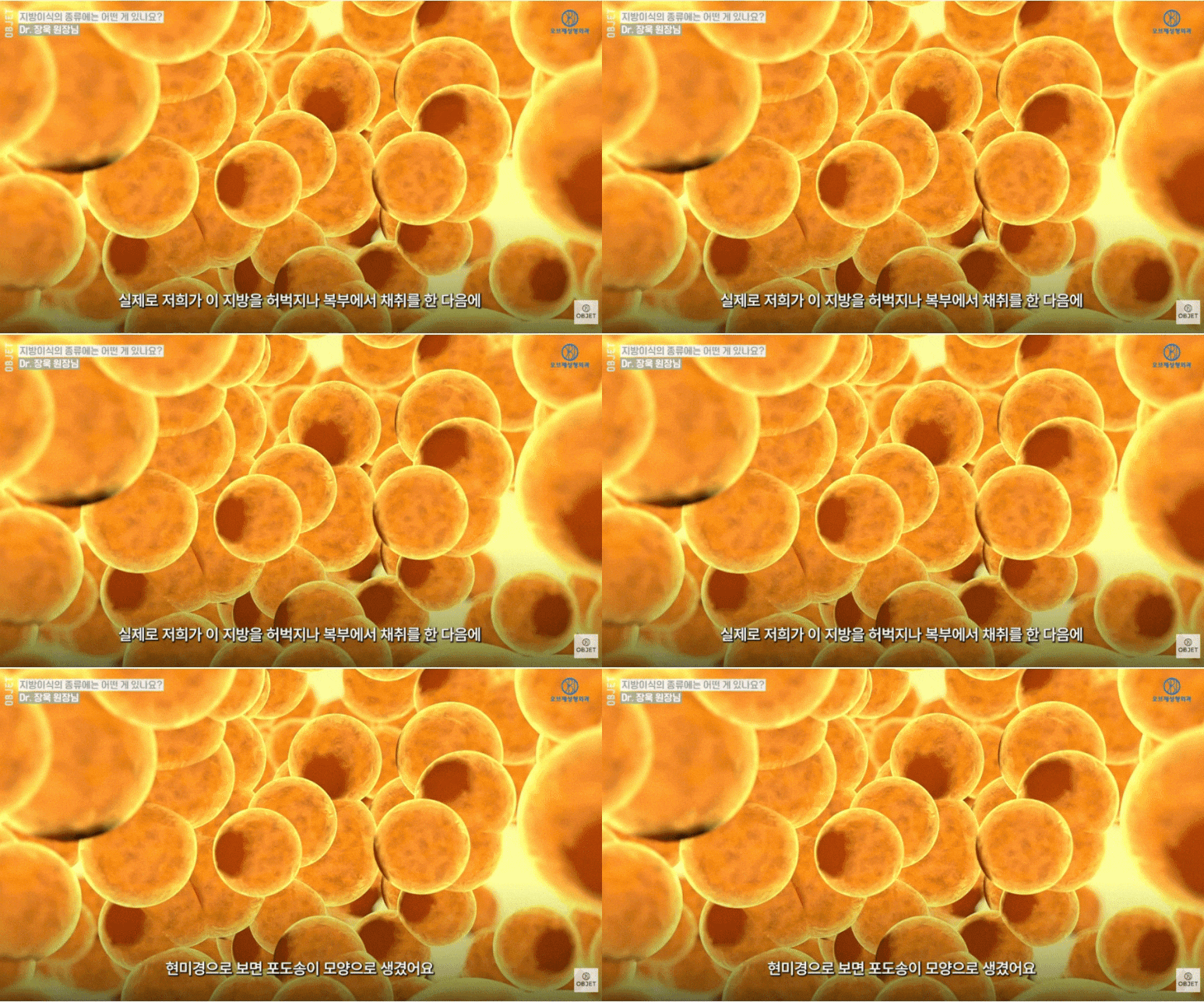
The fat, which is clumped together like a bunch of grapes,
is separated into individual cells through special enzyme treatment,
and then used after being refined one more step.
It is easier to understand if you think of it as placing each grape individually and evenly,
rather than putting the whole bunch down as is.
This allows the fat to settle more naturally
even in thin skin,
and it significantly lowers the risk of an uneven surface.
Before and after facial fat grafting,
can sagging occur?
Another common concern is hearing that fat grafting can make the skin sag.
In fact, the transplanted fat itself rarely sags.
However, if the procedure is performed on an area that is already prone to sagging,
it may appear to sag more due to the weight of the added volume.
Some people also worry whether leftover fat that has not survived
could cause sagging.
Non-surviving fat is naturally absorbed over time.
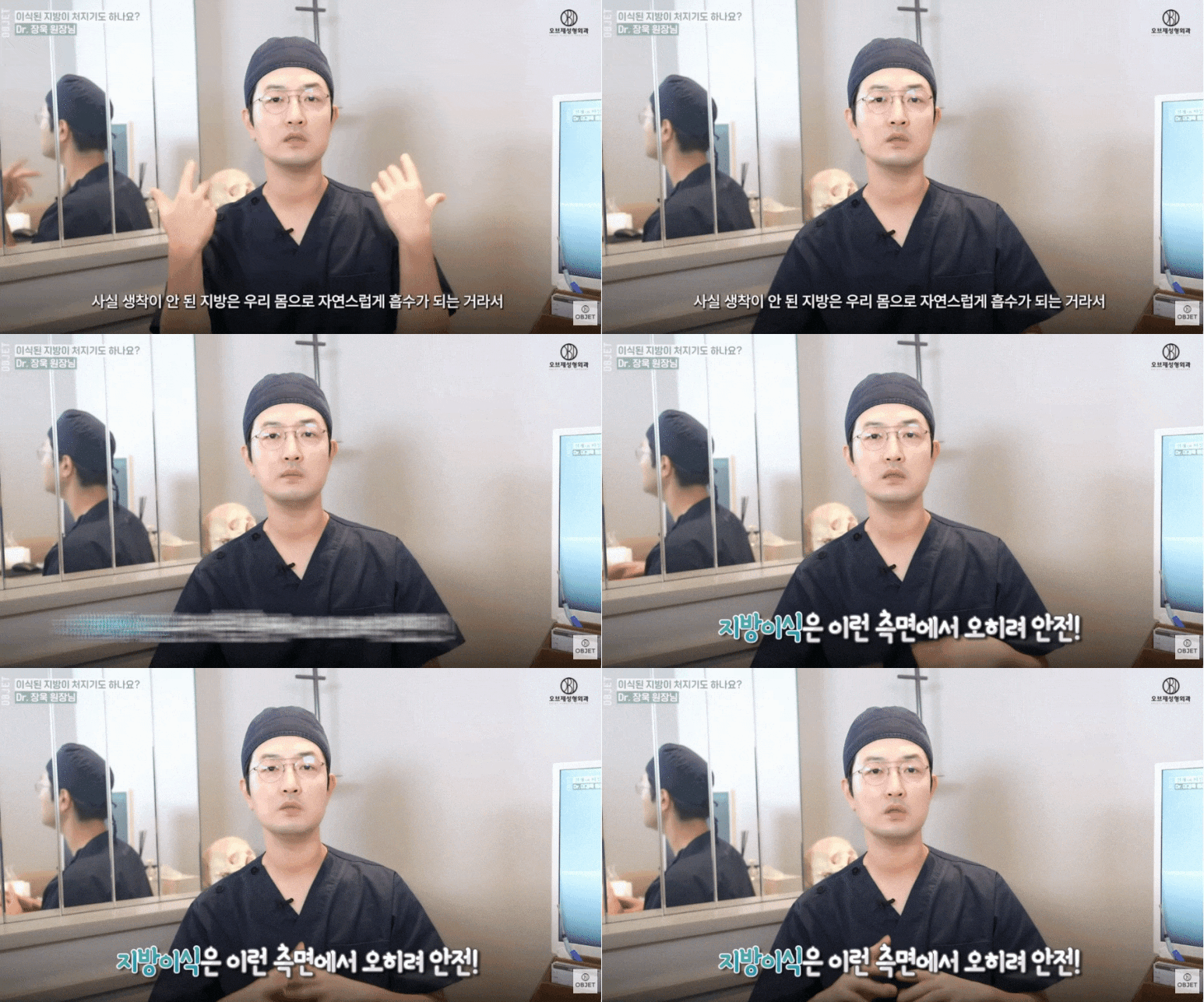
In this sense, since no foreign material remains,
fat grafting can be said to be a relatively safe procedure.
In the end, what matters most
is choosing the right area to treat.
It is necessary to consider the current skin condition,
elasticity,
and degree of sagging together,
and to judge how treating this area would affect
the overall facial balance.
That is why it is most important to carefully decide the treatment area
through 충분한 consultation.
Today, we looked at the three questions
people most often ask about before and after facial fat grafting.
Now, beyond simply looking at before-and-after photos,
you should be able to ask more specific questions.
For example, whether there is a system to check survival rate after the first graft
and consider a second graft,
what method is used for thin areas like under the eyes,
and whether grafting in that area would pose any risk of sagging
based on your skin condition.
Dr. Jang Uk of Obje Plastic Surgery checks the graft survival response after the first stage,
and then determines the treatment scope and method step by step,
considering the skin thickness of each area
and the possibility of sagging.
So even with the same fat grafting procedure,
they take a different approach depending on the individual
and maintain a high level of satisfaction.
If you want to know the reason why results differ
and decide based on that,
it may be worth receiving a consultation using these criteria.
This has been Obje Plastic Surgery.
Thank you.
<🔽🔽Videos you may find helpful🔽🔽>
| Fat grafting consultation and inquiries |
|---|
| Quick phone consultation |
| Kakao easy consultation |
-
This post is medical information written by Obje Plastic Surgery Clinic in compliance with the Medical Advertising Act.
-
The effectiveness of the procedure may vary depending on the individual, and side effects may occur.
We recommend that you first have a thorough consultation with medical staff before deciding on the procedure.