Is drooping at the nasal tip caused by the material?
What Dr. Lee Kyung-muk says about
<The real reason>
Hello.
This is Obje Plastic Surgery.
When considering rhinoplasty,
you may have heard at least once,
"They say the tip drops over time..."
Or after hearing from someone close to you,
"My friend had nose surgery, but
a few years later it seemed to drop again,"
you may have worried that
after rhinoplasty,
your nasal tip might droop later on.
So when you mention during a rhinoplasty consultation
that you are worried the tip might droop,
the conversation naturally turns to materials.
For example: since the septum is small, let's use autologous rib cartilage,
or since ear cartilage has limitations,
let's use donor rib cartilage.
As a result,
material choice can feel like the most important factor
for preventing nasal tip drooping.
In fact, during rhinoplasty consultations,
a large part of the explanation often focuses on
which material will be used.
But there is actually something more important than that.
That is, "support."
Today, I’d like to talk with you about why support is important,
and how each material should be used.
If you read until the end,
you may be able to ease some of your worries
about nasal tip drooping.
The real reason the tip drops?
Not the material, but ‘OO’
People worried about nasal tip drooping
tend to focus on material choice.
"They say the septum is strong, so it’s good."
"They say autologous rib doesn’t droop."
Because of this kind of information,
they think that choosing the right material is all that matters.
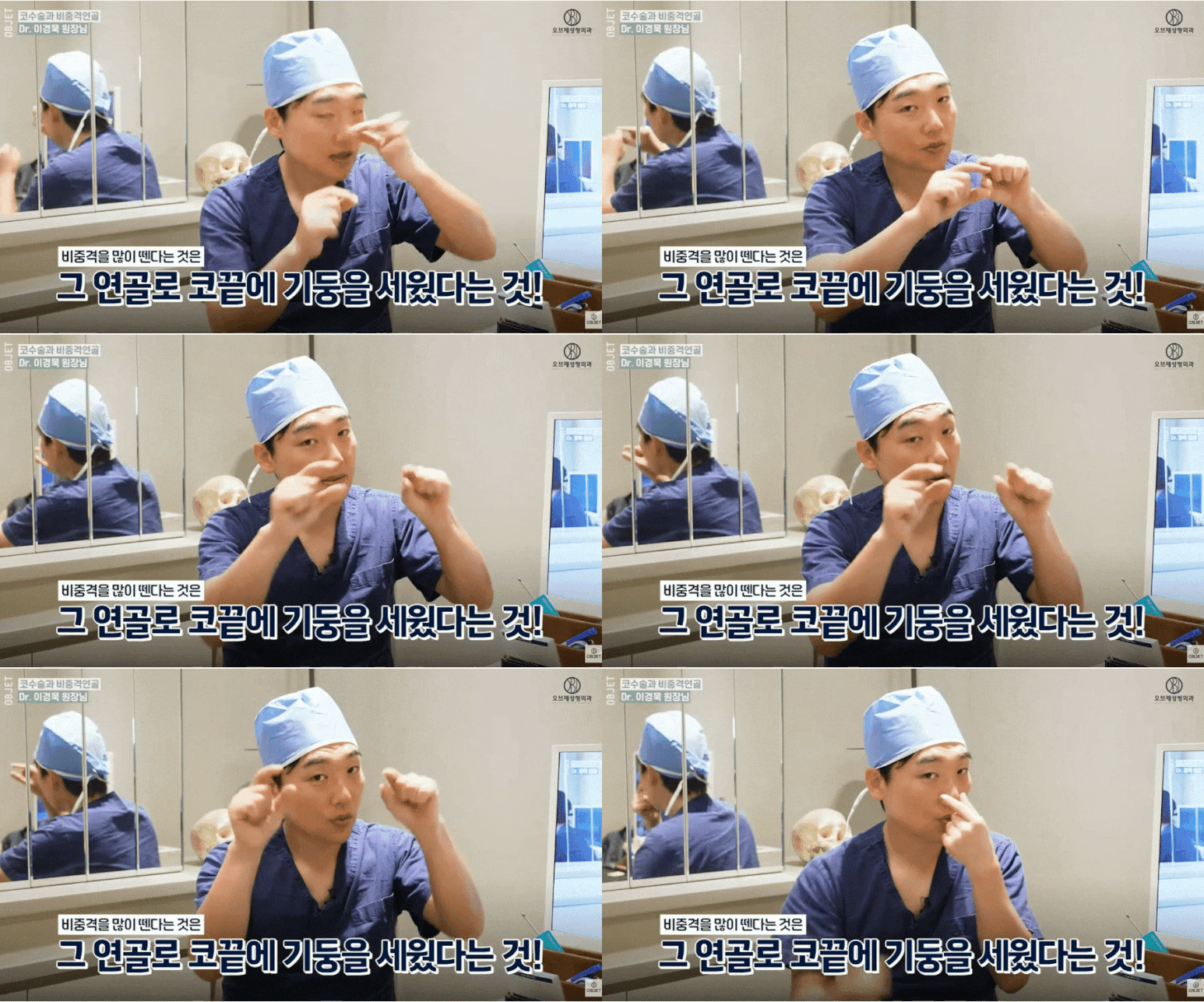
Of course, the material matters too,
but when it comes to preventing the tip from drooping,
there is something even more central.
That is support.
The nasal tip is the area
most affected by gravity.
That is because the force pulling the tissue downward
continues to act on it.
At this time, if the support structure
holding up the tip is weak,
then no matter what material is used,
the tip will eventually droop.
The reason people repeatedly say
that the shape changed over time
is that the support was not properly established.
On the other hand, if support is properly established,
even a soft material like ear cartilage
can sufficiently prevent the tip from drooping.
In other words, more important than the material’s "firmness"
is where and how the support is created.
So what exactly does support mean?
When building up the nasal tip,
it does not simply mean stacking cartilage.
It refers to the process of firmly fixing that cartilage
to a stable structure deep inside the nose.
If fixation is not done properly,
even if it looks fine at first,
as time passes,
it may gradually change shape
as it cannot withstand gravity and tissue forces.
That is why, even with the same material,
one person may maintain the result for a long time,
while another may say, "Why does it seem to have lowered again?"
In the end, what makes the difference
is not the material itself,
but where and how that material was fixed.
Support is not visible,
but it greatly determines the result,
and only when this part is solid
can the advantages of the material truly come through.
Talking about materials during consultation?
It’s not a ‘waste of time’
Then do materials really not matter?
No.
Support is the most important factor,
but because each material has different characteristics,
even if support is created in the same way,
the feel and recovery process can differ depending on the material.
The materials commonly used in rhinoplasty
can largely be divided into four types.
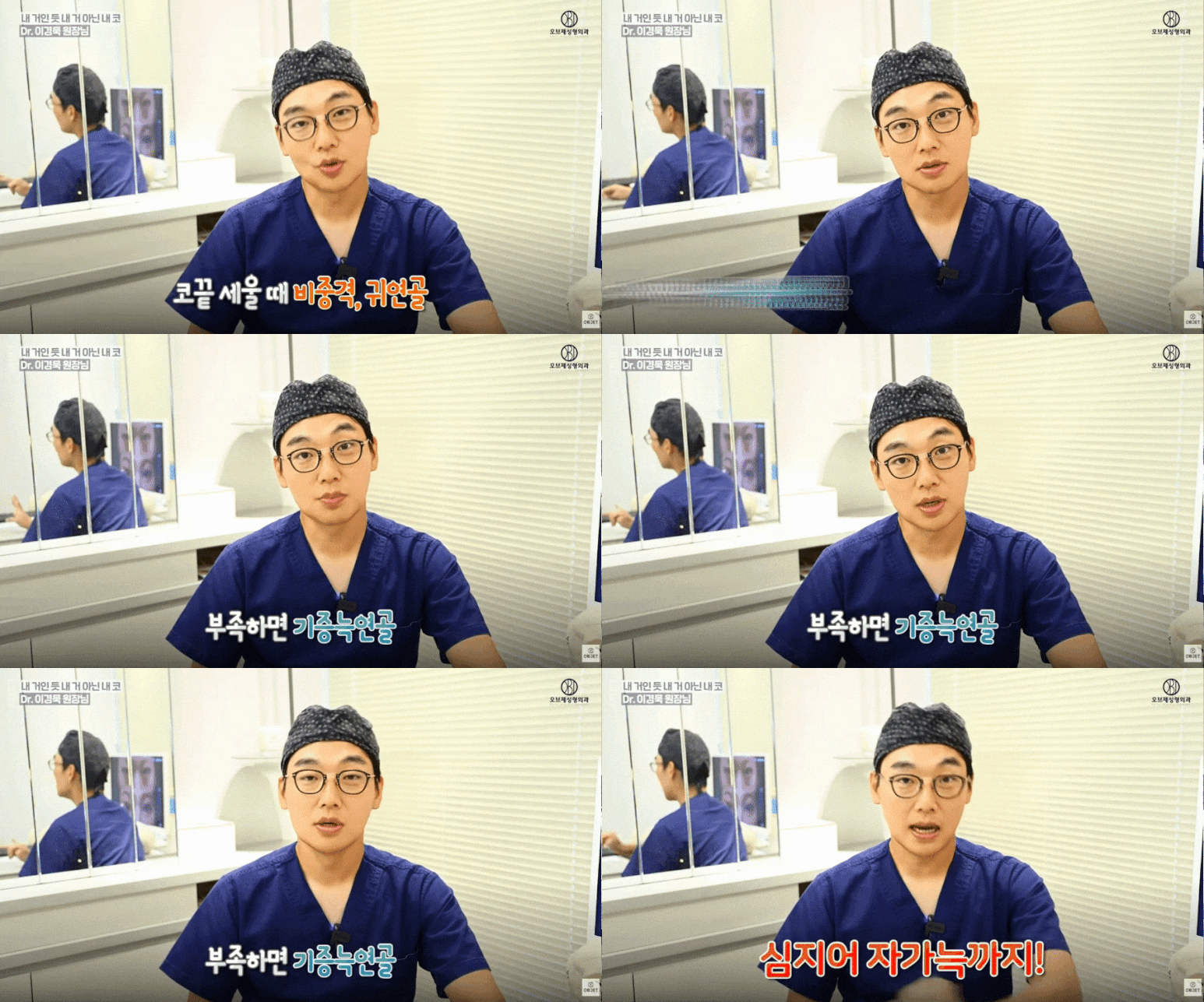
Ear cartilage, septal cartilage,
autologous rib cartilage, and donor rib cartilage.
Ear cartilage is soft and elastic,
so it allows for natural movement,
but it has limitations in size and strength,
while septal cartilage is firm and large,
but if too much is harvested,
the internal structure of the nose may weaken.
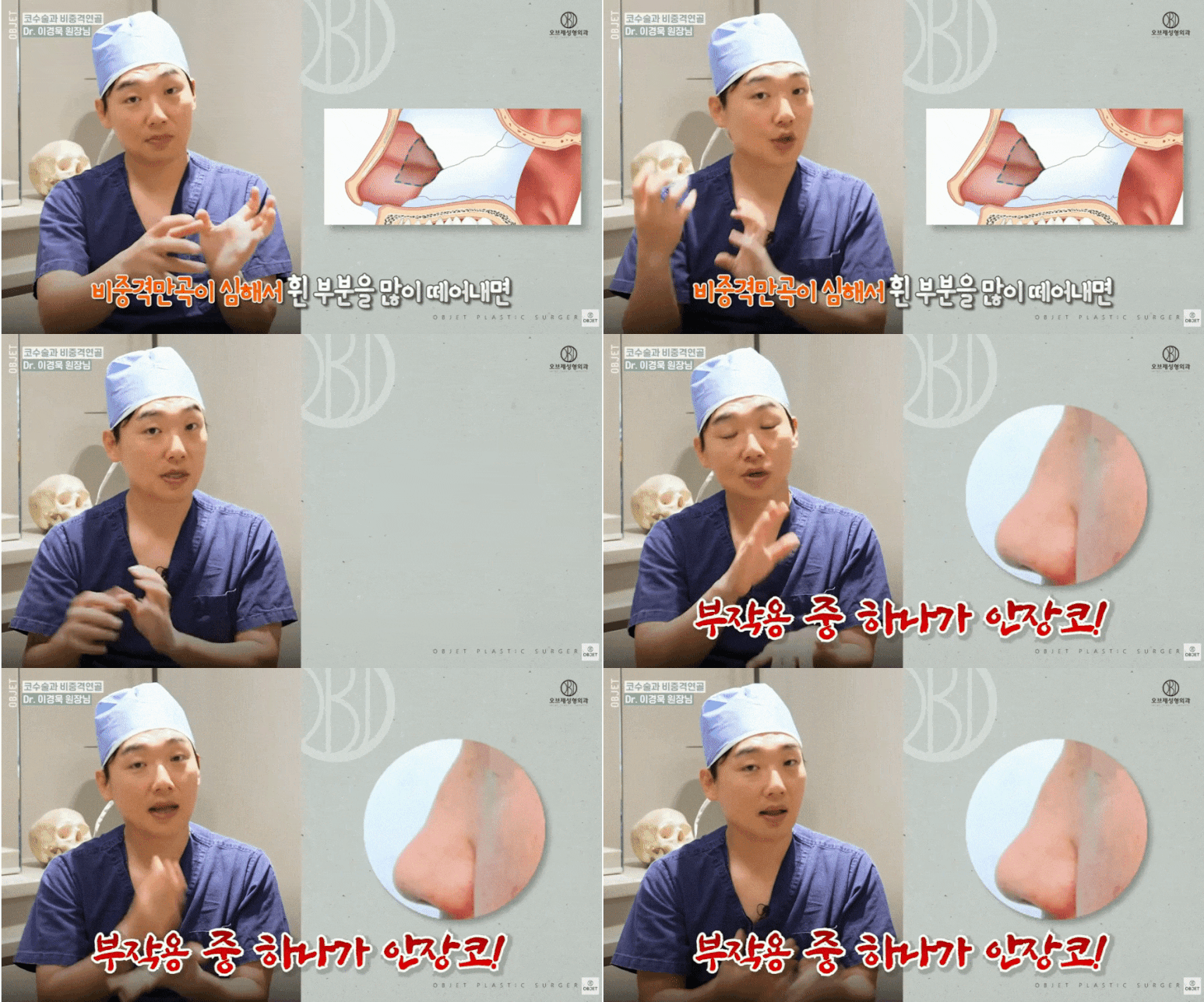
Autologous rib is large and strong,
but the harvesting process places a burden on the body,
and donor rib does not require harvesting,
but differences in absorption rate may exist.
Because each material has
clear characteristics like these,
it is important to understand them properly
and choose the material that suits you best.
However, that choice itself
is not the key factor in preventing nasal tip drooping.
What matters most is not which material is used,
but how it is fixed.
Even a soft material like ear cartilage,
if it is deeply fixed to the periosteum
and a solid support structure is created,
can result in a nasal tip that looks natural
and lasts for a long time.
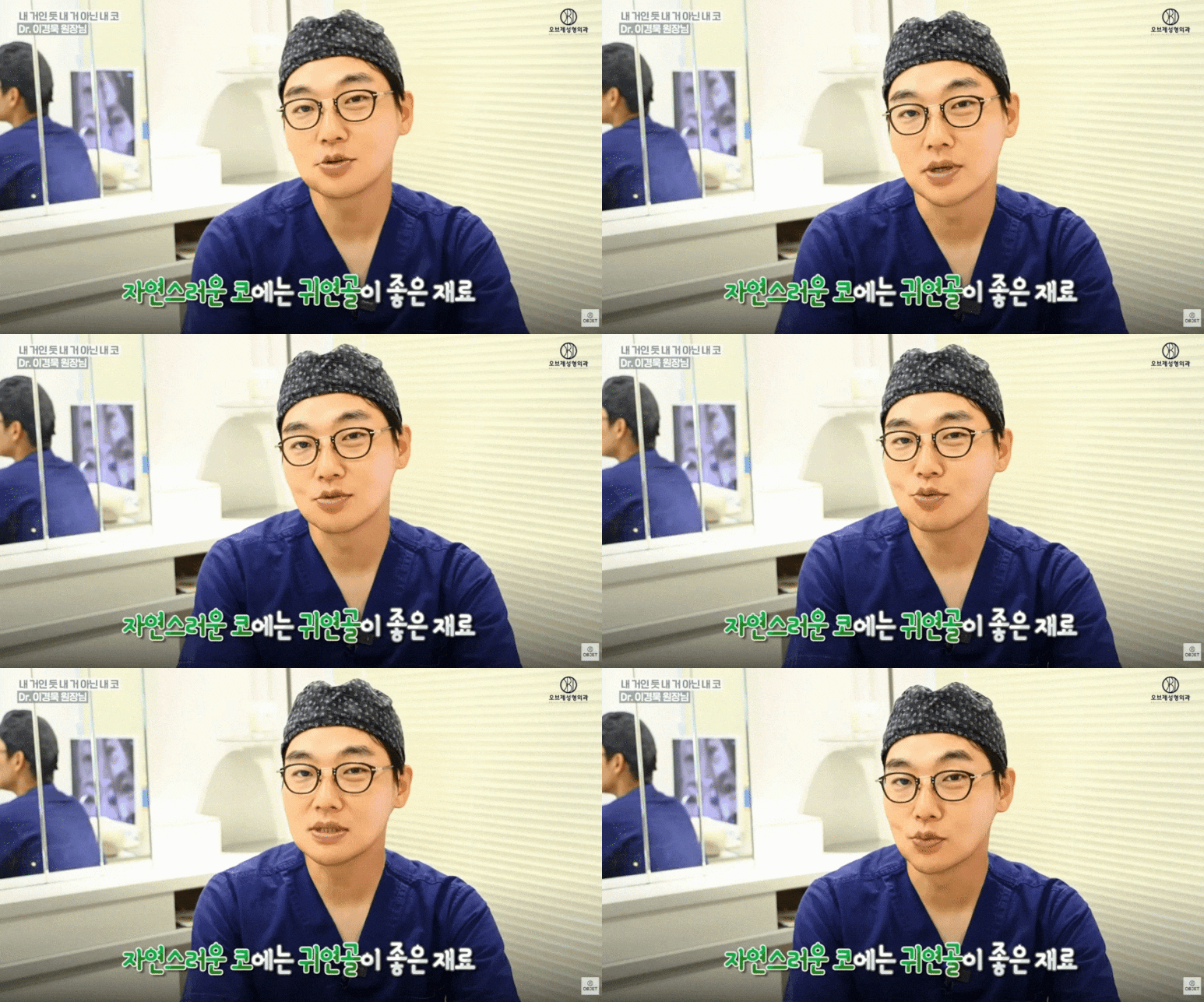
On the other hand, even if very firm
autologous rib or donor rib is used,
if support is weak,
the tip cannot avoid drooping over time.
At Obje Plastic Surgery,
no matter which material is used,
we apply precise support methods,
including periosteal fixation,
so that we can bring out the characteristics of the material
while creating stable results
without worrying about nasal tip drooping.
In the end, what matters is not only
material selection,
but also the ability to stably support the nasal tip.
I hope you will remember that.
Today, we looked at why nasal tip drooping occurs
and what the characteristics of each material are.
We also examined the concept of "support,"
which many people tend to overlook.
Dr. Lee Kyung-muk of Obje Plastic Surgery
uses various support methods, including periosteal fixation,
to make the most of each material’s characteristics,
from ear cartilage to autologous rib,
while focusing on creating a natural nose
without worrying about drooping.
I hope this post has helped ease
some of your concerns about rhinoplasty.
This has been Obje Plastic Surgery.
Thank you.
<🔽🔽A helpful video to watch together🔽🔽>
| Rhinoplasty consultation and inquiries |
|---|
| Quick phone consultation |
| Kakao easy consultation |
-
This post is medical information written by Obje Plastic Surgery Clinic in compliance with the Medical Advertising Act.
-
Treatment effects may vary from person to person, and side effects may occur.
We recommend that you fully consult with medical staff in advance before deciding on any procedure.