Non-implant nose surgery — Not recommended for the nasal bridge?
- Summary by Director Lee Kyung-mook
Hello.
This is Objet Plastic Surgery.
When looking into nose surgery,
it is natural to think,
"I want it done naturally
without an implant."
Many people feel that the mere idea of
an artificial material being placed in their body
is somehow unfamiliar
and burdensome,
and they worry whether problems might arise later,
so their attention naturally turns first to
non-implant nose surgery.
That feeling is completely understandable.
However, although many people think
non-implant nose surgery is a safer
and more natural method,
in reality, it is difficult to say
that is always the case.
Especially when the goal is to raise the nasal bridge,
the materials used in non-implant procedures
have structural limitations,
so it is important to understand this first
before making a choice.
Today, I will explain one by one
why the materials used for the nasal bridge
have limitations,
and why material selection differs
depending on the area.
If you read to the end,
you will gain a practical 기준 for
setting the direction of your nose surgery.
Non-implant nose surgery,
don’t use it for the nasal bridge!
One of the materials commonly used
to raise the nasal bridge in non-implant
nose surgery is autologous dermis.
This involves harvesting some skin tissue
from the buttock area
and inserting it into the nasal bridge.
This method has two major difficulties.
The first problem with autologous dermis
is that it is difficult to predict
how much will be absorbed.
For example,
if the goal is to raise the nasal bridge by 3 mm,
it is not easy to calculate exactly
how much needs to be placed initially
for 3 mm to remain in the final result.
That is because the absorption rate
differs from person to person.
In some cases, more may be absorbed
than expected,
and in others, less may be absorbed,
leading to different outcomes.
This is why even if the desired height
is designed at the beginning,
it is difficult to say the final result
will remain exactly the same.
The second problem is that,
over time, the material can spread sideways.
autologous dermis is basically a soft tissue,
so even after being inserted into the nasal bridge,
it is difficult to keep its shape fixed.
Methods such as triple suturing are used
to prevent this,
but over time the nasal bridge line
can become blunt.
It is not easy to prevent both absorption
and spreading at the same time.
In addition to autologous dermis,
another material commonly used for the nasal bridge
is autologous costal cartilage.
This is cartilage tissue harvested from the rib area,
and it is one of the options selected
to secure nasal bridge height.
This method also has two problems.
The first is a phenomenon called warping.
In simple terms, it means the cartilage bends
over time in an unexpected direction.
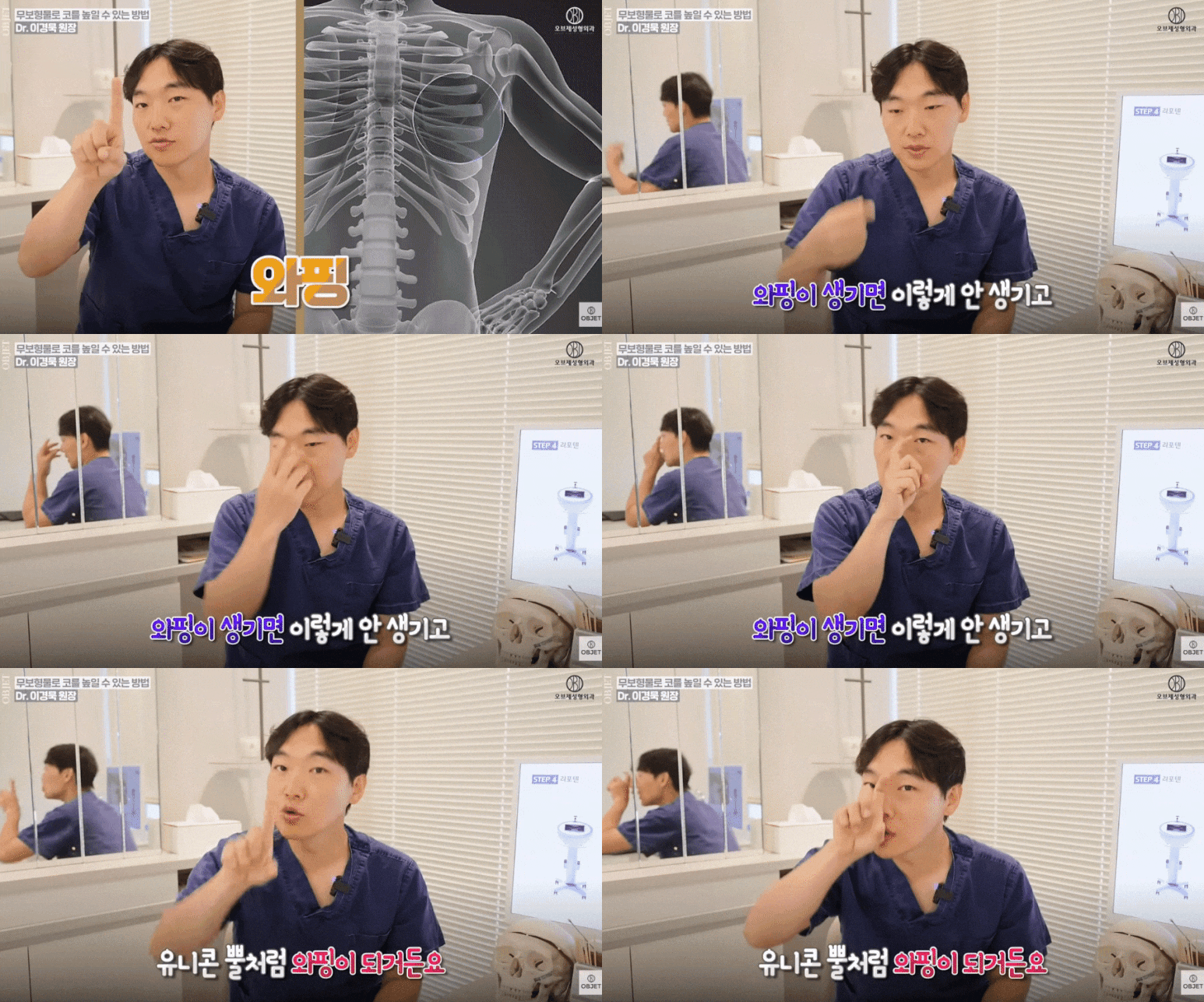
Because costal cartilage is structurally
under tension within the tissue,
even if it is straightened and used during surgery,
that tension can release over time,
causing it to bend little by little.
At this point, it may not just bend slightly;
one side of the nasal bridge can protrude,
or it can change into a shape that rises
like a unicorn horn.
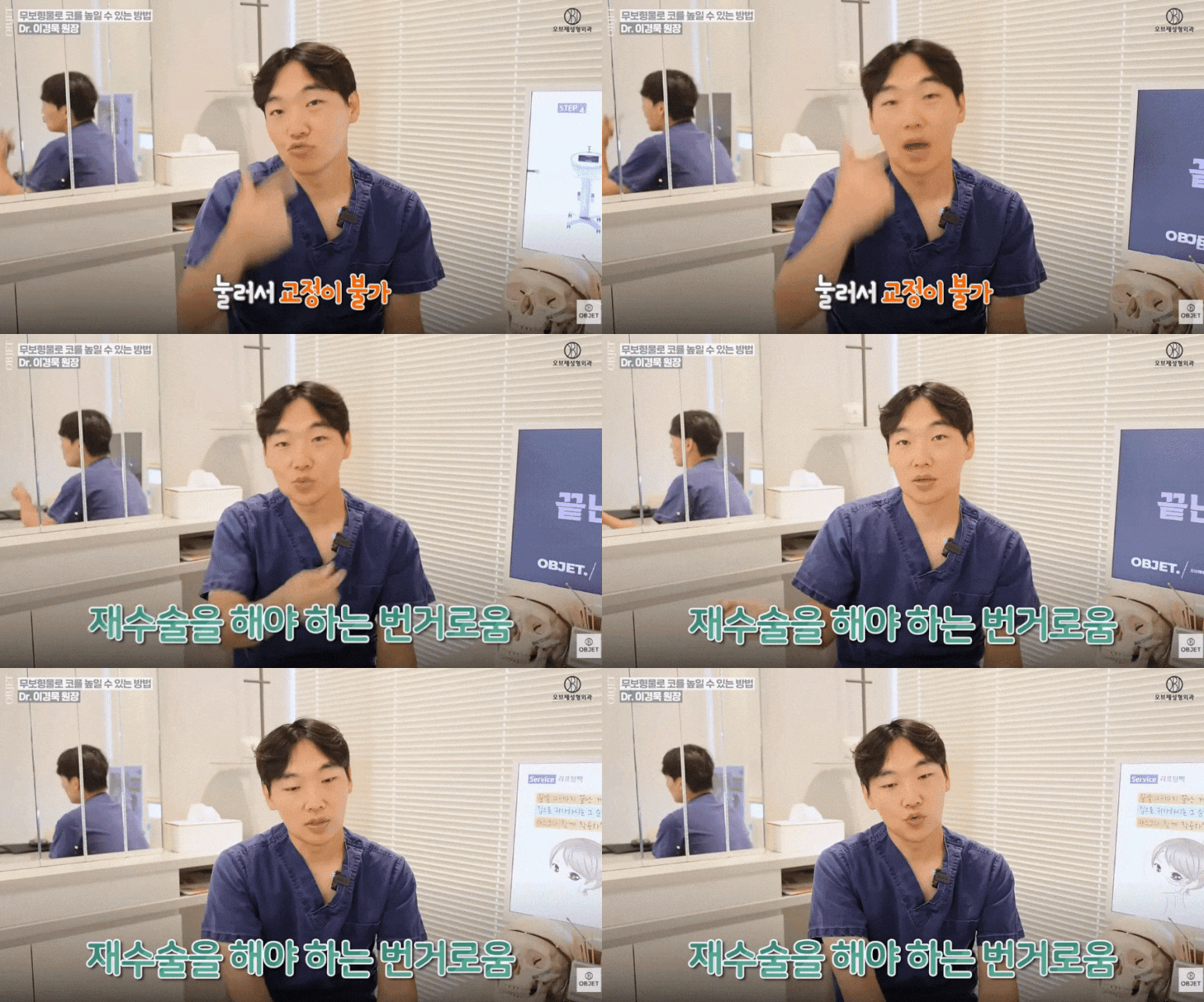
The problem is that if such a deformity occurs,
it is difficult to correct by pressing from the outside,
and additional surgery for correction
may ultimately be needed.
The second issue is how to handle inflammation
if it occurs.
autologous costal cartilage is tissue taken directly
from your own body, so the harvesting process itself
places physical strain on the body.
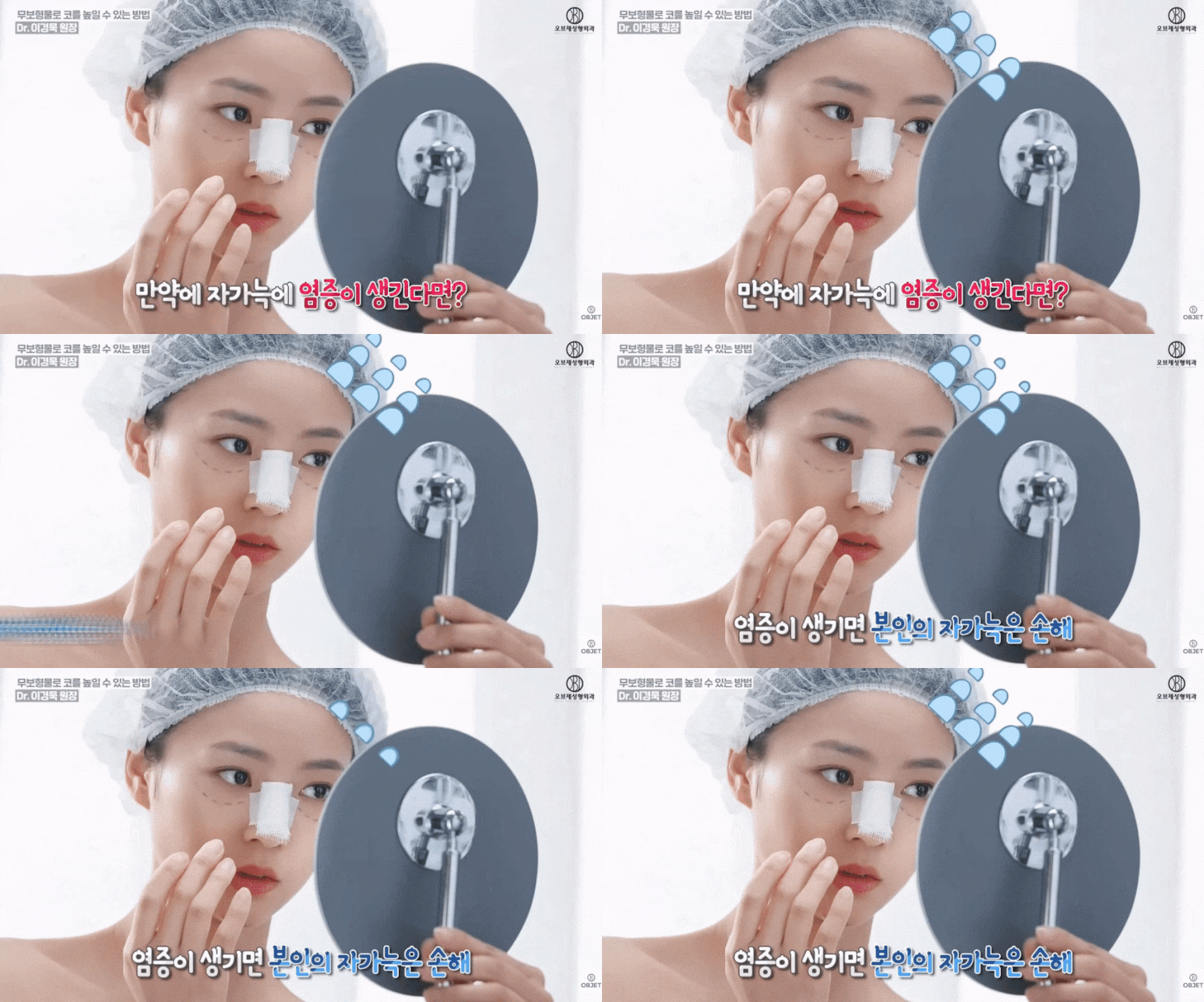
On top of that,
if inflammation develops after surgery,
there can be situations where the tissue can no longer
be used again.
Because it is your own tissue,
this situation can become more burdensome than
just the loss of a material.
Silicone,
there is a reason it keeps being used
After reading this far,
you may be thinking,
"Then isn’t every implant a problem?"

In fact, silicone
has a history of nearly 100 years.
Over that long period,
countless materials have appeared and disappeared,
but silicone has continued to be trusted
in three aspects.
Stability, shape retention, predictability.
Especially in areas like the nasal bridge,
where height and line must be matched precisely,
all three are important.
Silicone does not get absorbed or spread,
and it can maintain the shape designed at the start,
making the desired result much easier to predict.
Why the material choice differs
between the nasal tip and the nasal bridge
One of the important principles in nose surgery
is choosing materials differently
depending on the area.
The nasal tip and the nasal bridge are both part
of the nose, but their characteristics differ.
The nasal tip moves a lot
and has thin skin,
so autologous tissue is a better fit than
an artificial implant.
That is why flexible tissues such as
septal cartilage, ear cartilage, and donated costal cartilage
are used.
Donated costal cartilage is a material made by
medically and safely processing another person's rib cartilage
so that it can be used in surgery.
Because there is no need to remove cartilage
directly from your own body,
it is sometimes used as an alternative
to reduce the burden of harvesting autologous costal cartilage.
On the other hand, the nasal bridge is an area where
shape retention, height adjustment,
and line precision are important,
so materials with predictable behavior,
such as silicone or donated dermis,
are often used.
Donated dermis is a material made by processing
another person's skin tissue,
and its absorption rate is relatively easier to predict
than that of autologous dermis.
This is exactly why it is difficult to say
that non-implant nose surgery is
"always more natural."
The material's characteristics and the area's
characteristics must match in order to achieve
the desired result.
Today, I explained why non-implant materials
are not recommended for the nasal bridge
in nose surgery.
Non-implant nose surgery can certainly be a good choice
for areas like the nasal tip,
where autologous tissue is suitable.

But if the goal is to raise the nasal bridge,
it is more important to first understand
the characteristics of each material
and choose the method that fits the area.
Director Lee Kyung-mook of Objet Plastic Surgery
carefully determines which material characteristics
are needed for each part of the nose
and selects materials accordingly.
In particular, he places importance on creating
a completed result in one go during the first nose surgery.
If you have not yet decided on the direction
of your nose surgery,
we recommend confirming the method that fits your nose
through a consultation.
This has been Objet Plastic Surgery.
Thank you.
<🔽🔽A video worth watching together🔽🔽>
| Consultation and Inquiries for Rhinoplasty |
|---|
| Quick phone consultation |
| Kakao easy consultation |
-
This post is medical information written by Objet Plastic Surgery Clinic in compliance with the Medical Advertising Act.
-
Treatment results may vary depending on the individual, and side effects may occur.
We recommend that you fully consult with medical staff in advance before deciding on a procedure.