Hello.
This is Obje Plastic Surgery.
Functional rhinoplasty is
more than simply refining the shape of the nose.
It is a surgery that also addresses
internal nasal structures connected to breathing,
such as the septum and the inferior turbinates.
Because of that, it is not uncommon to hear people say
that the inside of the nose feels different
some time after surgery,
and the first word that often comes to mind in such cases is “recurrence.”
However, when we look closely at situations that seem like recurrence,
they are often changes caused not by the surgical result itself,
but by
the characteristics of the internal nasal structure,
the physiological movement of the tissue,
and the criteria used for diagnosis and material selection before surgery.
So today, we will take a step-by-step look at
what structural causes can actually lead to feelings of recurrence
after functional rhinoplasty,
and what diagnosis and preparation are needed
to help create a stable result from the start.
If you read to the end,
you will get a better sense of
what to check before surgery
and what points to keep in mind during postoperative care.
I heard that recurrence can happen after
functional rhinoplasty.
To begin with the conclusion,
situations that feel like recurrence can indeed occur.

However, because the word “recurrence” can mean several things,
the first step is to distinguish the causes.
The first cause is related to a deviated septum.
The septum is a wall-like structure that divides the inside of the nose
into left and right sides.
If this wall is bent,
air cannot pass easily through one nostril,
which can make breathing feel uncomfortable.
The important point here is that the septum is rarely bent only in the front part that is visible from the outside.
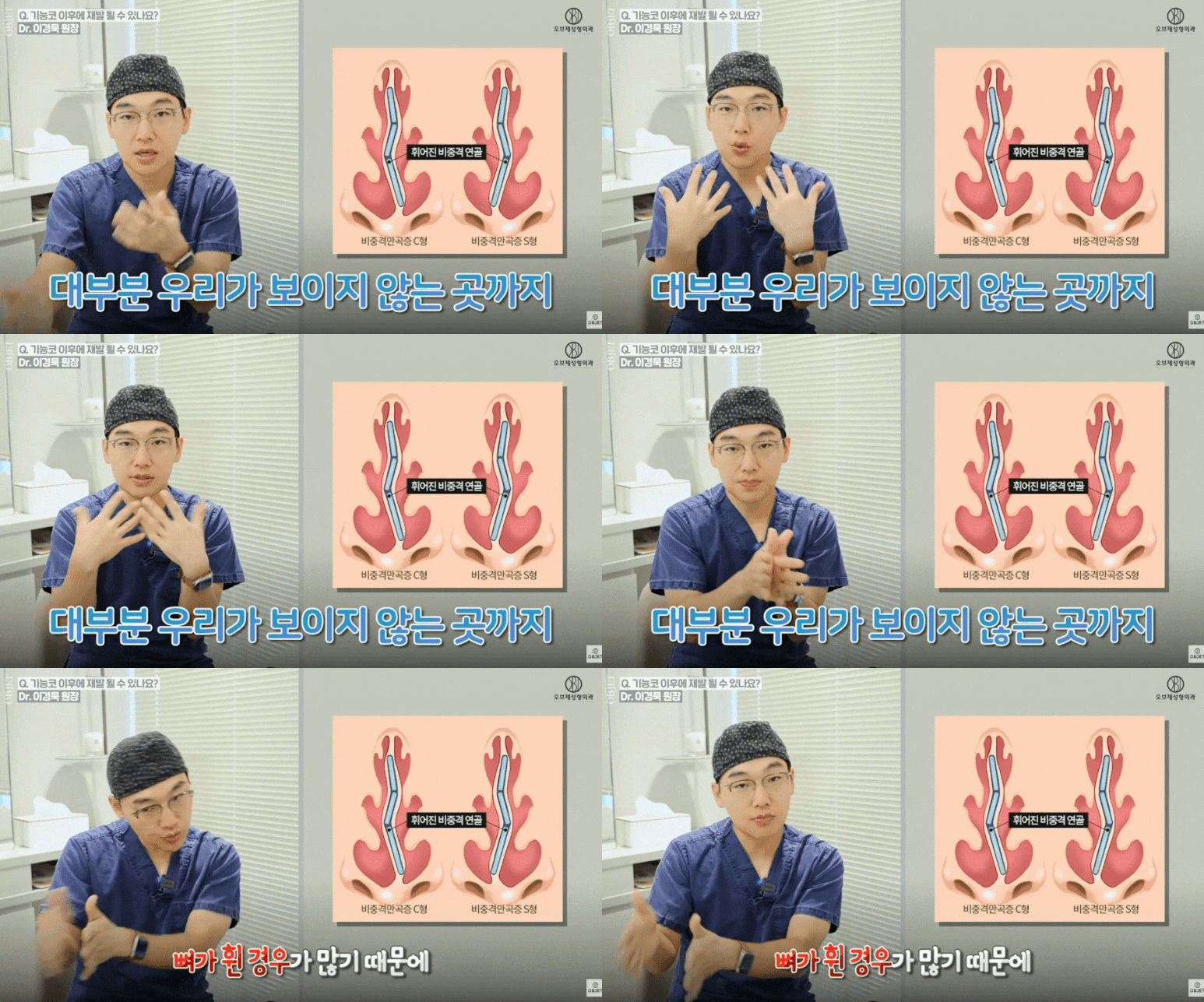
In some cases, the deeper part inside the nose,
all the way to the structure that meets the bone,
is bent as well.
So if only the front portion is corrected
and the deeper bony structure remains unchanged,
after some time it may appear bent again,
or breathing may feel similar to how it did before.
In short, what is called recurrence in septal functional rhinoplasty is closer to a change caused by the interaction of the deep septal structure and the surrounding tissue response.
That is why, before surgery,
it is important to check the direction and location of the septal deviation,
as well as the condition of the deeper parts of the nasal cavity,
and to determine the correction plan accordingly.
Another cause—have you heard of the inferior turbinate’s “nasal cycle”?
The second cause is related to the inferior turbinates.
Some people feel that their nose becomes blocked again after inferior turbinate surgery.
In many of these cases, however, it is not actual recurrence but rather the physiological movement of the tissue.
The inferior turbinate has a characteristic called the “nasal cycle.”
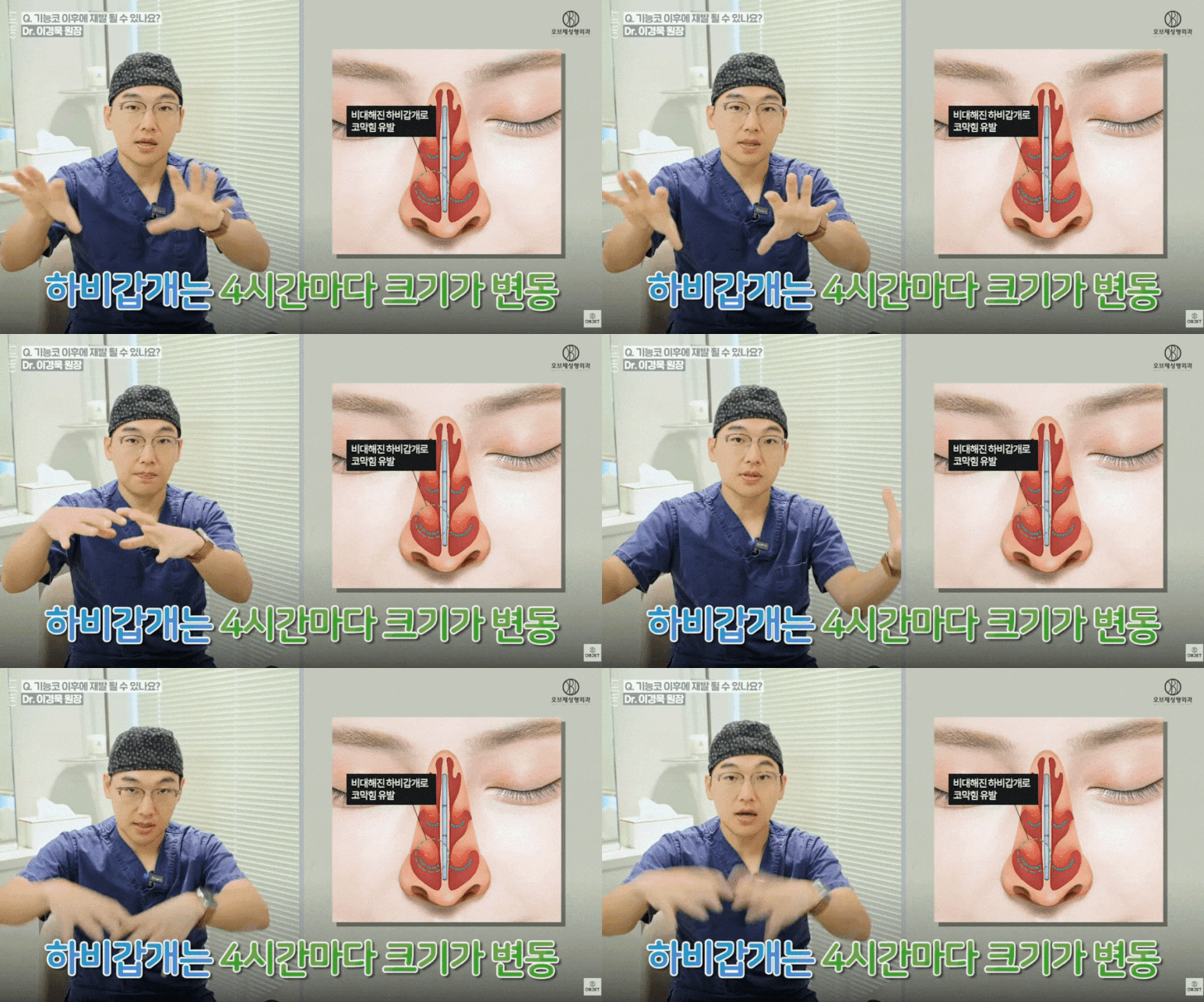
This is a phenomenon in which the turbinates on both sides alternately swell and shrink in a cycle of about four hours.
It is the body’s way of giving the tissue inside one nostril a brief rest.
Because this cycle exists, if the turbinate happens to be in a shrunken state at the time of the examination,
an image may be taken that makes it look less swollen than it actually is.
That is why the decision should not be made based on CT images alone.
It is necessary to look at the endoscopic exam and the clinical findings together,
and then decide on the surgical direction after taking the nasal cycle into account.
Even so, if some time passes after surgery and the inferior turbinate becomes larger again,
patients may feel the same kind of congestion as before,
which can lead them to wonder whether the structure has changed.
In some cases, the inferior turbinate does become slightly larger again.
At that point, the option that may seem most obvious is to “cut out a lot again.”
However, if too much of the inferior turbinate is removed,
a condition called empty nose syndrome may occur,
where air passes through too easily and discomfort such as a sensation of an overly open nose and long-lasting dryness can remain.
For that reason, instead of removing a large amount of tissue,
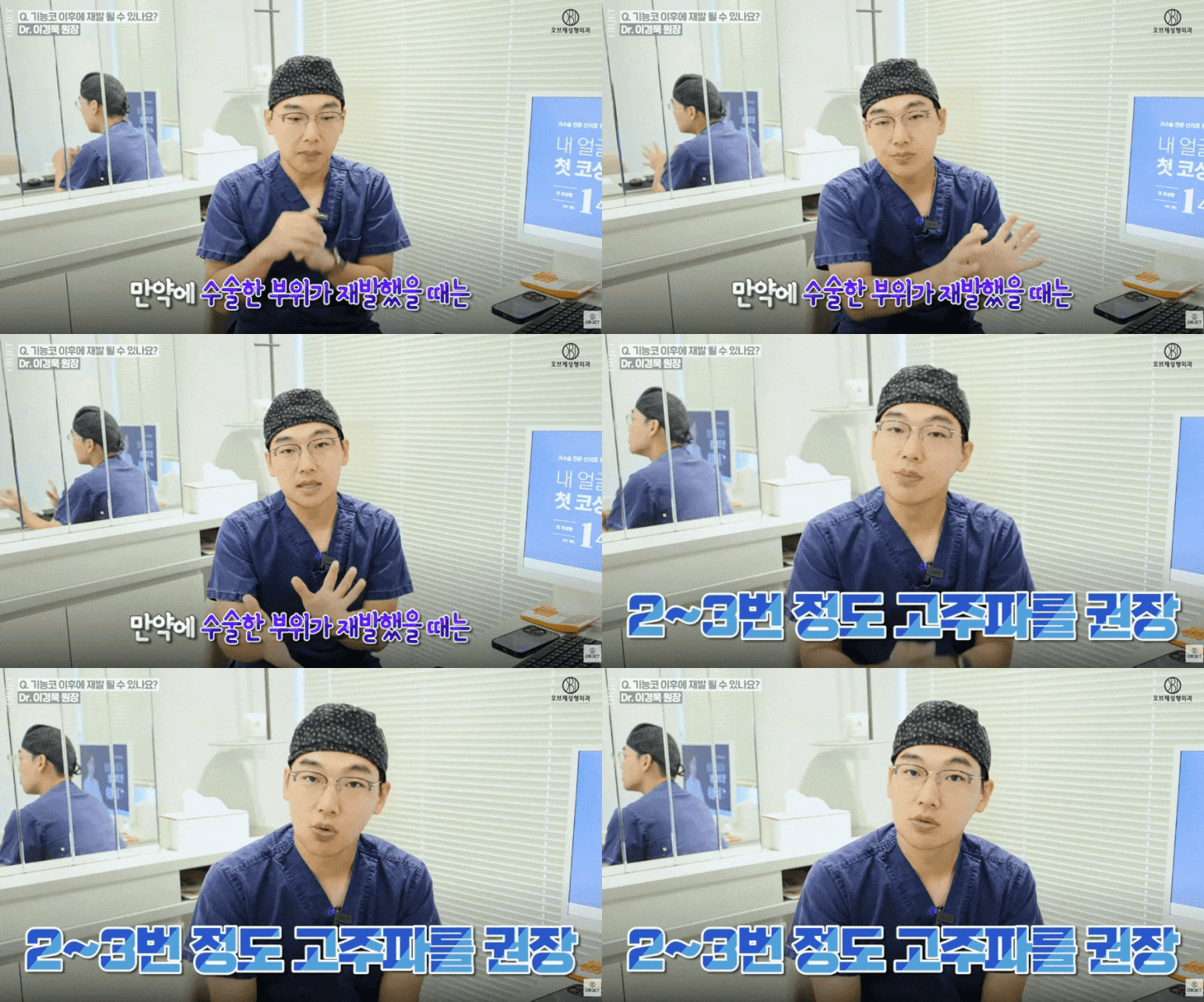
some cases consider a method that uses radiofrequency to gradually reduce the internal tissue.
When recurrence-like symptoms are felt, this approach involves dividing radiofrequency treatment into about one to three sessions
and reducing the tissue little by little.
The inferior turbinate is not tissue to be removed completely;
it is more accurate to think of it as tissue whose size and function must be adjusted together.
I want the results to last a long time!
Remember the “3 months”
The internal structure of the nose is not completed the moment surgery ends;
it settles into place over time.
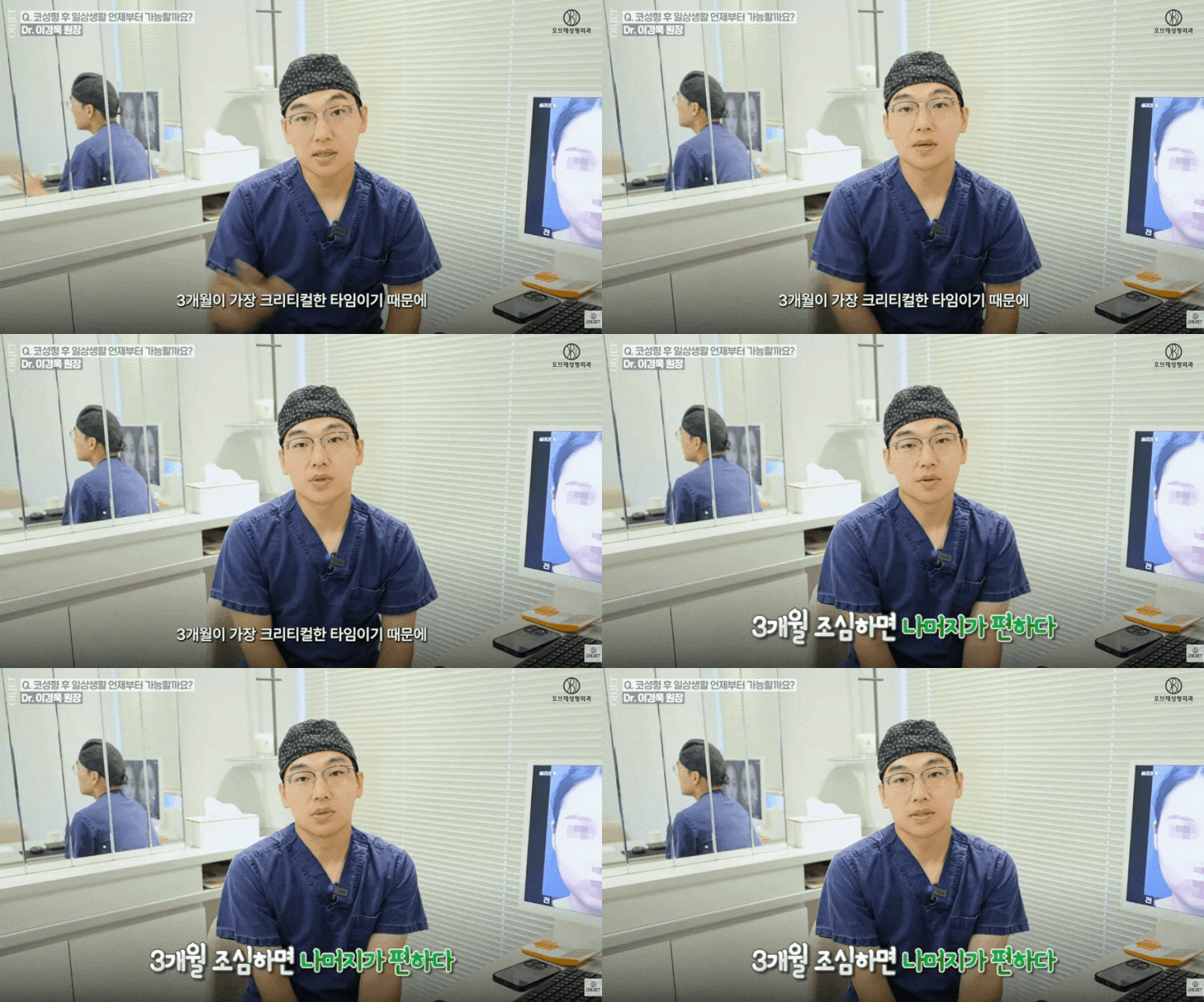
That is why, depending on how you spend the first three months after functional rhinoplasty,
the results may feel different even if the same surgery was performed.
Even when bleeding is controlled during surgery,
the injured blood vessels are not completely eliminated;
it is closer to sealing the openings of the vessels.
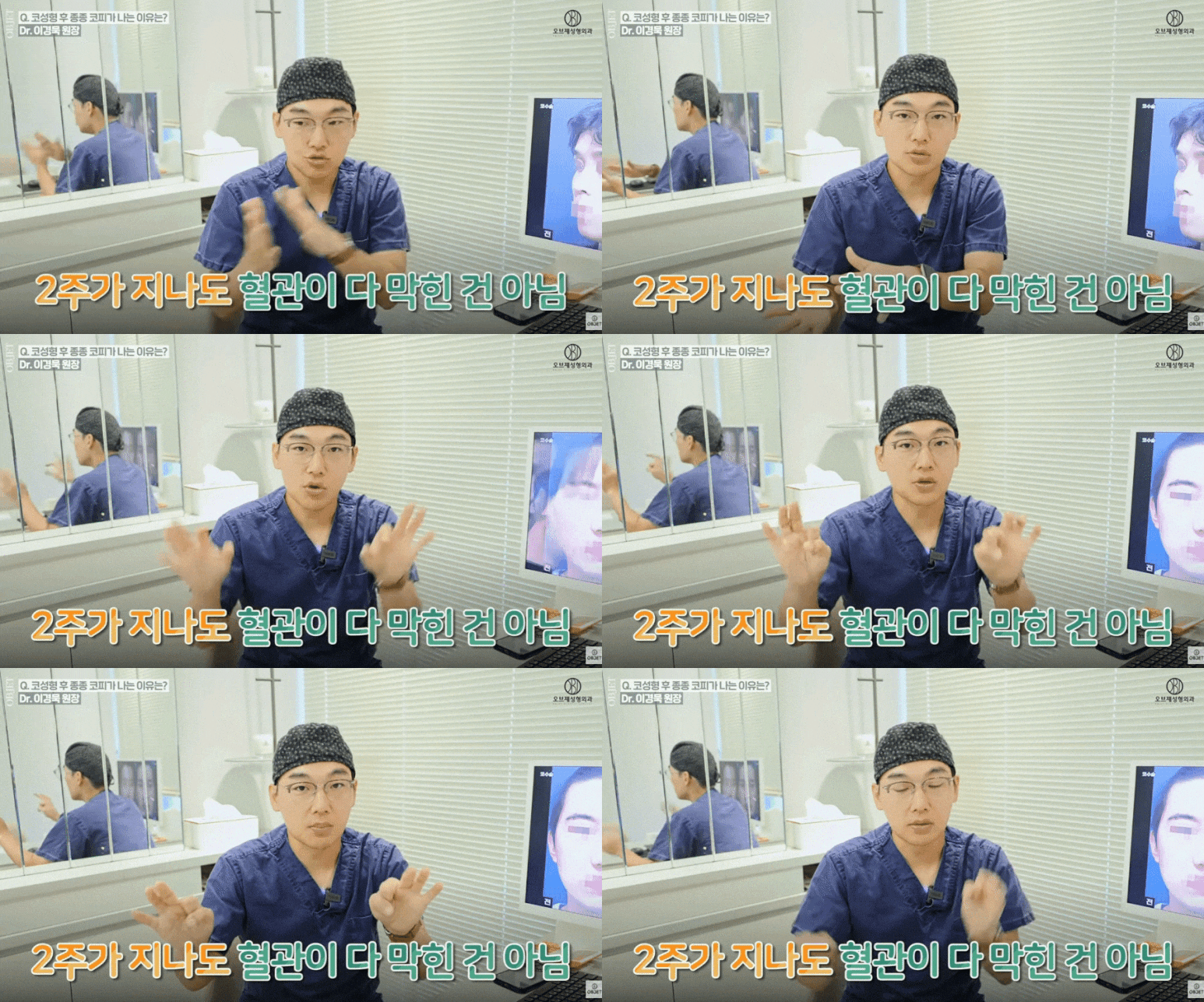
This means that even after two weeks,
the blood vessels have not fully returned to their original state.
If you apply strong pressure to the face during this period,
if external pressure is applied, such as during water activities,
or if the inside of the nose becomes severely dry,
the sealed vessel openings can reopen and lead to bleeding.
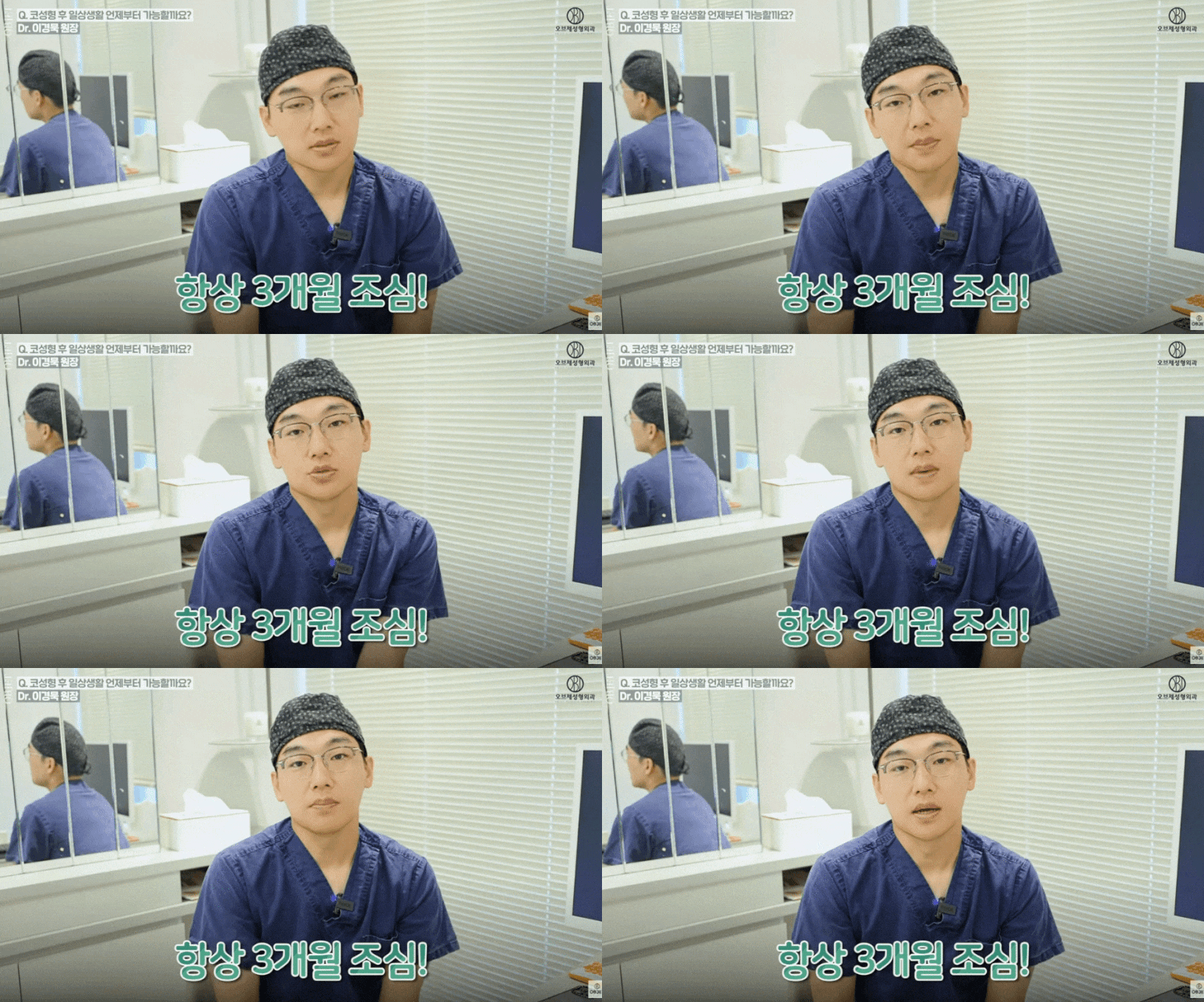
So the first three months are an important recovery period in which
the tissue inside the nose settles,
the blood vessels stabilize,
and the structure hardens in place.
Because small stimuli during this period can lead to structural changes or bleeding,
if you pay careful attention to management for three months,
recovery afterward will proceed much more smoothly.
Today, we looked at
what structural causes can make someone feel that recurrence has occurred after functional rhinoplasty,
and what diagnosis and preparation are needed to maintain results for a long time.
In the end, the key to situations that feel like recurrence
is “how accurately the diagnosis was made before surgery,
and how well the structure was corrected to fit it.”
Whether the deeper septal structure was checked,
and whether the nasal cycle and the condition of the inferior turbinates were considered
are factors that determine how long the results last.
Director Lee Kyung-muk of Obje Plastic Surgery
uses CT images and endoscopic examinations
to carefully check the direction of septal deviation
and the condition of the inferior turbinates,
and to determine in advance the correction plan for the deeper internal nasal structure.
In addition, rather than a method that removes a large amount of the inferior turbinate,
we also use a modulation approach with radiofrequency
to reduce the likelihood of lingering discomfort such as empty nose syndrome.
If you are worried about recurrence after functional rhinoplasty,
we recommend first checking, through CT and endoscopy,
what type your current nose condition is closest to.
This has been Obje Plastic Surgery.
Thank you.
<🔽🔽Recommended video to watch together🔽🔽>
| Consultation and inquiries for rhinoplasty |
|---|
| Quick phone consultation |
| Kakao convenient consultation |
-
This post is medical information written by Obje Plastic Surgery Clinic in compliance with the Medical Advertising Act.
-
Treatment effects may vary depending on the individual, and side effects may occur.
We recommend that you fully consult with medical staff in advance before deciding on any procedure.