Don’t Overlook the Columella in Tip Rhinoplasty!
A Summary by Dr. Lee Kyung-mook

Hello.
This is 오브제성형외과.
When researching tip rhinoplasty,
you naturally learn about
ways to raise the nasal tip
and refine its shape.
However, when you place
photos of the results side by side
and compare them,
some noses look natural
and sophisticated,
while others may feel
somewhat awkward.
At the heart of this difference
is the “columella.”

If you focus only on the nasal tip
and overlook the design of this area,
the side profile may look awkward,
or the nose may appear long,
giving the face a horse-like impression.
So today, we will explain
the columella in rhinoplasty
step by step, in a way that is easy
even for those encountering it
for the first time.
What exactly is the columella,
why should it be considered
together with tip rhinoplasty,
and how does its shape affect
the overall impression?
By reading through this carefully,
you will be able to take away
the key points to check
before surgery.
What Is the Columella?
Why Is It Important? <Key Summary>
The columella is the column-like structure
that vertically supports the area
between the nostrils.
Its medical term is
“columella.”
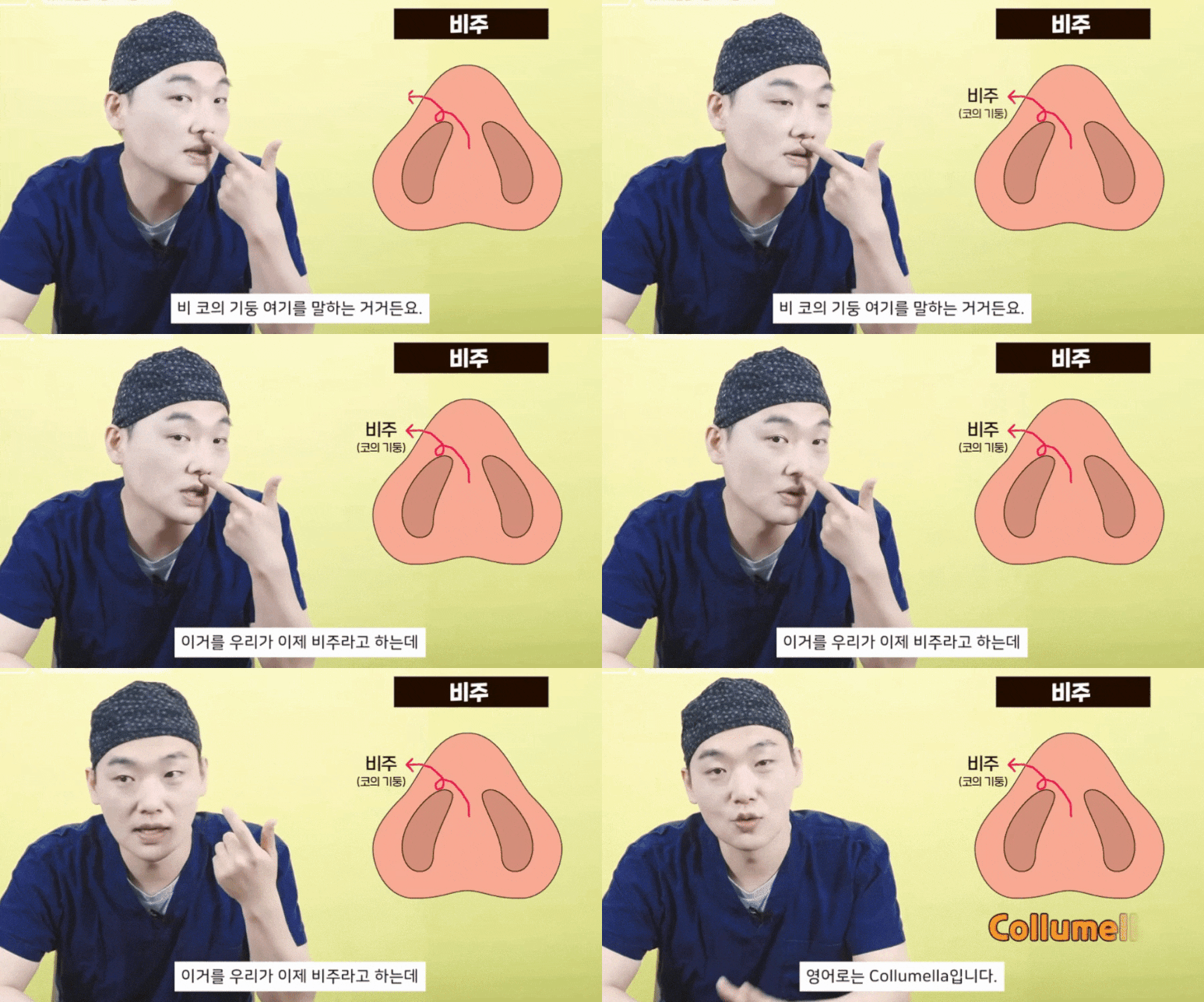
When looking at the nose from the front,
it is not particularly noticeable,
but its presence becomes much more apparent
from the side or when viewing the nose
slightly from below.
The length and degree of exposure
of this column influence the impression
of the entire nose.
A balanced appearance is generally seen
when the columella extends
slightly below the nostril wings.
If it is positioned too far inside
the nostril wings,
the nostrils may be clearly visible
from the front,
or the nasal tip may look congested.

Conversely, if it extends
too far below the nostril wings,
the nose may look long
and give a horse-like impression.
Therefore, if raising the nasal tip
and adjusting the position
of this column are not carried out together,
the tip may be raised,
but the side line may look awkward
or the nostril shape may appear distorted.
This is why the columella
should not be overlooked
in rhinoplasty.
The “Real” Reasons the Columella
May Look Long or Short
The shape and position
of the columella vary from person to person.
Even if the nasal tips look similar,
the impression of the side profile
can differ completely depending on
where this area is positioned.
First, there is a shape
in which the columella appears
to extend far below the nostril wings.
There are two main causes.
The first is when the septal cartilage,
which forms the central wall inside the nose,
extends farther downward than usual.
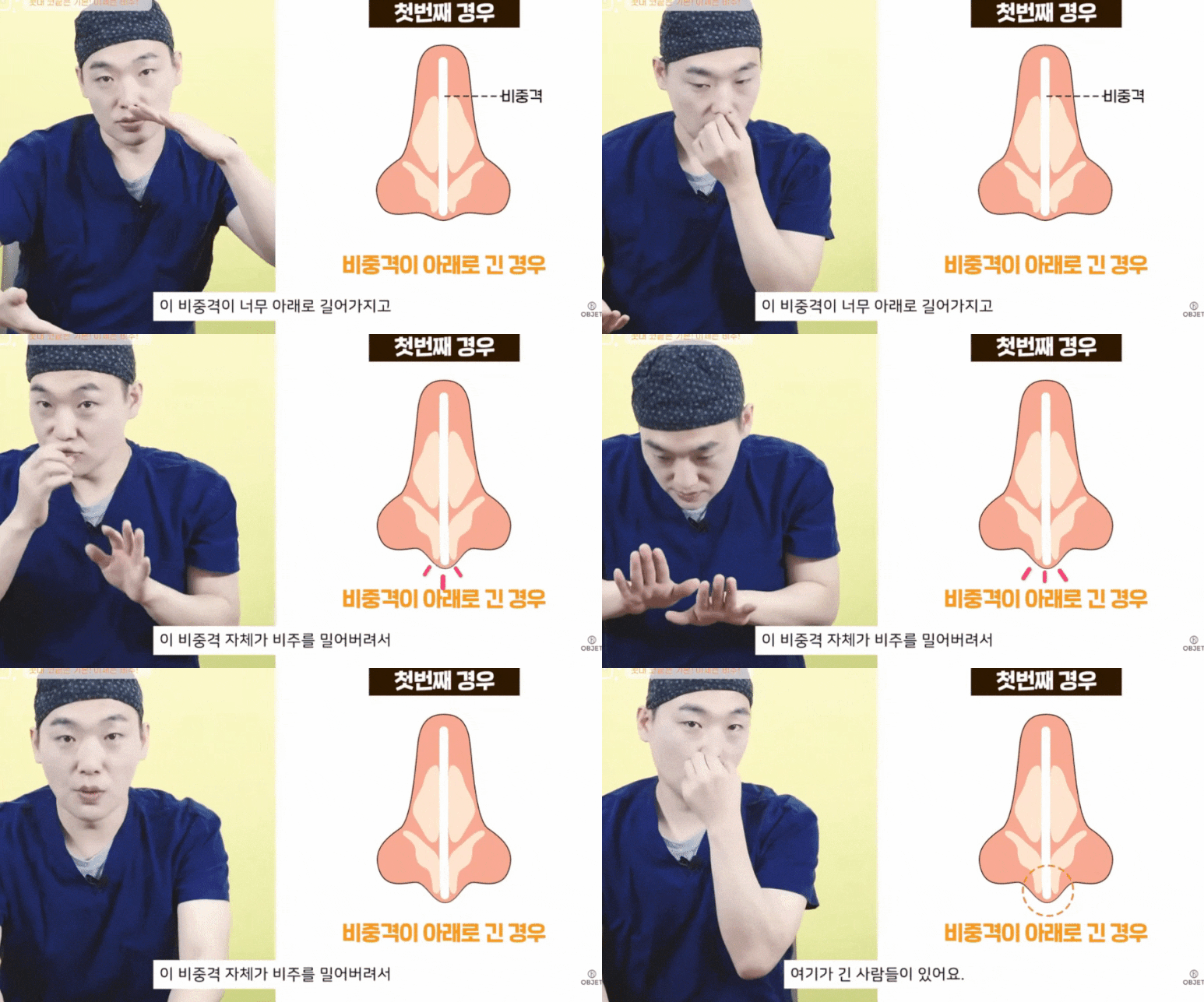
Because the septum supports the columella
as if pushing it downward,
the nasal tip may look heavy and drooping,
and the column of the nose
may feel firm to the touch.
Since the cause is relatively clear
in this case,
the approach is to trim only
the portion extending downward
from the septum and restore balance.
The second is when the cartilage
located inside the columella
has drooped.
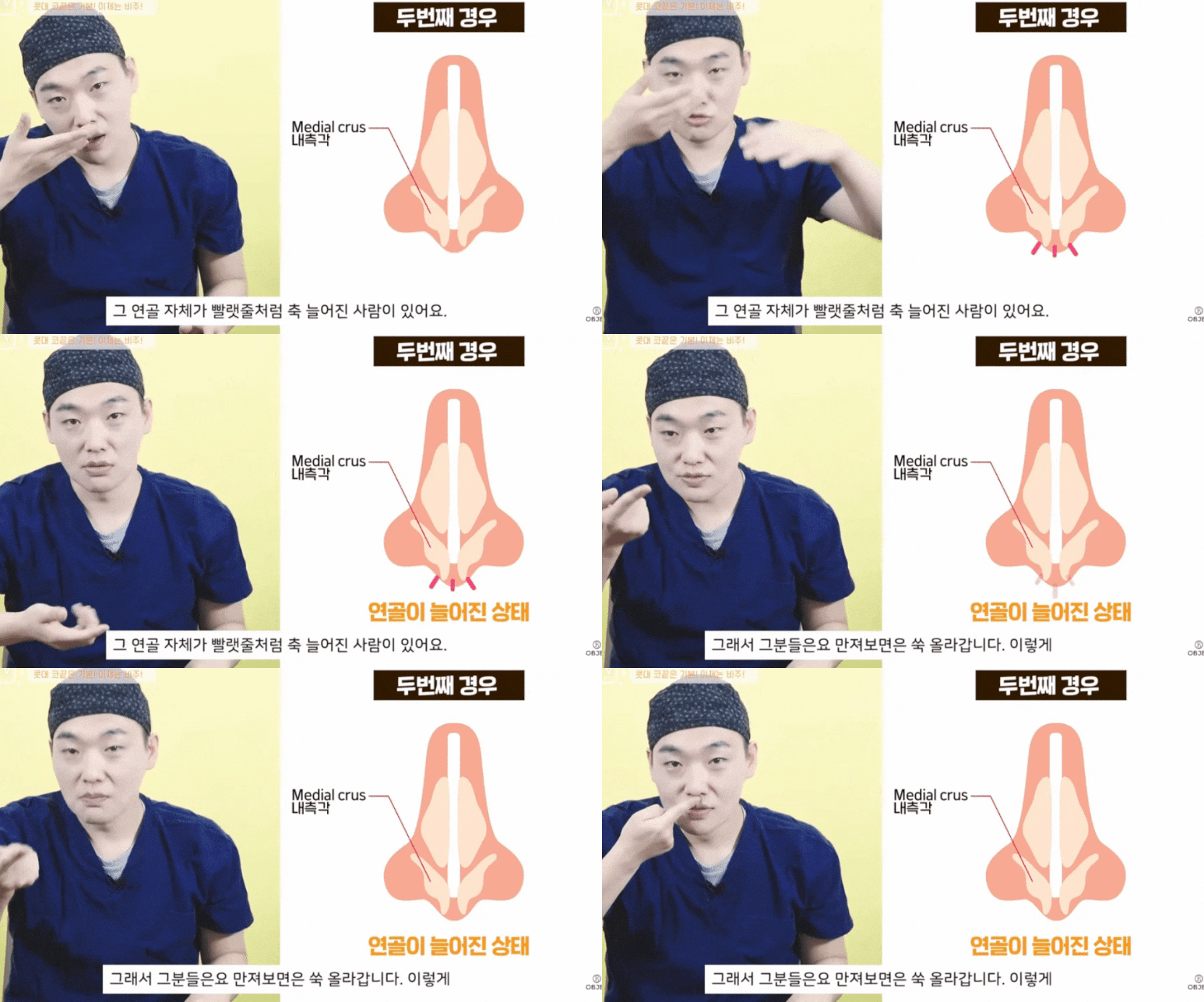
The septum itself may be of normal length,
but the cartilage that should support
the nasal column has stretched downward
like a clothesline,
becoming exposed below.
In this case, the drooping cartilage
must be secured again toward the septum,
and the inner mucosal line must also be refined,
which can make correction
more technically challenging.
Conversely, there are also cases
where the cartilage is hidden
inside the nostril wings.
When viewed from the front,
the nostrils are barely visible,
and the nasal tip may look heavy
and congested.
This shape is mainly seen when
the septum itself is short
and lacks sufficient supporting strength,
when the columellar cartilage
is narrow and lacks elasticity,
or when the inner mucosa
of the nasal column is pulled tightly.
Even noses that look similarly
“retracted” may require
completely different corrections
depending on the cause.
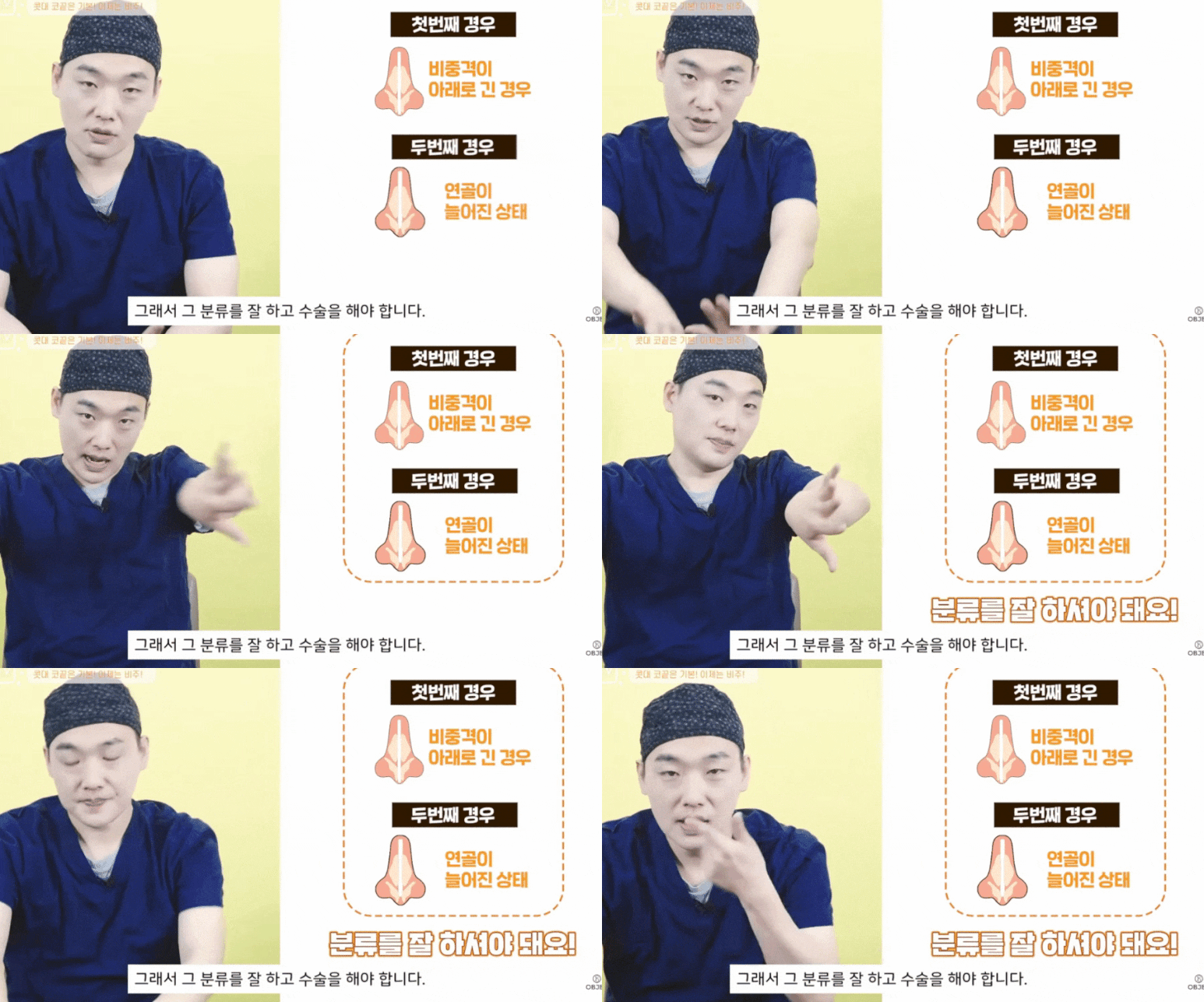
Why Do You Need to Know the Cause?
Because the Surgical Method Differs
For a nose in which the columella
appears too long,
when performing tip rhinoplasty,
the surgeon accurately identifies
whether the cause lies in the septal cartilage
or the columellar cartilage
and corrects the relevant area together.
If the septum is elongated,
only the portion extending too far downward
is carefully trimmed
so that it rises to a natural position.
If the columellar cartilage has drooped,
the key step is to firmly secure
the drooping cartilage higher up.
Conversely, for a nose in which
the columella appears recessed,
the approach is to supplement
the insufficient support.
A representative method
is septal extension grafting.

When the column itself that supports
the nasal tip is short,
the septal cartilage is extended
as if lengthening it,
creating a naturally downward-extending line.
If the columellar cartilage is narrow and weak,
thin cartilage may be harvested from the ear,
or a portion of the septal cartilage may be used
and grafted into this area.
Adding width and thickness to the cartilage
creates a more stable,
fuller column-like structure.

If the inner mucosa of the nasal column
is also tight,
a composite graft using both cartilage
and skin may be considered.
What is important here is that
raising the nasal tip and designing
the columella should not be treated
as separate tasks.
They need to be planned together
within the same overall design.
It is helpful to understand
tip rhinoplasty not as surgery
that adjusts height alone,
but as a process that also designs
the length, angle, and degree of exposure
of the columella.
Today, we looked at the definition
of this area, which determines
the shape of the nasal tip,
as well as the reasons it may appear
long or short.
We also reviewed the correction approach
that varies depending on the cause.
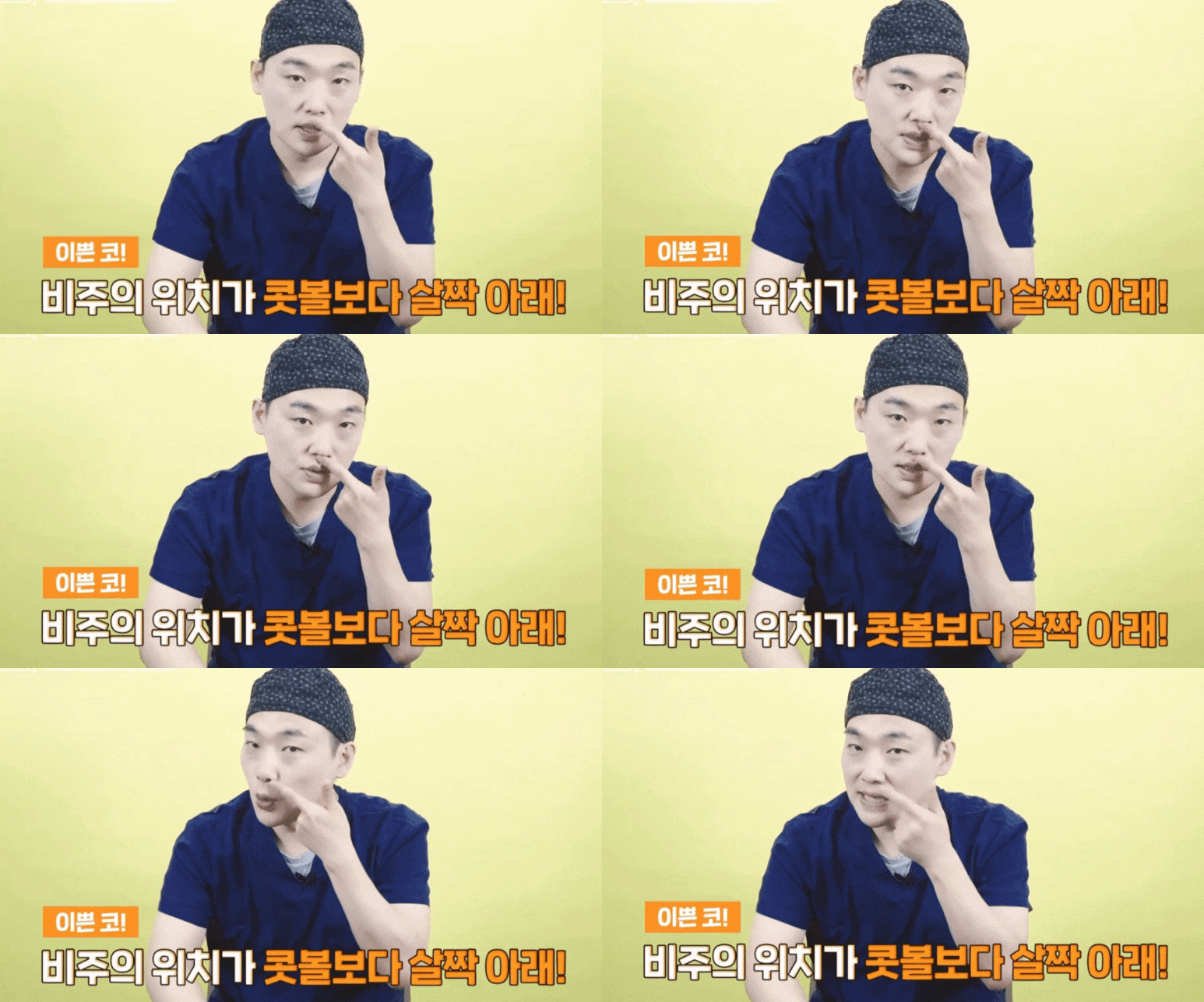
The columella influences the impression
more from the side and from below
than from the front,
so it is important to check it thoroughly
before surgery.
Dr. Lee Kyung-mook of 오브제성형외과
has long maintained a treatment approach
in which osteotomy or nasal packing
is not automatically used as the standard
for a first rhinoplasty.
Instead, the design that places
the least burden is considered first,
based on the patient’s nasal structure
and recovery circumstances.

The columella is also not assessed
by looking at nasal-tip height alone.
The angle of the side line,
the proportions relative to the nostril wings,
and the degree to which the nostrils are visible
are all calculated together
within a single overall view
when planning surgery.
If the shape of the nasal column
makes the nasal-tip impression look awkward,
or if you are dissatisfied with your side profile,
we recommend first consulting
with a medical professional
to determine which type
your nasal shape most closely resembles
and what surgical approach suits its cause.
This has been 오브제성형외과.
Thank you.
<🔽🔽Recommended Video to Watch Together🔽🔽>
| Rhinoplasty Consultation and Inquiries |
|---|
| Quick consultation by phone |
| Convenient Kakao consultation |
-
This post contains medical information prepared by 오브제성형외과의원 in compliance with the Medical Advertising Act.
-
The effects of the procedure may vary from person to person, and side effects may occur.
We recommend that you make a decision about the procedure only after having a thorough consultation with a medical professional in advance.