Hello,
The beginning of natural beauty,
365 days a year in operation
Bellevue Clinic.
Fine dust caution,
How to reduce its harmful effects
on the skin
These days, fine dust advisories have been staying at the "bad" level day after day. Every time I check the weather forecast and pack a mask before going out, I feel worried. That is because I know how bad it is for your health. Ultrafine dust is even worse. It feels as if just breathing is enough to shorten your lifespan on its own. On severe days, your throat hurts, sometimes your eyes hurt, and your skin suddenly gets worse. Today, let’s look at the harmful effects of fine dust on the skin and ways to minimize the damage as much as possible.

Various facts about fine dust
Fine dust refers to dust particles so small that they are invisible to the naked eye. Depending on particle size, particles with a diameter of 10 ㎛ or less (10 ㎛ is 0.001 cm) are called fine dust (PM10), and those with a diameter of 2.5 ㎛ or less are called ultrafine dust (PM2.5). Because these particles are extremely small, they can reach the ends of the alveoli when we breathe and can immediately enter the bloodstream.
Fine dust is classified by source into natural and artificial types, with artificial sources making up the majority. Among fine dust particles, PM2.5, which has a greater impact on health, is mainly generated as a secondary pollutant formed when primary pollutants emitted through combustion from cars, thermal power plants, and similar sources react with other substances in the air. It is mainly composed of sulfate, nitrate, organic carbon, and similar components.
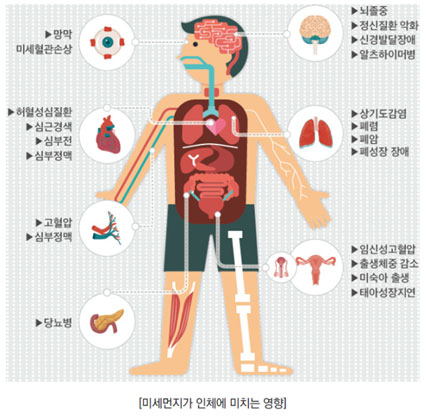
Exposure to fine dust can cause or worsen heart- and lung-related diseases and, as a result, may contribute to increased mortality. In the short term, it worsens symptoms such as asthma attacks, acute bronchitis, and arrhythmia, and prolonged exposure in areas with high fine dust concentrations increases the risk of cardiovascular disease, respiratory disease, and lung cancer.
When fine dust enters the body, it supplies reactive oxygen species to various organs, accelerating cellular aging. It also promotes inflammatory responses, causing tissue damage. Because these effects act throughout the body via the bloodstream, fine dust does not affect only the respiratory system but can influence various organs throughout the body.
https://www.kdca.go.kr/contents.es?mid=a20205070400
 https://www.kdca.go.kr/contents.es?mid=a20205070400
A research team led by Professor Jo So-yeon of Boryeong Hospital’s Dermatology Department was the first to reveal through research that fine dust penetrates deep into the skin and causes inflammation.
The research team conducted laboratory and animal experiments using fine dust with particle sizes of 10 ㎛ or less collected in Seoul during winter and found that fine dust can directly harm damaged skin in both humans and animals.
In the laboratory experiment, when fine dust was applied to cultured human epidermal keratinocytes, cytotoxicity appeared in proportion to the dose, and skin inflammation increased. It was also observed that reactive oxygen species that damage cells were generated.
When human keratinocytes were observed under an electron microscope, dust particles were found inside the cells, confirming that fine dust had directly penetrated the skin.
In experiments in which laboratory mice were divided into a group with a normal skin barrier and a group with a damaged skin barrier and then exposed to fine dust, fine dust was observed in the skin follicles of both groups after exposure.
In particular, when the skin barrier was damaged, fine dust was actually observed passing through keratinocytes and entering the epidermis, and electron microscope observation confirmed that fine dust particles had penetrated and passed into the skin.
To examine the effects of repeated exposure to fine dust, fine dust was applied to the skin of laboratory mice 10 times and the tissue was observed. The results showed thickening of the epidermis and infiltration of inflammatory cells deep into the dermis. However, when an antioxidant was applied to the skin, the inflammation was analyzed to have been reduced.
This study is the first to directly confirm the effects of exposure to fine dust, which had been suspected as a cause of skin disease. It is meaningful in that it medically and scientifically demonstrated that fine dust penetrates the dermis of damaged skin and causes inflammation.
Professor Jo So-yeon said, "Even when the skin barrier is normal, fine dust enters even into the hair follicles, so when fine dust levels are high, you should shower every day to wash it off thoroughly. In particular, people with atopic dermatitis, diabetes, and older adults, whose skin barrier is weakened, should pay special attention to exposure to fine dust."
Source: Health Chosun (http://www.k-health.com)
When will we be free from fine dust?
Unfortunately, it seems difficult for us to be completely free from fine dust and breathe freely without worry for the time being. If anything, it seems likely to get worse rather than better. Just looking at how fine dust, which used to be severe only in warm seasons like spring a few years ago, is now continuing day after day even in winter shows this. During periods when a fine dust or ultrafine dust advisory appears in the weather forecast, it is best for those in the "sensitive group" for fine dust to avoid going out if possible. This includes infants, older adults, pregnant women, and people with allergic conditions such as atopic dermatitis, asthma, and rhinitis.
Sensitive groups for fine dust
Sensitive groups such as pregnant women, infants, children, older adults, and people with cardiovascular, cerebrovascular, respiratory, or allergic diseases are at especially higher risk from fine dust exposure. Fine dust inhaled by pregnant women is associated not only with fetal growth and development but also with premature birth. When exercising or increasing physical activity, people breathe faster and deeper, inhaling more fine dust particles. Infants and children are more vulnerable to fine dust because their lungs are not fully developed, they are immature, and they tend to spend more time outdoors or be more physically active. Older adults may also be more vulnerable because aging weakens the immune system and they are more likely to have heart and lung disease even if it has not yet been diagnosed. People with cardiovascular, cerebrovascular, respiratory, or allergic diseases need extra caution because their existing symptoms can worsen due to fine dust.
https://www.kdca.go.kr/contents.es?mid=a20205070400

Preventing skin worsening and aging from fine dust
▶ The most important thing is thorough cleansing and a full-body shower after going out
-
Remove fine dust attached to the skin immediately after going out by washing your face and showering
-
Use a double-cleansing method: first cleanse with an oil cleanser, then do a second cleanse with a foam cleanser
-
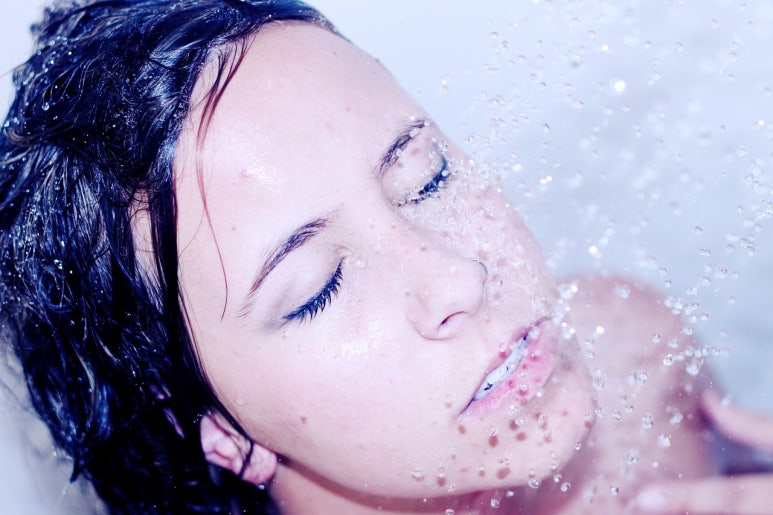
Shower every day: Showering every day plays an important role in preventing skin aging caused by fine dust. Harmful substances in fine dust can trigger skin inflammation and allergic reactions, and simply removing them can help maintain skin health. Fine dust is very small, about 1/5 the size of a pore, so it easily accumulates in pores; regular showers remove pollutants that have built up in pores and help prevent dermatitis and acne. Fine dust also promotes the generation of reactive oxygen species, which destroy skin collagen and increase wrinkles. Regular showers remove fine dust and reduce the generation of reactive oxygen species. Since you need to remove fine dust attached not only to the face but also to the hair and the entire body to maintain overall skin health, make it a habit to shower every evening, right after returning from outside. It is an important habit for preventing skin aging caused by fine dust and maintaining overall skin health.
▶ After cleansing, be sure to strengthen the skin barrier
-
Maintain skin barrier function by using moisturizers
-
Choose products containing ceramides, hyaluronic acid, and similar ingredients
▶ Antioxidant care
▶ Sun protection
To prevent accelerated skin aging caused by the synergistic effect of fine dust and ultraviolet rays, use sunscreen throughout the year
▶ Use plant extracts
Plant extracts such as Afzelin have been shown to suppress oxidative stress and inflammatory responses in the skin caused by fine dust (https://www.medifonews.com/news/article.html?no=146207) - for reference only.
▶ Regular skin care
▶ Indoor air quality management
Lower indoor fine dust concentration by using an air purifier
I hope these care methods help prevent skin aging caused by fine dust and allow you to maintain healthy skin. They are not perfect, but they are the best we can do for now. Just as fish cannot live apart from water, we also cannot live without breathing. When fine dust is severe like it has been recently, those with weakened skin barriers should be especially careful. I hope today’s information was helpful as well. Build beautiful, healthy skin for a long time with Bellevue Clinic.
Your skin shows your life.
When you pay close attention to the signals your body and skin send, your body and skin will naturally become healthier and more beautiful. Bellevue Clinic will also help you maintain healthy, well-conditioned skin at all times. You are always welcome~! ^^
★ What are the benefits of choosing Bellevue Clinic?
- Personalized consultation
: We suggest the optimal procedure based on your skin condition.
- Experienced medical staff
: Our experienced medical staff performs safe and effective procedures.
: We provide beauty at an affordable price.
: You can visit conveniently even in a busy daily life.
<Bellevue Clinic 'Mark-Vu' diagnostic test>

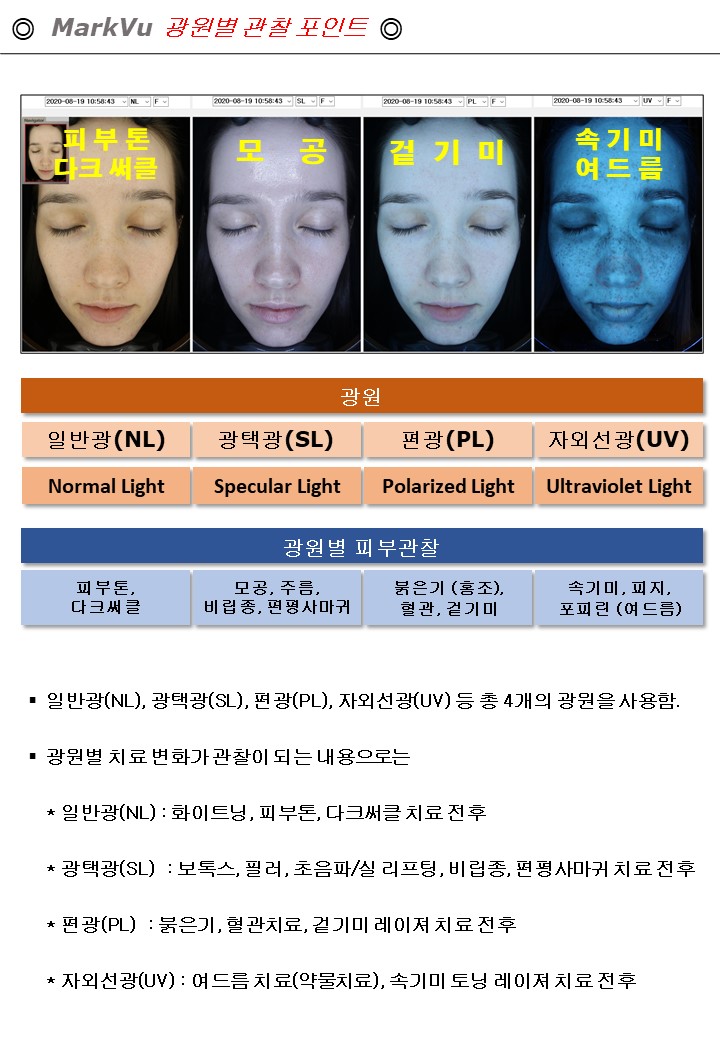
Bellevue Clinic provides a final diagnosis through the Mark-Vu skin diagnostic test by identifying various skin issues that are difficult to see with the naked eye, such as skin texture, pigmentation, pores, wrinkles, skin tone, dark circles, radiance, redness, melanin, sebum, and acne bacteria. Based on these results, we strive to provide the most effective procedure for each patient through detailed consultation. Thank you.
★ Visit Bellevue Clinic’s YouTube ★
★ Bellevue Clinic consultation inquiries ★



(To learn about each month’s events,
add Bellevue Clinic as a friend right now~^^)
★ Learn about Bellevue Clinic ★

<Medical guide & directions>


Your reasonable choice,
which will make you more beautiful today than yesterday!
'Bellevue Clinic at Gangnam Station'
Thank you for visiting.