Hello?
The start of natural beauty,
Open 365 days a year
this is 'Bellevue Clinic.'

Why Keloid Family History Is Inherited
Keloids are a phenomenon in which abnormally excessive scar tissue forms after skin damage. Genetic factors play a particularly important role here. The genetic characteristics of keloids have already been confirmed through several studies, and they show a higher incidence in certain ethnic groups and in those with a family history. Today, I’ll explain this in more detail.
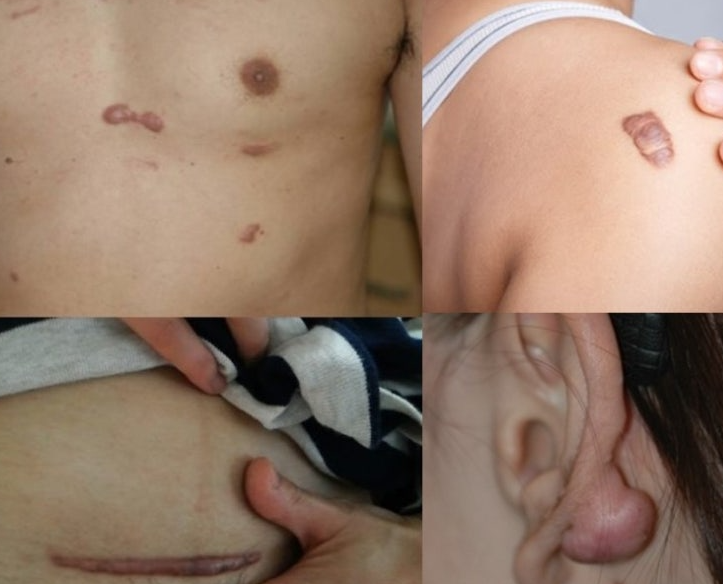
Keloid genetic predisposition is known to appear in about 15% of the total population. That’s a surprisingly high percentage, right? This suggests that keloid development involves mechanisms that cannot be explained by environmental factors alone. The fact that keloid incidence is higher among people of color, such as Asians and Black individuals, also shows that racial genetic factors play an important role. In addition to keloids, there are several skin diseases that show genetic characteristics. A brief look at them is as follows:
-
Ichthyosis: This is a group of skin disorders caused by genetic factors. In most cases, ichthyosis is inherited in an autosomal dominant pattern, and mutations in the filaggrin (FLG) gene are known to be the cause.
-
Atopic dermatitis: Like ichthyosis, it is associated with mutations in the FLG gene and often shows a family history.
-
Albinism: A hereditary disorder in which the skin becomes partially or generally white.
-
Epidermolysis bullosa: A hereditary skin disorder in which blisters form easily.
-
Neurofibroma: A hereditary disorder that affects not only the skin but also nerve tissue.
-
Tuberous sclerosis: A hereditary disorder in which benign tumors develop in the skin and other organs.
These conditions, like keloids, are strongly influenced by genetic factors and often show a family history, though the specific inheritance patterns and associated genes can differ from disease to disease. Genes are diverse.
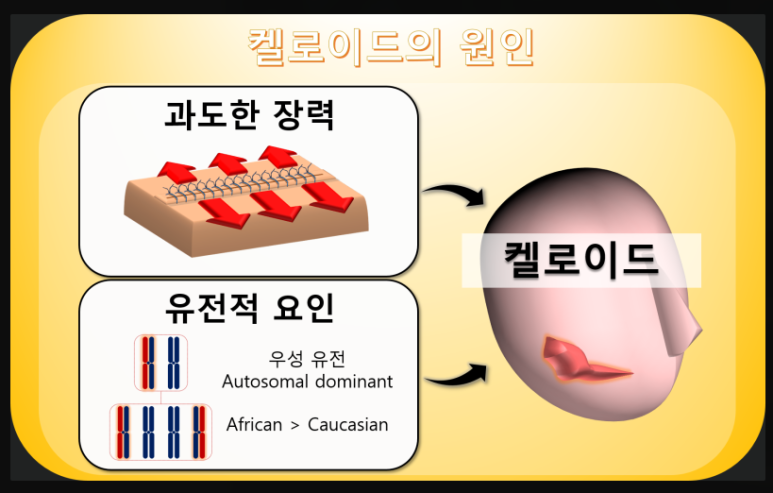
The genetic characteristics of keloids are thought to follow a polygenic inheritance pattern. Simply put, this means that keloid development is influenced by complex interactions among multiple genes rather than a single gene. These genetic factors mainly affect various biological pathways involved in wound healing, such as collagen production and breakdown, cell proliferation, and inflammatory responses.
One of the main genetic factors involved in keloid formation is genes related to collagen metabolism. In normal wound healing, the balance between type I collagen and type III collagen is important. In keloids, this balance is disrupted, and the proportion of type III collagen is known to become abnormally high. Abnormal collagen metabolism results from differences in the activity of enzymes involved in collagen synthesis and breakdown, and the following genes play important roles:
-
COL1A1 and COL1A2: These genes are involved in the production of type I collagen. In normal skin, type I collagen accounts for 80–90%.
-
COL3A1: This gene produces type III collagen. In normal skin, it accounts for 10–20%, but the proportion increases in people with keloids. Type III collagen mainly plays an important role in the early stages of wound healing, and is involved in new connective tissue formation and tissue regeneration. It is found in the skin, blood vessel walls, lungs, uterus, and more, and plays an especially important role in maintaining the elasticity and strength of blood vessels and internal organs. The COL3A1 gene plays a key role in maintaining the structural stability and function of connective tissue, and mutations are associated with connective tissue disorders. This gene is an important research target not only in scar-forming disorders such as keloids, but also in serious diseases such as vascular Ehlers-Danlos syndrome.
-
MMP (Matrix Metalloproteinase) gene family: These genes produce enzymes that break down collagen. They include MMP-1, MMP-2, and MMP-9.
-
TIMP (Tissue Inhibitors of Metalloproteinases) gene family: These genes produce proteins that inhibit MMP activity.
-
TGF-β (Transforming Growth Factor-β)-related genes: TGF-β is an important growth factor that promotes collagen production.
-
CTGF (Connective Tissue Growth Factor) gene: This gene produces another important factor that promotes collagen production.

Problems in the expression or mutations of these genes can affect keloid formation. For example, overexpression of genes that promote collagen production or decreased activity of genes responsible for collagen breakdown can further promote keloid formation.
Summary -> For people born with these genetic characteristics of keloids, when the skin is injured, collagen fibers begin to form excessive tissue due to genetic factors and other influences, and the scar tissue gradually continues to grow over several weeks to years beyond the original size of the initial skin injury. It can be seen as one of the skin’s unnecessary (?) hyperreactive responses.
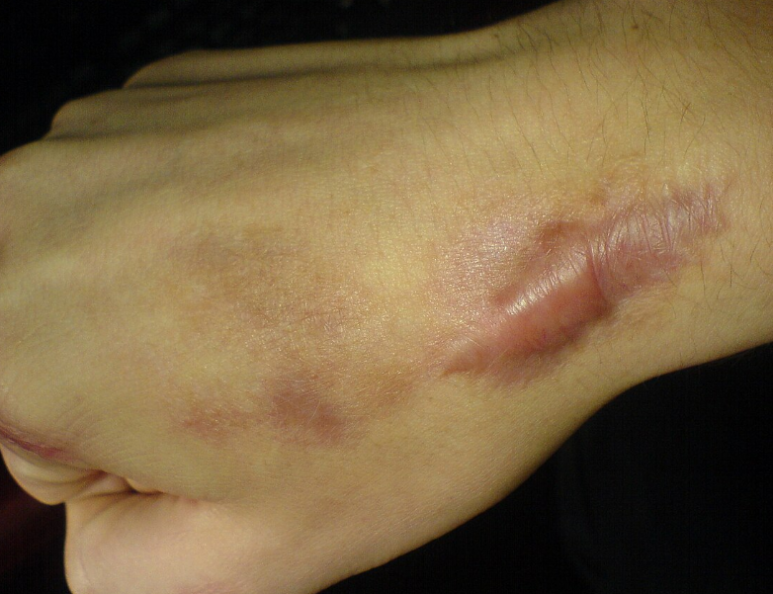
At present, several ways to use genes related to collagen metabolism in keloid treatment are emerging. For example....
-
Gene therapy: siRNA can be used to suppress the expression of specific genes involved in keloid formation. This can be used as an efficient gene knockdown method.
-
Growth factor regulation: Methods to regulate growth factors such as TGF-beta are being studied. These growth factors play an important role in promoting collagen production.
-
Activation of collagen-degrading enzymes: By increasing the activity of MMP (Matrix Metalloproteinase) genes, excessive collagen accumulation can be reduced.
-
Stem cell therapy: Mesenchymal stem cell therapy is being studied as a new method, and it may help regulate collagen metabolism.
-
Drug development: New drugs targeting genes related to collagen metabolism can be developed. For example, calcium channel blockers and retinoids are being studied.
These methods are still in the experimental stage or require further research. At present, traditional methods such as steroid injections, radiation therapy, and laser treatment are mainly used. They are not perfect, but they can provide some relief, so please keep them in mind.
Also, genes related to inflammatory responses play an important role in keloids. An appropriate inflammatory response is essential during wound healing, but excessive inflammation can promote keloid formation. In other words, gene variants that affect the production or reactivity of certain inflammatory mediators can increase the risk of keloid development. Genes related to cell proliferation also play an important role in keloid formation. Keloids are characterized by excessive cell proliferation beyond the normal wound healing process. This is related to gene variants involved in cell-cycle regulation and growth factor signaling.

Comparison with Hypertrophic Scars
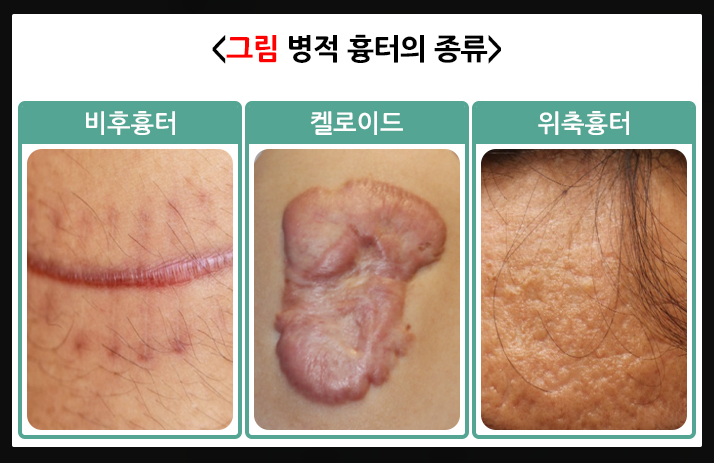
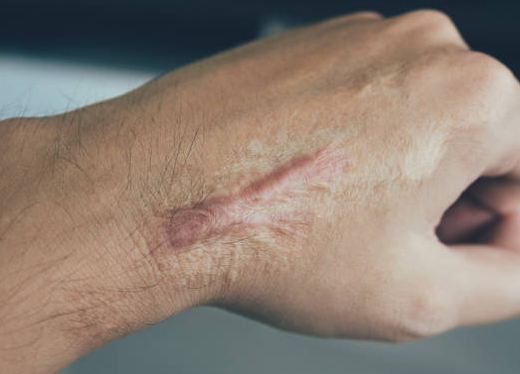
Keloids and hypertrophic scars are often compared. We often get questions from people whose scars became severe after incision surgery. Since hypertrophic scars and keloids look very similar in form, many people find them confusing. You might think hypertrophic scars can happen to anyone, so there may be no family history. However, heredity is not completely unrelated. For reference, the factors that promote hypertrophic scar development are as follows:
-
Tension at the wound site: The greater the tension applied to the skin, the higher the likelihood of hypertrophic scar formation. In particular, areas such as the wrist are constantly moving, so scars are more likely to form due to the pulling force.
-
Repeated irritation: If micro-injuries such as scratching or rubbing repeatedly occur at the wound site, the inflammatory response may persist and promote hypertrophic scar formation. It is better to minimize scratching and touching.
-
Delayed wound healing: If the inflammatory response is prolonged due to bacterial invasion or external irritation, the likelihood of hypertrophic scar formation increases.
-
Delayed epithelialization: If epithelialization of the wound is delayed, excess collagen may accumulate in the dermis, leading to hypertrophic scar formation.
-
Hormonal influence: Androgens are known to promote keloid formation.
-
Genetic factors: The incidence of hypertrophic scars is higher in certain ethnic groups (Asians and Africans), suggesting that genetic factors are also involved.
-
Location of the wound: Hypertrophic scars occur more easily in certain areas such as the chest, back, shoulders, ears, wrists, and ankles.
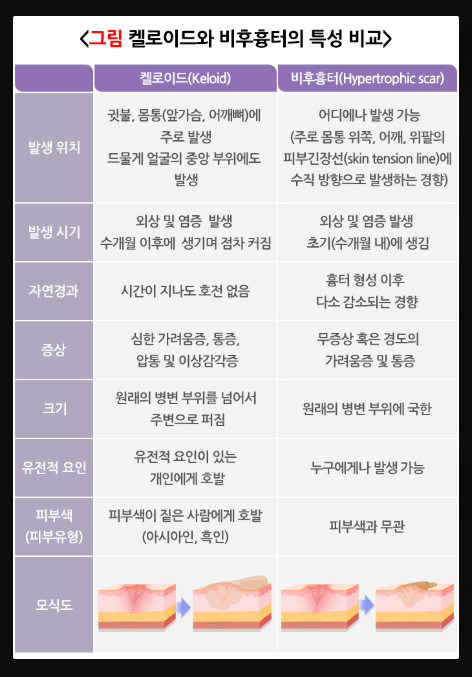
The hereditary nature of keloids is well confirmed through family history. The high frequency of keloids among family members of keloid patients supports the importance of genetic factors and means that the genes involved in keloid development are passed down through generations. However, keloids do not simply appear based only on the presence of genes. Interaction with environmental factors is also important.
In simple terms, even if someone is genetically at high risk for keloids, keloids may not develop if there is no skin injury. That is a very obvious point, but... still, understanding the genetic characteristics of keloids is important for prevention and treatment. People with a family history should try to minimize skin damage in daily life and receive appropriate early care when wounds occur.
In addition, understanding genetic factors can also help develop personalized treatments. Research on the genetic characteristics of keloids is still ongoing. With recent advances in genomics technology, more genetic factors involved in keloid development are expected to be identified.
Keloid inheritance shows a complex polygenic pattern rather than a simple single-gene disorder. The complex interaction of multiple genes involved in various biological processes such as collagen metabolism, inflammatory responses, and cell proliferation affects keloid development. These genetic factors interact with environmental factors to determine the risk of keloid formation. Understanding the genetic characteristics of keloids will be an important foundation for developing more effective prevention and treatment strategies in the future.
Bellevue Clinic
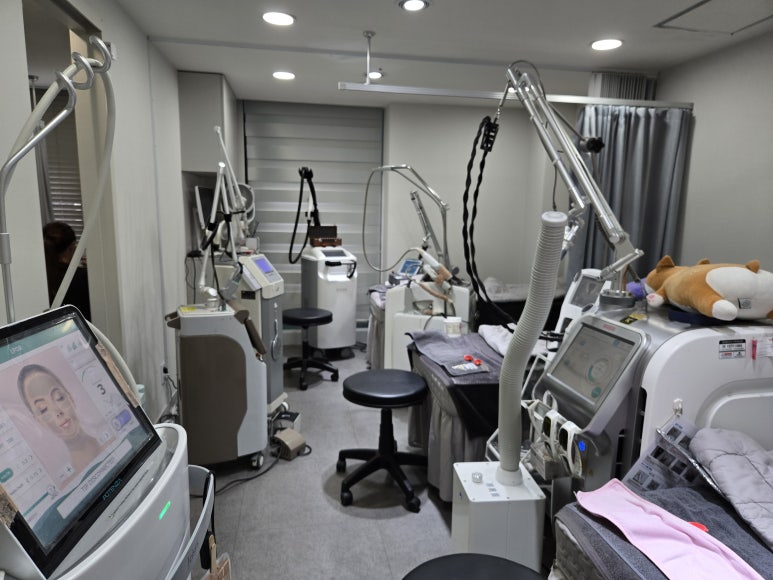
Gangnam Station Bellevue Clinic welcomes consultations and visits any time, 365 days a year.
Take the first step toward healthy skin today!
We provide evening consultations on weekdays,
and on Saturdays, Sundays, and public holidays,
we are open until 5:00 PM.
Thank you.
★ What are the benefits of coming to Bellevue Clinic?
-
Personalized consultation
After Mark-Vu imaging and diagnosis, we propose the optimal procedure based on your skin condition.
-
Experienced medical staff and genuine products used
Our highly experienced medical staff perform safe and effective procedures using genuine fillers, Botox, laser equipment, and more.
-
Reasonable pricing
We try to reduce the clinic’s profit as much as possible and provide beauty at an affordable price for our patients.
-
365 days / weekday evening consultations
Even on weekends and public holidays, visit at a time that is convenient for you in your busy schedule. Advance reservation is essential courtesy~!
<Bellevue Clinic 'Mark-Vu' Diagnostic Test>

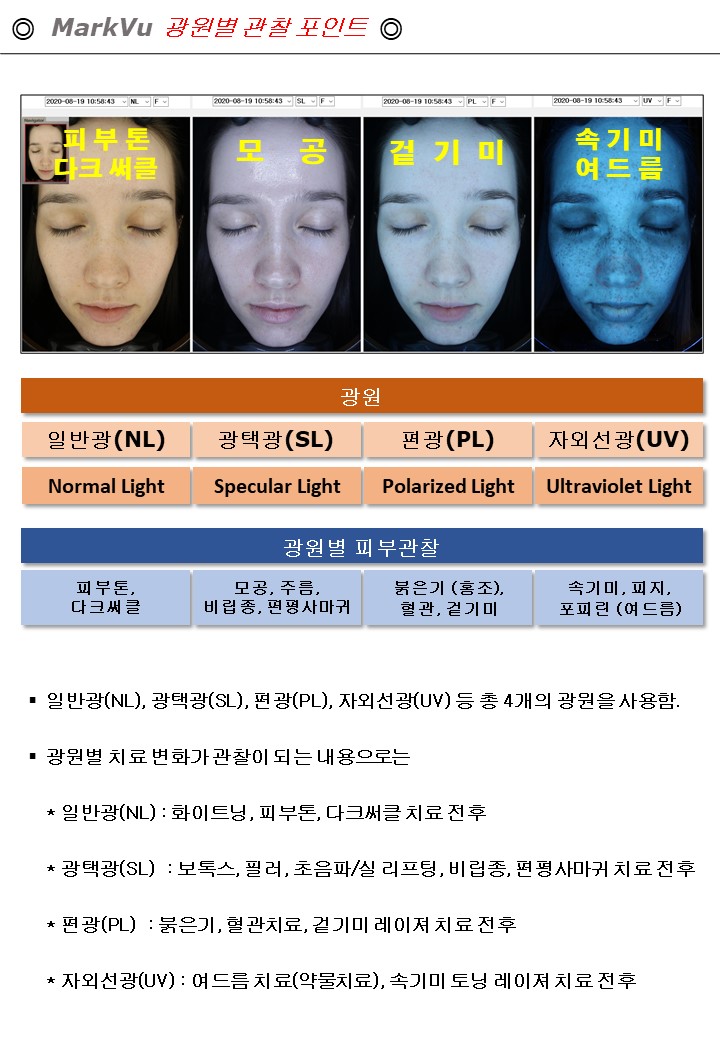
Bellevue Clinic makes the final diagnosis through the Mark-Vu skin diagnostic test, which identifies various skin issues that are difficult to confirm with the naked eye, such as skin texture, pigmentation, pores, wrinkles, skin tone, dark circles, radiance, redness, melanin, sebum, and acne bacteria. Based on the diagnostic results, we strive to provide the most effective procedures for patients through detailed skin consultations. This is a clinic that does not recommend unnecessary additional procedures, so please feel at ease when you visit. Thank you.
★ Visit Bellevue Clinic’s YouTube ★
★ Bellevue Clinic Consultation Inquiries ★



(To learn about each month’s event details,
add Bellevue Clinic as a friend right now~^^)
★ Learn More About Bellevue Clinic ★

<Clinic Information & Directions>


To become more beautiful today than yesterday,
your reasonable choice!
'Gangnam Station Bellevue Clinic'
Thank you for visiting.