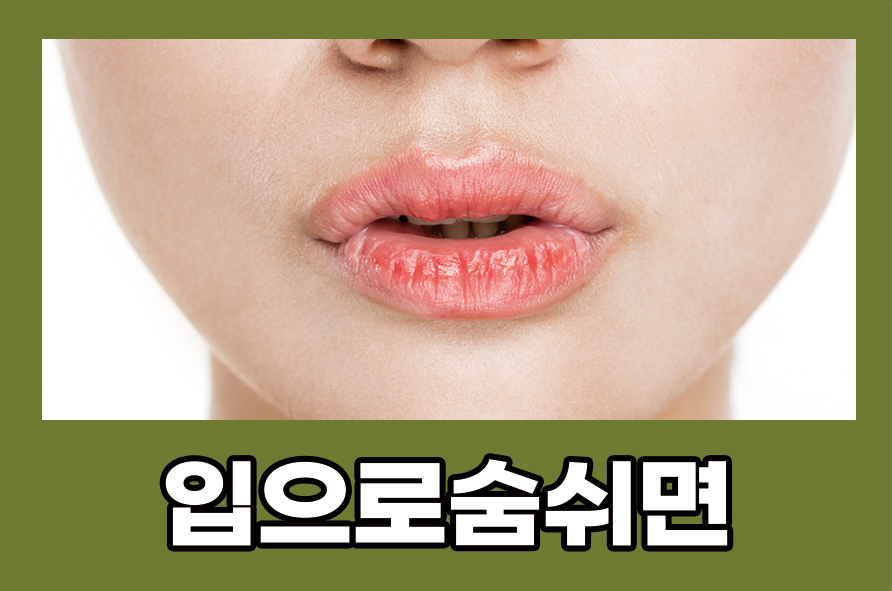
Breathing and smelling through the nose is natural, but sometimes
your nose gets blocked and you cannot breathe through your nose,
so you end up breathing through your mouth.
However, breathing through your mouth can cause a variety of
symptoms, so if you have the habit of mouth breathing,
it is a good idea to improve it.
Let’s look at what problems can occur when you breathe through
your mouth and how the symptoms can be improved.

When your nose is blocked, you have no choice but to breathe through
your mouth. Allergic rhinitis, sinusitis, and a deviated septum can
cause nasal congestion and lead to mouth breathing.
In the case of these nasal conditions, most are chronic, so even if
there is discomfort, people may get used to it and not receive proper
treatment.
However, if you breathe through your mouth instead of breathing
through your nose, it can cause various symptoms.

First of all, breathing through your mouth can increase the likelihood
of developing respiratory illnesses such as colds, the flu, and tonsillitis.
When you breathe through your nose, air is filtered by nose hairs and
mucus before entering the lungs, but when you breathe through your mouth,
air goes straight into the lungs without this process.
Because harmful germs and dust can enter the bronchial tubes and lungs
without being properly filtered, the likelihood of developing respiratory
illnesses can increase.

Breathing through your mouth can cause headaches. If you cannot breathe
through your nose and breathe through your mouth instead, the amount of
oxygen you can take in decreases, which can lead to complaints of headaches.
For this reason, many patients with nasal congestion complain of headaches,
and if this condition continues, it can lead to problems such as reduced
concentration.
The quality of sleep can also decline. If the nose is severely blocked and
you breathe through your mouth, it can cause snoring or sleep apnea.

When you breathe through your mouth, the saliva in your mouth dries out,
which can cause bad breath, cavities, and periodontal disease.
Saliva has antibacterial effects, but if it dries out due to mouth breathing,
its antibacterial function decreases, which can lead to cavities.
Not only that, but breathing through your mouth can also affect the growth
of the jawbone and change facial features.

As such, mouth breathing can cause various problems, so it is a good idea
to develop the habit of breathing through your nose.
If it is difficult to breathe because your nose is blocked, using a humidifier
or a wet towel to maintain proper indoor humidity can help improve symptoms.
We have looked at what problems can occur when you breathe through your mouth
and how to improve the symptoms. Please refer to this information.