Causes of Prolonged Menstrual Periods and
How to Improve and Manage the Symptoms
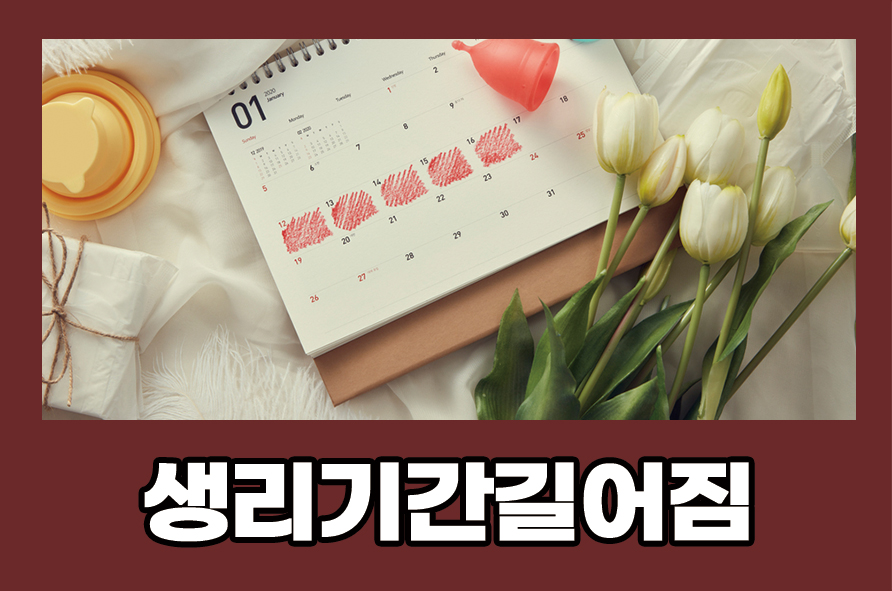
If you are a woman of reproductive age, you will have menstruation once a month.
Menstruation occurs at intervals of about 21 to 35 days, and it usually lasts
3 to 5 days.
However, there are cases in which this cycle is not maintained properly, and
menstruation becomes so irregular that it is difficult to predict when the next
period will come.
Today, let’s look at what causes menstrual irregularities such as prolonged
menstrual periods, the symptoms, and how to improve and manage them.

For women who do not have any particular health problems, menstruation generally
occurs on a cycle of about 24 to 34 days, but there are cases where the cycle
becomes shorter or longer than this.
When menstruation does not occur on time, it is called menstrual irregularity.
If the menstrual cycle is shorter than 20 days, it is called frequent menstruation.
On the other hand, there are cases in which people experience symptoms of
prolonged menstrual periods. When the menstrual cycle becomes longer than 35 days,
it is called oligomenorrhea.

If an irregular menstrual cycle continues like this, you should be careful because
you may develop amenorrhea, which means not having a period for more than 3 months.
This symptom can appear for various reasons, including excessive stress, intense
exercise, and sudden weight loss or gain.
If you experience sudden physical or psychological changes, ovulation may not occur
properly, which throws off the menstrual cycle.

However, if menstrual irregularity does not improve even after a few months, it may
be due to a problem with the uterus or hormones. Possible causes include
anovulatory bleeding and uterine fibroids.
It may also be caused by polycystic ovary syndrome. If you have this condition, you
may experience symptoms such as prolonged menstrual periods, amenorrhea, and
abnormal bleeding.
In addition, if there is a problem with the thyroid gland, which produces and secretes
hormones, abnormalities in female hormone secretion may occur, leading to menstrual
irregularity.

If your menstrual cycle becomes longer and you do not have a period for 4 to 6 months,
you may suspect premature menopause.
Even if it is not premature menopause, if amenorrhea continues for 3 to 6 months or
longer, it may lead to infertility, so you should be careful.
Because various problems can arise in this way, do not take the symptoms lightly.
If there is any abnormality in your menstrual cycle, it is a good idea to undergo a
thorough examination.

Since temporary menstrual irregularity can occur due to stress or weight changes,
it is good to maintain proper exercise and a healthy diet to help improve and manage
the symptoms.
You should keep your sleep schedule regular, and if you are underweight or obese,
it is helpful to manage your weight so that it falls within the normal range.
Today, we looked at what causes symptoms of prolonged menstrual periods, along with
the accompanying symptoms and how to improve and manage them. I hope the above
information was helpful.