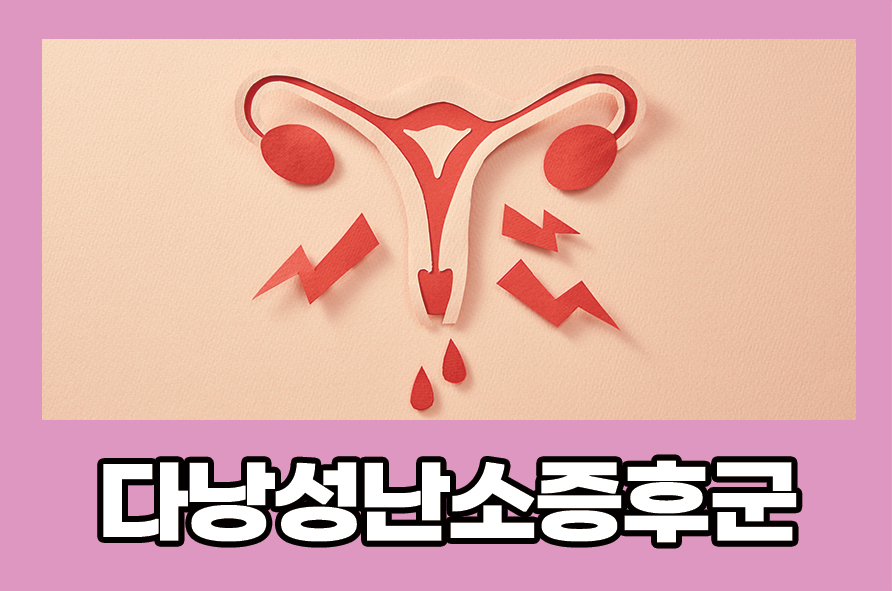
Women often think about future pregnancy and childbirth, but if ovulation does not occur properly, it can affect the menstrual cycle and hormones.
In such cases, polycystic ovary syndrome, an endocrine disorder that mainly occurs in women of reproductive age, may be suspected, and it should not be left untreated because it can cause infertility.
Today, I will explain the causes, symptoms, diagnosis methods, treatment methods, and prevention methods of polycystic ovary syndrome in various ways.

In a healthy woman, about 10 follicles are generally formed in line with the menstrual cycle, and one of those follicles is released as an egg, leading to menstruation.
However, in women with polycystic ovary syndrome, instead of a large number of follicles developing simultaneously, ovulation does not occur normally.
There is still insufficient explanation for the exact cause of this condition, but it has been reported that multiple factors act in combination.

It develops due to major factors such as genetics, environmental factors, obesity, and male hormones, which causes multiple follicles to grow in the ovaries at the same time.
The representative symptom of this condition is irregular menstruation, and patients who have it often leave it untreated even when their menstrual cycle is not regular.
If the menstrual cycle exceeds 35 days, if the number of periods is 8 or fewer per year, or if menstruation does not occur for more than 3 months, a clear cause should be identified and appropriate treatment should be provided.

There are several ways to treat polycystic ovary syndrome, and if you are obese, you should lose weight through appropriate exercise.
Even a weight loss of about 5% can improve metabolic function and ovulation, but if there are no plans for pregnancy, taking oral contraceptives is also an option.
If there is a plan for pregnancy, ovulation can be promoted through the use of ovulation-inducing agents. In addition, medication treatment and surgery may be performed while considering the patient’s condition and pregnancy plans.

This is not a condition that can be completely cured with just one treatment, and because polycystic ovary syndrome has a high chance of recurrence, it must be managed consistently throughout life.
For patients, it is important to visit the relevant hospital regularly and undergo hormone tests, ultrasound examinations, and other tests to understand their uterine health.
If anything unusual is found in the test results, treatment should be started as soon as possible. If pregnancy is being planned, difficulties are likely compared with healthy women, so treatment should be approached with infertility in mind as well.

Since it is a type of chronic disease, rather than trying to cure it with simple medication, correcting daily lifestyle habits is also important.
Insulin resistance, which is known as part of the disease mechanism, should be reduced, and if your weight is considered higher than that of other women, you must lose weight.
Also, even if you are already thin, do not be complacent; it is good to keep doing aerobic exercise about three times a week, and it is also recommended to take supplements at the same time.