Notes on Why
No-implant rhinoplasty is getting attention
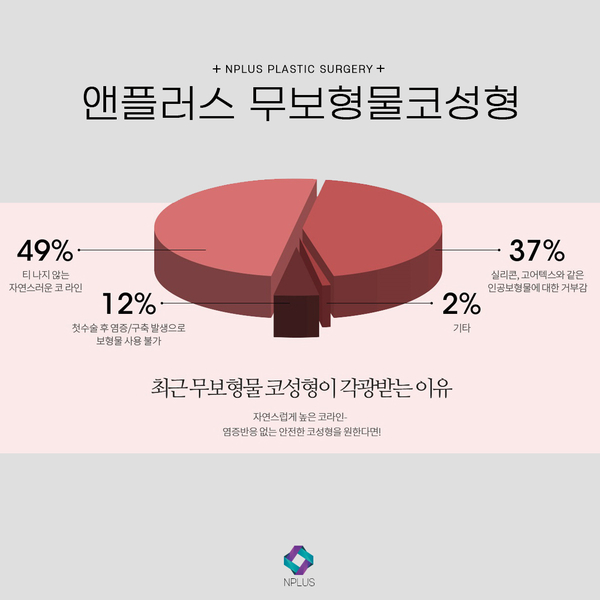
These days, inquiries about no-implant rhinoplasty have increased significantly.
No-implant nose surgery refers to
nose surgery performed without inserting an implant.
The reason this no-implant rhinoplasty trend seems to be taking hold is likely because people think it can create a straight and refined nose line without inserting an artificial implant, while also causing fewer side effects.
The basics of rhinoplasty usually involve placing an implant in the bridge of the nose,
and using autologous cartilage for the tip, which has delicate skin and relatively free movement.
For the bridge, artificial implants such as silicone or Gore-Tex are used, and for the tip,
autologous tissue such as autologous cartilage, fascia, or dermis,
or donor tissue may be used.
About autologous cartilage and other tissues
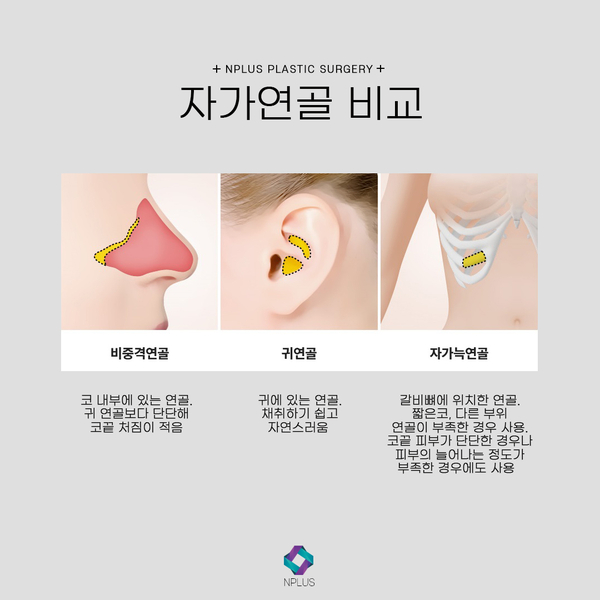
Representative types of autologous cartilage commonly used for tip rhinoplasty include ear cartilage,
septal cartilage, and rib cartilage.
Because each type of cartilage has different characteristics,
the material used varies depending on the condition of the nose and the size of the cartilage.
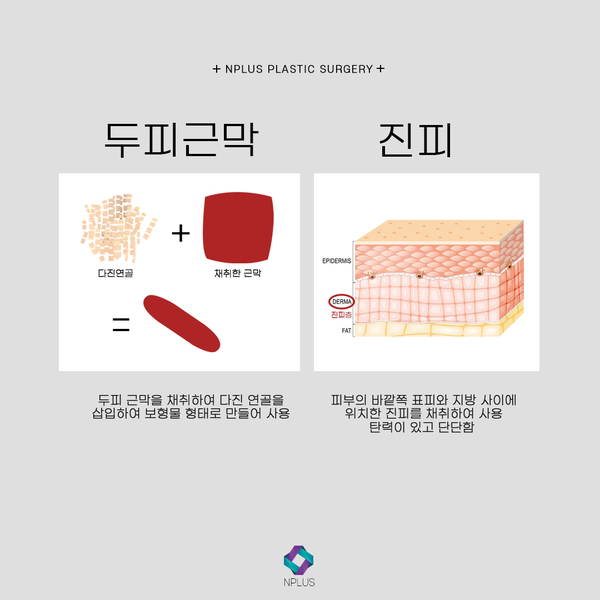
Fascia is harvested by removing a small amount of skin from the head to obtain the fascia,
and it is usually not used on its own; instead, minced cartilage is placed inside it and wrapped,
and it may be used in place of an implant.
Dermis refers to the layer located between the outermost epidermis and fat of the skin.
It is elastic and thick, making it one of the materials used in nose surgery.
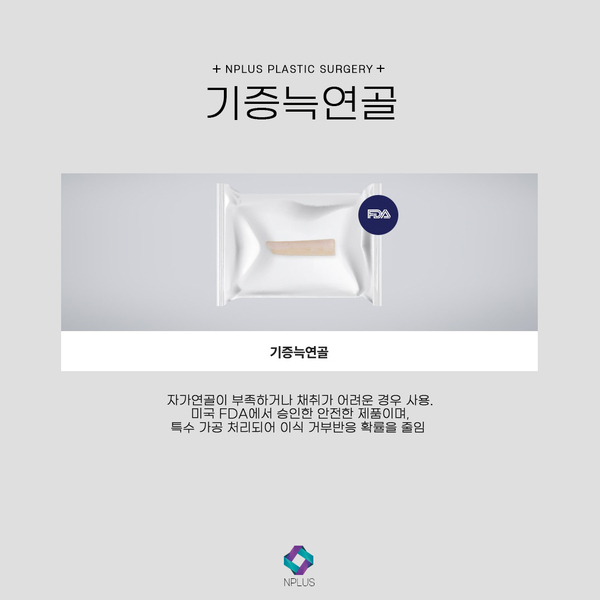 Donor tissue refers to donated rib cartilage, and when autologous cartilage is insufficient or difficult to harvest,
it is used as an FDA-approved product in the United States.
Is no-implant rhinoplasty possible for everyone?
During consultations, I often get asked whether it is possible to raise the bridge of the nose
with no-implant surgery.
However, it is practically difficult to raise the bridge significantly without inserting an implant.
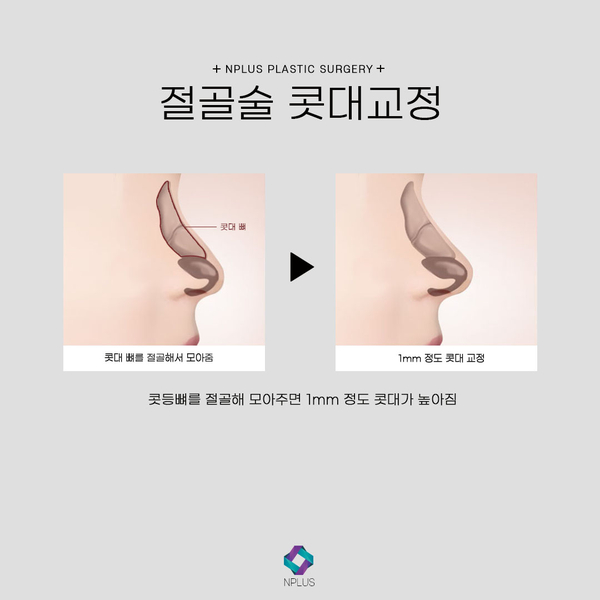
That said, if the nasal bones are brought closer together through osteotomy,
there can be an effect of raising the bridge by about 1 mm, so with this method,
it is possible to raise the bridge without implant insertion.
People who want to raise the bridge while having no-implant surgery usually want to
lift the bridge using autologous tissue.
In this case, although an implant is used as an autologous implant and placed in the nose,
those receiving consultation usually think of "implant" as referring to an artificial implant,
and that their own tissue is fine.
Reasons for preferring no-implant rhinoplasty
As mentioned in the introduction above,
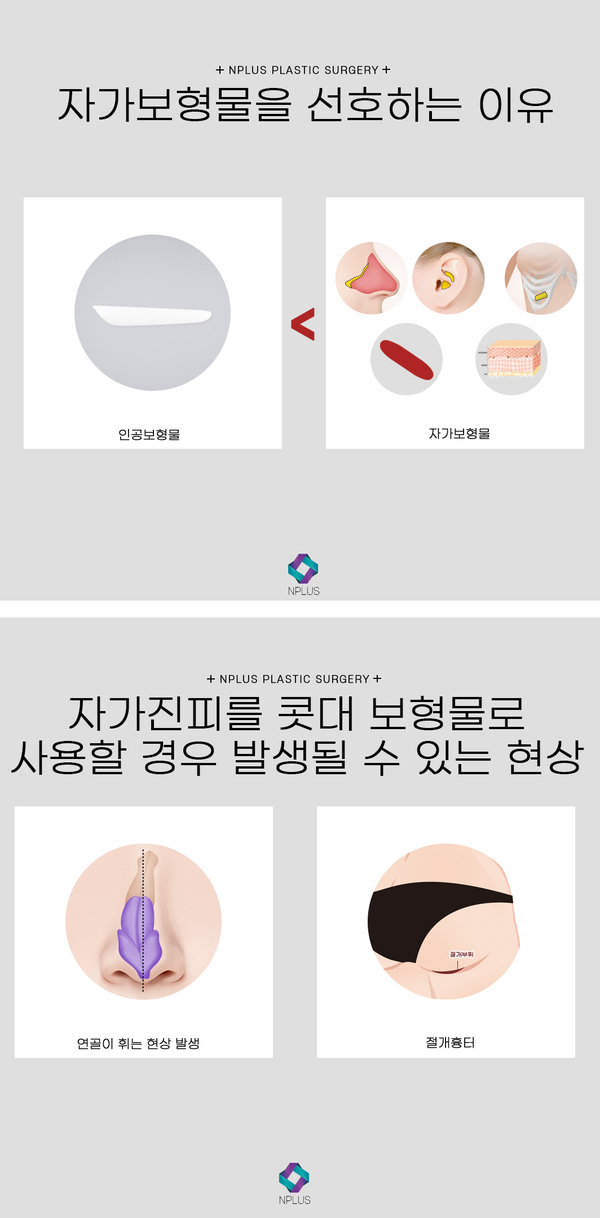
the reasons for preferring no-implant rhinoplasty are a dislike of artificial implants
and concerns about inflammation caused by artificial implants.
In the case of autologous implants, inflammation or side effects can also occur,
but these are mostly limited to an early inflammatory response,
and after a certain period following surgery, there is generally no need to worry about inflammation or contracture.
However, these autologous implants, despite their many advantages,
also have disadvantages unique to autologous implants.
Cartilage and dermis are widely used as autologous implant materials.
Among autologous cartilage, septal cartilage or ear cartilage is difficult to obtain in sufficient quantity to raise the bridge of the nose.
If overused, it may also cause structural problems (shape deformity, saddle nose, etc.).
https://m.blog.naver.com/nplus_ps/221995263908
Please refer to the post linked above comparing rib cartilage rhinoplasty and autologous cartilage.
To prevent this issue, rib cartilage is used,
but rib cartilage is firm,
so it is not as easy to manipulate as silicone.
In addition, due to a phenomenon called warping,
the bridge of the nose may bend after 1 to 2 years.
And in the case of dermis,
because a large amount of dermis must be harvested, scarring at the donor site on the buttocks can become an issue,
or the bridge of the nose may become lower due to a high absorption rate.
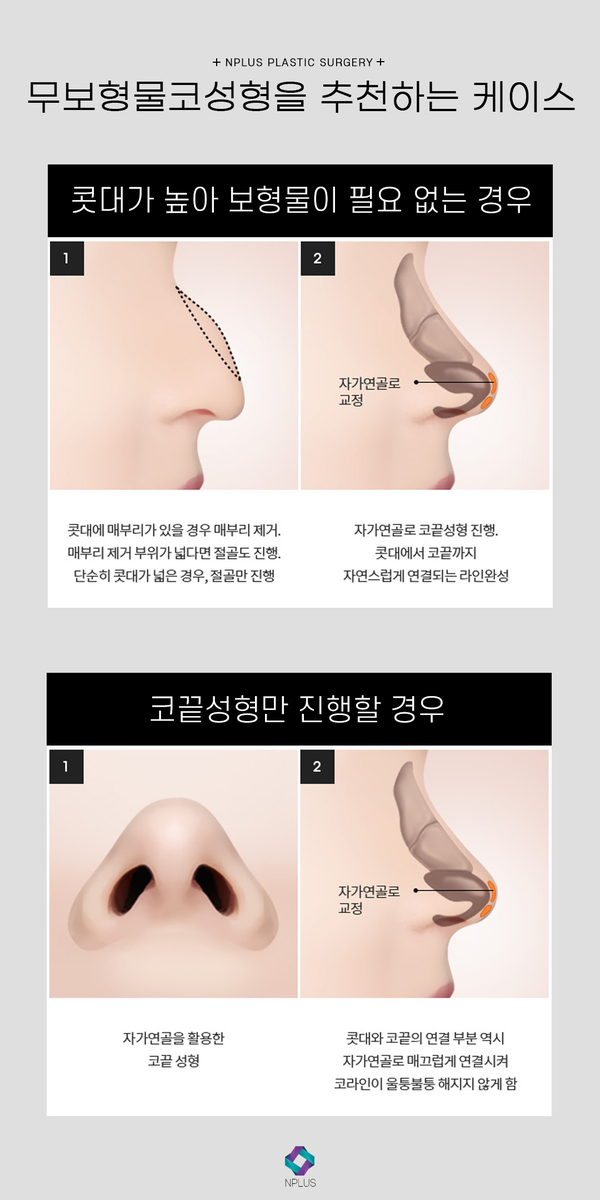 Therefore, the cases in which I would recommend no-implant rhinoplasty are:
-
When the existing bridge of the nose is relatively high, so there is no need to use an implant
-
When the existing bridge is not very high, but due to a dislike of implants,
only tip rhinoplasty is performed
In the first case, if there is a dorsal hump on the bridge,
it is shaved down to remove the hump,
and if the hump removal area is wide, osteotomy may be performed as well.
If the bridge is simply wide, only osteotomy is performed,
and the tip is corrected with autologous cartilage.
In the second case, autologous cartilage can be used to correct only the tip height on its own.
Things to check before nose surgery (side effect prevention)
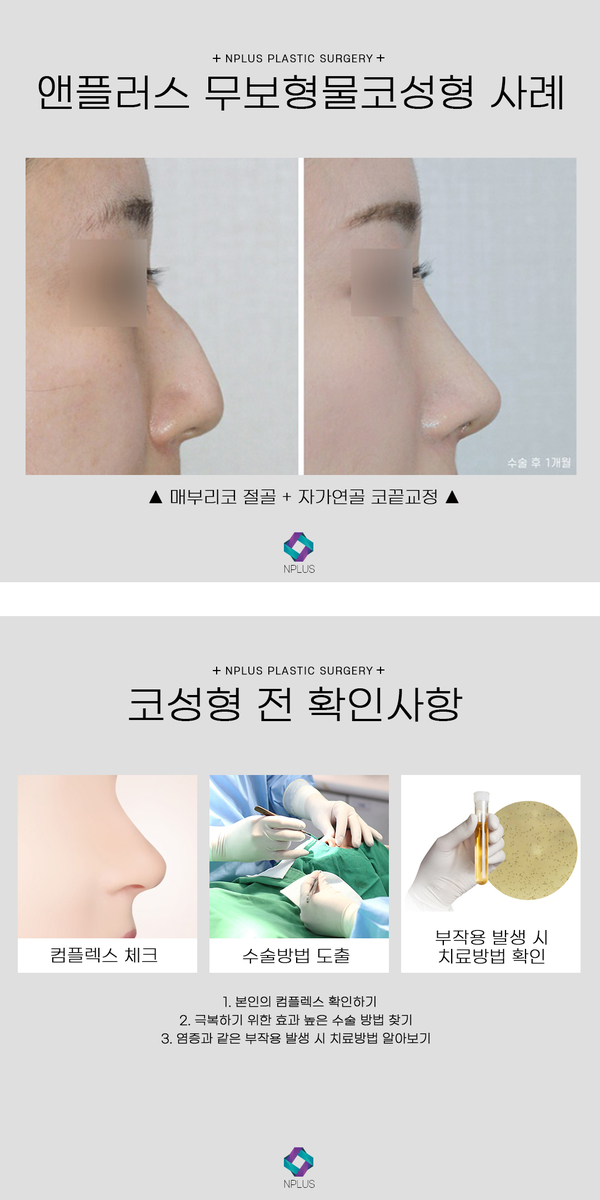
Lastly, what I would like to say is that when undergoing nose surgery,
rather than insisting unconditionally on no-implant surgery or autologous tissue only,
it is better to determine what your own concern is, what surgical method would be most effective to overcome it,
and, most importantly, how side effects such as inflammation can be treated if they occur,
and then make the decision accordingly.
Because the details of consultation may differ slightly depending on the doctor,
I think it would be helpful to plan your nose surgery after a consultation at a place with extensive experience in nose surgery
or with proven know-how, so that you can find the right direction for your rhinoplasty choice.
-Director Yoon Hyun-cheol, N+ Plus-