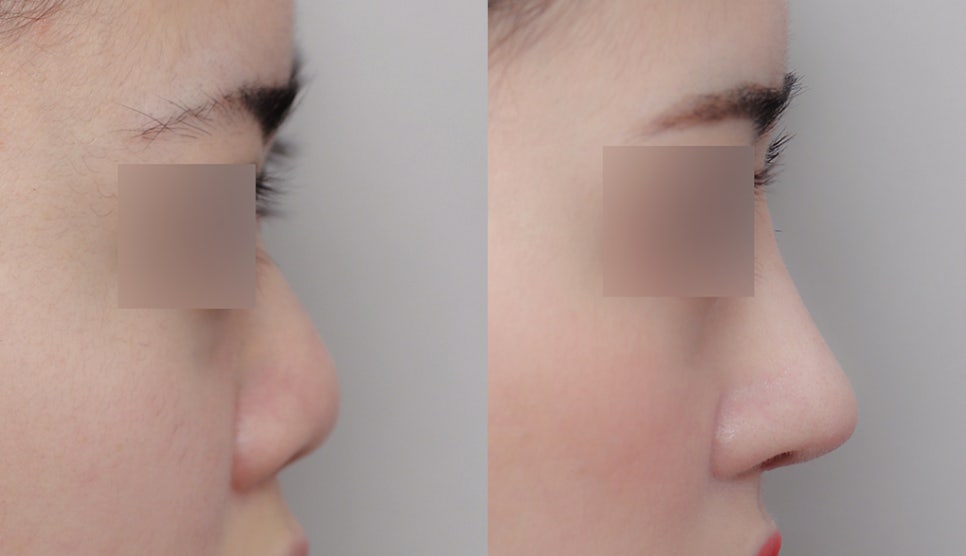
Before upturned nose surgery / 1 month after upturned nose surgery
Hello. For 15 years, we have focused only on rhinoplasty, Ojigo N Plus.
Going forward, through this blog, we will introduce the various rhinoplasty cases from our clinic to those who are considering nose surgery,
and we hope it will be even a little helpful for those looking to refer to cases similar to their own.
The case we are introducing this time is a patient who underwent upturned nose surgery at our clinic.
An upturned nose refers to a nose whose tip is tilted upward, making the nostrils highly visible from the front.
In this patient’s case, like typical upturned nose cases, the tip was lifted upward, causing excessive nostril exposure when viewed from the front,
and the bridge was also very low, resulting in a lack of facial definition.
In cases of an upturned nose, there can be congenital factors, but there can also be acquired factors that appear after nose surgery when contracture causes the tip to shorten.
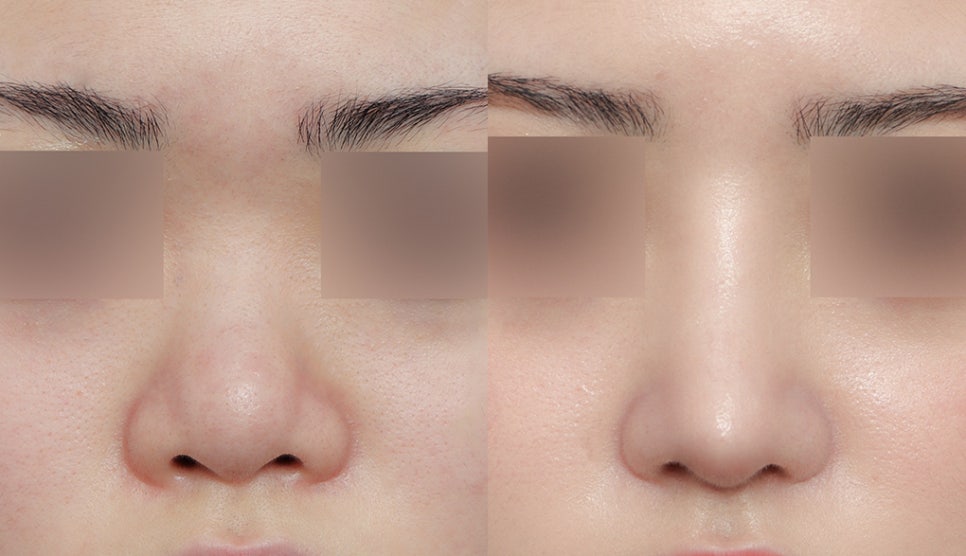
In this patient’s case, in addition to a low and upturned nose, the tip cartilage was spread apart, so although the alar base was not wide, the nose also had the appearance of a bulbous nose.
The patient was also stressed about this and wanted improvement, so the surgery was performed by raising the low bridge for added height and firmly fixing the upturned tip with a strong columellar support so that it would not lift up again or droop later.
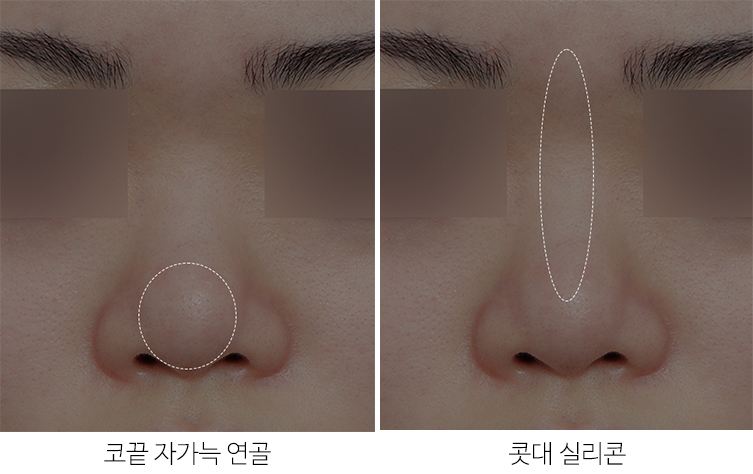
Bridge: 6 mm silicone
Tip: autologous rib cartilage tip lengthening + tip cartilage suturing to improve the tip shape that looked like a bulbous nose
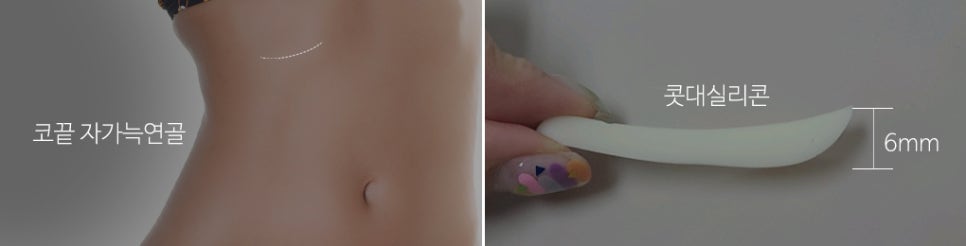
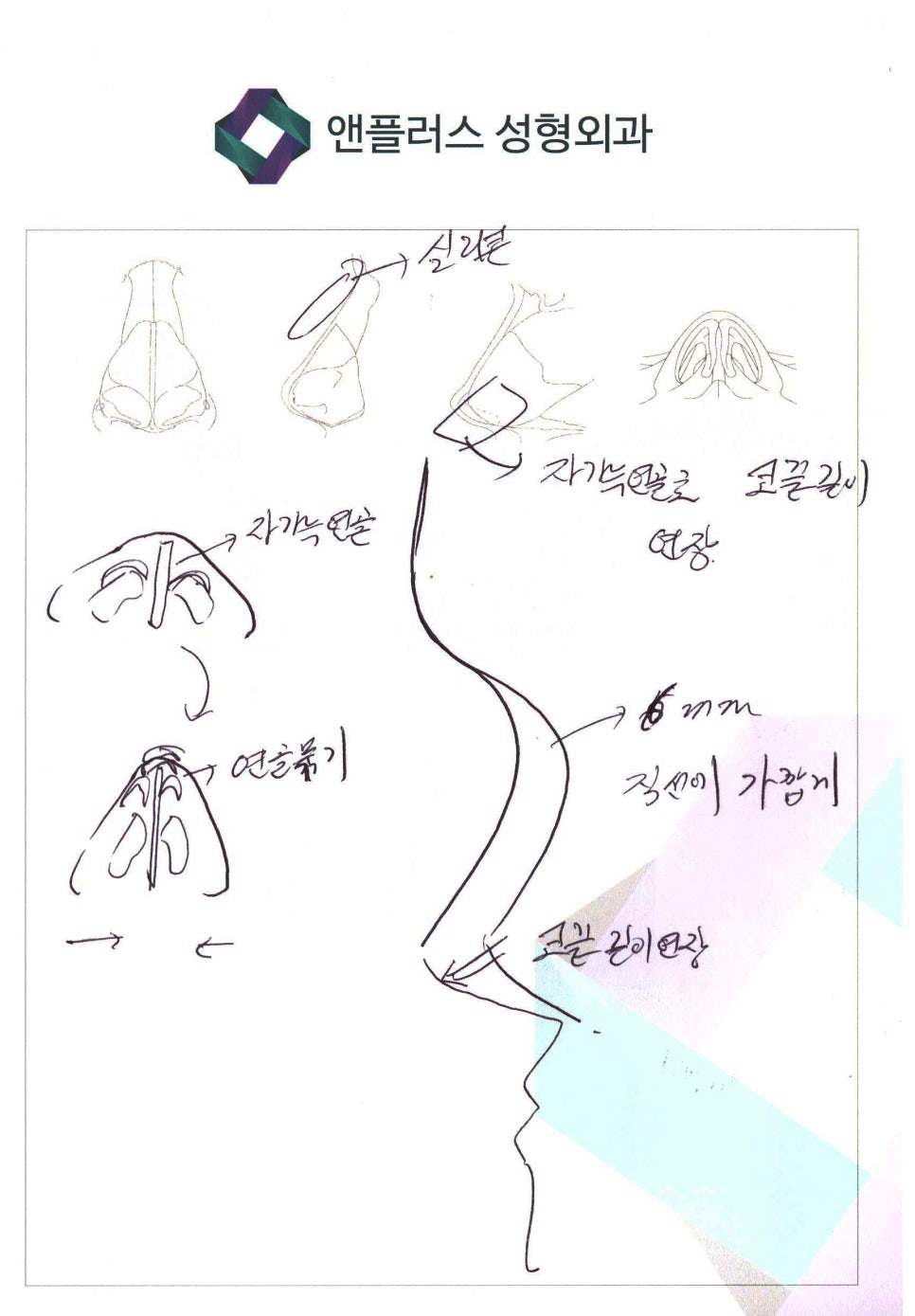
This is a mini chart used during consultation. We draw diagrams to explain how the surgery will be performed.
Rib cartilage harvest time: 40 minutes
Nose surgery time: 2 hours 30 minutes
Surgery notes
Because the nose was low, small, and upturned, we decided to perform the surgery in a way that would provide as much volume as possible.
For the bridge, silicone was used to prevent warping after surgery (the phenomenon in which autologous rib cartilage bends) and to create a more natural shape.
For the tip, CT findings showed that the septum was small and thin, so it seemed difficult to achieve sufficient tip lengthening with septal cartilage alone, so autologous rib cartilage was used.
With autologous rib cartilage, there is enough cartilage available and it allows the tip to be lengthened with stronger support,
making it effective for correcting a small, upturned tip like this.
To help the skin stretch well, and to prevent the tip cartilage from being pulled upward even under pressure,
we firmly fixed it to the patient’s septal cartilage and nasal bone tissue, and sufficiently dissected between the tip cartilages so that the cartilage could relax adequately.
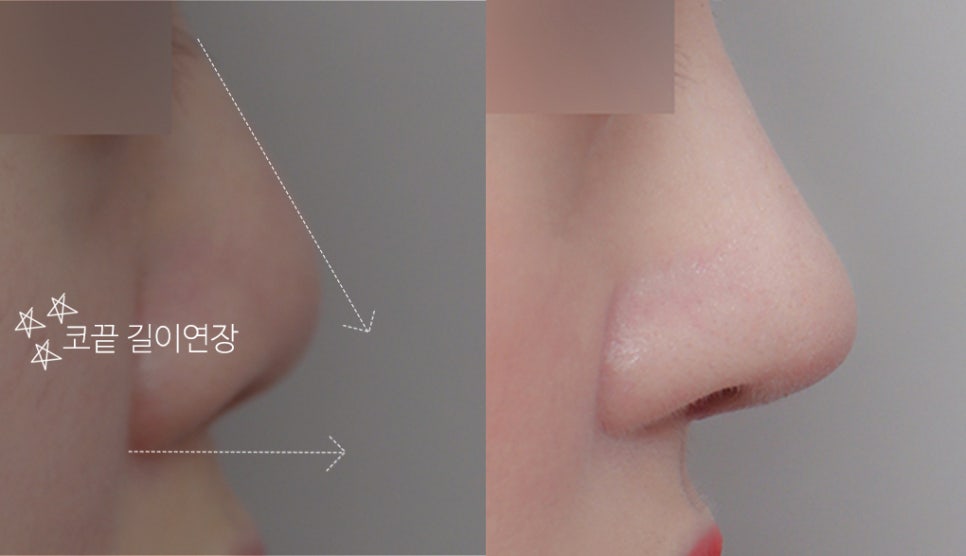
N Plus Upturned Nose Surgery point
To lengthen a small nose, both methods are important: lengthening the internal cartilage and lengthening the outer skin tissue.
Autologous rib cartilage was used to sufficiently lengthen the cartilage, and to lengthen the skin tissue,
micro needles were used to make tiny holes in the skin so that the skin could stretch like a net.
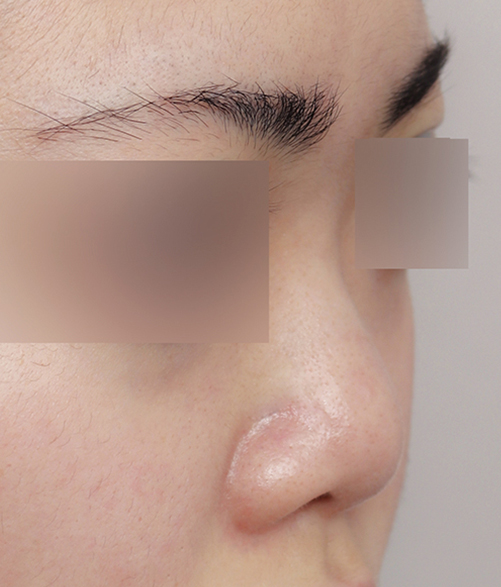
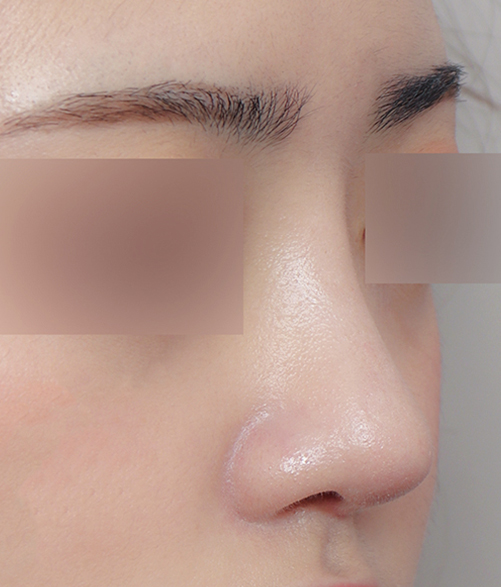
Upturned nose rhinoplasty is a high-difficulty procedure that simultaneously lowers the lifted tip and corrects the tip’s height.
At N Plus, to clearly improve a short nasal tip, we perform at least two or more different combined corrective procedures.
We aim for a highly satisfying result by selectively performing the "septal extension" procedure to lower the lifted tip, the "columellar support" that firmly secures the tip so it does not lift again,
and the "skin lengthening & cartilage grafting" procedure to satisfy both the height and length of the tip.
Today, we introduced a case of upturned nose surgery using autologous rib cartilage.
We hope the various rhinoplasty cases on this blog will be helpful for those considering surgery.
Thank you.