If you’re considering rhinoplasty, be sure to
learn these 3 things in advance before you come in for a consultation.
Hello. I’m Director Yoon Hyun-cheol of Oji-ko, and I focus only on your beautiful and healthy nose.
Today, I’d like to explain the most essential things you should know before getting rhinoplasty.
When people come in for a consultation, there are times when things become very difficult.
It is hard when someone comes in without a clear idea of why they want surgery or what exactly they are dissatisfied with about their nose shape.
“From your perspective, what areas would improve if they were corrected?”
Some people ask questions like this, but rhinoplasty is not simply a cosmetic procedure to improve something according to trends.
Also, since your satisfaction after surgery is the most important thing, there may be parts that are difficult to improve before rhinoplasty, while other parts may improve more easily.
So before rhinoplasty, you need to have clear standards about the parts you were dissatisfied with
so that consultation about those parts is possible.
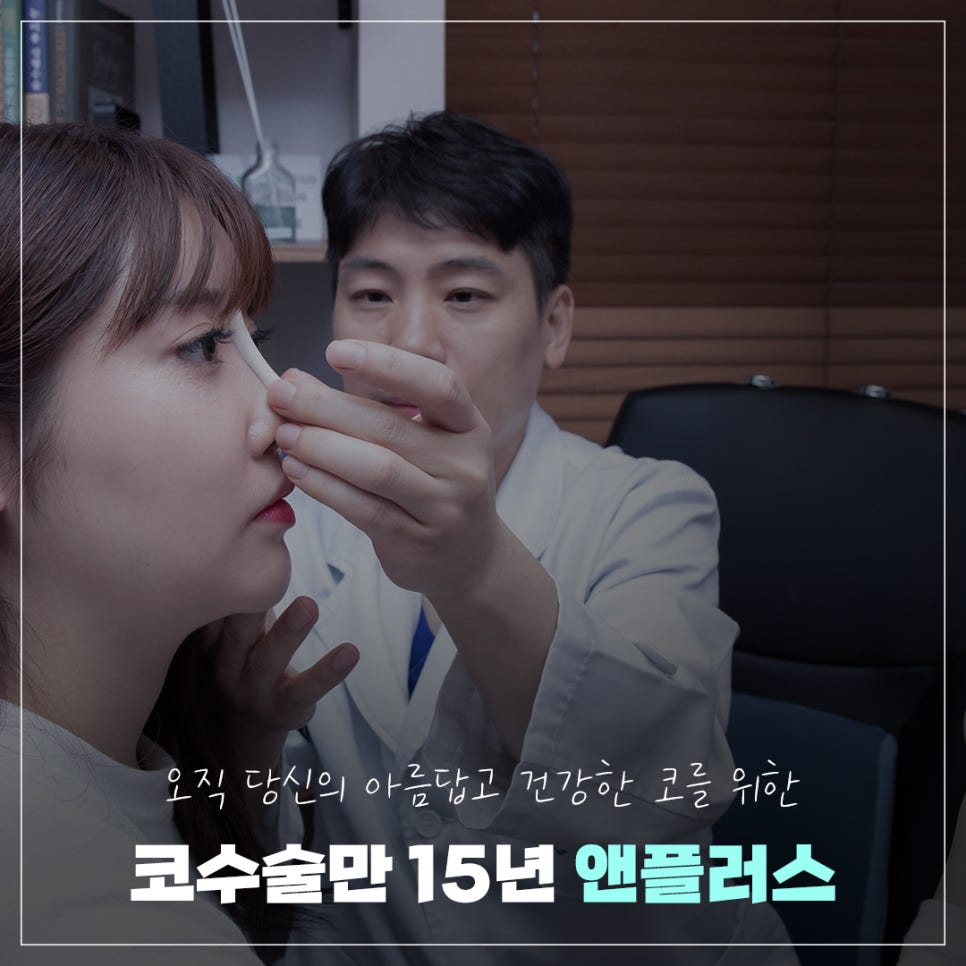
When going through a rhinoplasty consultation, some people do not bring criteria for the parts they were dissatisfied with;
instead, they simply bring a photo of a pretty celebrity’s nose and ask to have it done exactly like that.
For these people as well, consultation is very difficult because the exact standard of what they want is not clear.
For example, if you say, “Please make my nose suit my face,” the direction each person wants may be different,
and the results that can be achieved through surgery may also differ.
If that happens, it can lead to dissatisfaction after surgery, and in severe cases, it can even lead to revision surgery,
so it is best to know exactly what direction you want.
Also, during the consultation, it is helpful if you can provide information about the kind of nose you think is beautiful,
but an even better example is to clearly say, “I really dislike noses like this.”
That makes it easier to identify the features or points, so when you receive a consultation,
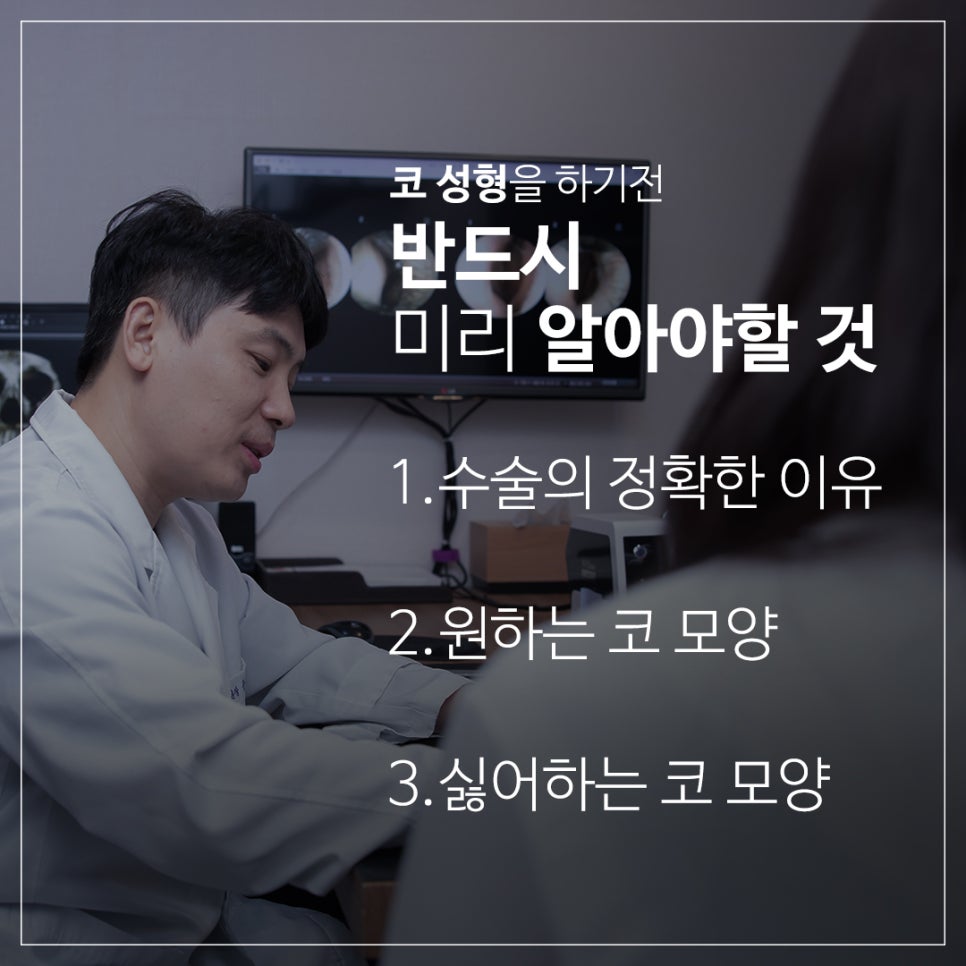
Rhinoplasty consultation useful tips
-
The exact reason for surgery
-
The nose shape you want
-
The nose shape you dislike
If you prepare these three things before your surgery consultation, the consultation can be much better aligned with
your desired direction, and the surgical result may also be more satisfying.
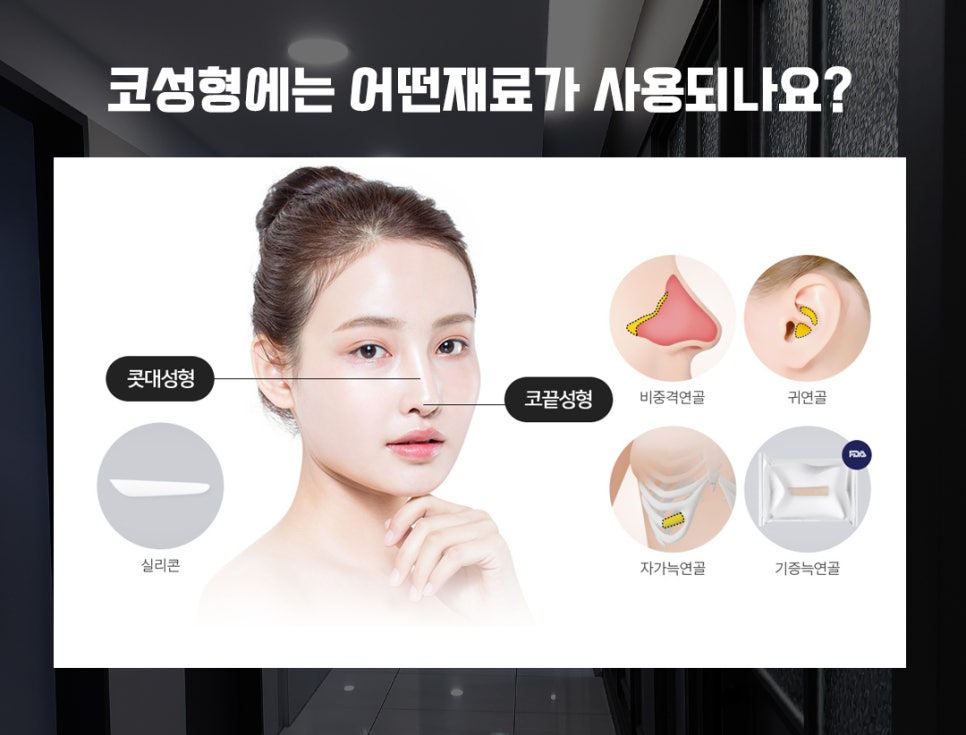
What is the difference between autologous implants and artificial implants?
When we perform nose surgery, we use either artificial implants or autologous implants depending on the situation.
Koreans generally tend to have low and small noses, so both the bridge and the tip are often raised together.
In surgery, about 90% of patients have an artificial implant inserted into the bridge and autologous tissue used for the tip.
This is because if the soft tissue at the nose tip, which is as delicate as skin, uses an artificial implant instead of autologous tissue, problems can occur.
It keeps irritating the fragile skin, causing redness, and eventually it can protrude through the skin.
That is why, in the early days of nose surgery, when this concept did not yet exist, L-shaped silicone was used in the nose.
So it may seem fine at first, but over time the problems mentioned above can occur.
Nowadays, the bridge is often made with implant materials such as silicone or Gore-Tex, and the tip uses 100%
autologous tissue and autologous cartilage (ear cartilage, septal cartilage, or autologous rib cartilage).
Of course, because there can be some resistance to artificial implants in the bridge as well, autologous tissue (autologous rib cartilage) is sometimes used there too.
Both artificial implants and autologous tissue must be used only if the material is suitable and free of problems.
The advantage of artificial implants is that they are easy to obtain.
If a problem occurs, they are also relatively easy to deal with.
However, because they are not autologous tissue, inflammation or foreign-body reactions can occur,
but the probability is low, which is why they are used most often.
In the case of autologous tissue, because it is your own tissue, foreign-body reactions are less likely.
However, to achieve a certain amount of volume, a substantial amount of autologous tissue must be harvested.
The only autologous tissue that can provide that level of volume is rib cartilage.
So while the nose tip can sufficiently use ear cartilage, septal cartilage, or autologous rib cartilage,
autologous tissue is not 100% all advantages.
In the case of autologous rib cartilage, when it is used for the nasal bridge, the originally curved cartilage is processed and used,
but over time it may warp, a phenomenon known as warping.
For example, if wood is dried thoroughly in sunlight, it warps.
By the same principle, even if rib cartilage is carefully carved, notched, and inserted as straight as possible at the time,
it can unexpectedly warp after about 1 year and 6 months to 2 years.
Dermis is harvested from the buttock area, and the scar is quite large, about the size of a pinky finger.
It also has a high absorption rate. In addition, depending on the person, the low-absorption rate can be 50%,
and the high-absorption rate can be up to 80%, so it is difficult to predict.
For example, if you expect it to be absorbed well and raise it as much as possible, but over time it is absorbed less than expected,
it may remain like swelling between the eyebrows;
or if you predict that it will not be absorbed well and place only a small amount, it may be absorbed a lot.
Therefore, if artificial implants are used for the nasal bridge and autologous tissue is used for the nose tip,
it seems right to use them according to the characteristics of each area.

When can I wear glasses after surgery?
There are also many inquiries about how to wear glasses after nose surgery.
First, we recommend wearing them one month after surgery.
If an implant has been placed in the nose, the silicone may warp due to the nose pads of the glasses, or there may be problems caused by blood collecting.
Even if no implant is inserted, if an osteotomy is performed to correct a hump nose,
or if a crooked nose is straightened, problems can also occur.
Also, when septal surgery is performed for functional reasons, if the weight of the glasses places a load on the septal area,
a saddle nose can develop.
Therefore, we recommend not wearing glasses until at least one month after surgery and instead wearing contact lenses.

Thank you^^