Rhinoplasty
Why the Rib Cartilage (Autologous Costal Cartilage) Should Be Used from the First Surgery

Hello. This is Ojiko & Plus, thinking only about your beauty and health.
The topic I’m introducing this time is whether autologous costal cartilage should be used in the first nose surgery.
When we consider rhinoplasty, most people in our country have typical Asian features,
so a low nose is often the issue, and surgery mainly focuses on raising the bridge and lifting the tip.
The most important principle in rhinoplasty is to use an implant for the bridge, while the tip, which is made of delicate skin,
is operated on using autologous tissue and autologous cartilage.
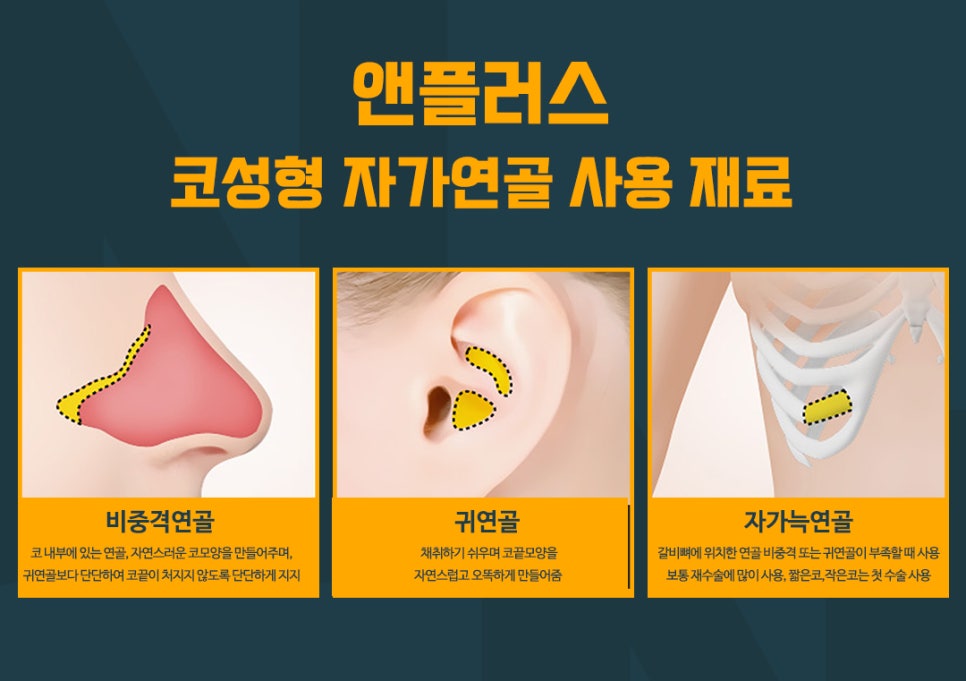
In the past, silicone was usually used for the bridge, and septal cartilage or ear cartilage was used for the tip,
and autologous costal cartilage was often used in revision surgery.
But recently, it has become common to use autologous costal cartilage even from the first surgery.
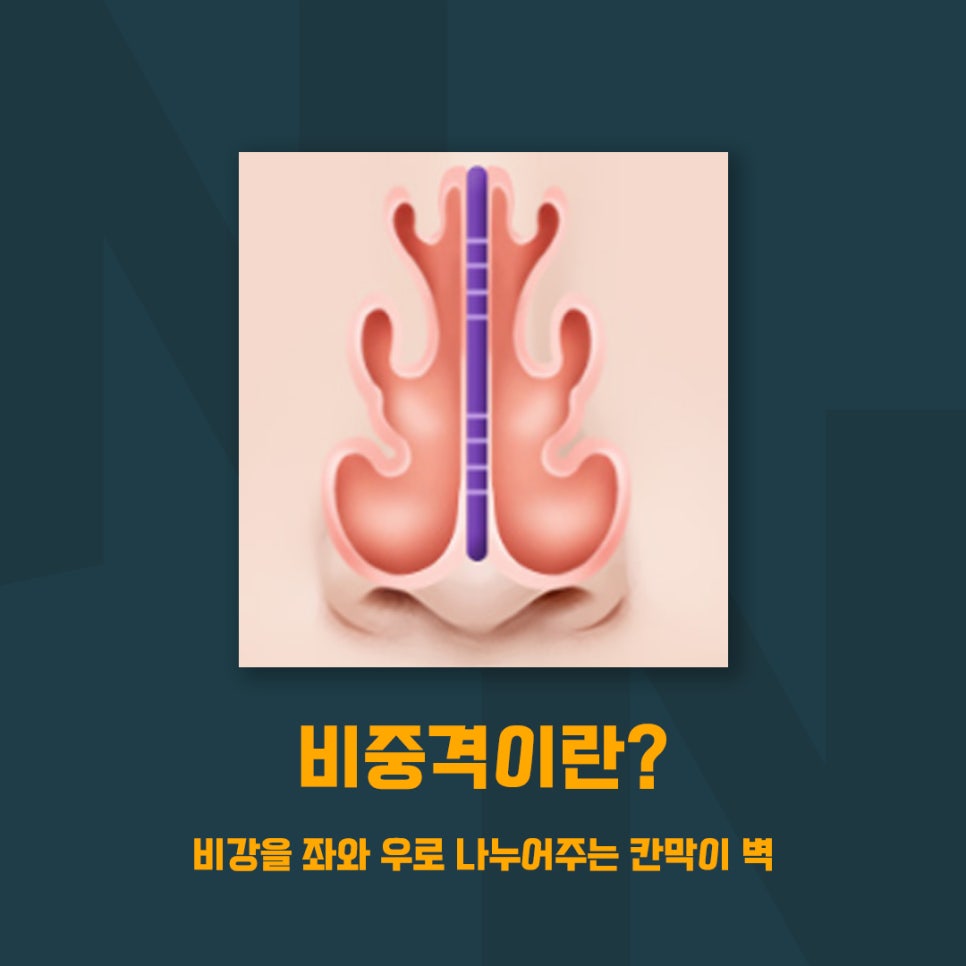
When examining septal surgery, if you look inside the nose, the partition that divides the nostrils in the middle is called the septum.
If you touch it with your hand, you will feel an elastic membrane. That part is called septal cartilage.
The front part of the nose must be preserved, and the diamond-shaped cartilage at the back is harvested.
That part varies from person to person.
Some people have large, thick cartilage, while others have small, thin cartilage, and in some cases it is even bent.
So if the cartilage is large and thick, it is not a major problem,
but people with a small, low, and upturned nose often have small cartilage as well.
In such cases, there may be difficulties when performing surgery using septal cartilage.
In the case of Asians, the part they generally want to correct is a bulbous nose tip.
The skin is thick, there is also a lot of fatty tissue, and the skin is tough. On the other hand, the materials used for the tip, such as ear cartilage,
or septal cartilage, may be small or thin and therefore lack support, and ear cartilage is also very soft,
so when we need enough height to reach the desired goal, or when lowering an upturned nose and creating a thinner bridge,
ear cartilage or septal cartilage is often insufficient to resist the pressure from that tension.
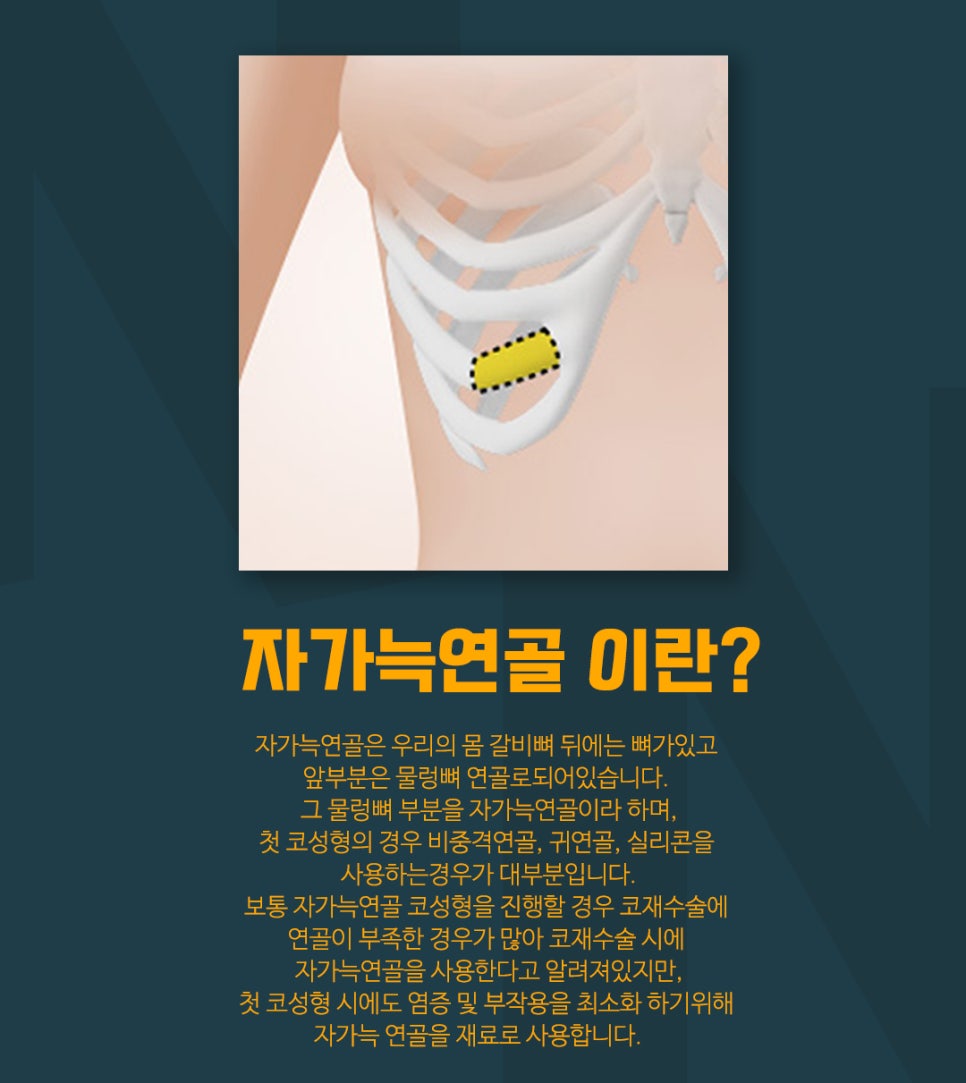
In the case of autologous costal cartilage, there is bone behind the rib and cartilage in the front,
and surgery is performed using part of the cartilage in that front area.
Do we really need to use autologous costal cartilage from the first surgery?
You may ask this question, but when we operate on the nasal tip, we need firm cartilage in a sufficient amount,
and septal cartilage and ear cartilage are often lacking.
On the other hand, autologous costal cartilage is large and strong, which can make for a more satisfying surgery.

Do we really need to use rib cartilage from the first surgery?
Many people ask this. Rather, I would ask back.
Do we really need to undergo nose surgery while already thinking about revision surgery?
Wouldn’t it be better if the first surgery were done perfectly from the start?
Why is autologous costal cartilage recommended?
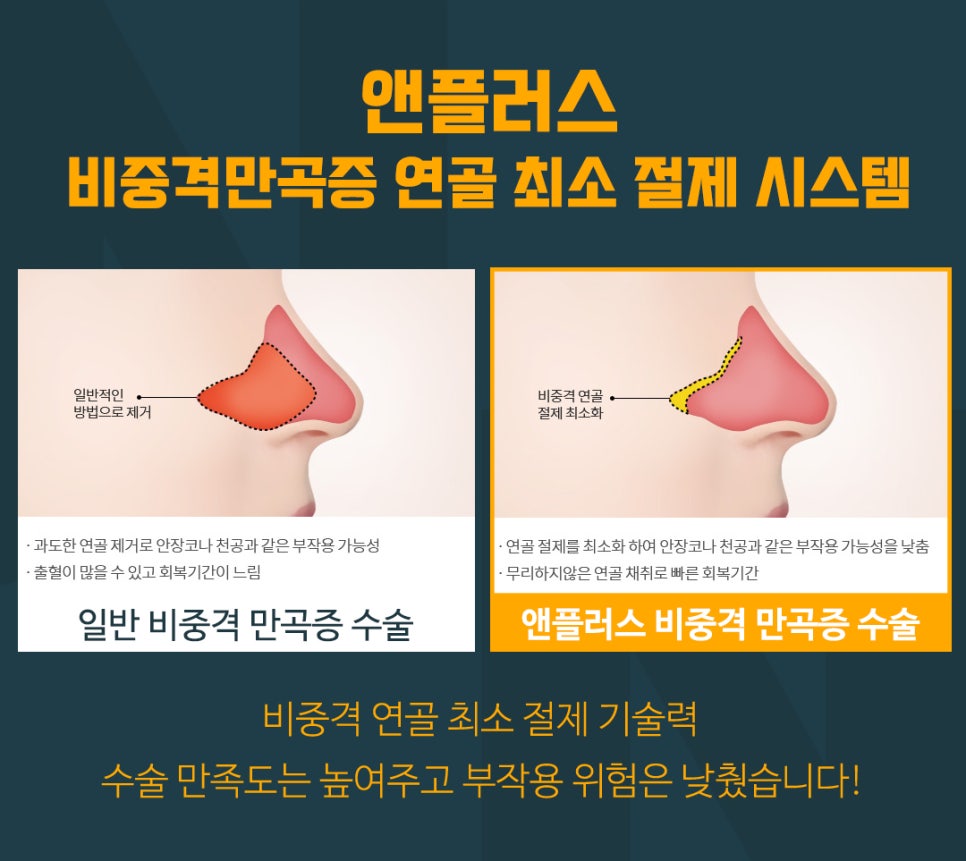
If a revision surgery is needed, septal cartilage is limited.
And if too much septal cartilage is harvested, a saddle nose can occur, and the middle part of the nose may collapse.
If septal cartilage is removed excessively, the remaining cartilage becomes weaker, which may cause the nasal tip to deviate or the inner septum to bend,
leading to functional problems as well.
As you can see, ear cartilage has a curled, three-dimensional structure, so it is difficult to make it into a straight,
symmetrical shape, and as you may know by touching it, it is very soft.
Also, if a large amount of ear cartilage is harvested, the shape of the ear may change slightly.
Women can cover this with their hair, but for men, the ears are often exposed,
so it may remain visible.
There is also a nerve behind the ear called the greater auricular nerve.
That nerve passes through the area where ear cartilage is harvested.
It is inevitably damaged during ear cartilage harvesting.
One of the most common complaints when using ear cartilage for nasal tip surgery is pain.
The pain can last from one month to one or two years after surgery.
Although the wound has healed, some people strongly complain of pain when they are sleeping and the area is slightly pressed.
So using autologous costal cartilage from the first surgery is not a major operation,
and it is not an excessive procedure. I can say it is one of the very good methods.
The concerns people most often have about autologous costal cartilage surgery are:
-
Scarring
-
Side effects when harvesting rib cartilage
The two questions above are asked very often.
In hospitals that frequently perform autologous costal cartilage surgery, the incision does not need to be large, and an incision of about 2 to 2.5 cm is usually sufficient.
Scarring tends to be more noticeable in areas with a lot of movement where the incision is made,
such as joints, or in areas exposed to ultraviolet light. But the area where autologous costal cartilage is harvested is usually covered by clothing,
and the movement is limited to the slight rise and fall of the chest while breathing,
so scarring is not a major issue.
Also, harvesting autologous costal cartilage itself may be considered a relatively major surgery.
Possible side effects include pneumothorax and lung injury.
In hospitals that perform autologous costal cartilage surgery frequently, the harvesting process itself is not very difficult.
Because it is a surgery that can be done simply and smoothly, even for the first surgery,
I strongly recommend using autologous costal cartilage.
To those who ask, “Do we really need to use autologous costal cartilage from the first surgery?”
or “I want to use autologous costal cartilage only when I have revision surgery,”
I have explained the misunderstandings about autologous costal cartilage and provided a detailed explanation.
The conclusion is that even in the first surgery, using autologous costal cartilage alone can lead to a high level of satisfaction.
Thank you^^