
Hello. I am Director Yoon Hyun-cheol of Anplus Clinic, also known as Oziggo, where I have performed only nasal surgery for 15 years.
It seems that inquiries about rhinoplasty for rhinitis have increased significantly these days, perhaps because of the changing seasons.
So today, I would like to explain this topic as clearly and in as much detail as possible.
It is often also called “functional nose surgery,” and it is performed for rhinitis, deviated septum, and nasal valve stenosis.
First, to explain rhinitis: the most common types are allergic rhinitis and hypertrophic rhinitis.
The main symptom of hypertrophic rhinitis is nasal congestion, while allergic rhinitis causes nasal congestion, itching, runny nose, and sneezing.
Because allergic rhinitis is related to our individual constitution, it is treated with immunotherapy and medication, and it is difficult to cure completely with surgery.
What we refer to in functional nose surgery is hypertrophic rhinitis, which can be improved through surgery.
What Is Hypertrophic Rhinitis?
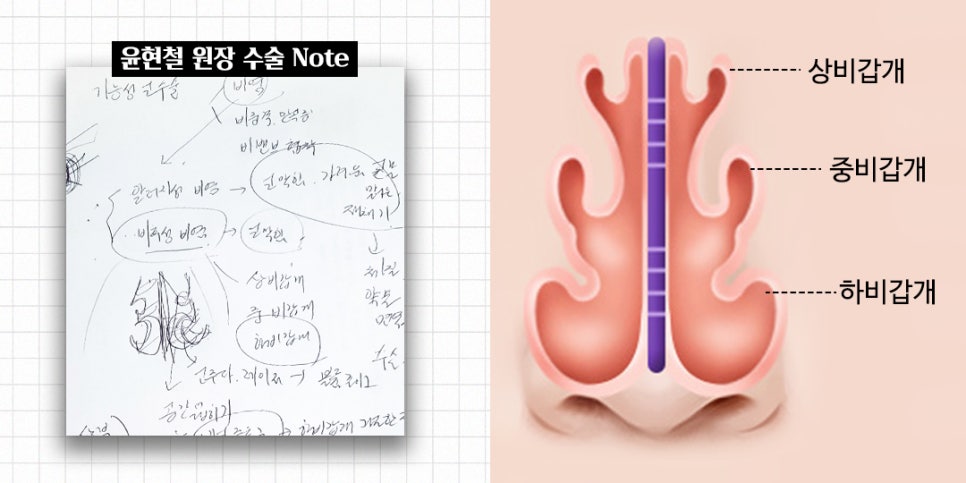
Inside the nose are the superior turbinate, middle turbinate, and inferior turbinate, which are easy to understand if you think of them as protruding soft tissue.
Among these, when the inferior turbinate tissue has grown larger than its normal size, this can be described as hypertrophic rhinitis caused by inferior turbinate hypertrophy.
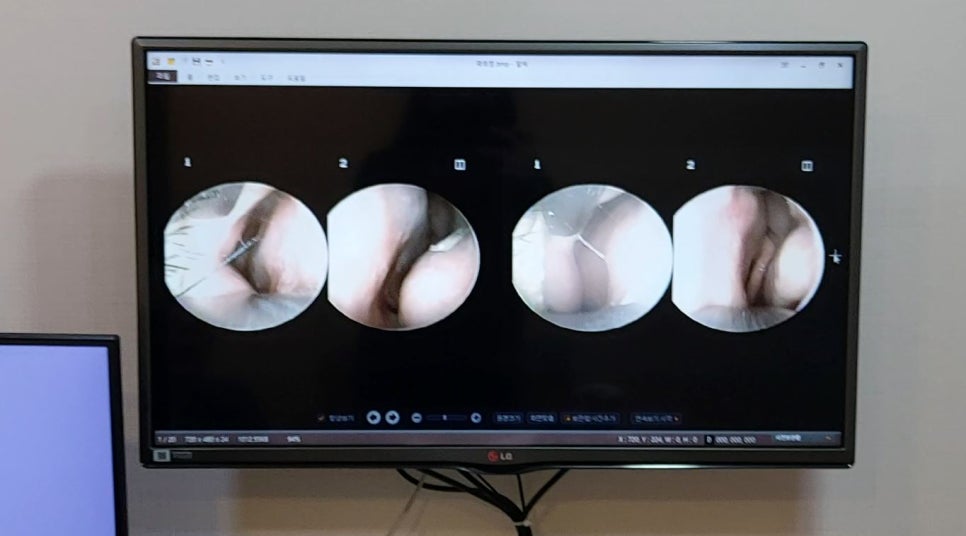
For example, in an endoscopic image taken at our clinic, you can see a passage for breathing that is so severely swollen that it is blocked.
In such cases, surgery is needed to reduce the volume using radiofrequency or laser, and to widen the space by pushing the bone inside outward.
It may seem like a simple surgery, but you need to be careful about “empty nose syndrome,” which can occur as a result.
This can happen when too much tissue is removed because the inferior turbinate is large. In such cases, if you look inside the nose with an endoscope or CT scan, you can see that the nasal cavity is overly open. When the inferior turbinate is present, air normally enters in layers, which is called “laminar flow.”
When it functions normally, it helps regulate temperature and humidity. However, if it does not function properly, it becomes “turbulent flow,” and the air swirls in like a gust of wind. In this case, even though air passes through well, the person feels as if the nose is blocked, and because too much air enters, the inside of the nose becomes dry, causing significant discomfort in daily life. Recently, stem cell treatment and similar approaches may help restore function, but complete recovery is very difficult. Therefore, the most important point is not to remove too much of the inferior turbinate.
Next, “deviated septum” refers to the septum, the middle wall that divides the nose, being bent.
In simple cases, the bent septum can be corrected by removing the deviated portion.
However, the septum is a structure that supports the nose, so it should not be removed excessively.
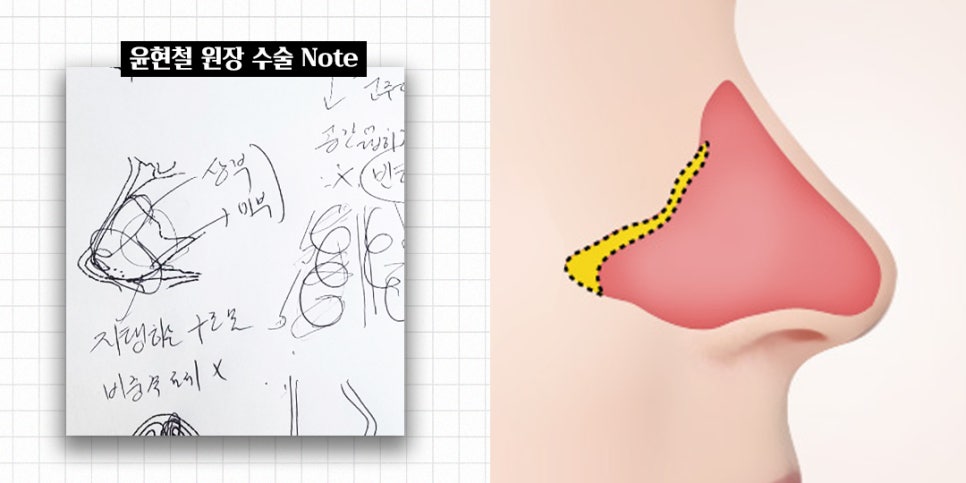
The surgery needed also changes depending on the degree and shape of the deviation.
If the upper part of the septum is narrowed, the nasal valve area marked in yellow in the image above becomes narrower.
When this nasal valve is narrowed, it is called “nasal valve stenosis.”
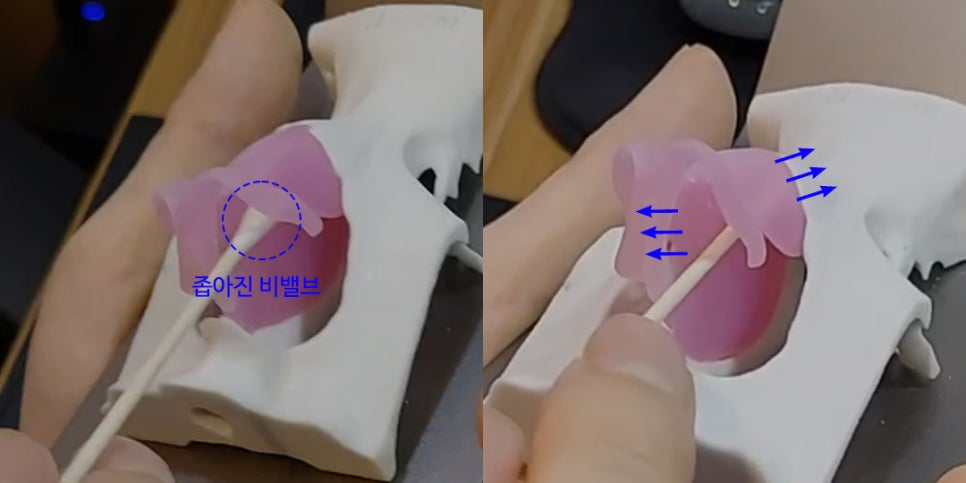
To make this easier to understand, I have attached a nasal model as an example.
If we assume the right side is the narrowed nasal valve, then a cotton swab goes in easily on the left side,
but on the right side, the cotton swab does not enter as easily as on the left. This condition is called nasal valve stenosis,
and the surgery that widens this narrowed nasal valve area is called nasal valve correction.
Surgical methods include using sutures to pull it outward, or widening it with cartilage grafts, among various other methods.
The appropriate method is selected and performed depending on the case.
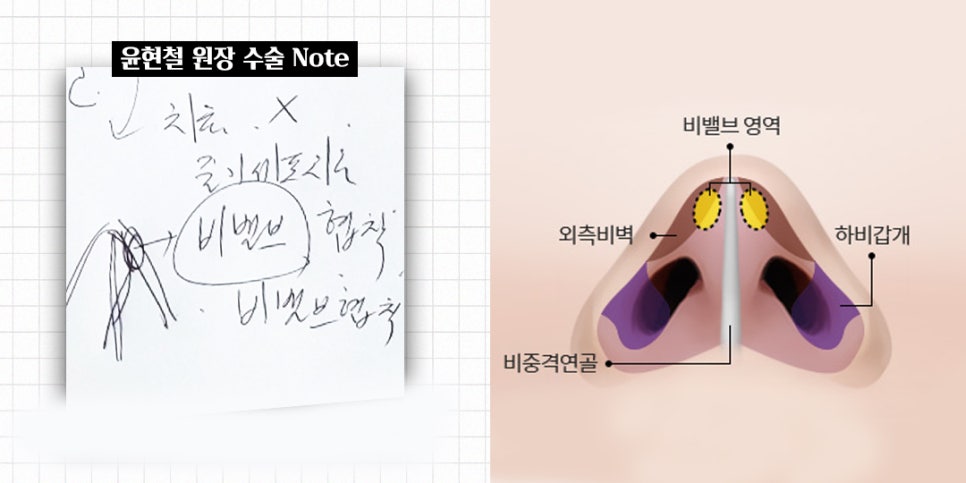
One more thing I would like to explain is that the nasal valve also has an “external nasal valve.”
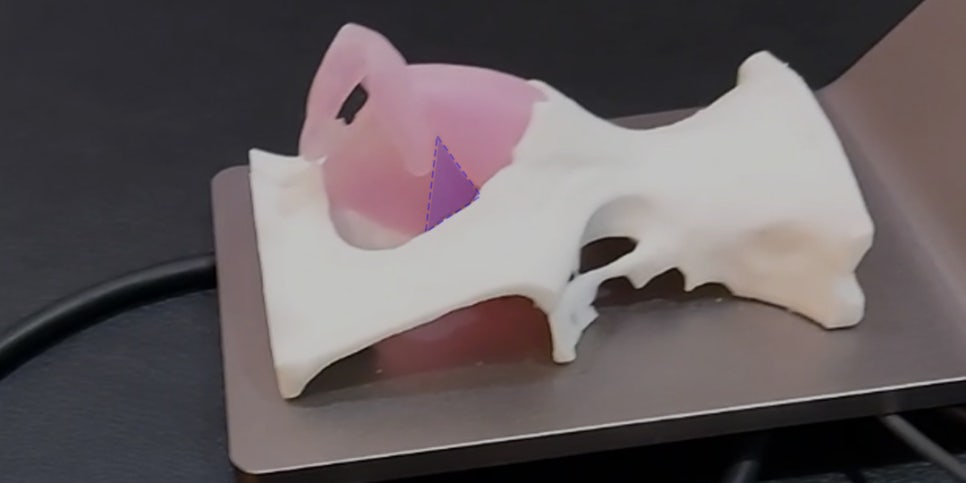
Once again, I used a model to help with understanding.
The triangular part marked in the image above is an area without cartilage,
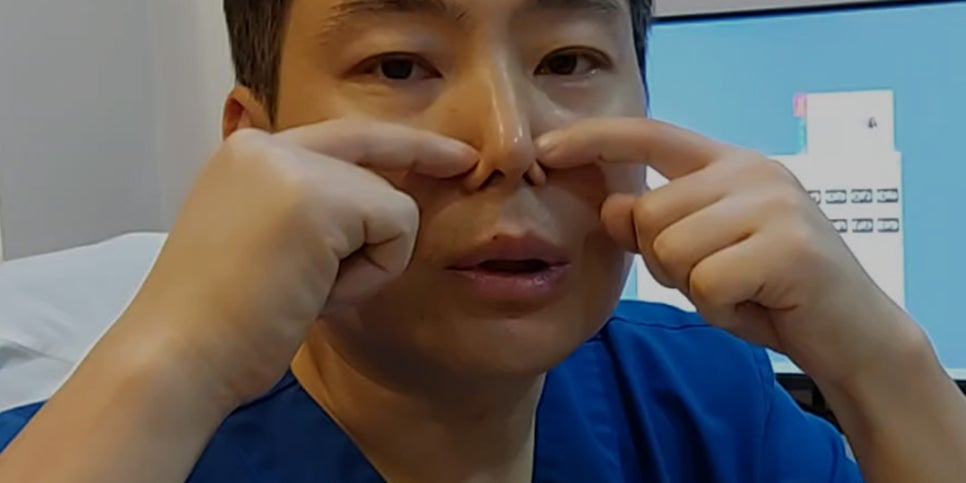
and for people whose supporting strength in that area is weak, when they inhale, it folds inward too much, as if they are breathing heavily, creating a collapsed-looking passage.
This is corrected by methods such as cartilage grafting to strengthen the support.
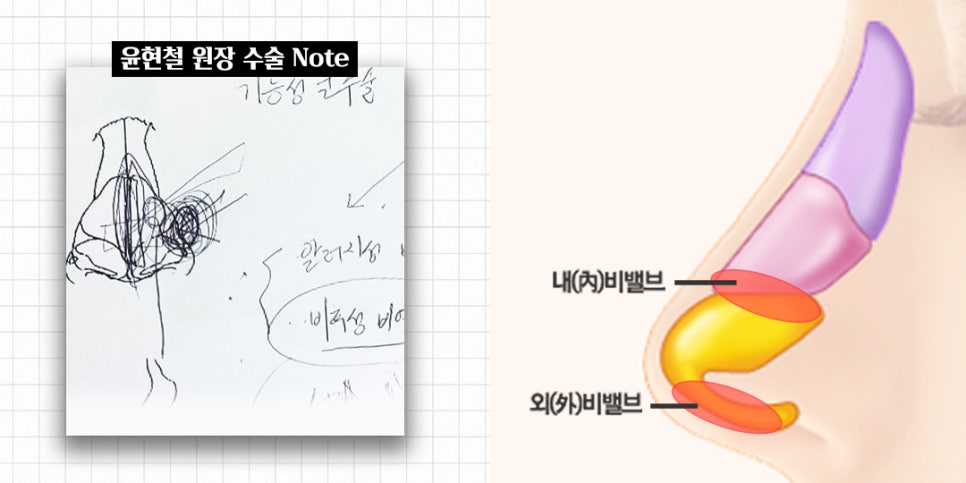
To summarize the nasal valve one more time: the first case I explained is the “internal nasal valve.”
The second case is the “external nasal valve.”
If the nasal valve is narrowed even while resting, it is a “static nasal valve.”
When it narrows during movement, it is called a “dynamic nasal valve,” and correcting these conditions is called “nasal valve correction surgery.”
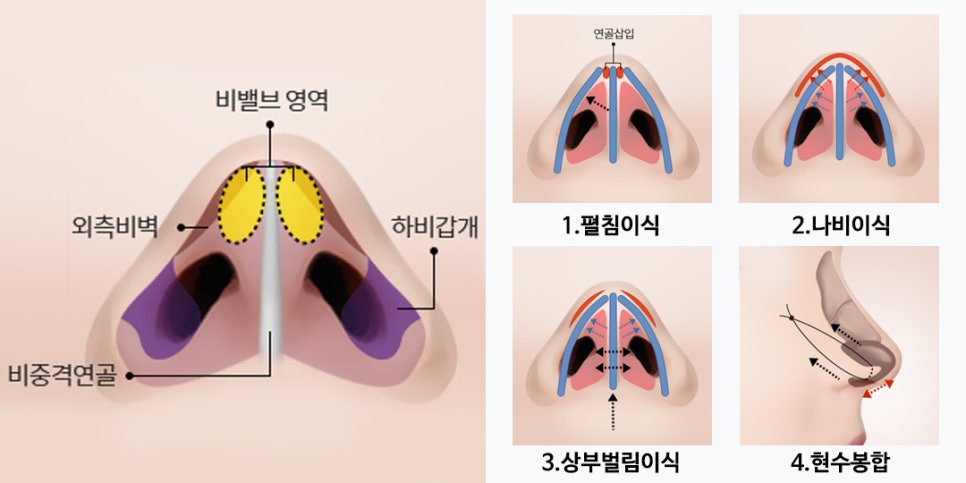
Functional nose surgery, which is commonly seen these days, is not a single surgical method.
It refers collectively to rhinitis, deviated septum, and nasal valve correction surgery.
If you usually feel nasal congestion or discomfort when breathing and this causes inconvenience in your daily life,
it may be helpful to check the points explained above and see which symptoms apply to you.
Thank you.