Hello. This is Oji Co. & Plus, a clinic that has spent only the past 16 years thinking about your healthy and beautiful nose.
In this post, we have prepared the advantages and disadvantages of the implants used in nasal bridge surgery.

During pre-surgery consultations, some people sometimes say, "I don't want to use silicone." Many people tend to have somewhat negative thoughts about silicone, an artificial implant used in nasal bridge surgery.

When we have nasal surgery, we can divide it into nasal bridge surgery and tip surgery, such as raising a low nasal bridge, lengthening a low and short nose tip, or lifting a drooping nose tip.

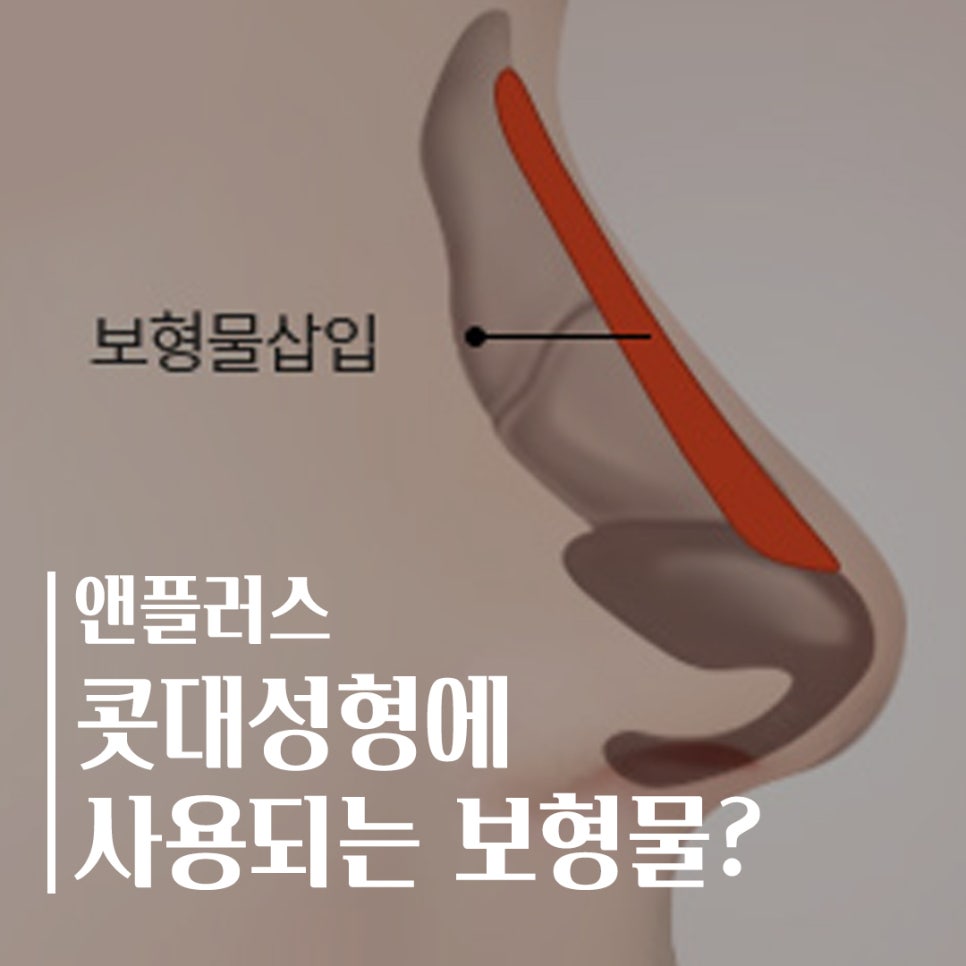
In the case of nasal bridge surgery, the procedure is generally performed by inserting an artificial implant.

The types of implants used in nasal bridge surgery can be broadly divided into artificial implants and autologous implants. Artificial implants include silicone and Gore-Tex, while autologous rib cartilage, autologous dermis, and donated dermis are used as materials for nasal bridge surgery in the case of autologous implants.

First of all, in the case of silicone or Gore-Tex, which are most commonly used in nasal bridge surgery, carving is used (creating a shape with specific instruments and tools), and this carving work makes it easier to shape the artificial implant.

In other words, it is easy to design the nose line we want, such as straight, straight-then-curved, or gently curved. The same goes for thickness: it is easy to refine the shape so that men have a thicker bridge and women have a slimmer one.

However, there can be some issues with silicone, which is typically used in nasal bridge surgery. What many people worry about most is the concern about "contracture" or "inflammation" after about three years or so,

and these symptoms occur when the body recognizes silicone as a foreign substance and shows a rejection reaction. There are also cases where seroma, a watery tissue fluid, accumulates in the bridge of the nose and causes swelling, or where pus comes out, or the wound does not heal completely.

In addition, there are cases where the implant comes through weak areas of the skin.

In this way, when performing nasal bridge surgery, the ways to prevent side effects caused by implant insertion are, first, to proceed in the cleanest possible sterile state during the surgery,

and from a postoperative care perspective, it is also important to keep the surgical area clean and avoid touching it with dirty hands or tissues, etc.

Also, if you experience even slight pain or discharge from the surgical area after surgery, the most important thing is to show the condition to the doctor at the hospital where you had the surgery and receive an accurate diagnosis as to whether there is a problem with the current condition. That is because if there is a problem, finding it early and treating it is the way to prevent side effects.

Therefore, side effects caused by the implant being recognized as a foreign substance during nasal bridge surgery can be said, in a broader sense, not to be a major problem. The reason is that these problems can be resolved by removing the implant or correcting it.

Today, I summarized the artificial implants used in nasal bridge surgery, and in the next part, I will explain the autologous implants used in nasal bridge surgery. I hope this post is very helpful for those who are currently considering nose surgery when choosing materials. Thank you.
https://youtu.be/oPgZ-dwfeG8