
Hello. We are Ojiqo Hospital & Plus, focused only on your healthy and beautiful nose for 16 years. The topic prepared this time is about non-implant nose surgery that improves the nose naturally.

In modern times, caring for one’s appearance has become a trend regardless of age or gender, and many people can be said to be dedicated to self-care. Even with these efforts, people want to improve parts that are difficult to change through cosmetic surgery. Among these, many people want an overall image improvement through rhinoplasty, since the nose is located at the center of the face and is the most three-dimensional feature. Changes to the nose play a major role in determining the overall image. In particular, those who want a natural-looking change can learn more about non-implant nose surgery.
What is non-implant nose surgery? It refers to a procedure that corrects the nose line by using autologous cartilage at the tip of the nose without using an implant on the bridge. In the case of non-implant nose surgery, autologous cartilage is used for correction, which relatively lowers the chance of inflammation. Therefore, it is suitable for those who want a natural nose line or are worried about inflammatory reactions.
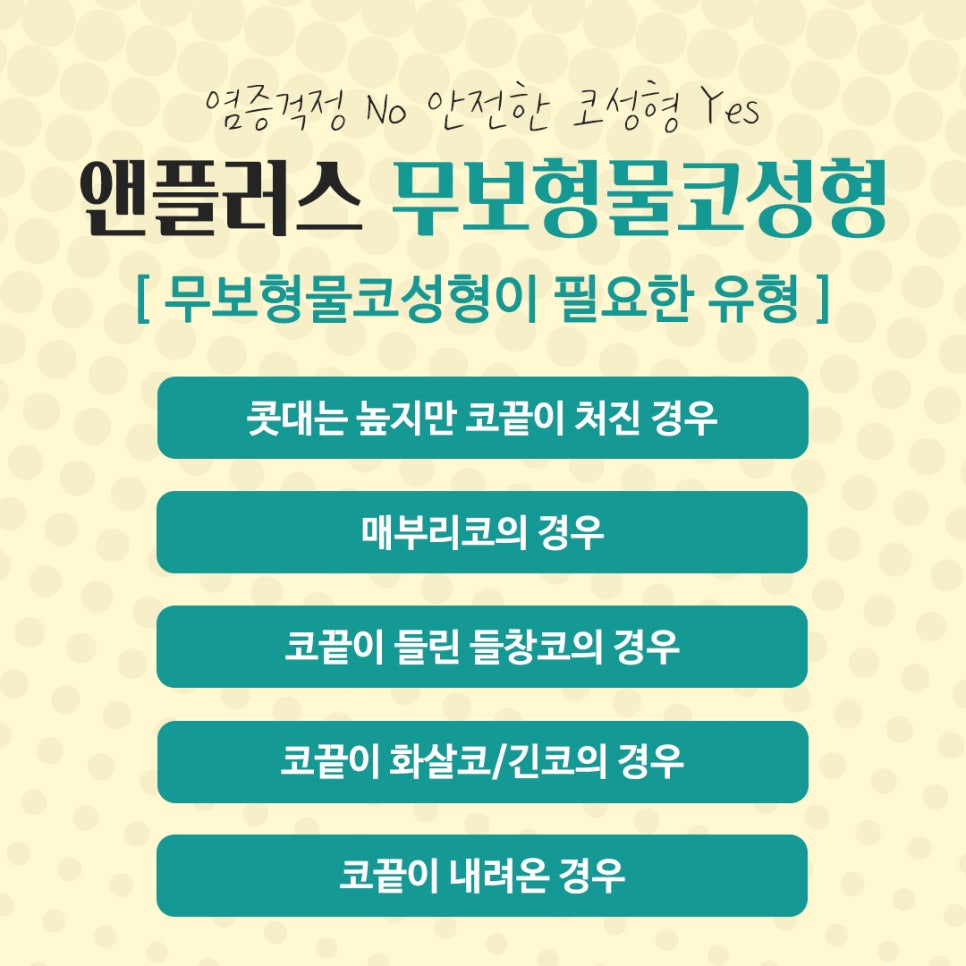
Those who look into this type of non-implant nose surgery can be divided into various cases, such as when the bridge is high but the tip is drooping, when the tip is upturned, or when the tip has the shape of an arrow nose or a long nose. The surgery is performed differently for each person by setting the method and materials according to the individual’s condition.
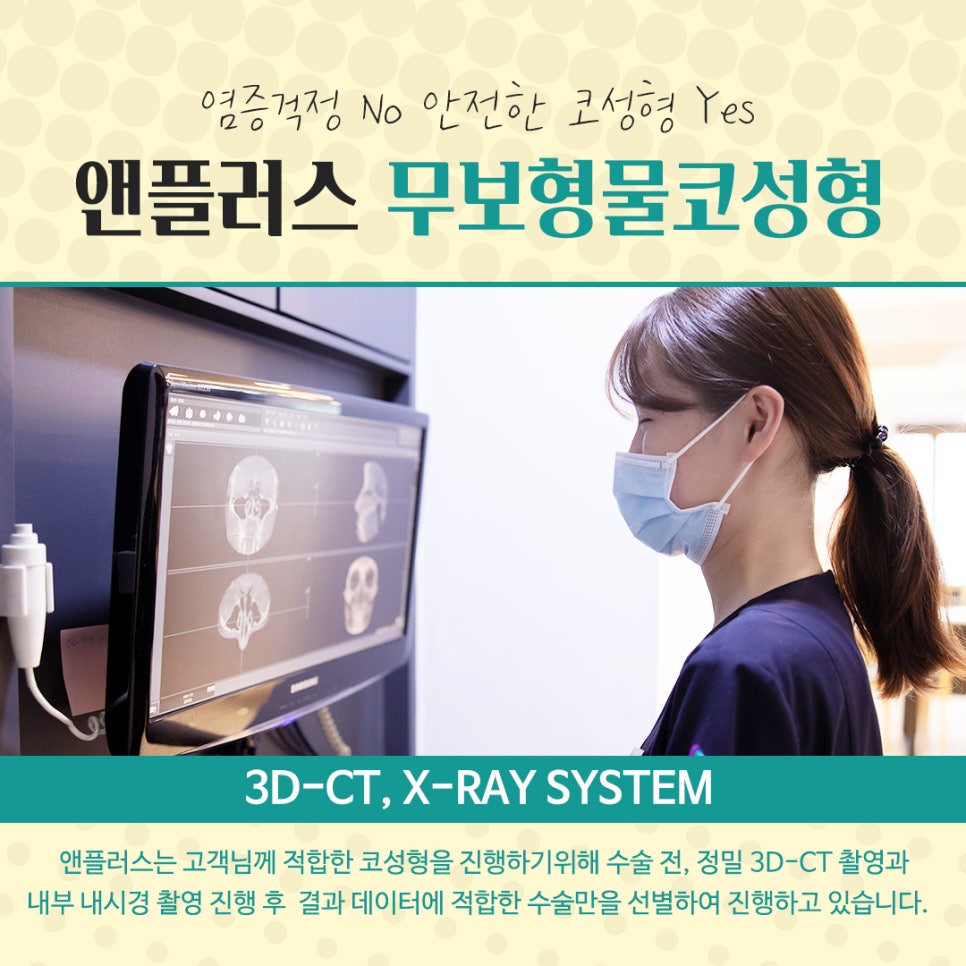
At Ojiqo Hospital & Plus, to ensure safe and satisfying non-implant nose surgery, the current condition of the nose is accurately assessed through various preoperative allergy tests, 3D-CT scans, internal endoscopic imaging, and internal nasal function tests. Based on the collected data, a surgical plan is established and the procedure is carried out.
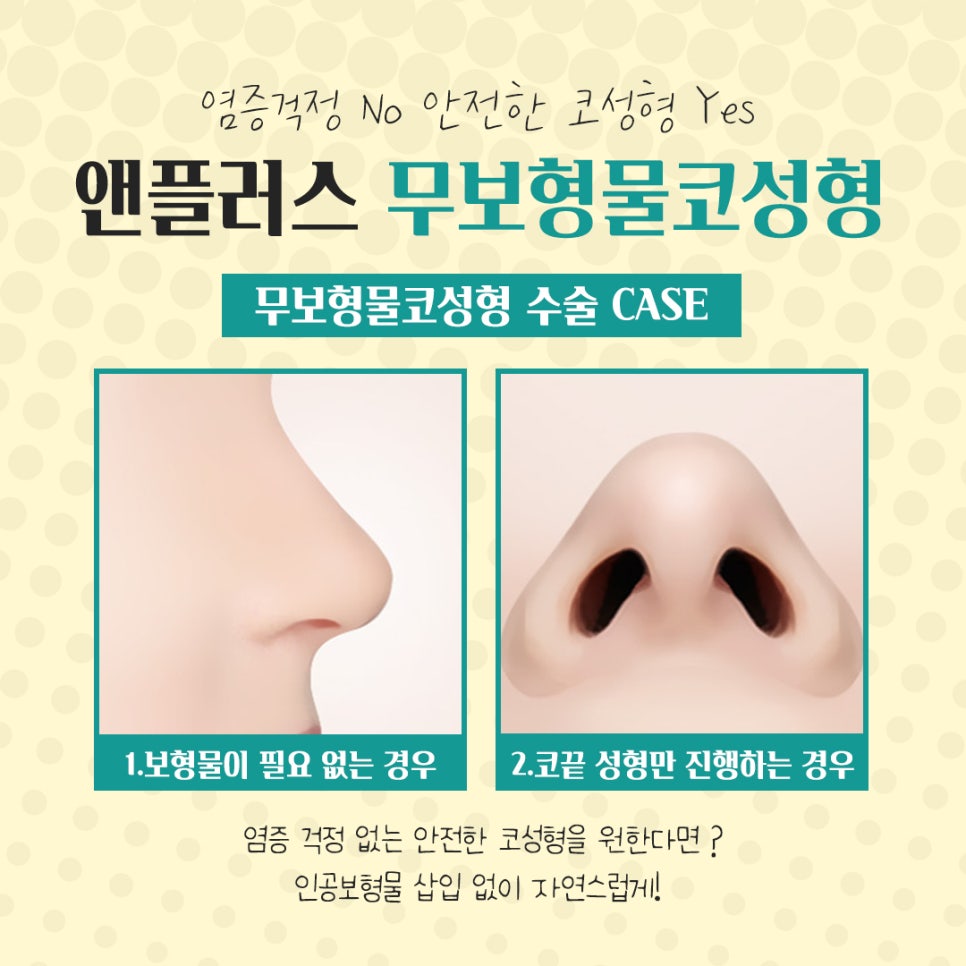
In the case of non-implant nose surgery, the procedure is broadly divided into two methods: cases where the bridge is high enough that an implant is unnecessary, and cases where the bridge has no issue but only the tip is corrected.
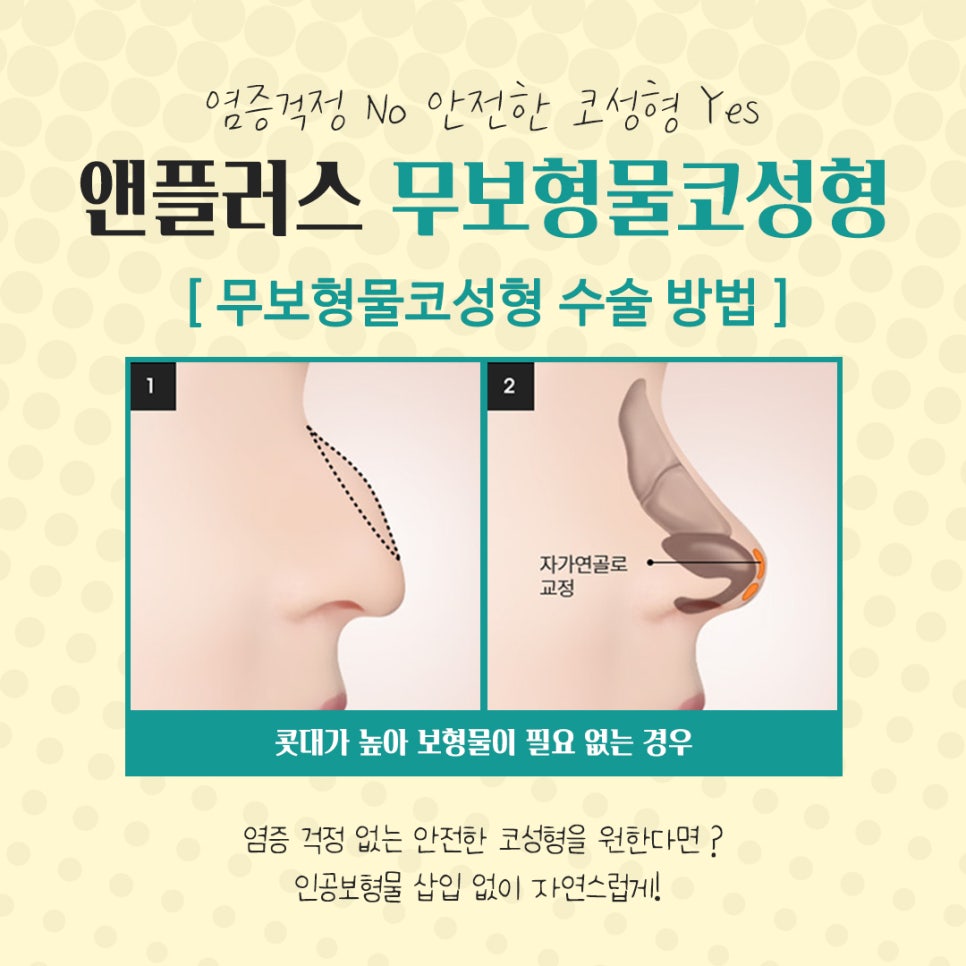
When the bridge is high enough that an implant is unnecessary, if there is a hump on the bridge, it is removed and osteotomy is performed, then the tip is corrected into the overall nose line using autologous cartilage.
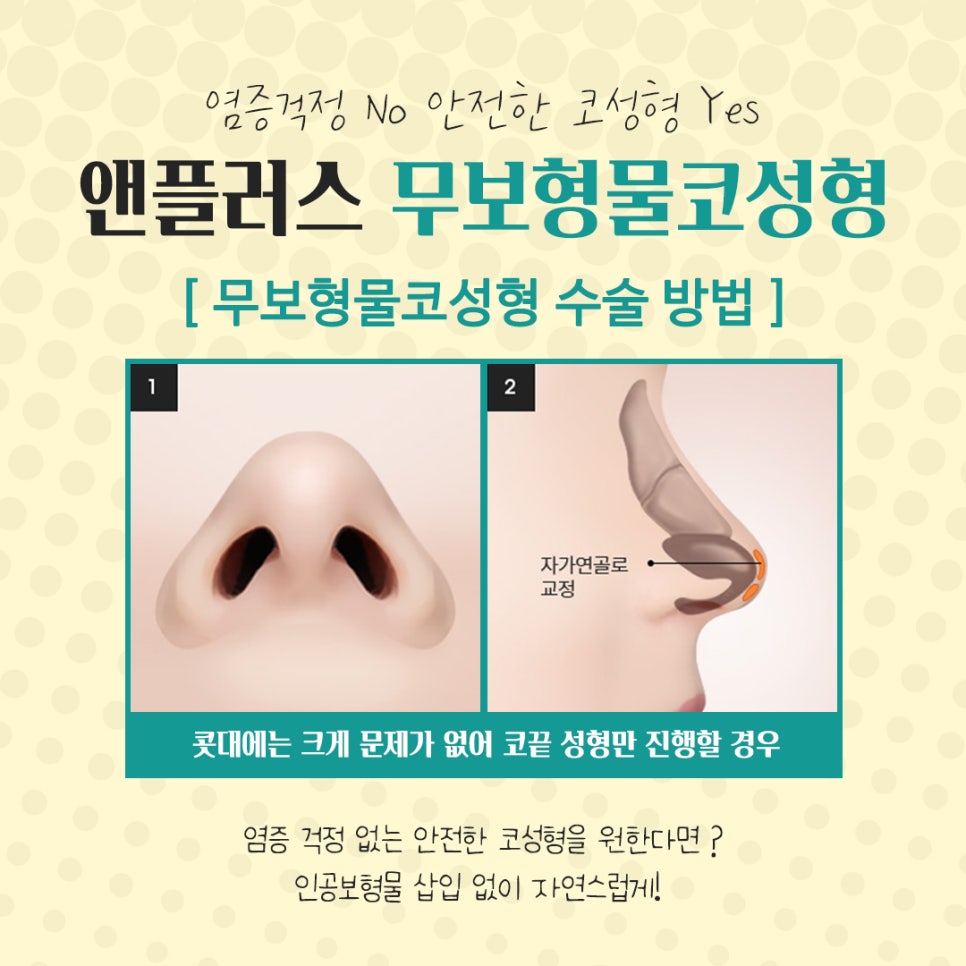
When the bridge has no issue and only tip surgery is performed, the tip is corrected using autologous cartilage and then naturally connected so that the line from the bridge does not appear broken.
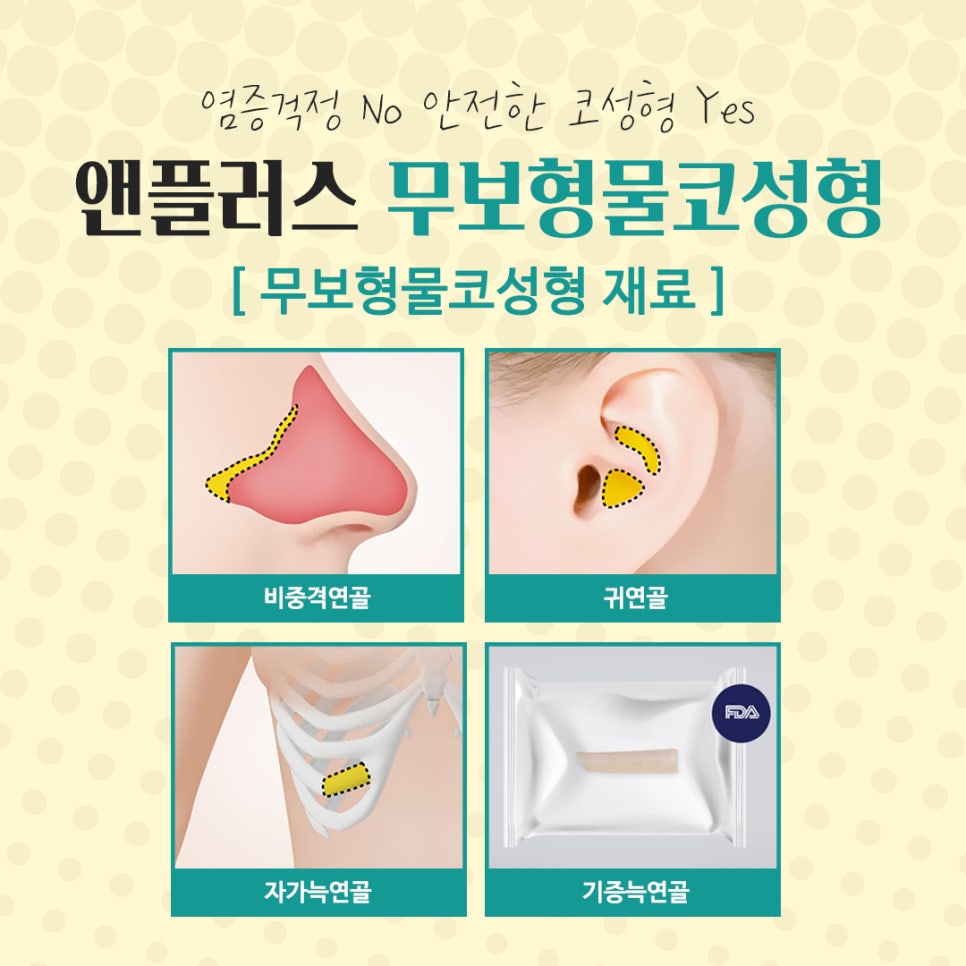
The autologous cartilage used in non-implant nose surgery includes septal cartilage, ear cartilage, and autologous rib cartilage. Before surgery, preoperative examinations are used to determine the material suitable for each person. However, if using such autologous cartilage is difficult, donated rib cartilage approved by the U.S. FDA may be used.
In this way, non-implant nose surgery reduces the burden of using implants and corrects the nose into a natural line using autologous cartilage. Many people may think it is a relatively simple procedure because no implant is used. However, the nose is a functional part responsible for breathing and smell, and among cosmetic procedures it is considered highly difficult. Therefore, those looking into non-implant nose surgery may find it helpful to proceed only after carefully checking whether the medical staff have strong anatomical knowledge of the nose, whether they have sufficient relevant experience, whether equipment is available to accurately assess the condition of your nose, and whether postoperative care is handled thoroughly.
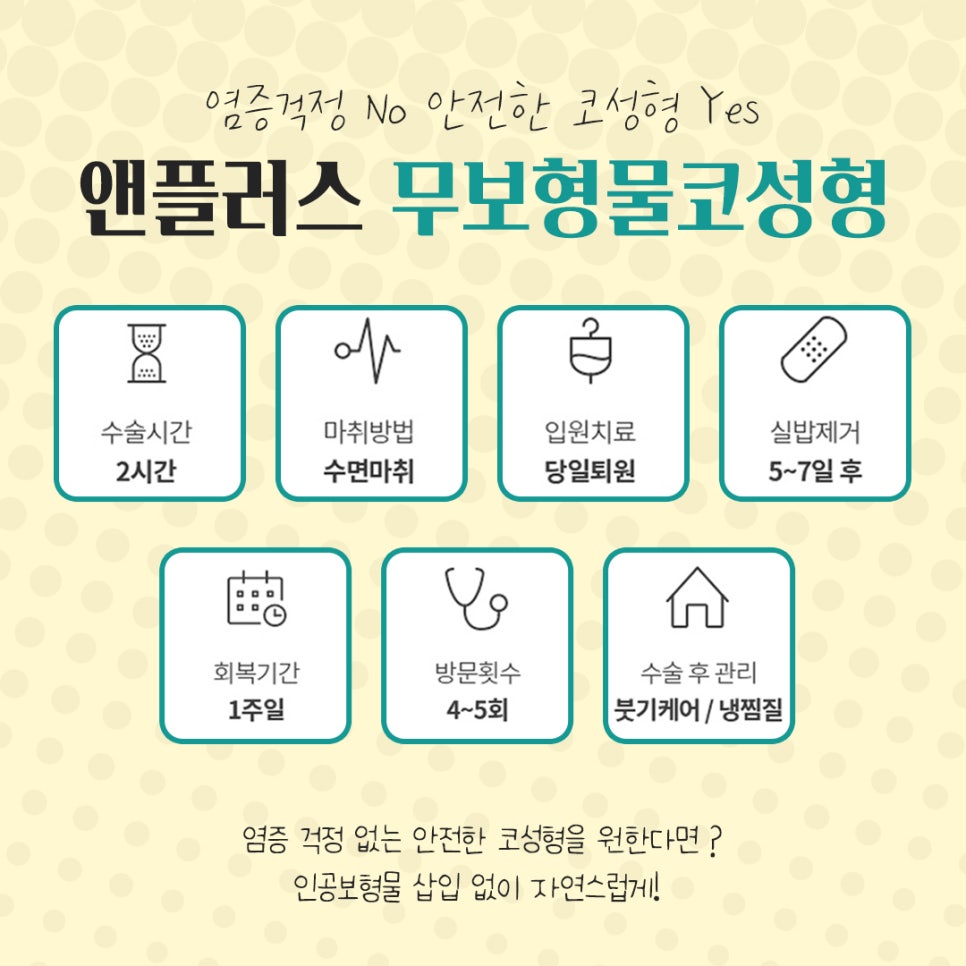
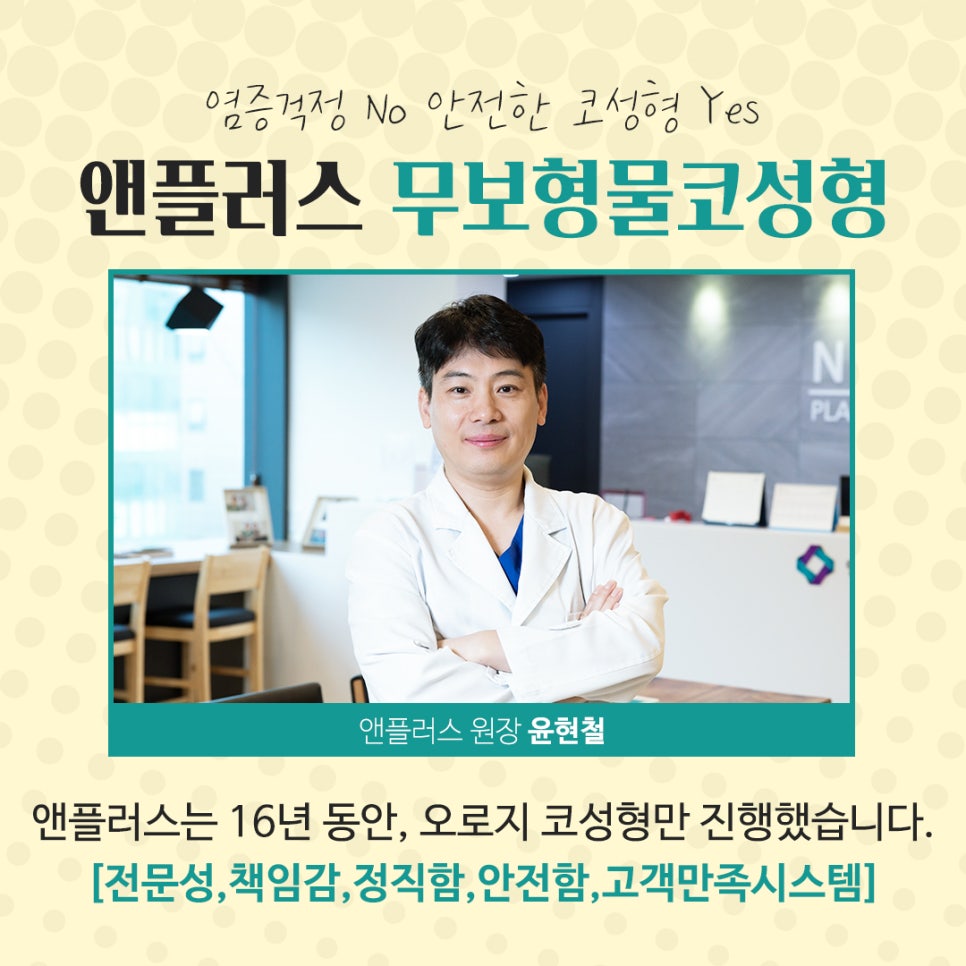
At Ojiqo Hospital & Plus, Director Yoon Hyun-cheol personally handles everything one-on-one, from consultation about non-implant nose surgery, to surgical planning, the procedure itself, treatment, and follow-up visits. This allows you to receive high-level medical care throughout the entire process, before and after surgery.

Postoperative care is also supported by a one-year warranty service after surgery, as well as a surgical responsibility guarantee system prepared for all possible situations, including postoperative pain, inflammation, and dissatisfaction with the result. This helps ensure safe and satisfying rhinoplasty even after the operation.
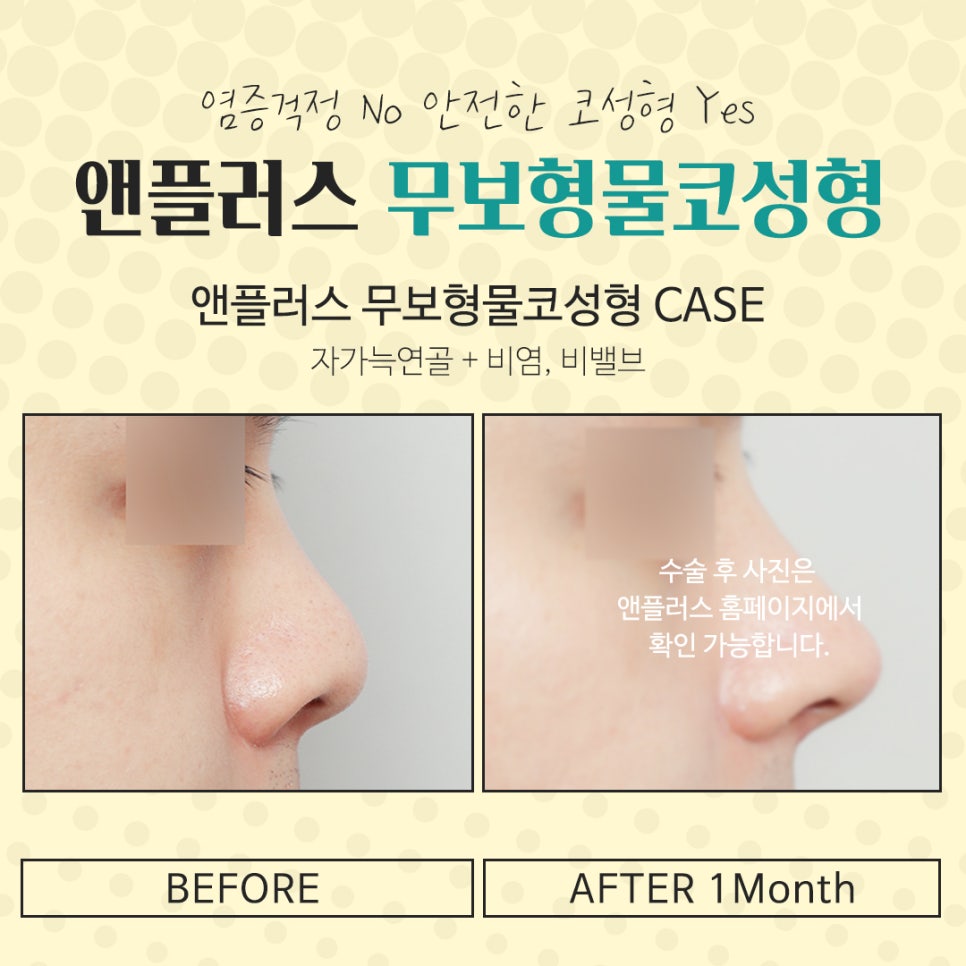
(The above image shows before-and-after photos of non-implant nose surgery at Ojiqo Hospital & Plus.)
That concludes the information shared about non-implant nose surgery at Ojiqo Hospital & Plus, which improves the image naturally. We hope this article is helpful for those who want to naturally improve a nose shape they are currently unhappy with. Thank you.