These days, unlike in the past, more and more people want a more natural-looking nose surgery.
It seems that many people now prefer a nose line that looks like it was done, but not obviously done, rather than an artificially noticeable one.

Artificial implants include silicone and, in the past, commonly used Gore-Tex.
Some people feel a certain resistance toward those materials.
In a narrow sense, “non-implant” generally refers to silicone, Gore-Tex, and the like.
In a broader sense, it can also refer to all tissues inserted into the body.
This includes dermis, fat, and even fillers, autologous cartilage, and autologous tissue.
What we usually mean by non-implant rhinoplasty is a procedure that does not use artificial implants such as silicone or Gore-Tex.
When performing rhinoplasty, the bridge of the nose is usually raised using an implant,
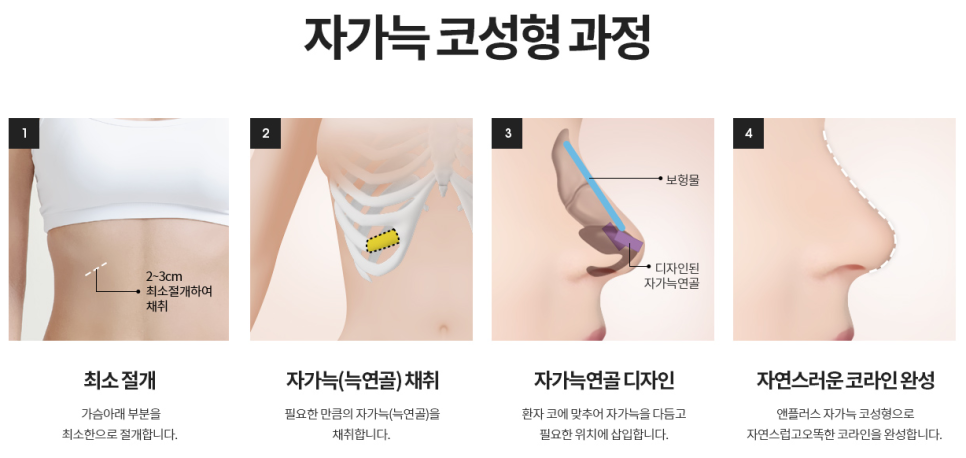
and when lifting the tip of the nose, autologous tissue or autologous cartilage is typically used.

So in what cases is it possible to perform non-implant rhinoplasty without inserting any implant at all?
First, non-implant rhinoplasty is possible if the nasal bridge is already high and the nose has a hump.
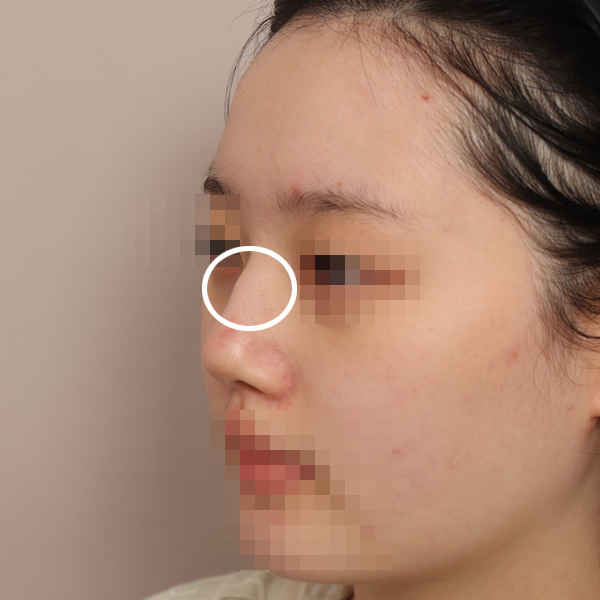
In such cases, surgery can be done without necessarily inserting an implant.
In these cases, it may be enough to shave down the protruding hump, straighten any bent areas, lift a drooping nose tip, and smooth the transition between the bridge and the tip to make non-implant rhinoplasty possible.
However, if the bridge is low and you want to raise it, an implant is unavoidable.
If you do not want an artificial implant,
you will have to use autologous cartilage or autologous dermis.
In the case of autologous dermis, it is often harvested from areas with thicker skin,
such as the area between the hips and the waist, where the skin is relatively thick.
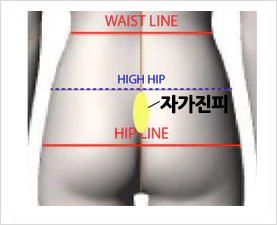
So skin about the length and width of a thumb is harvested from this area,
but the downside is that it leaves a noticeable scar, and the dermis itself has a very high absorption rate,
so the height of the nasal bridge may become much lower than it was at first.
In general, you can think of the absorption rate as being around 50% to 70%.
The septal cartilage or ear cartilage does not provide enough volume to raise the nasal bridge, so it is difficult to use.
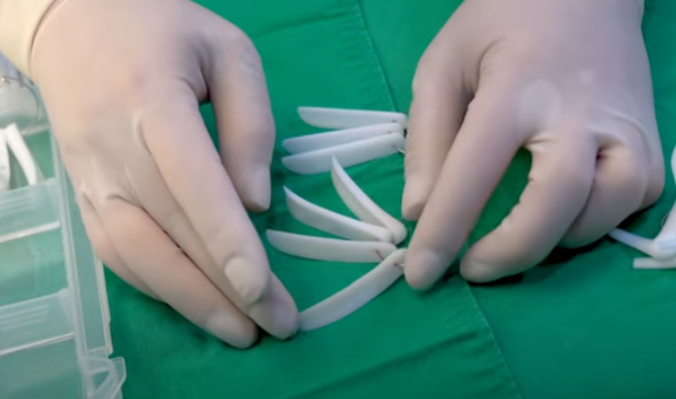
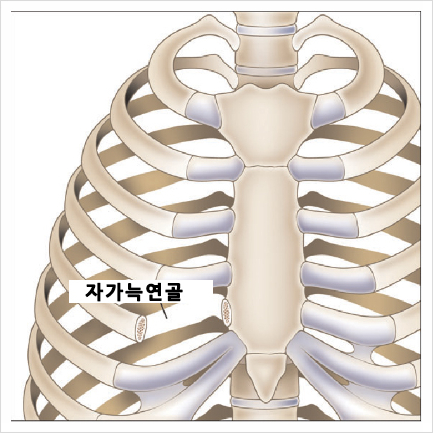
In the case of autologous rib cartilage, that amount of volume can be achieved,
but the biggest problem with autologous rib cartilage is the "warping" phenomenon.
"Warping" is the phenomenon in which costal cartilage gradually bends over time, differently from the shape that was designed.
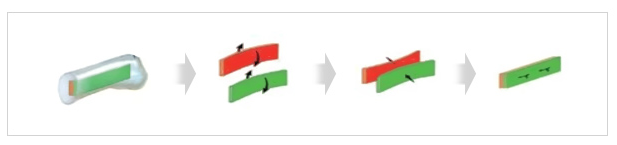
After one hour, the shape changes, and after one week, it changes even more.
In this way, the degree of bending becomes more severe over time, which limits its use when carving cartilage into a shape as firm as the nasal bone.
As a result, the nose shape may not end up as sharp as expected,
and it may produce a slightly heavier-looking nose shape.
Recently, there have also been cases where this rib cartilage is cut into small pieces,
and the pieces are placed inside a pouch made using the "temporal fascia" on the side of the head,
then allowed to grow there before increasing the size to add height to the nose.
In such cases, because autologous cartilage is used, there are fewer side effects,
and even people who are resistant to implants have the advantage of being able to complete the procedure entirely with autologous tissue.
On the other hand, the downside is that the surgery can end up being much more extensive than expected.
Taking the "temporal fascia" itself requires a very large incision,
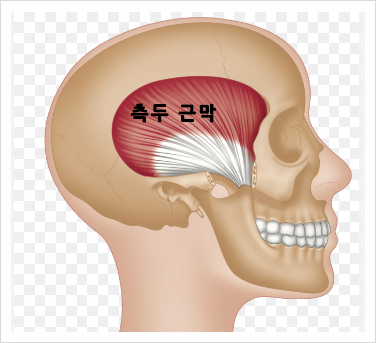
and when a pouch is made using the temporal fascia itself, the pouch size is not very large,
so even if cartilage is inserted, the height may not be as much as expected.
These are the difficulties involved when performing non-implant rhinoplasty using autologous tissue.
That is why, in most cases, for the nasal bridge, artificial implants such as silicone and Gore-Tex are recommended rather than using autologous tissue.
To perform non-implant rhinoplasty like this,
it is important to determine whether the nose is naturally high enough that no implant is needed,
or whether autologous tissue or an artificial implant should be used.
It is best to have a thorough consultation with the medical staff before surgery,
and this is the way to achieve the highest level of satisfaction.
https://youtu.be/TSEqUwUlqao