There are countless dermatology ads and endless reviews.
In the middle of all this, patients can easily lose their way.
The earnest hopes of patients looking for an ethical dermatology clinic, and the realistic concerns of doctors who provide treatment.
I have spent the past 9 years experiencing and observing both sides.
Today, from a doctor’s perspective and using only the patient’s best interests as the standard, I would like to explain the criteria for choosing a clinic that has at least a basic sense of ethics and competence.
Standing on the patient’s side, I will point out 3 criteria for choosing a “truly good clinic,” along with some uncomfortable truths about the industry.
Table of Contents
-
Does it set a customized energy level for me and keep proper treatment records?
-
If its main procedures are [Tune Face, InMode, Titanium, Onda], be suspicious at least once
-
A place where a doctor examines you directly, not a consultation manager

Source: Medical Observer
- Does it set a customized energy level for me and keep proper treatment records?
The purpose of a factory-style system is maximum efficiency.
In this environment, time, cleanliness, and labor are all converted into “costs.”
At some factory-style clinics, I have even heard that there is no chart that records symptoms in detail.
Carefully recording each patient’s energy settings in the chart and analyzing the changes at the next procedure may be a “luxury” in this system.
That is because, in that time, performing the procedure on one more patient would be more profitable for the clinic.

What kind of experience does that leave the patient with?
There is no “data” on what energy level was used last time, how the procedure was performed, or how the skin responded.
In the end, every patient receives treatment at the same “standard setting.”
In some clinics, to avoid possible side effects or complaints, treatments are even performed intentionally at energy levels that are less effective.
What matters is continuously finding a setting that is both safe and effective for the patient.
Instead, the patient pays money but gets no effect, only the same uneasy experience over and over.
There are certainly advantages to factory-style clinics.
You can get treated quickly and leave at the time you want. There are also many skilled doctors.
It is ultimately a matter of choice, but if it were my family or friends, I would at least tell them to reduce even one risk from the procedure.
It is worth checking whether the doctor examines you properly, tells you the energy level suited to your condition, and keeps detailed chart notes.
 Monitor the procedure’s progress, set different energy levels according to the patient’s skin response and improvement trend, and continue updating those records.
- If its main procedures are [Tune Face, InMode, Titanium, Onda], be suspicious at least once
Recently, devices such as Tune Face, InMode, Titanium, and Onda have become very popular.
This does not mean these devices are bad. When used properly, they can be excellent procedures.
But they all share one thing in common: they require almost no “consumable cost.”
Why is that a problem?
From the clinic’s perspective, it makes price competition easy, which means they are highly likely to turn into a “bait product.”

They first attract you with a low price, but once you visit, a structure is created in which they must recommend other expensive procedures to make a profit.
Naturally, the patient becomes the target of excessive sales tactics, and the recommended procedures may also be unsuitable for them.
What really matters is not the “name of the device,” but solving “my problem.”
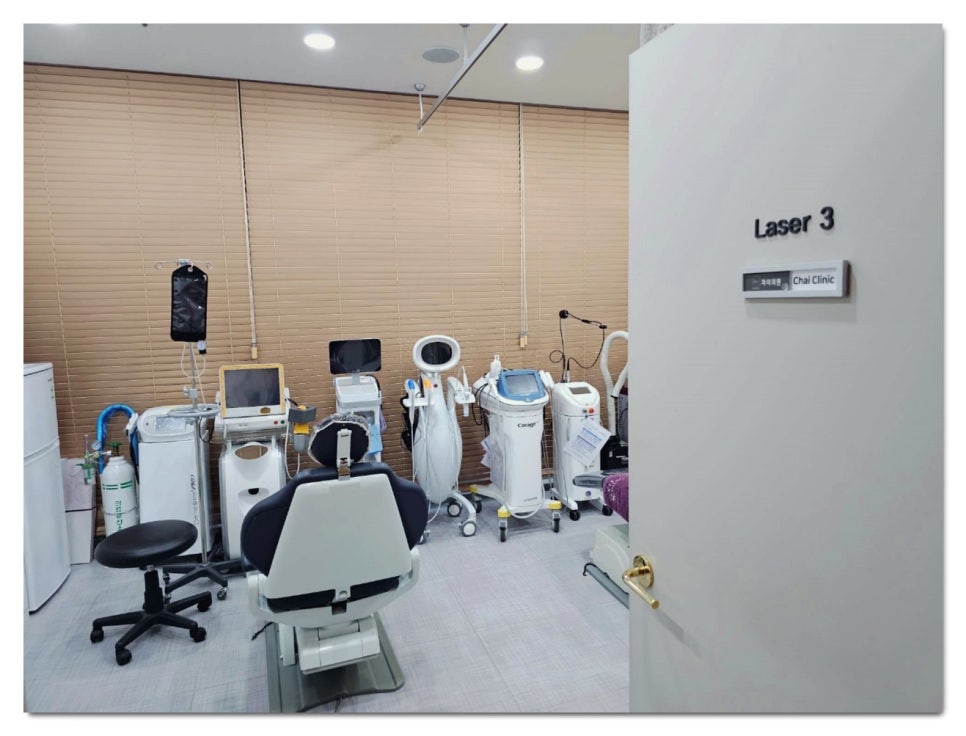
The reason I want access to a variety of devices is that I need many tools to solve a patient’s problem.
It is the doctor’s job to present the solution that fits the patient. Forcing the patient into the one tool the clinic has is dangerous.
- A place where a doctor examines you directly, not a consultation manager
If you go to a hospital because your body hurts, it is natural to be examined by a doctor and receive a prescription.
So why have cosmetic dermatology procedures strangely become a system in which a “consultation manager,” not a doctor, diagnoses the issue first and decides on the procedure?
There are even absurd cases where the patient lies down in the procedure room and learns about their condition only from the voice of a doctor they are meeting for the first time, without even knowing the doctor’s face.
The core of this structure is “incentives.”
In many clinics, consultation staff receive performance bonuses proportional to sales.
This is why their goal inevitably becomes “sales,” not an accurate diagnosis of the patient.

Recently, a patient came to me after receiving chin filler at another clinic and developing a bumpy chin tip.
It was a heartbreaking case in which the procedure was rushed forward based only on the consultation staff’s recommendation, without any medical consideration of bone asymmetry or muscle movement.
At this point, you may be thinking:
If the director consults directly,
won’t it be too expensive?
Of course it may be a little more expensive, but in many cases the difference is not as large as you might think, so I recommend comparing after a direct consultation.
I have also seen far too many cases where, because of a wrong procedure, patients end up paying double the cost in the end.
The wise way to save money is clear.
Get the right diagnosis from the start, and receive even a single procedure correctly.

Of course, not every large clinic pursues efficiency above all else, and not every one-doctor clinic is ethical.
Rather than criticizing a specific operating style, I wrote this in the hope of helping you develop the “wise eye” to distinguish quality from the rest.
Even if you do not visit our clinic, I sincerely hope you will find a good clinic and receive wise care using these 3 criteria I have shared.
Thank you.