Hello. I am Jo Won-jin, the director of 차이의원, where I have been providing dermatological care in Hongdae for 10 years.

My neck wrinkles seem to be getting worse.
Can they be removed?
What treatment should I receive for neck wrinkles
that look like a cockscomb?
Many people decide on a treatment based only on bits of information such as:
“I heard Botox is good for neck wrinkles,”
or “I heard fillers are all you need.”
The problem is that the most effective treatment can vary completely depending on the type of neck wrinkle.
If the treatment is not properly matched to the wrinkles, you may spend the money without seeing much of an effect.
Today, under the topic “Neck Wrinkle Treatments: A Guide to Managing Horizontal and Vertical Wrinkles by Type,”
I will explain how to accurately distinguish between the types of neck wrinkles and summarize the appropriate treatments and daily care methods for each.
Table of Contents
-
What type of neck wrinkles do I have?
-
Which neck wrinkle treatments are effective for horizontal wrinkles?
-
Which treatments are suitable for vertical wrinkles?
-
Can neck wrinkles be completely smoothed with treatments alone?
-
How can I maintain the effects of treatment for longer?
What type of neck wrinkles do I have?
Neck wrinkles can broadly be divided into two types.
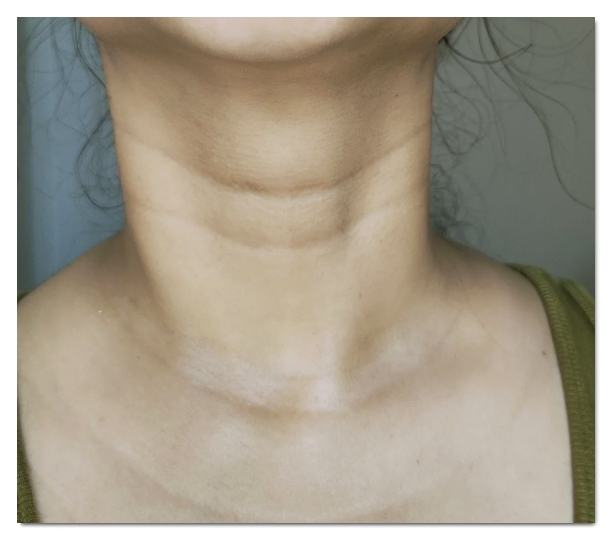
Horizontal wrinkles
These are lines that form across the neck.
The main causes are a decrease in collagen, which supports skin elasticity as we age, accumulated UV exposure,
and the habit of frequently looking down at a smartphone, also known as forward-head posture.
As the skin itself loses elasticity, the creases become set in place.
This is the most common type after the age of 30.
These days, they are also appearing earlier and more frequently among people in their 20s who use digital devices extensively.
Vertical wrinkles
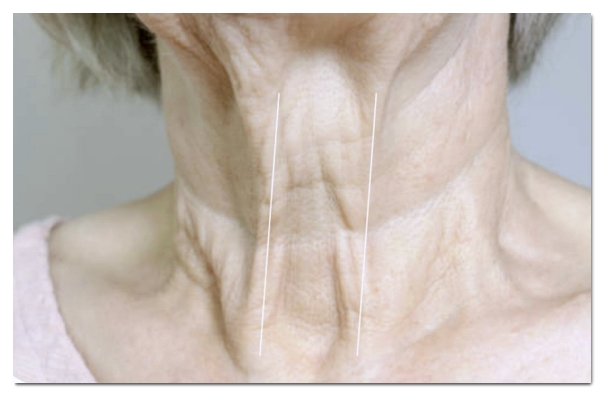
These are vertical lines that rise from beneath the chin toward the collarbone.
This is not a skin problem. They occur when a thin muscle at the front of the neck called the platysma contracts.
As we age, muscle tension can change, and genetic factors may also play a role in some people.
If vertical lines become prominent on your neck when you open your mouth and say “ee~” in front of a mirror, they are likely platysma bands.
You must first determine whether your neck wrinkles are horizontal, vertical, or a combination of both before you can select the right treatment accurately.
Which neck wrinkle treatments are effective for horizontal wrinkles?
Because horizontal wrinkles are a problem with the skin itself,
treatments that replenish collagen or improve skin elasticity can be effective.
Rejuran Healer
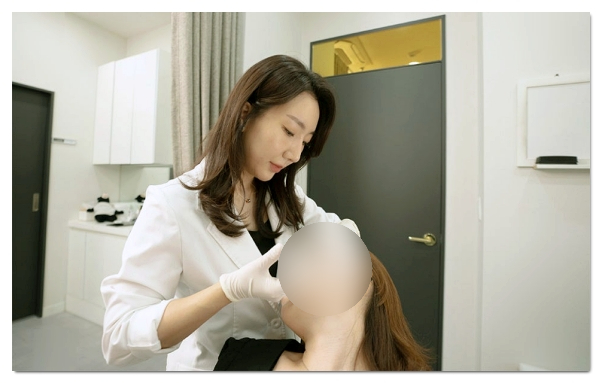
This treatment involves injecting PDRN, a regenerative ingredient extracted from salmon DNA, into the deeper layers of the skin to stimulate regeneration.
It is suitable for improving fine, shallow wrinkles or thinning skin, and is usually performed as a series of three to four treatments.
Fillers
Fillers may also be used for deeply etched horizontal lines.
However, because the skin on the neck is thin, ordinary fillers can appear bluish through the skin—a phenomenon known as the Tyndall effect—or may easily create an uneven appearance.
Therefore, it is important to choose a product that is soft and adheres well,
and it is also very important not to inject too much.
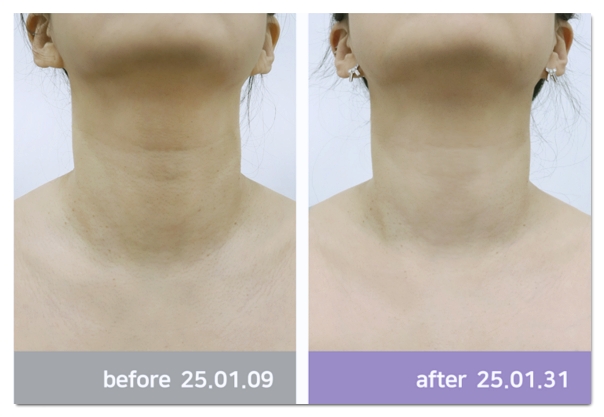
The photo above shows a case where filler was injected into horizontal wrinkles.
Rather than aiming to improve neck wrinkles by 100% and filling them completely, it is important to inject as conservatively as possible, with a target of 70–80% improvement.
Radiofrequency lifting (Thermage)
This treatment restores elasticity throughout a sagging neck contour.
Its strength lies more in improving elasticity than in treating the wrinkles themselves.
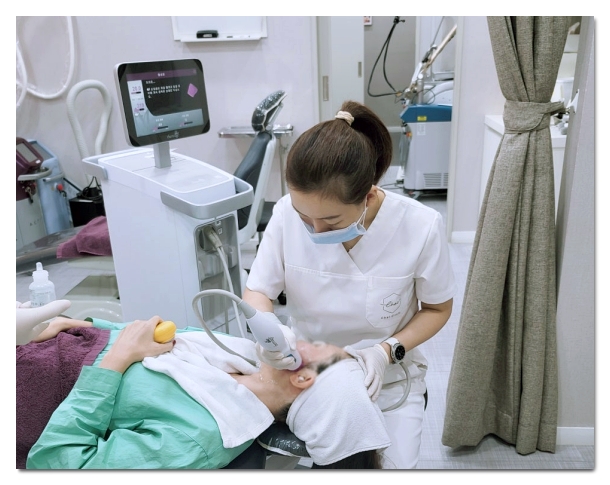
Rather than receiving just one treatment on its own, it is common to combine two or three treatments depending on the depth of the wrinkles and the condition of the skin.
Which treatment is suitable for vertical wrinkles?
Because vertical bands are caused by muscle activity,
treatments that relax muscle tension are the closest to the appropriate solution.
A representative option is Botox.
Botox is injected in small amounts into the platysma in the neck to relax excessive muscle contraction.
It can soften the vertical bands while also making the jawline look more defined.
The effects generally last about four to six months after one treatment.
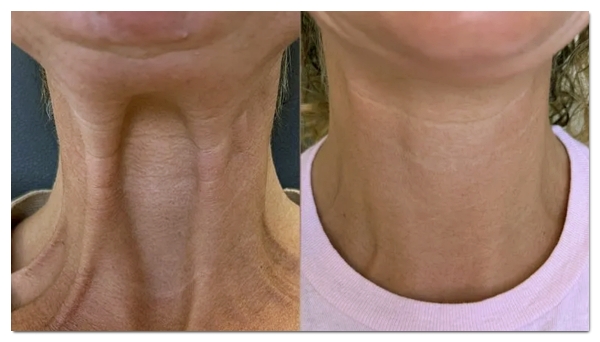
The important point is that fillers or Rejuran have little effect on vertical bands, no matter how many times they are administered.
This is because the cause lies in the muscle.
Conversely, the conventional muscle-injection method of Botox has limited effects on horizontal wrinkles.
However, the skin Botox technique—in which Botox is diluted and injected in many small amounts into the superficial layers of the skin—is used for shallow horizontal wrinkles or to improve skin texture.
Ultimately, the type and direction of treatment vary depending on how the wrinkles formed
and what caused them.
Can neck wrinkles be completely smoothed with treatments alone?
To be honest, it is rare for them to disappear completely.
The skin on the neck is thinner than facial skin and has fewer sebaceous glands, making it a slower-healing area.
It is also an area that moves and creases constantly in daily life. Therefore, for wrinkles that have become deeply established,
it is best to consider 70–80% improvement a realistic goal, even with treatment.
-
Duration of effects: Botox, 4–6 months; fillers, 6–12 months; Rejuran and skin boosters, approximately 6 months to 1 year after a series of treatments
-
Maintenance: Most treatments require regular repetition rather than being performed only once
-
Downtime: This varies by treatment, but minor marks or swelling may last about 1–3 days

It is important to understand these points before beginning treatment in order to have greater satisfaction.
If you expect the wrinkles to be completely smoothed in a single session, you may easily be disappointed when you see the results.
Consider the treatment the beginning, with ongoing maintenance as the main process.
How can I maintain the effects of treatment for longer?
No matter how good the treatment is, the results may quickly revert without daily care.
The following four points are the most important.
Sun protection:
The neck is one of the areas most exposed to UV rays.
Apply sunscreen to the front and back of your neck just as you do to your face.
It is necessary throughout all four seasons.
Posture correction:
Keep your smartphone or laptop at eye level whenever possible.
A bent-neck posture is one of the biggest causes of horizontal wrinkles,
and forward-head posture accelerates not only wrinkles but also pain and sagging.
Neck-specific moisturizing:
The skin on the neck is thin and prone to dryness.
Apply a neck cream containing retinol or peptides consistently,
and it is also helpful to make a habit of extending any remaining face cream down onto your neck.
Sleeping position:
A pillow that is too high can keep your neck folded while you sleep.
Maintain an appropriate height suited to the height of your shoulders.
Neck wrinkle care is most effective and lasts longer when treatment is combined with lifestyle habits.
In summary
Neck wrinkle treatment is not a simple area that can be resolved with a single option.
First, accurately identify the type of wrinkles you have,
then choose the appropriate treatment and continue with daily maintenance as well.
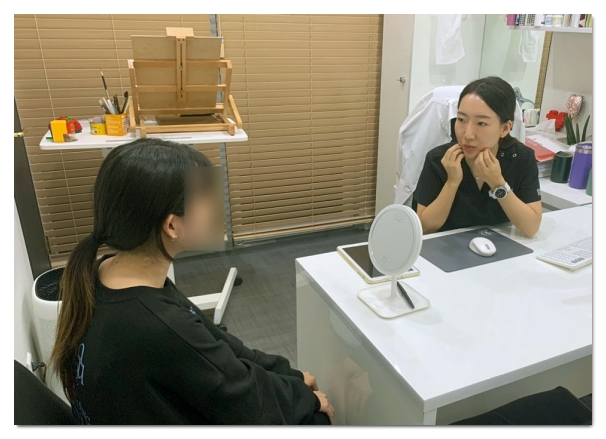
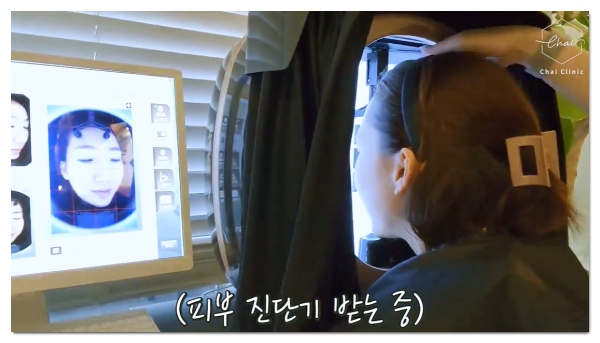
During your consultation, I recommend first having your wrinkles accurately assessed as horizontal, vertical, or mixed.
Thank you. This was Jo Won-jin.
[Read this before receiving laser or lifting treatment]