Hello. I am Wonjin Cho, the director of 차이의원, where I have been practicing dermatology in Hongdae for 10 years.

These are the laser devices at our clinic.
There really are a lot of them, aren’t there?
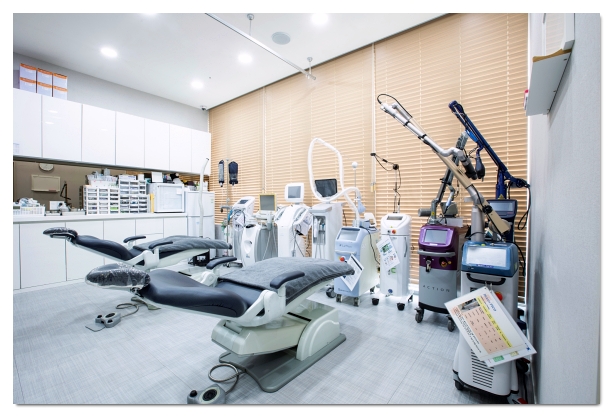
The photo above shows the laser devices we have at our clinic.
I am sometimes told, “You seem to be very interested in equipment.”
But I did not bring them in simply because I wanted to have them.
Each device targets different types of pigmentation and produces different effects.
Ultimately, the key to pigmentation treatment is how well these devices are combined and how appropriately they are used.
The same applies to the dual toning and regular laser toning I will discuss today.
To start with the conclusion, laser toning is a treatment performed using a single device,
while dual toning combines two different devices or modes, such as laser toning and Genesis toning.
Today, I will explain how the effects of dual toning differ from those of regular laser toning,
and why results vary from person to person even when they receive the same toning treatment.

Table of Contents
-
Even pigmentation that looks like the same type of blemish can be at different depths
-
How do the effects of dual toning differ from laser toning?
-
If you have these concerns, consider it
-
Realistic expectations for the effects of dual toning
-
If performed incorrectly, melasma may actually become darker
-
How to maintain the effects of dual toning for longer
Even pigmentation that looks like the same type of blemish can be at different depths
Blemishes all look like similar brown spots on the surface, but their locations within the skin can vary considerably.
Some pigmentation, such as freckles or age spots, is located close to the epidermis.
Melasma can be epidermal, dermal, or mixed, so its depth varies.
Although it may look like the same brown pigmentation and seem as if it can be resolved in one treatment, the depth the laser needs to reach can be completely different.
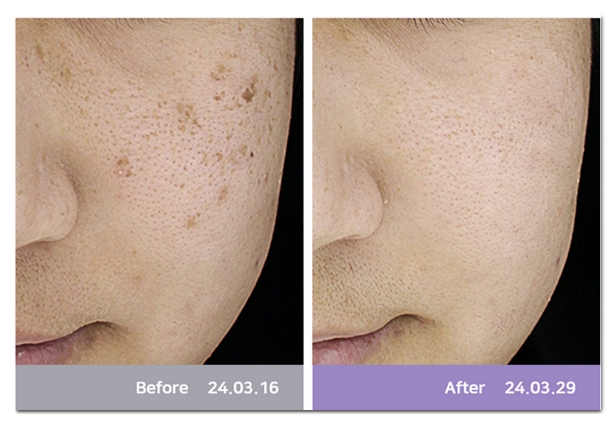
What is important here is that the depth and action of a laser vary depending on its wavelength and mode.
Using only one type of toning may work well for pigmentation at a particular depth,
but it may not sufficiently target pigmentation that is shallower or deeper.
When epidermal and dermal pigmentation are mixed,
this is why using only one type of toning may provide only half the potential benefit.
Many people who say, “Laser toning didn’t work for me,” are actually dealing with this issue.
How do the effects of dual toning differ from laser toning?
As the name suggests, dual toning is a treatment that combines two types of toning with different characteristics.
For example, Pico Toning and Genesis Toning may be performed together, or laser toning and Pico Toning may be combined.
Two treatments with different wavelength ranges, laser emission modes, and devices are combined in a single treatment process to target pigmentation three-dimensionally.
The reason for this approach is that each type of toning is effective in a different area.
Pico Toning uses short, powerful energy delivered in picoseconds to break melanin into tiny particles and precisely target stubborn or deep pigmentation.
Genesis Toning is effective for improving skin texture and elasticity and for refining the appearance of redness and pores.
Laser toning brightens broad areas of pigmentation and evens out the overall skin tone.
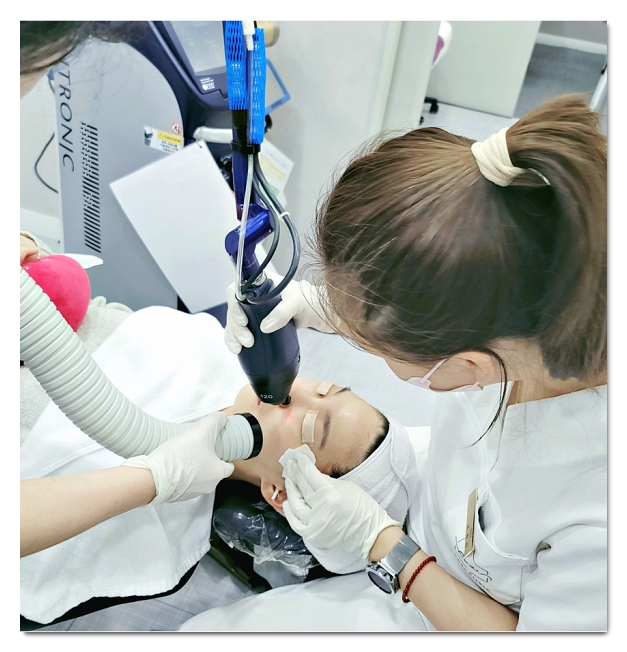
By layering toning treatments with different strengths in this way, surface blemishes, deep dermal melasma, redness, and pores can all be addressed within one treatment plan.
This is exactly what I meant earlier when I said that the key is how well the devices are combined.
Rather than targeting only one area with a single type of toning,
this approach selects and layers the toning treatments that suit your specific skin concerns.
If you have these concerns, consider it
Dual toning may be suitable if you have undergone multiple laser toning treatments but your melasma has remained unchanged,
if you have both epidermal blemishes and dermal melasma that have not responded to a single treatment,
or if your overall skin tone looks dull and uneven.
On the other hand, if the pigmentation is limited to the superficial epidermis or you have only one or two simple blemishes,
it may not be necessary to receive both types of toning.
So rather than assuming that “dual is always best,” it is important to first determine which combination is appropriate for your pigmentation.
Realistic expectations for the effects of dual toning
However, dual toning is not a treatment that produces a dramatic transformation all at once.
Because it works by gradually lightening melanin, you generally need to receive treatment consistently—usually 5 to 10 or more sessions at intervals of one to two weeks—before noticing a change.
Rather than deciding that it “doesn’t work” after one or two sessions, continuing at an interval suited to your skin can determine the outcome.
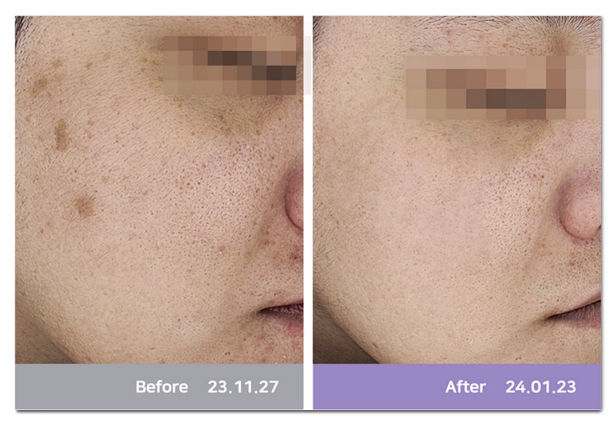
For information on ways to improve the results, please refer to the article below.
How melasma may become darker if the treatment is performed incorrectly
This is something I especially want to emphasize.
Dual toning is absolutely not better simply because it is performed more intensely or more frequently.
Melasma is particularly sensitive to irritation, so if the energy is too high or the intervals between treatments are too short,
rebound hyperpigmentation may occur, causing the pigmentation to become darker.
That is why results can vary significantly even with the same dual toning treatment.
What truly matters is not how many types of toning you receive or what the devices are called.
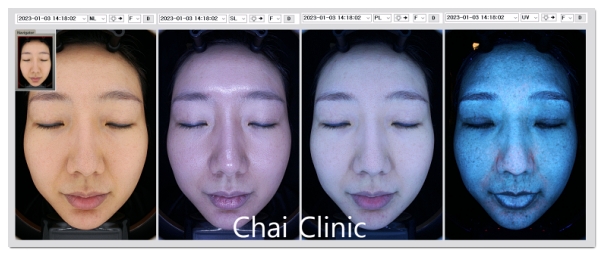
The key is accurately assessing whether your pigmentation is epidermal or dermal and how your skin responds to irritation,
then designing the appropriate combination, energy level, and treatment intervals.
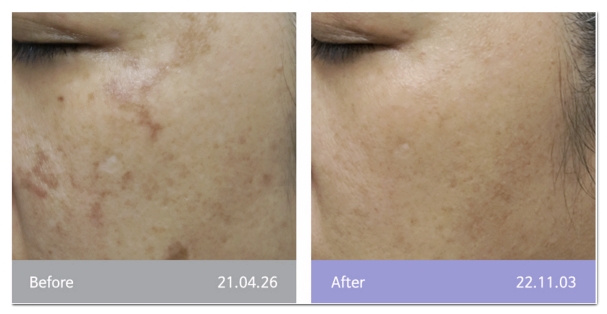
As I have mentioned several times, whether you are receiving pigmentation treatment or lifting treatment, careful energy adjustment and record-keeping are very important when using laser devices.
The clinic needs to maintain these records systematically so that the next treatment can be performed with energy settings that are better suited to you.
Please be sure to read the article below for more details.
How to maintain the effects of dual toning for longer
Aftercare is just as important as the treatment itself.
Even if you have worked to lighten pigmentation, direct exposure to ultraviolet rays can stimulate melanin again and quickly reduce the effect.
During the treatment period, apply sunscreen thoroughly 30 minutes before going outdoors,
and it is best to take a temporary break from irritating exfoliation and excessive use of brightening products.
Combining moisturizing and soothing care can also help the effects last longer.
Dual toning produces the best results when treatment and aftercare are carried out together.
In conclusion
If you have said, “Laser toning didn’t work for me,”
it may be that the treatment itself was not the problem, but that the combination was not suited to your pigmentation.
The true value of the effects of dual toning lies not in receiving two types of toning,
but in intelligently designing a combination of different wavelengths and modes to suit your pigmentation.
Using good equipment in a way that is well suited to your skin is much more important than simply having good equipment.
If you are considering dual toning, rather than immediately increasing the number of sessions, start by having the type and depth of your pigmentation accurately assessed.
Thank you. This was Wonjin Cho.