One of the biggest concerns for people considering facial contouring surgery is nerve damage.
It is one of the complications often mentioned in connection with facial contouring.
“Is it okay that the area where I had cheekbone surgery feels numb?”
“I can’t really feel sensation at the facial contouring surgery site. Is that a problem?”
Questions like these come up quite often.
These concerns are frequently brought up during preoperative consultations as well,
and they are also among the most common questions patients ask when checking their postoperative progress.
If you have been considering facial contouring surgery,
you may have come across information about sensory changes through communities or search results.
So why do these sensory changes occur after facial contouring surgery,
and how long does it take for recovery?
Today, I will explain this in detail.
Why sensation becomes dull after surgery
There are two main reasons why sensation becomes dull after facial contouring surgery.
First, it is due to reduced sensation caused by muscle tightness or swelling at the surgical site.
This refers to cases where the surgical area is swollen, or the surrounding muscles become tense, causing temporary dullness in sensation.
In most cases, this recovers normally within about 3 months after surgery, when the swelling subsides.
Second, it is due to reduced sensation caused by facial nerve damage.
There are various sensory nerves distributed across the face,
and if a nerve is damaged during surgery, sensation may become dull.
If a nerve is damaged during surgery, sensation may become dull.
If a nerve is damaged, regeneration may take more time,
and if the nerve is not simply damaged but severed,
there is also a possibility that sensation may not return completely.
Nerves that can be problematic if injured
Infraorbital Nerve
Mental Nerve
Many nerves and blood vessels are densely distributed throughout the face.
Among them, there are four nerves that must be carefully protected during facial contouring surgery.
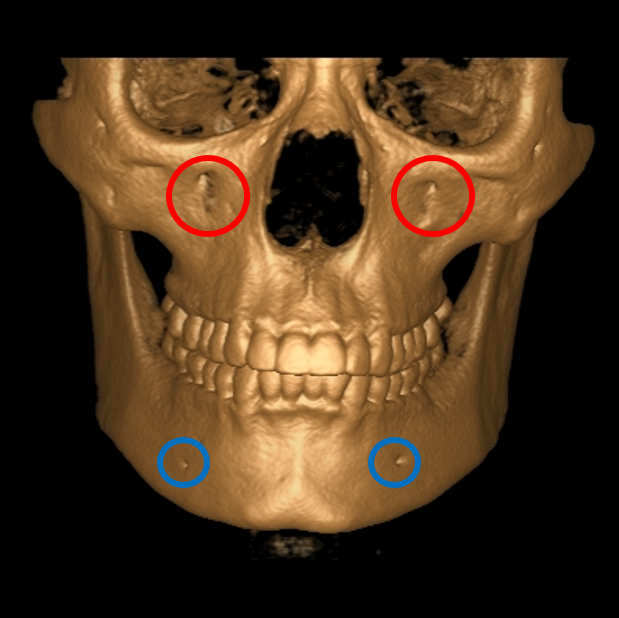 Source: TS Plastic Surgery
These are the nerve lines emerging from the four nerve foramina marked in red and blue,
and two of them are the Infraorbital Nerve in the cheekbone area, marked in red.
This nerve is responsible for sensation in the nose, upper lip (left and right), and the front cheekbone area,
so during cheekbone reduction surgery, care must be taken to avoid the nerve line emerging from the foramen.
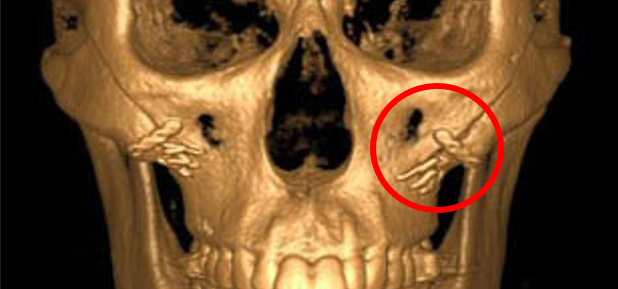 Source: TS Plastic Surgery
As shown in the CT image, there are many cases where a cheekbone fixation pin is located near the foramen from which the Infraorbital Nerve emerges.
In such cases, the nerve may be compressed by the fixation pin,
so it must be checked properly and fixed securely during cheekbone reduction surgery.
Source: TS Plastic Surgery
The next is the Mental Nerve, which emerges from the blue-marked nerve foramen.
This is a nerve that is easily injured during square jaw surgery or chin surgery.
The Mental Nerve is responsible for sensation in the lower jaw, including the chin and lower lip,
and because everyone has a different facial bone structure,
the nerve’s location varies slightly from person to person.
Therefore, it is essential to identify the location of the nerve foramen through 3D-CT imaging before surgery,
and to proceed safely while checking the nerve line during the operation.
How to tell whether it is temporary swelling or nerve damage
During the period immediately after surgery, when swelling is severe,
it is difficult to distinguish whether reduced sensation is temporary and caused by swelling or caused by nerve damage.
That is why patients who come in for follow-up about 1 to 2 weeks or around a month after surgery often feel the most anxious and ask many questions.
At this stage, it is difficult to tell whether the cause is swelling or nerve damage,
and one way to check is to test lip sensation.
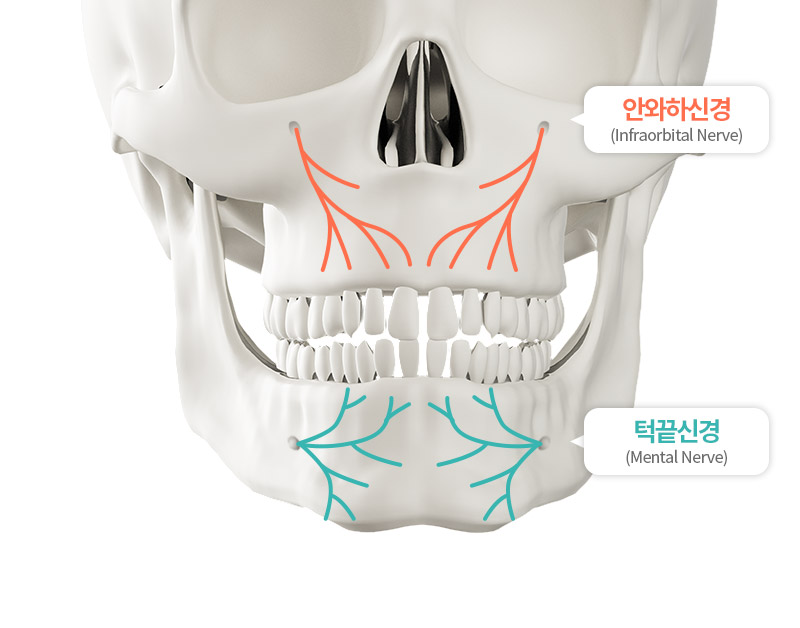 Source: TS Plastic Surgery website
The lips are the area controlled by the four main nerves mentioned earlier,
divided between the left and right sides of the upper lip and the left and right sides of the lower lip.
Therefore, if you can still feel sensation in your lips after surgery,
it is likely to be temporary reduced sensation caused by swelling,
and in most cases, it recovers within about 3 months.
Even if there is some nerve damage, as long as the nerve is not completely severed,
lip sensation may still be preserved.
Because it gradually recovers over time,
there is no need to worry too much.
However, just as swelling, scarring, and recovery periods vary from person to person,
the speed of sensory nerve recovery can also differ.
Please note that it usually takes 6 months and, in some cases, up to 1 year.
Blood vessels that require caution during facial contouring surgery
Facial artery
Facial vein
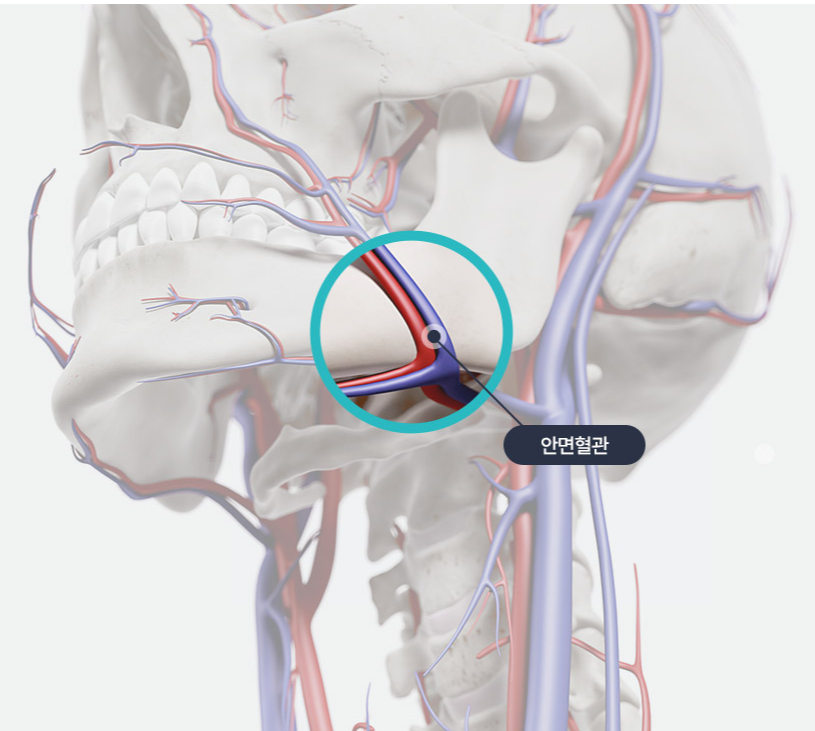 Source: TS Plastic Surgery website
In addition to nerves, various blood vessels are distributed throughout the face,
and among them, the blood vessels that require special caution during facial contouring surgery are the facial artery and the facial vein.
In the case of the nerve damage described earlier, there is no threat to life,
but if these major blood vessels are injured, it can lead to massive bleeding
and may escalate into a medical accident,
so even greater care is required during surgery.
Especially because square jaw surgery or chin surgery is performed through an intraoral incision
in a limited space,
unexpected risky situations can occur if the surgeon does not have sufficient experience.
Although every surgeon who performs facial contouring surgery has their own techniques,
I always emphasize that above all else, “safety” comes first.
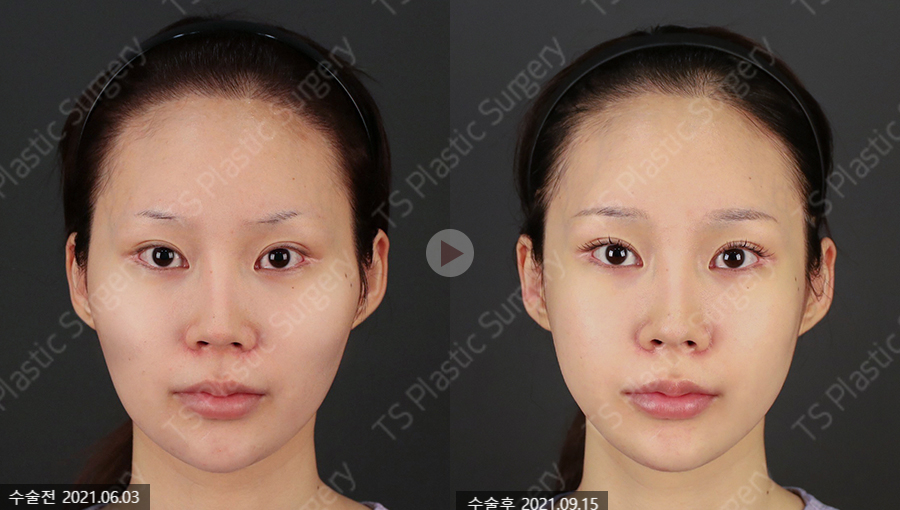 Cheekbone reduction + square jaw surgery + nose surgery performed (3 months post-op)
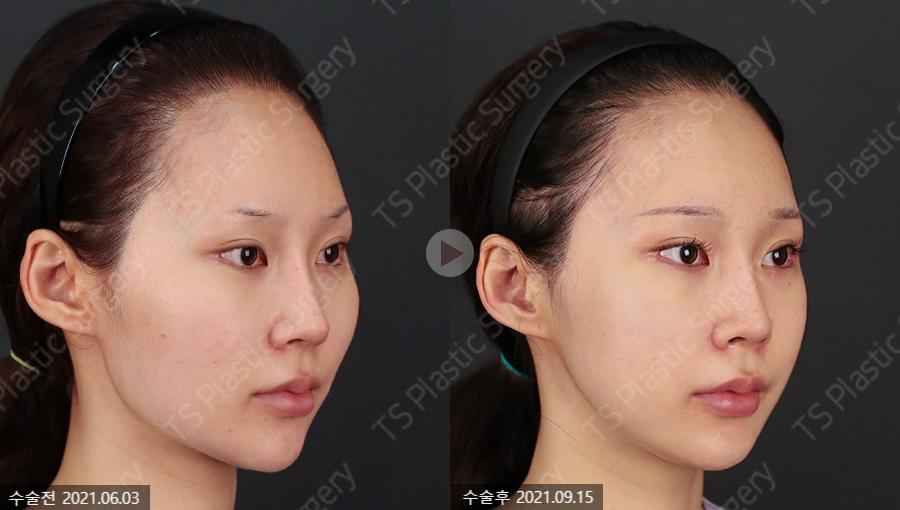 Cheekbone reduction + square jaw surgery + nose surgery performed (3 months post-op)
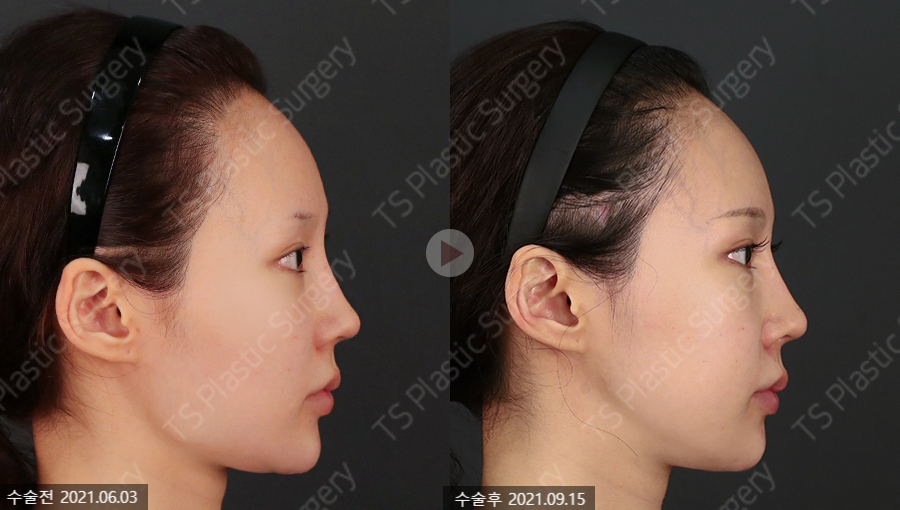 Cheekbone reduction + square jaw surgery + nose surgery performed (3 months post-op)
Facial contouring surgery is one of the procedures that can produce clear changes after surgery and a high level of satisfaction.
It is true that many people visit clinics hoping for such dramatic changes.
However, just as important as those surgical results is “safety.”
I believe that satisfaction with surgery must be based on safety during the procedure, no less than on the outcome.
To ensure safe facial contouring surgery, it is essential to thoroughly understand each patient’s anatomical structure through detailed examinations such as 3D-CT and X-ray before surgery,
and then create a customized surgical plan based on that information.
Accurately removing bone according to the plan is extremely important,
and an vague, uncertain approach such as “roughly around here” can lead to serious complications such as nerve or blood vessel damage.
To secure both satisfaction and safety,
thorough preoperative diagnosis and a detailed surgical plan are absolutely necessary.
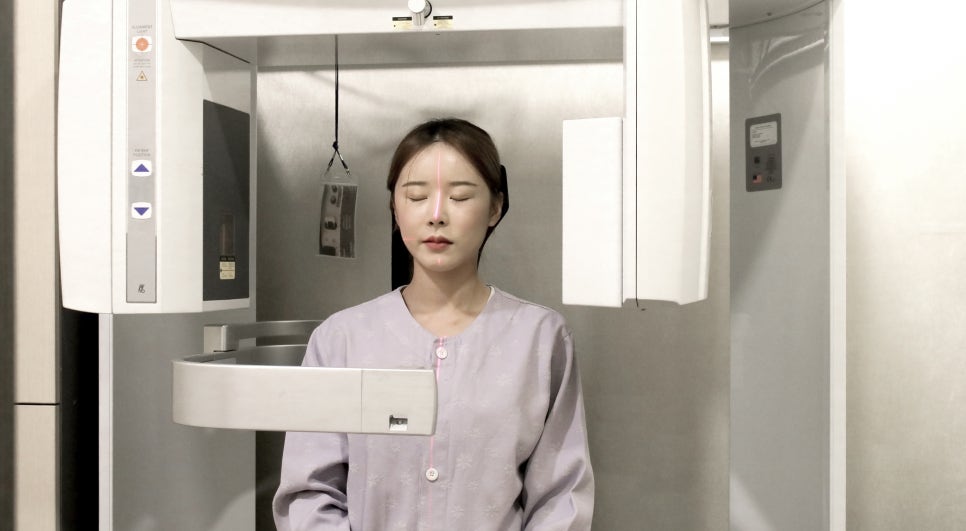 Source: TS Plastic Surgery website
To summarize what I explained today,
diminished sensation after facial contouring surgery is a natural phenomenon that can sufficiently occur during the recovery process,
and in most cases, it gradually recovers over time.
Although it varies from person to person, sensation usually returns little by little over several months, so there is no need to worry too much.
If you feel anxious, you can simply check your lip sensation.
If you can feel sensation in your lips, you are in the recovery stage, so waiting a little longer can lead to sufficient improvement.
Rather than worrying unnecessarily because of unverified information you come across online or from people around you,
it is most important to trust the medical team that performed the surgery and focus calmly on recovery.
※ Depending on the individual, side effects such as inflammation, bleeding, and nerve damage may occur, so sufficient consultation with the medical team before surgery is necessary.
These are example images provided to help understanding.