Recently, as more people prefer a natural look and a higher nasal bridge line in rhinoplasty, the use of rib cartilage from the first surgery is gradually increasing. In particular, in the case of East Asian patients, the septum is often small and lacks support, so it may be difficult to achieve the desired height using septal cartilage alone. In such cases, autologous rib cartilage or donor rib cartilage may be considered.
Among these, the option chosen by those who prefer autologous tissue is autologous rib cartilage. Donor rib cartilage may cause psychological discomfort because it uses another person’s tissue, and autologous tissue is considered because it may involve relatively less concern about side effects and can be expected to offer greater safety.
Reasons for Considering Autologous Rib Cartilage Rhinoplasty
One of the concerns when considering autologous rib cartilage rhinoplasty is that a separate procedure is required to harvest the rib cartilage. This may make the surgery time somewhat longer, and depending on the clinic, there may be concerns about side effects such as general anesthesia, scars at the harvest site, or, in rare cases, pneumothorax. To reduce this burden, rib cartilage harvesting during autologous rib cartilage rhinoplasty is performed through a micro-incision at a safe area. In this article, we explain why the harvest site and incision are important in autologous rib cartilage rhinoplasty.
- Autologous Rib Cartilage Rhinoplasty with Safety in Mind
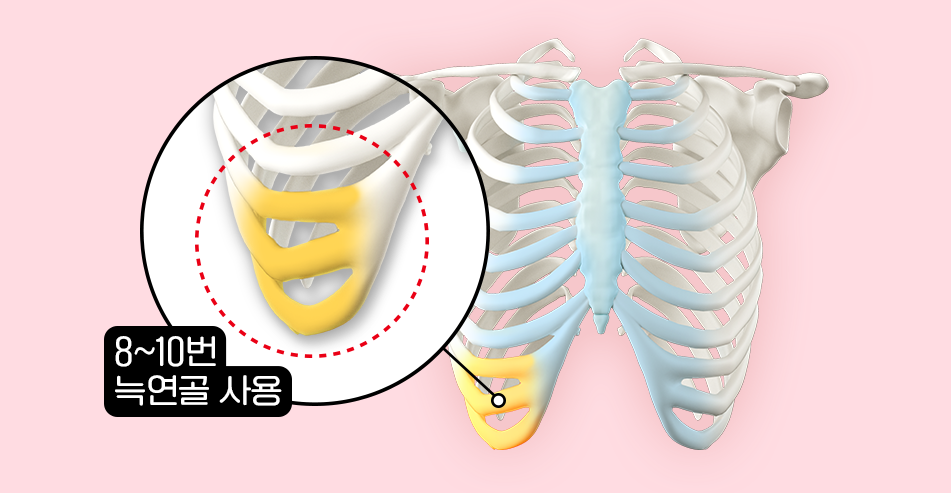
Source: TS Plastic Surgery website
There are 12 ribs on each side, and we harvest the 10th rib cartilage, which is relatively safer. While the 6th to 8th rib cartilages are commonly used, the 10th rib cartilage, which is located relatively lower, has the advantage of a lower chance of pneumothorax. Because the lungs are not directly located behind the 8th to 10th rib cartilages, the burden related to pneumothorax is relatively lower, and cartilage harvesting is possible under local anesthesia or sedation rather than general anesthesia. In addition, the incision site is also located lower and more to the outside, offering the advantage of being less visible.
- The Importance of a Micro-Incision
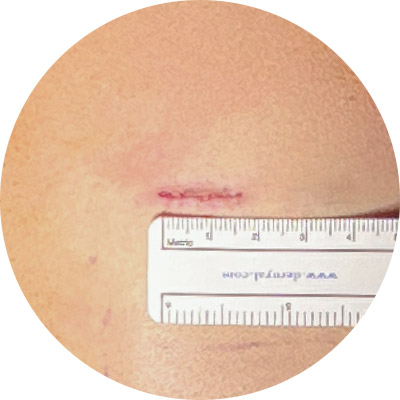
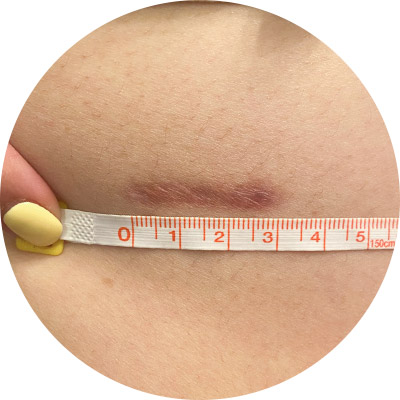
Incision site for autologous rib cartilage rhinoplasty at TS Plastic Surgery (left), scar at the incision site for autologous rib cartilage rhinoplasty at another hospital (right)
Not only the safety of the harvest site but also the size of the incision is important, as it can affect recovery after surgery and scarring. The wider the incision range, the longer the recovery period may be, and the greater the chance that a scar may remain.
During harvesting, the incision is minimized to within about 2 cm and performed as a micro-incision. This helps reduce bleeding, lessen pain and scar-related concerns, and may also support faster recovery. However, cartilage harvesting through a micro-incision requires sufficient surgical experience, so it is preferable for it to be performed by an experienced medical team.
The harvested cartilage is secured in sufficient quantity for the surgery and then cut into pieces for use. Usually, it is sliced and finely divided before being used in the procedure.
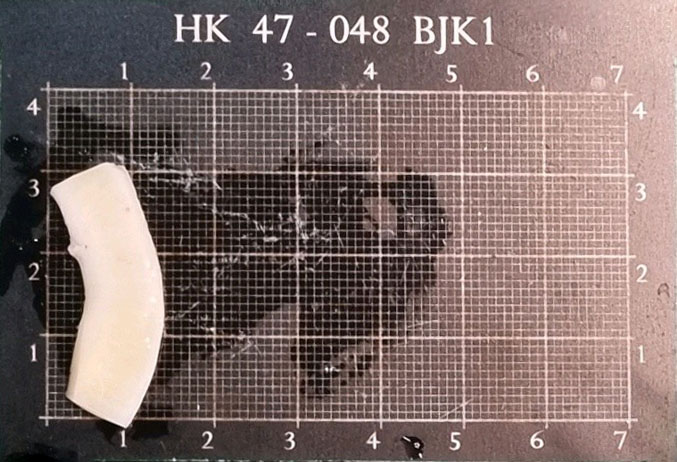
Source: TS Plastic Surgery website
- The Warping Effect to Consider When Using Autologous Rib Cartilage
One point to note when using rib cartilage is the bending tendency called the “warping effect.” After rib cartilage is harvested, it must be trimmed into a suitable shape before being used in rhinoplasty. During this process, the harvested rib cartilage tends to bend back toward its original direction.
Warping can occur within 20 to 30 minutes after the cartilage is cut, so before grafting it into the nose, enough time should be allowed to observe it and use mainly the straight portions. In addition, considering the direction when cutting the cartilage can help reduce the expected bending.
To prevent warping during autologous rib cartilage rhinoplasty, a method called layering is sometimes used. This involves combining pieces with opposite tendencies to bend in order to complement each other and create a new piece for use. In some cases, small notches are also made on the side opposite the direction of bending to lessen the warping. Since thinner rib cartilage bends more easily, it is important to slice it to an appropriate thickness for use, which can lower the likelihood of warping.
In rare cases, warping may appear between 3 and 6 months after surgery, but in general, it can be minimized through proper care immediately after surgery and skilled cartilage processing. If there has been no bending for more than 6 months after surgery, there is usually no need for particular concern afterward.
In the past, autologous rib cartilage rhinoplasty was mainly used for revision surgery, but recently it is also being considered more often for primary rhinoplasty.
Autologous rib cartilage involves less burden regarding the use of artificial implants, and because there is a sufficient amount of cartilage, it may help achieve the desired shape.
It also has the advantage of being a firm tissue that supports the nasal tip well, but handling the cartilage requires a high level of skill.
In particular, since safety during the harvest process, scarring, pain, and recovery all need to be considered, we recommend having a thorough consultation with a medical team that has extensive surgical experience and can perform delicate procedures. Before surgery, please carefully check not only the expected results but also the surgical method and safety.
※ Depending on the individual, side effects such as inflammation, bleeding, and nerve damage may occur, so sufficient consultation with the medical team is necessary before surgery.
This is an example image to help with understanding.