lower blepharoplasty # lower blepharoplasty surgery # upper blepharoplasty # under-eye wrinkles # best place for lower blepharoplasty # lower blepharoplasty plastic surgery # upper blepharoplasty # under-eye fat repositioning # eye plastic surgery # lower blepharoplasty method # lower blepharoplasty scar
upper and lower blepharoplasty # revision eye surgery # under-eye wrinkle removal # double eyelid surgery # lower blepharoplasty under the eyes # under-eye fat removal # crow’s feet wrinkles # crow’s feet laser # under-eye fat # lower blepharoplasty recovery period
upper and lower blepharoplasty # under-eye fat removal surgery # lower blepharoplasty # lower blepharoplasty scar # upper blepharoplasty # best place for lower blepharoplasty # upper and lower blepharoplasty surgery # lower blepharoplasty under-eye fat repositioning # lower blepharoplasty
lower blepharoplasty plastic surgery # best place for lower blepharoplasty surgery # upper blepharoplasty under-eye surgery # upper blepharoplasty lift # lower blepharoplasty laser # upper blepharoplasty levator # lower eye blepharoplasty # upper blepharoplasty plastic surgery # ptosis correction plastic surgery # cosmetic eye surgery
double eyelid sagging # ptosis surgery method # best place for upper blepharoplasty # upper blepharoplasty method # upper blepharoplasty recovery period # lower blepharoplasty surgery # ectropion surgery # entropion surgery # middle-aged upper blepharoplasty
correction of drooping eyes # best place for upper blepharoplasty # lower blepharoplasty revision surgery # middle-aged lower blepharoplasty # sagging eyes in middle age # middle-aged upper blepharoplasty surgery # drooping eye plastic surgery # under-eye wrinkle procedure # drooping eyelids # drooping eyelid surgery
non-incisional upper blepharoplasty # ptosis double eyelid # upper blepharoplasty revision surgery # under-eye radiofrequency # blepharoplasty # sunken eye surgery # elderly double eyelid surgery # eyelid sagging # lateral canthoplasty # middle-aged eye surgery
lateral canthoplasty # ptosis surgery # eyelid sagging surgery # middle-aged eye surgery # brow reduction surgery # drooping eyelids # blepharoplasty # ophthalmic surgery # ptosis double eyelid surgery # correction of scleral show
scleral show # excessive scleral show # under-eye wrinkle surgery # drooping eye surgery # middle-aged eye plastic surgery # ptosis in middle age # ectropion # under-eye laser # drooping eyes # under-eye sagging # eyelid wrinkles # removing eye wrinkles
eyelid sagging # severe ptosis # brow sagging # eye thread lifting # blocked tear duct # non-incisional upper blepharoplasty # under-eye sagging surgery # under-eye wrinkle surgery # middle-aged double eyelid surgery # under-eye wrinkle removal surgery # eye sagging
drooping eyes # double eyelid surgery in your 50s # middle-aged double eyelids # sagging eyes # upper blepharoplasty for men # drooping eye surgery # fine under-eye wrinkles # fat repositioning # sagging-eye double eyelids # sub-brow lift # lower eyelid correction surgery
crow’s feet care # drooping-eye plastic surgery # mini lower blepharoplasty # how to remove crow’s feet # middle-aged plastic surgery # under-eye thread lifting # how to remove under-eye wrinkles # under-eye wrinkle plastic surgery # multiple-fold double eyelids # under-eye bags
how to remove under-eye wrinkles # wrinkles under the eyes # wrinkles above the eyes # under-eye wrinkle care # crow’s feet removal # eyelid sagging ptosis # under-eye fat lifting # plastic surgery in your 50s # wrinkles under the eyes # eyelids
eyelid lifting # eye lift surgery # crow’s feet improvement # best place for eye plastic surgery # under-eye wrinkle laser # middle-aged double eyelid surgery # under-eye fat repositioning and fat grafting # removal of under-eye wrinkle lines # eye wrinkle surgery
under-eye fat laser # filial piety plastic surgery # elderly double eyelid surgery # under-eye fat removal # under-eye fat # middle-aged eye correction # upper eyelid fat # under-eye fat revision surgery # how to remove crow’s feet # Gangnam eye plastic surgery
Duhan # Duhan Plastic Surgery # Director Shin Duhan # Duhan blepharoplasty # Duhan eye plastic surgery # crow’s feet procedure # revision eye plastic surgery # under-eye fat repositioning revision surgery # under-eye fat repositioning surgery # eye surgery
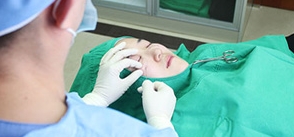
Lower blepharoplasty (under-eye wrinkle removal surgery)
This is a surgery intended to smooth out the lower eyelids that have sagged downward with age, making the under-eye area look brighter and younger and creating an improved impression.
If the eyelids have sagged, lower blepharoplasty should include removing a certain amount of eyelid skin.
You cannot simply leave sagging eyelid skin and proceed with surgery.
An incision is made in the skin, an appropriate amount of skin is removed according to the designed line, and the skin is then closed.
During surgery, fat may also be removed or repositioned to correct hollow areas as well.
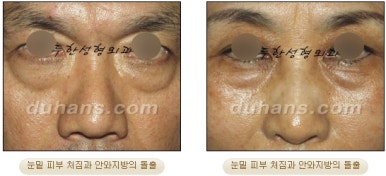
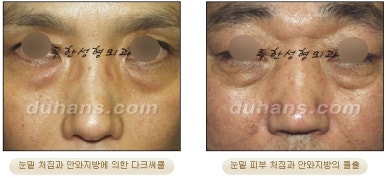
Indications for lower blepharoplasty (under-eye wrinkle removal surgery)
① When the lower eyelids appear wrinkled
② When wrinkles make the skin look saggy
③ When wrinkles make you look much older
④ When there are dark circles
Surgical process for lower blepharoplasty (under-eye wrinkle removal surgery)
- Before anesthesia, the design is marked with special ink just below the eyelashes, and local anesthesia is given under sedation anesthesia.
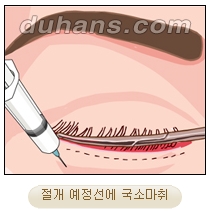
- After local anesthesia, an incision is made along the design line.
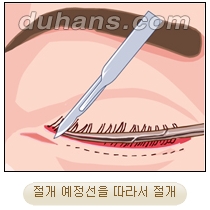
- The tissue between the muscle layer and the fat layer is sufficiently dissected down to below the wrinkle line, lifting the muscle and skin.
If there is a lot of fat, the fat is pulled downward to fill the hollow area, and fat repositioning is performed with fixation sutures to smooth the area.
Fat repositioning can only be applied when there is a large amount of fat; it cannot be applied when there is little fat or when the eye area is already hollow.
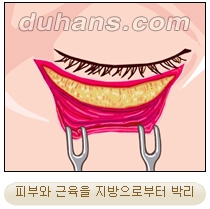
- The skin is pulled upward and outward with forceps to smooth the wrinkles, and the excess skin is measured.
The amount to be removed is determined based on the excess skin.
To prevent the skin from sagging again, it is fixed to the periosteum at the lateral canthus.
This is called lateral canthal fixation.
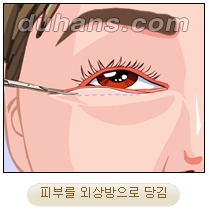
- An appropriate amount of skin is removed according to the design line.
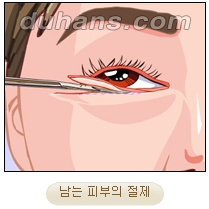
- After skin removal, the skin is carefully sutured with fine thread.
Once suturing is complete, the area is disinfected, flesh-colored adhesive tape is applied, and you go home.
The stitches are removed after 4–5 days.
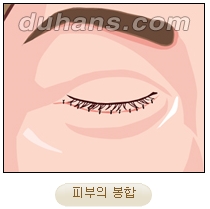
Examples of lower blepharoplasty (under-eye wrinkle removal surgery)
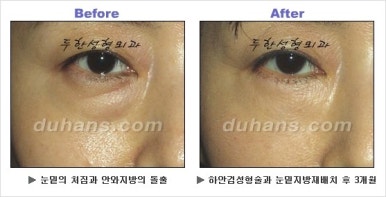
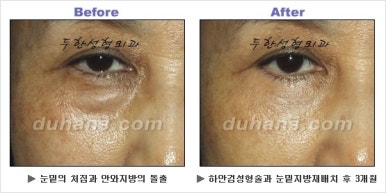
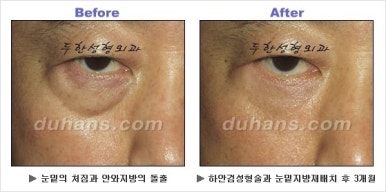
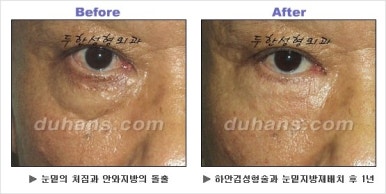
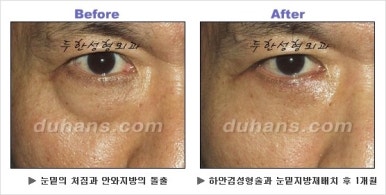
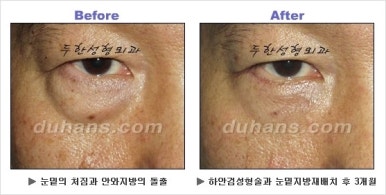
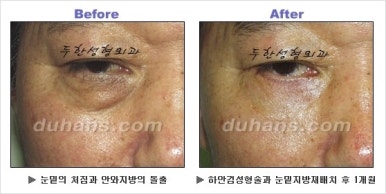
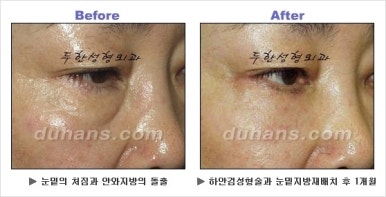
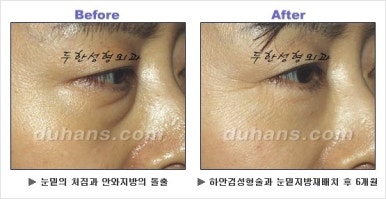
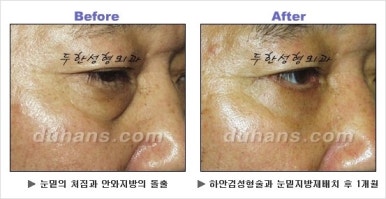
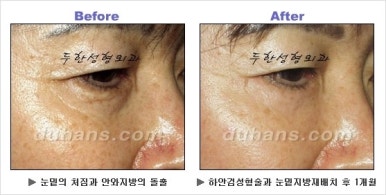
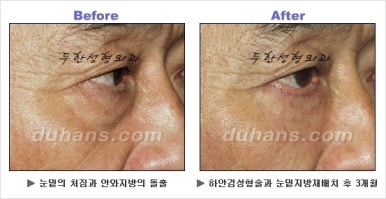
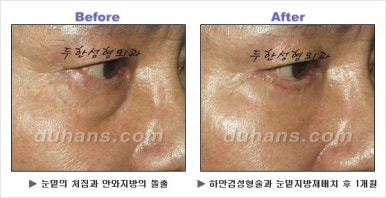
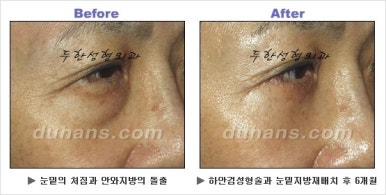
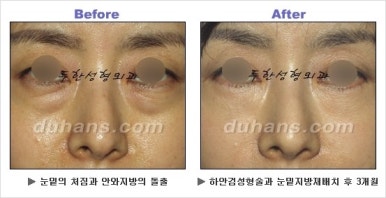
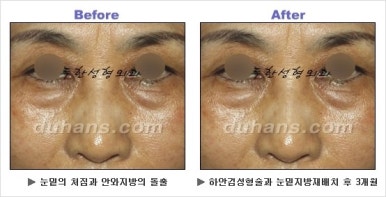
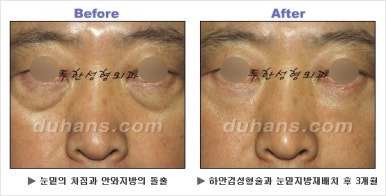
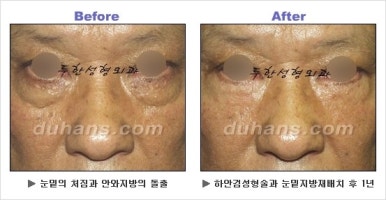
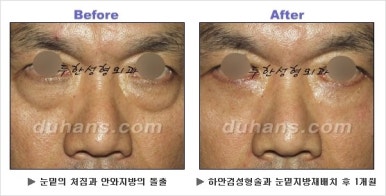
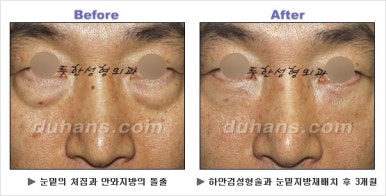
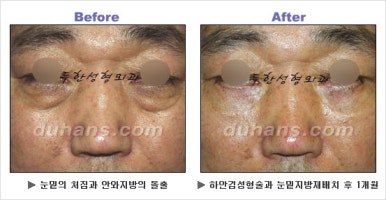
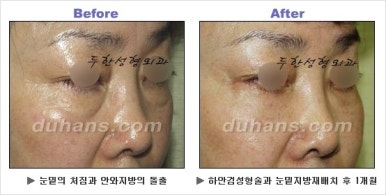
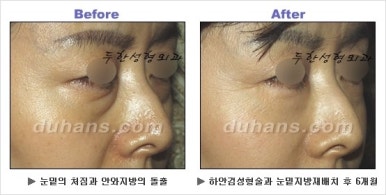
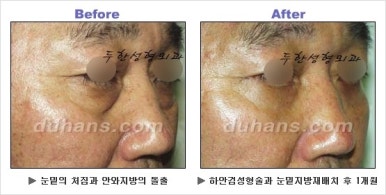
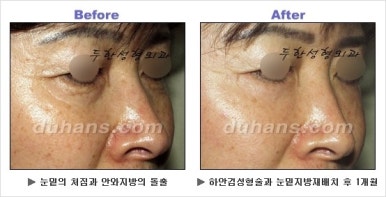
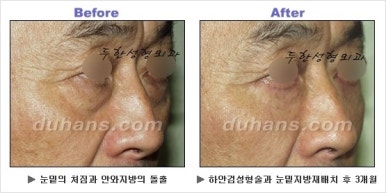
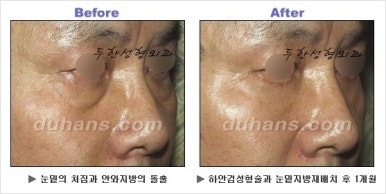
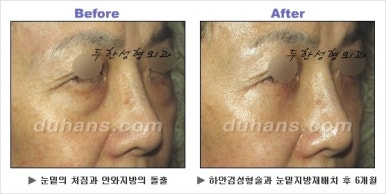
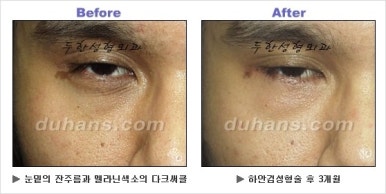
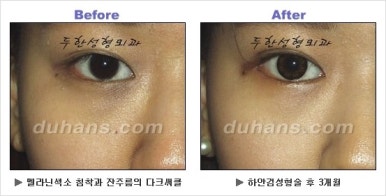
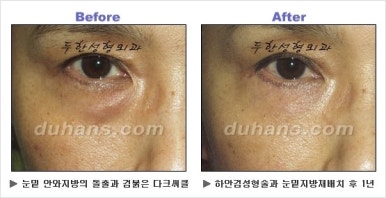
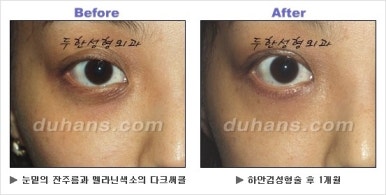
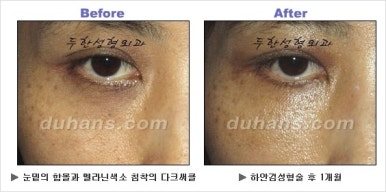
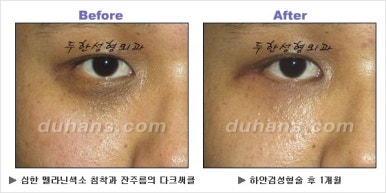
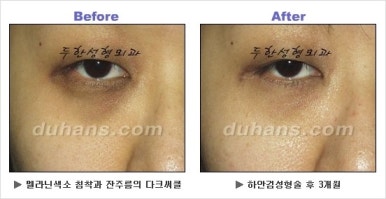
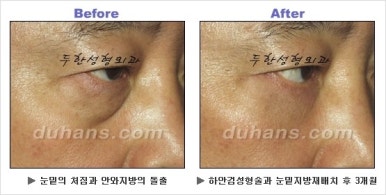
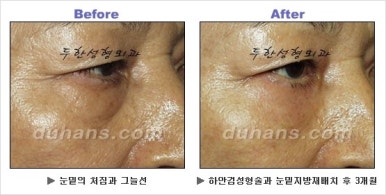
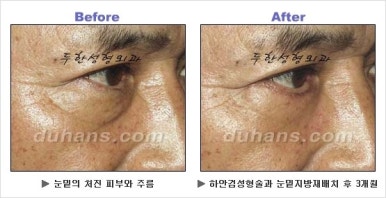
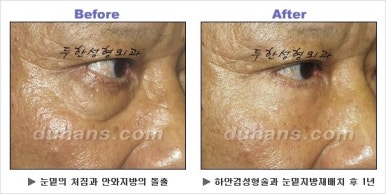
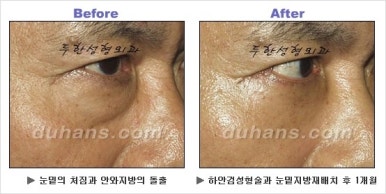
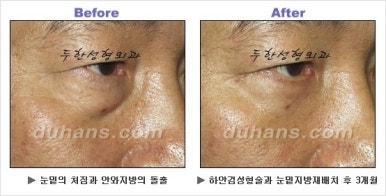
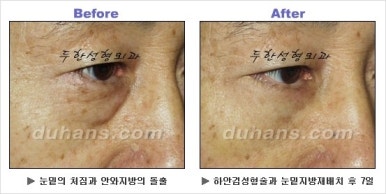
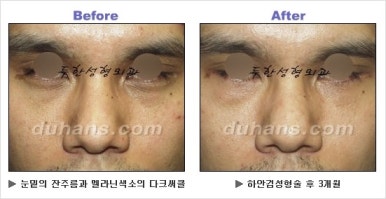
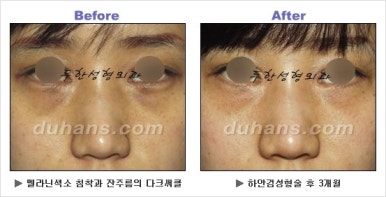
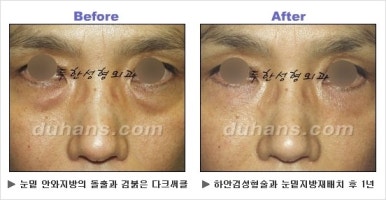
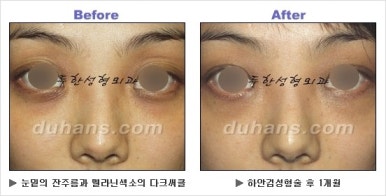
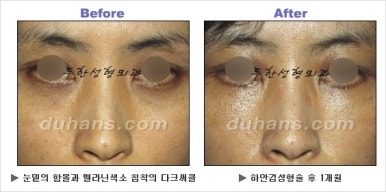
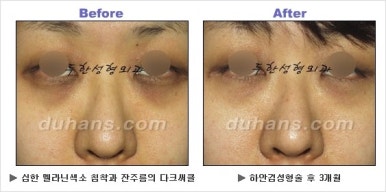
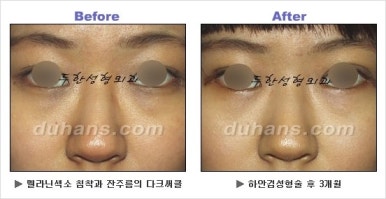
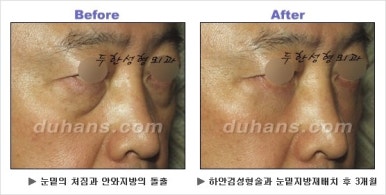
Postoperative care instructions after lower blepharoplasty (under-eye wrinkle removal surgery)
- For 3 days after surgery, apply cold compresses using the cool pack provided by the hospital.
You only need to do this for 2–3 hours a day for 3 days.
You may apply cold compresses continuously for 2 hours, or in 20–30 minute intervals.
It is usually more convenient to do this before sleeping.
-
Visit the clinic 1–2 days after surgery to disinfect the surgical area.
-
Visit the clinic on day 4 or 5 after surgery to remove the stitches.
-
After the stitches are removed, you may wash your face and wear makeup, and you may take showers or use a sauna or jjimjilbang.
-
Swelling after surgery varies from person to person, and it usually subsides somewhat within 7–14 days.
-
Refrain from alcohol and smoking for about one week after surgery.
-
Return to the clinic one month after surgery for follow-up.
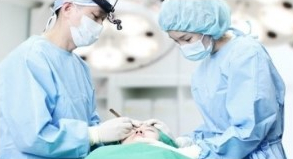
Correction by under-eye fat repositioning
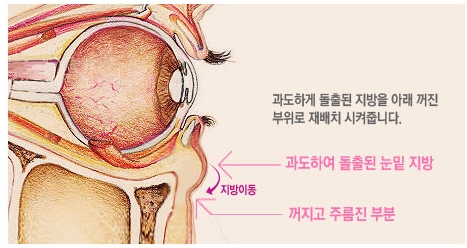
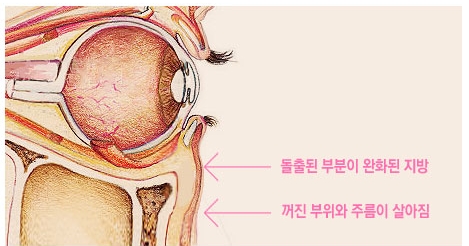
This refers to a method in which, instead of removing the orbital fat under the eyes, the fat is moved and spread into the lower area where there is a depression.
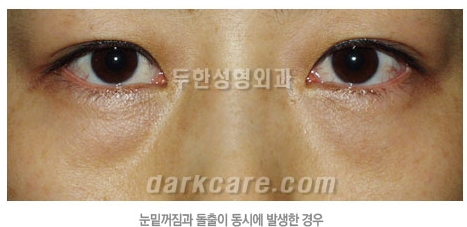
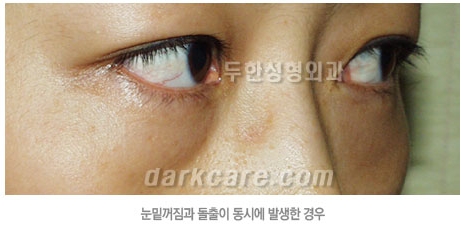
This method aims to correct both protruding areas and hollow areas at the same time.
It was designed to address the shortcoming of fat removal, which can solve protrusion but cannot solve hollowing.
Candidates for under-eye fat repositioning
Cases where protruding orbital fat under the eyes is accompanied by hollow wrinkles.
Advantages of under-eye fat repositioning
① Improvement of dark circles
② Correction of puffy-looking eyelids
③ Prevention of the sunken appearance that can occur after excessive under-eye fat removal
④ Correction of under-eye wrinkles along with restoration of a smooth eye area
⑤ No visible scar and a natural result
Surgical method for under-eye fat repositioning
Through the conjunctiva, the loosened fat pouch is removed, moved above the bone under the eyes, and fixed so it does not shift.
Differences between lower blepharoplasty and under-eye fat repositioning
| Lower blepharoplasty | Comparison | Under-eye fat repositioning |
|---|
| Incision under the eye skin | Procedure site | Inner conjunctiva of the eye |
| A slight incision mark remains. | Scar | Almost none |
| It disappears. | Aegyo-sal under the eyes | Preserved or created |
| There is. | Wrinkle removal | None |
| Surgery is not possible. | Whether patients with keloids can have surgery | Surgery is possible |
Problems with under-eye fat repositioning
The problem is that it is difficult to obtain the desired result properly.
Because the surgery is performed through the conjunctiva, the field of view is limited and the procedure may not be carried out properly. In addition, there are not many patients who are truly suitable for achieving good results through fat repositioning.
As a simple example, if there is land with a puddle and the goal is to make everything level by digging soil from a hill to fill the puddle, then if the hill is not very large, even after shaving off all the soil from the hill, it may still be insufficient, and after filling the puddle the hill may instead become a hollowed-out area.
This is the strange result that can occur when fat is forcibly pulled and repositioned while there is not much of it: the protruding area can end up becoming sunken instead.
In another case, the puddle may be larger than the hill, so even after shaving off all the soil from the hill to fill the puddle, the depth of the puddle may decrease somewhat but still remain a puddle.
This refers to a case where a small amount of fat has been pulled and repositioned, but the hollow area is not corrected well and remains hollow.
In yet another case, the hill may be large, so even after filling the puddle, the hill only becomes slightly smaller and still remains a hill.
This refers to a case where there is so much protruding fat that even after repositioning, some fat remains and the under-eye protrusion is still present.
Four points of dissatisfaction with under-eye fat repositioning
① When there is too little fat, the protruding area where the fat was located becomes sunken after fat repositioning
② When there is a lot of fat, the original protruding area still appears protruded even after fat repositioning
③ After fat repositioning, the original hollow area appears protruded in the opposite direction
④ When there is little fat, the original hollow area is not properly filled even after fat repositioning and still appears sunken and shadowed
Therefore, when performing fat repositioning, the surgery must be done by carefully considering the appropriate shape and indications in order to obtain satisfying results. If the indications are not appropriate, fat repositioning can become an awkward procedure that is neither here nor there.
In addition, because more tissue must be dissected than with fat removal, swelling and bruising are much more severe.
If the indications are not suitable, fat removal can provide a more definite result than fat repositioning, and if necessary after fat removal, a micro-fat graft can be performed to fill any hollow area.
Postoperative care instructions after under-eye fat repositioning
① After fat repositioning, use the cold compress pack provided by the hospital for about 3 days.
② On the day of surgery, sleep with your head raised about 30 degrees to reduce bruising and swelling.
③ On the day of surgery, try not to lie down and instead stay seated as much as possible to reduce swelling and bruising.
④ Washing your face and wearing makeup are possible starting the next day.
⑤ Contact lenses may be used starting the day after surgery.
⑥ Use the eye drops prescribed by the hospital for about one week.
⑦ The conjunctiva is closed with dissolvable thread, so there is no separate stitch removal.
⑧ Swelling and bruising are only mild and usually subside almost completely within about one week.
Under-eye fat repositioning
If it is carelessly applied to patients who do not have much orbital fat,
the actual result is often unsatisfactory
or looks awkward.
Also, with fat repositioning,
improvement in under-eye color can hardly be expected,
and it can only be performed for the purpose of contour correction.
However,
a truly flat under-eye area is extremely rare.
At other clinics, even for eye areas with almost no under-eye fat protrusion,
fat repositioning is often recommended, which should be considered carefully.
Rather than making the under-eye area flat after fat repositioning,
the under-eye area may instead become sunken or protrude,
and there are cases where patients inquire at our clinic for correction.
If the area has become sunken, it can be corrected again with micro-fat grafting.
Director Shin Duhan
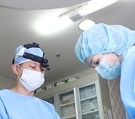
Upper blepharoplasty (drooping upper eyelids)
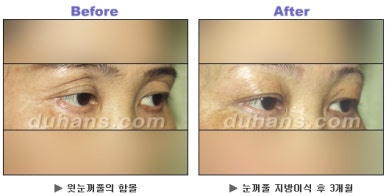
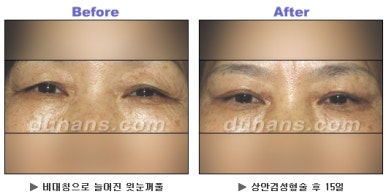
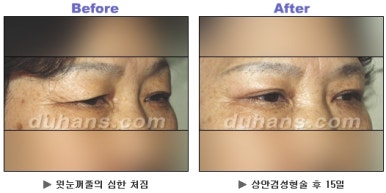
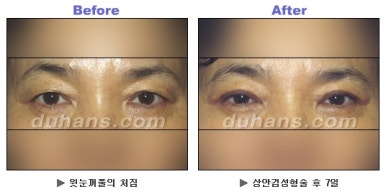
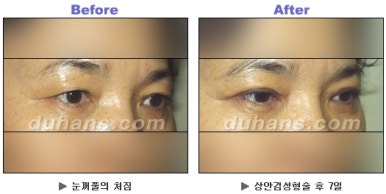
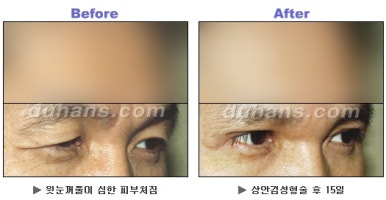
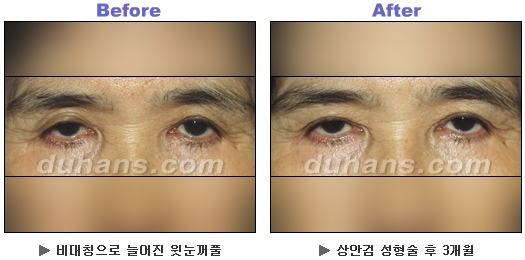
This is a surgery that improves sagging upper eyelids caused by aging, making them look better while also addressing eye fatigue and visual field obstruction.
If the skin of the upper eyelid has sagged, upper blepharoplasty should be performed to remove the excess skin.
This is done to trim the loosened skin and create a neat double eyelid line.
Upper blepharoplasty has a broad meaning that includes double eyelid surgery.
If there is already a double eyelid crease, the crease is preserved and the sagging skin above the crease is removed.
For those without a double eyelid crease, a natural-looking line is created.
Indications for upper blepharoplasty (drooping upper eyelids)
① When the eyelids sag so much that they feel heavy
② When the eyelids are drooping and covering the pupils, causing visual field obstruction
③ When the sagging eyelids make you look older
Surgical process for upper blepharoplasty (drooping upper eyelids)
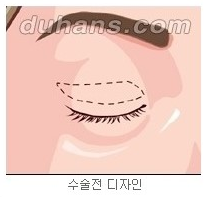
- Before surgery, the width of skin to be removed is determined.
At this time, the amount of remaining skin is pinched and measured, and before anesthesia the upper eyelid skin is designed with special ink.
If the outer side of the eye is more sagging, the design extends about 5–10 mm beyond the lateral canthus.
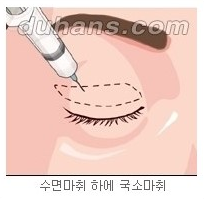
- Local anesthesia is administered along the planned design line.
Because local anesthesia is performed under sedation anesthesia, there is no pain during anesthesia.
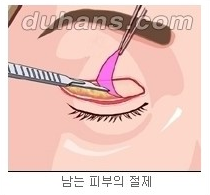
- After anesthesia, an incision is made in the skin along the design line.
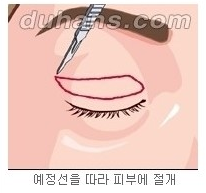
- After the incision, the skin tissue inside the incision line is removed.
Sometimes the muscle layer is removed as well.
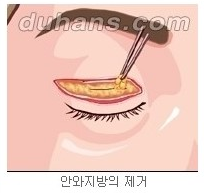
- If there is a lot of fat, orbital fat is also removed.
If the patient wants to create a double eyelid after fat removal, a three-point suture may be done in about three places to form the crease.
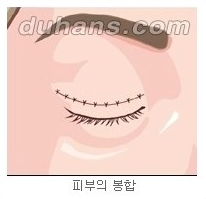
- Finally, the skin is sutured.
To minimize scarring, the skin is sutured densely at 1 mm intervals.
After suturing, the area is disinfected and you go home.
The stitches are removed after 4–5 days.
Postoperative care instructions after upper blepharoplasty (drooping upper eyelids)
- For 3 days after surgery, apply cold compresses using the cool pack provided by the hospital for 2–3 hours a day for only 3 days.
You may apply cold compresses continuously for 2 hours, or divide them into 20–30 minute intervals.
It is usually more convenient to do this before sleeping.
-
Visit the clinic 1–2 days after surgery to disinfect the surgical area.
-
Visit the clinic on day 4 or 5 after surgery to remove the stitches from the surgical area.
-
After the stitches are removed, you may wash your face and wear makeup, and you may also take showers or use a sauna or jjimjilbang.
-
Swelling after surgery varies from person to person, and it usually subsides somewhat within 7–14 days.
-
Refrain from alcohol and smoking for about one week after surgery.
-
Return to the clinic one month after surgery for follow-up.
Postoperative care instructions after upper blepharoplasty (drooping upper eyelids)
Endotine lifting for brow lift
This is a procedure that is mainly effective for sagging facial skin or deep expression lines.
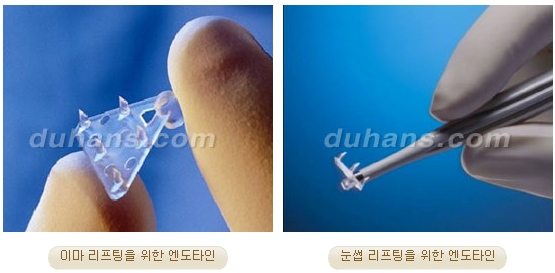
Endotine is a device made of dissolvable soft plastic material, and because it has stronger lifting power than thread lifting, it can correct various areas of the face.
It can also be applied to the forehead, brow lift, and upper cheek areas that could not be addressed with conventional thread lifting, and the lasting effect is long.
Because an endoscope is used, there are fewer incisions, and there is less concern about pain and swelling.
Advantages of Endotine lifting
① It is safe.
Because it is performed under sedation anesthesia, there is less concern about pain.
Through a small incision in the scalp, an endoscope is used, so scars are hardly visible.
② It is simple.
It is a relatively simple surgery, and leaves minimal scarring.
It has the advantage of a fast recovery period.
Because recovery is quick, returning to daily life is also quick.
③ The effect is long-lasting and good.
Because the procedure is performed in multiple directions, the effect is better than with conventional surgical methods.
The fixation plate is absorbed by the skin, and the effect continues.
Endotine surgical method for brow lift
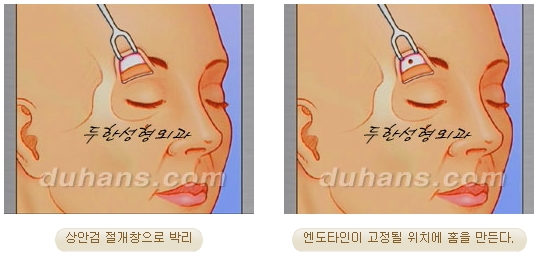
① Because it is usually performed together with upper blepharoplasty, the forehead bone is exposed by dissecting through the upper blepharoplasty incision.
② Dissection is extended above the brow to prepare for lifting the brow upward.
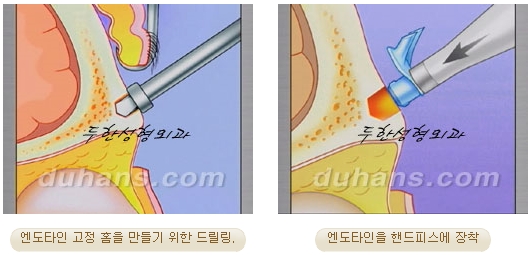
③ A fixation groove for the Endotine is created in the brow bone by drilling.
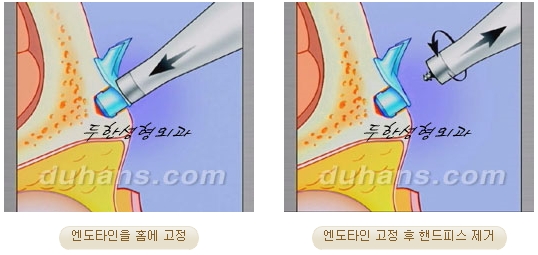
④ After creating the groove, the handpiece Endotine is attached and fixed into the groove.
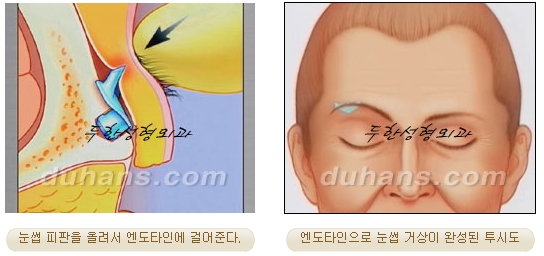
⑤ The brow flap is lifted onto the inserted Endotine and hooked in place.
⑥ Close the incision.
⑦ Apply taping.
⑧ The stitches are removed after 4–5 days.
Advantages of Endotine procedures
♥ Minimal incision and no scar.
♥ Compared with thread lifting, the pulling effect is stronger and lasts longer.
♥ Unlike non-dissolving thread lifts, Endotine dissolves and disappears, so there is no foreign-body reaction.
♥ Even after Endotine dissolves, the effect continues once the tissue has been repositioned.
♥ Recovery to daily life after the procedure is quick.
Lasting effects of Endotine lifting
The biggest advantage of Endotine is that, because it is a soft material, it does not feel like a foreign body, and since it dissolves and disappears after one year, there are no side effects caused by foreign-body reactions.
Also, although the lifting effect is strong, the lifting result remains even after Endotine has dissolved and disappeared.
The duration of the effect varies by person, but it lasts about 5–10 years.
Features and advantages of Endotine lifting
| Conventional surgery | Comparison | Endotine lifting |
|---|
| Under 1 year | Duration | More than 5 years |
| 10–25 cm | Incision size | 2 cm |
| Required | Removal surgery | Not required |
| High risk | Nerve damage | Almost none |
| 4 hours | Surgery time | 40–50 minutes |
| Hair loss occurs along the incision site | Hair loss | Almost none |
| Lacking volume and awkward | Facial change | Voluminous and natural |
As people age into their 30s and 40s, skin aging accelerates.
The eyelids sag and wrinkles form on the forehead.
Wrinkles make a person look tired and lacking energy,
and wrinkles between the eyebrows make the face look angry and not very pleasant.
Deep forehead wrinkles make the face look tight and older.
Endotine lifting is
a surgical procedure used for forehead wrinkles, drooping eyelids, brows, and the midface,
and because it is performed through an incision inside the head,
the surgical marks are hardly visible.
Recovery is also fast, and return to daily life is quick.
The Endotine fixation plate is made of an absorbable material,
with projections at the ends that secure and lift the skin.
Because it is absorbable, it is absorbed by the body over time,
so it is known as a relatively simple and safe procedure compared with other treatments.
Endotine received FDA approval in 2003,
so its safety has already been verified,
and it is currently gaining great popularity, especially in the United States.
The surgery is performed under sedation anesthesia,
and because an endoscope is used, there are fewer incisions,
and there is less concern about pain and swelling.
Director Shin Duhan
http://www.duhans.com