Newly Introduced Alma Opus
Hello, this is Raon Dermatology near Wangsimni Station!
It is not common for people to visit a dermatology clinic with only one concern. In many cases, several issues overlap—for example, wanting to improve acne scars while also being concerned about enlarged pores and redness. In situations like this, it can be burdensome to switch between different devices and receive multiple treatments separately. The newly introduced Alma Opus is a device that can address different layers by changing its tips. Let’s take a look at how it works and which concerns it can be used for:)

Newly Introduced Alma Opus
What Is Opus??
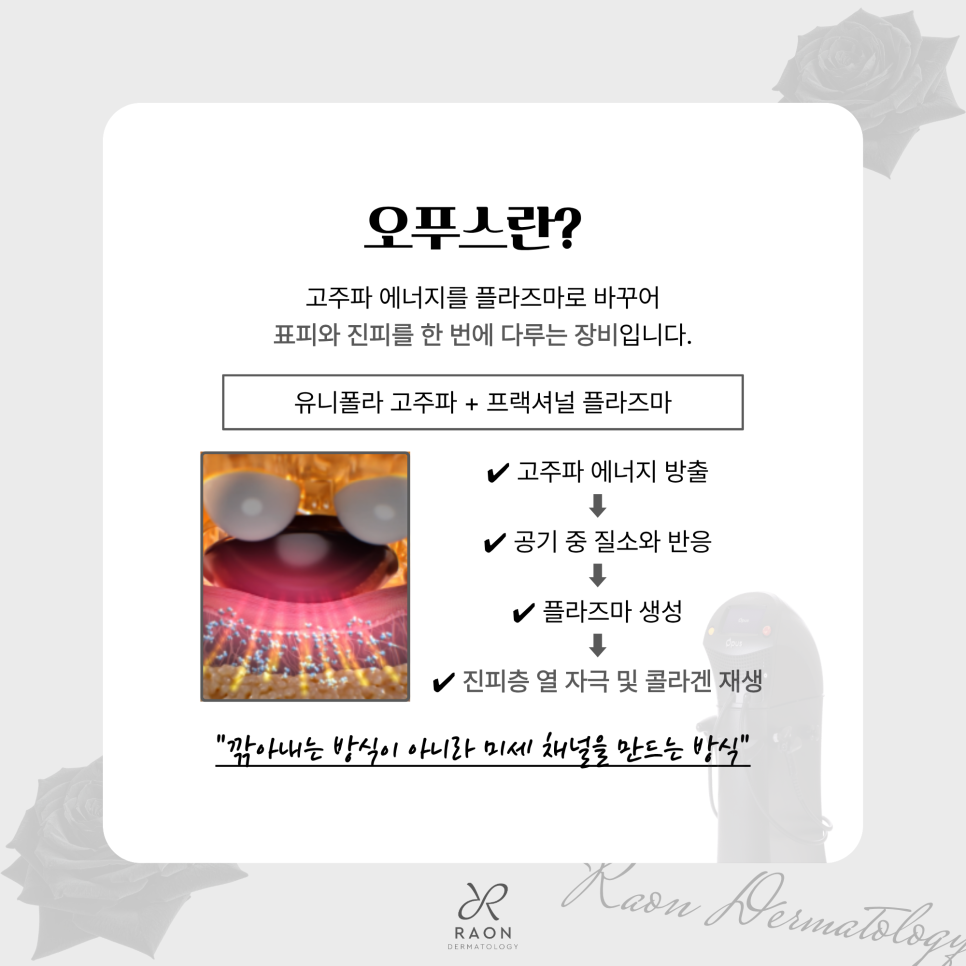
Opus is a device that converts radiofrequency energy into plasma. When the radiofrequency energy emitted from the pin-shaped tip meets nitrogen in the air, plasma is instantly created. This plasma forms very small, regular channels on the skin’s surface. Its approach is fundamentally different from a method that abrades the surface.
Between each channel, undamaged normal tissue remains intact. Because the remaining tissue serves as a reference point for recovery, the regeneration process tends to be relatively fast. At the same time, radiofrequency energy is delivered to the dermal layer, initiating collagen production. Surface refinement and dermal regeneration take place as part of the same process:) This is why the results differ from treatments that only remove the surface layer.
<Opus>
-
Radiofrequency energy emission
-
Reaction with nitrogen in the air
-
Plasma generation
-
Thermal stimulation of the dermal layer and collagen production
What Is Opus??
2 Handpieces
The reason it has such a wide range of applications lies in its handpiece configuration. RF Pixel creates plasma and forms surface channels, making it suitable for scars, pores, and rough texture. Coaxipolar delivers bipolar radiofrequency energy to the superficial layers to help improve the resilience of thin skin.
The depth to which the energy reaches can also be adjusted as needed. Since the skin thickness differs between the forehead, cheeks, and jawline—even on the same face—depth adjustment can directly affect the results. It is also possible to combine the appropriate handpieces for each area. Rather than alternating between multiple devices, several concerns can be addressed in one treatment, which is one of its strengths:)

2 Handpieces
Acne and Scars
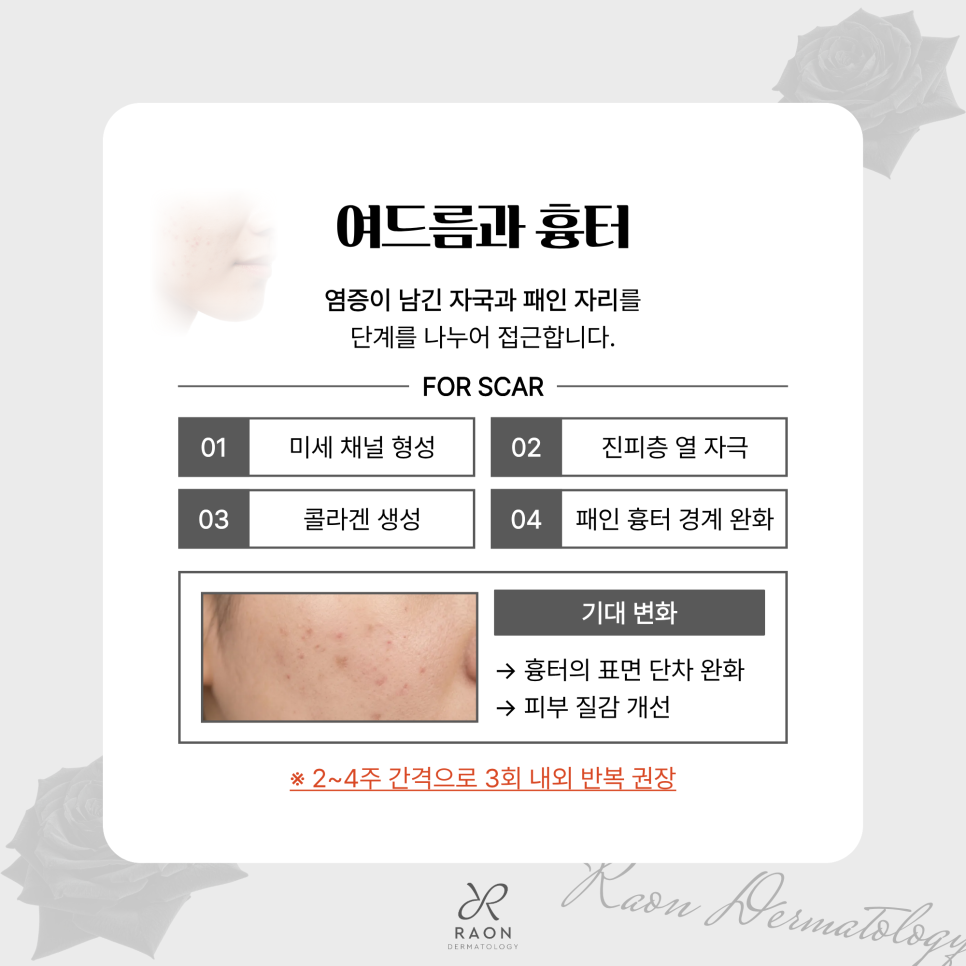
The reason it is often selected for acne scars is related to the same principle. Depressed scars are not only a surface problem; the underlying tissue is also tethered, preventing it from rising. When the microchannels pass through the scar tissue and deliver thermal stimulation to the dermal layer, a regenerative response begins. As new collagen fills in, the edges of the depressed scar gradually become smoother. As the difference in surface height decreases, the shadows that stood out under lighting also become less noticeable.
It can also help when treating active acne. This is because the heat from the plasma helps refine the environment around the pores and organize the stagnant layer of dead skin cells. Since recovery tends to be relatively quick, treatment is generally repeated about three times at intervals of two to four weeks. Please note that scars do not disappear in a single treatment, so the interval may be adjusted while monitoring changes.
<Acne and Scars>
-
Formation of microchannels
-
Thermal stimulation of the dermal layer
-
Collagen production
-
Softening of the edges of depressed scars
Acne and Scars
Redness and Sensitive Skin
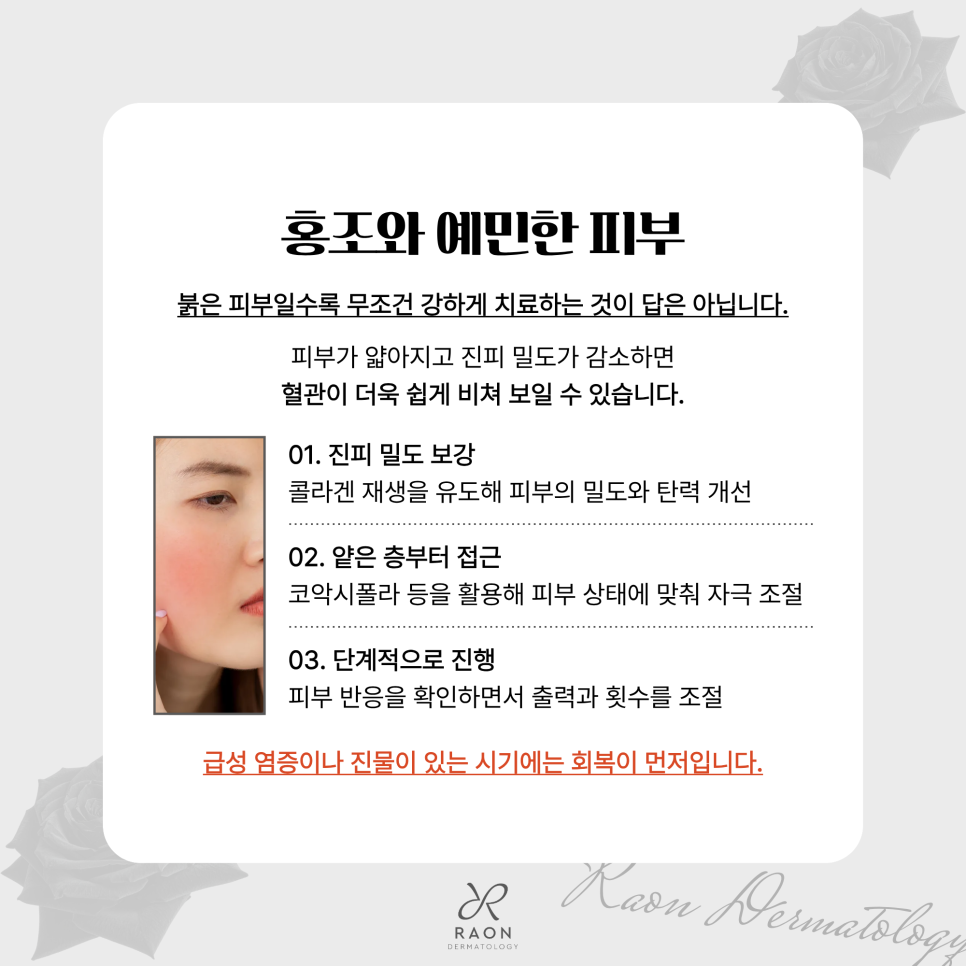
When redness is the main concern, a different approach is needed. Redness can occur as the skin becomes thinner and blood vessels become more visible, while repeated irritation causes the vessels to dilate easily and remain that way. Adding strong stimulation to this type of skin may worsen the condition. This includes cases where sensitivity becomes more severe while trying to eliminate redness.
For this reason, the approach focuses on restoring dermal density. As collagen fills in and skin thickness recovers, the visibility of blood vessels may be reduced. Using a tip that targets the superficial layers, such as Coaxipolar, at a lower power and over multiple sessions is a safer approach. It tends to produce more stable results than applying strong energy all at once. However, please remember that during periods of acute inflammation or oozing, barrier recovery should come first.
Redness and Sensitive Skin
Pigmentation and Skin Tone
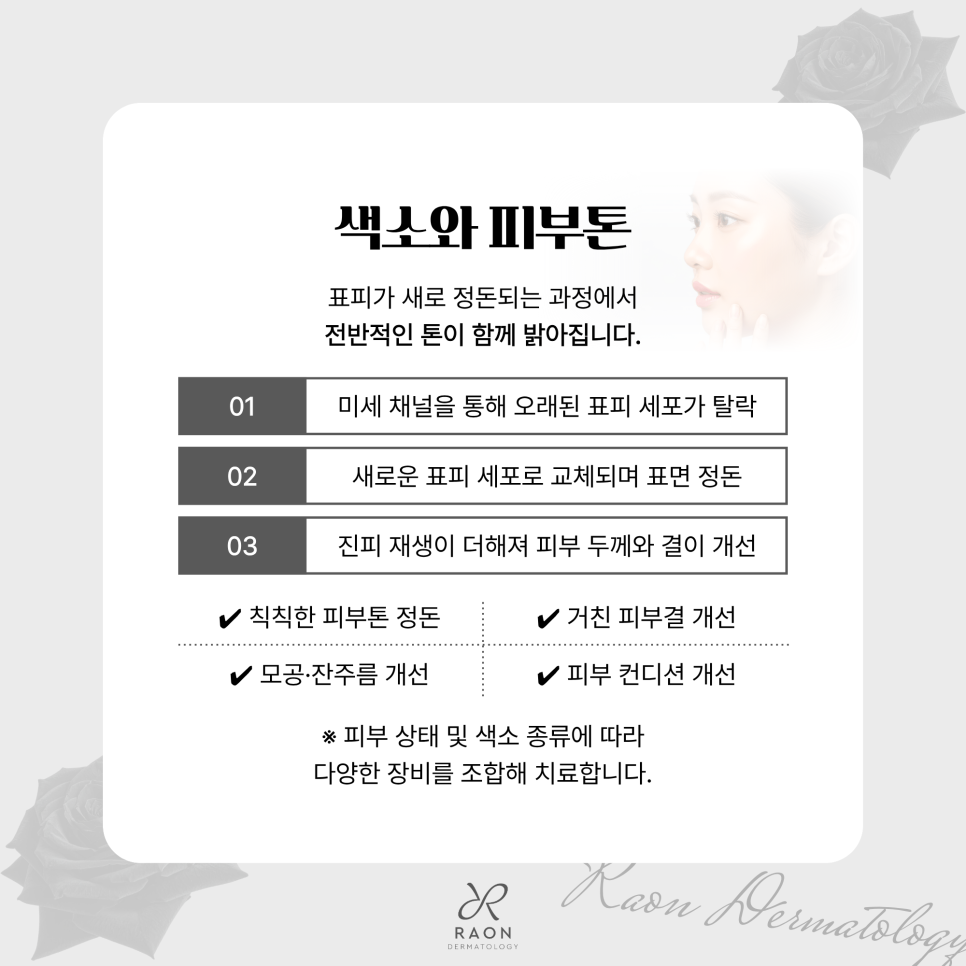
We also frequently receive questions about skin tone. Can pigmentation be improved as well? Opus is not a device that directly breaks down pigmentation. Instead, microchannels help old epidermal cells shed and be replaced with new cells, refining the surface. When dermal regeneration is added, an overall brightening of the skin tone may also be expected.
However, when the depth and characteristics of the pigmentation differ, as with melasma, proper assessment comes first. Some areas need to be treated with a pigmentation-specific laser using an appropriate wavelength:). In any case, if you want to improve pores, texture, and tone at the same time, Opus can be a good starting point. Its versatility increases when multiple concerns overlap, so if you have several skin concerns, it may be worth considering at least once.
<Pigmentation and Skin Tone Improvement Effects>
Pigmentation and Skin Tone
Newly Introduced Alma Opus