Hello.
I am Yoo Young-gi, a board-certified plastic surgeon with the ability to harvest autologous rib cartilage through a minimal 11 mm incision.
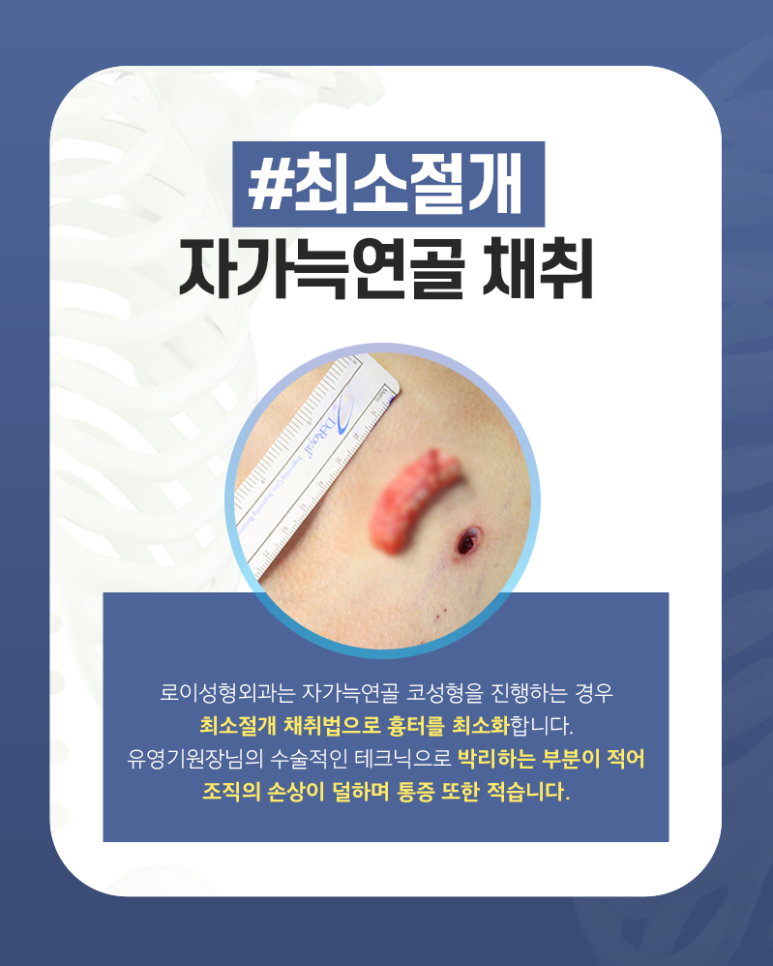
Because the incision is usually 2.0 cm to 3.5 cm or longer,
from the patient’s perspective, many choose other alternative options instead of using this excellent autologous rib cartilage,
out of concern that a scar may remain.
There is a widespread perception that using autologous rib cartilage is something you only do in the final revision surgery.
Not every plastic surgeon can perform the technique for harvesting autologous rib cartilage,
and because it is technically difficult,
many patients keep repeating revision surgeries until the condition of their nose becomes severe,
and only then find a doctor with enough experience to harvest autologous rib cartilage.
At that point, there are no real choices other than autologous rib cartilage,
so I think the idea that it is only used in the last surgery has become widespread.
However.
Why do people keep undergoing revision surgery?
- Because contracture develops in the nose
- Because functional breathing problems occur
- Because of repeated inflammation
and so on, there can be many reasons.
But one surprisingly common reason is
“the patient’s aesthetic dissatisfaction.”
It may seem like revision surgery would only be done if something major goes wrong,
but many people undergo surgery for even a 1 mm change in the nasal tip,
and if they are not satisfied, they get revision surgery again and again.
Sometimes I meet patients who think that because some deformity is unavoidable after nose surgery,
it is only natural to have revision surgery after 10 years anyway.
Seeing that kind of thinking fairly often makes me feel that misinformation is widespread everywhere.
Nose revision surgery is not inevitable.
Each time revision surgery is performed, normal tissue is also damaged,
and if this process is repeated, irreversible side effects can occur,
leading to severe deformities such as contracture that make reconstruction difficult.
When performing short nose surgery, the operation should be done with realistic expectations from the very beginning.
This is where the doctor’s proper explanation is extremely important.
In most short noses, when dissection is actually performed,
the internal cartilage, especially the septal cartilage,
which is the central pillar-like cartilage,
is often very small.
To lengthen the nose to a satisfying degree, the internal structures must first be firmly supported,
and in almost all cases, a strong material such as rib cartilage is absolutely necessary.
At this point, because harvesting autologous rib cartilage can feel burdensome,
allograft rib cartilage is often used.
However, after COVID, because almost all cadavers were incinerated,
it has become extremely difficult to obtain allograft rib cartilage in good condition.
There was even a time when I had to postpone a scheduled patient’s surgery by three months because I could not obtain allograft rib cartilage in a “good” condition.
I always try to approach surgery with the mindset of operating on my own family,
and every time a supplier brought allograft rib cartilage, I often rejected it because the condition was not good.
But the price of this allograft rib has also skyrocketed,
and recently there have been not-infrequent reports of chronic inflammation,
so the question of whether allograft rib cartilage is truly safe and stable inside the body
needs to be observed over a longer period of time.
The case I will introduce today involves a patient who kindly allowed us to post the photos without mosaics,
and even sent us recent photos just a few days ago.
When she first came to our hospital, she had already undergone two nose surgeries at another hospital.
The first was about 10 years ago, when silicone was inserted through a closed approach only to raise the bridge height.
However, after the surgery, the low nasal tip kept bothering her,
so she decided to undergo revision surgery.
The second was 4 years ago, when she had open surgery (a method that also incises the skin in the middle of the nose).
Right ear cartilage was harvested to raise the nasal tip.
However, according to the patient, although it did seem slightly higher immediately after surgery,
it was completely different from the result the doctor had originally led her to expect.
After already having surgery twice,
she was very cautious about deciding on another operation,
and after consulting at several hospitals, she came to our clinic.
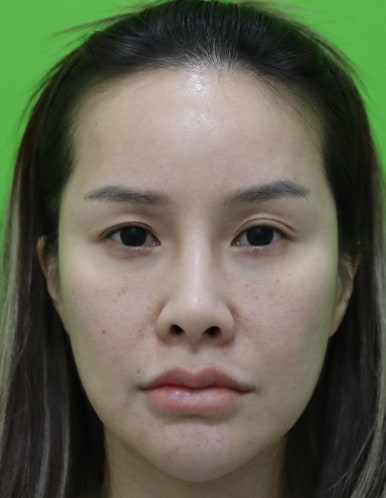
Let’s first look at the photos before the short nose revision surgery.
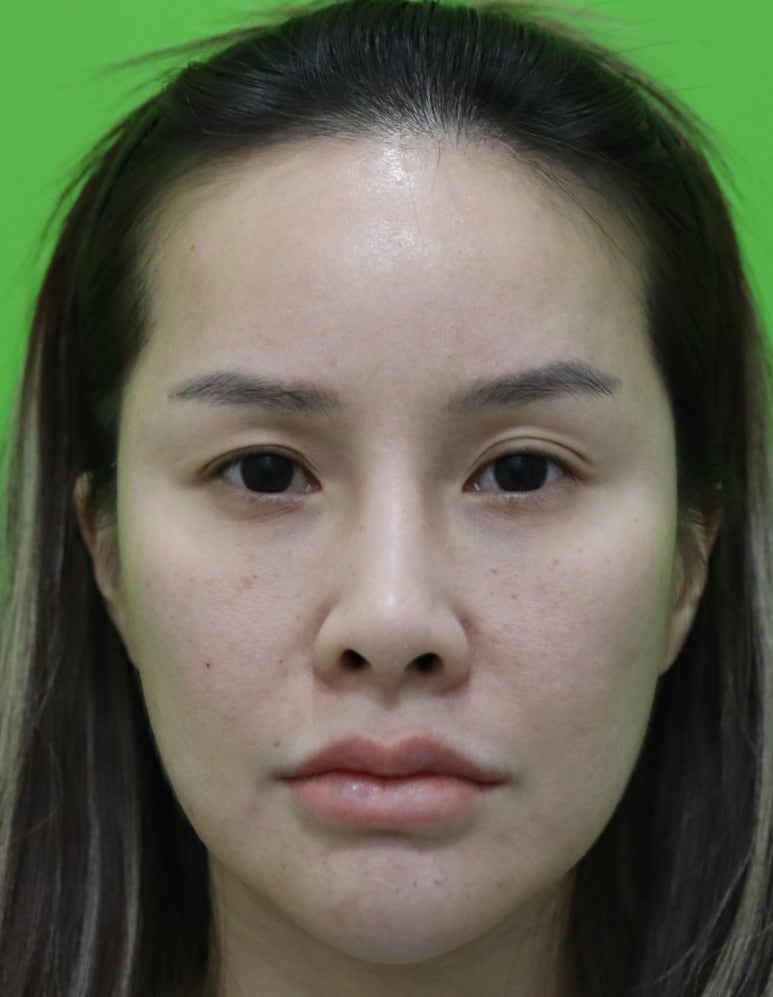
From the front, the nasal tip had curled upward due to contracture,
and she said she was concerned that too much of the nostrils were visible.
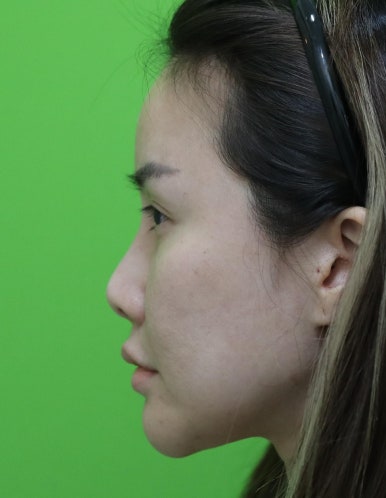
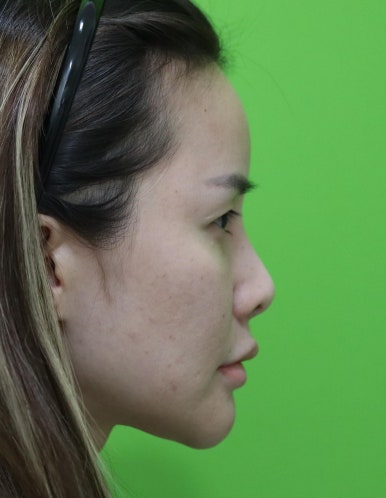
From the side, the nasal tip appears short and slightly curled upward.
The short nose surgery was performed using autologous rib cartilage.
When harvesting the autologous rib cartilage, a 12 mm incision was made.
The nasal incision and dissection took a long time.
When dealing with tissue that has already been damaged multiple times,
one must pay attention to many things and take enough time to dissect carefully.
Inside, the damage was more severe than expected,
and in addition to ear cartilage, an unidentified foreign material was found.
It was presumed that artificial materials such as mesh had been used because there had not been enough material.
All unnecessary foreign material was removed, and the old silicone was also removed.
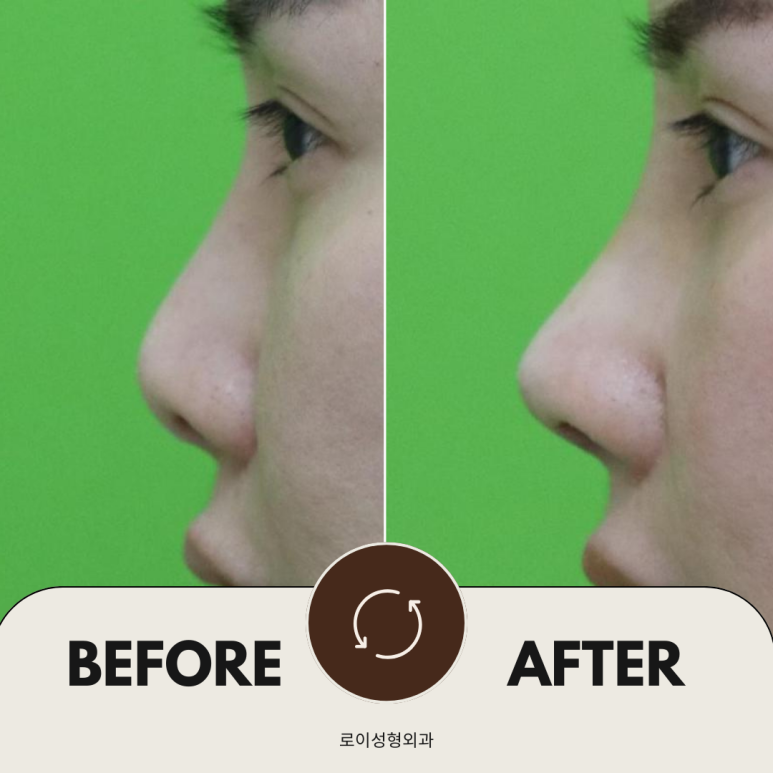
The comparison photos taken 7 days after surgery, when the splint was removed.
Please keep the swelling in mind.
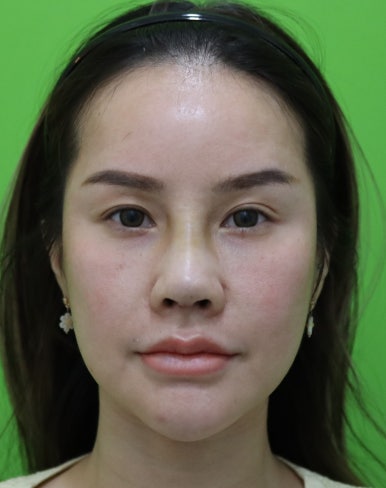
To reduce the amount of nostril show from the front,
cartilage grafting was performed in several ways to add support.
These cartilage grafts actually widen the breathing passage,
so the patient said breathing became easier after surgery.
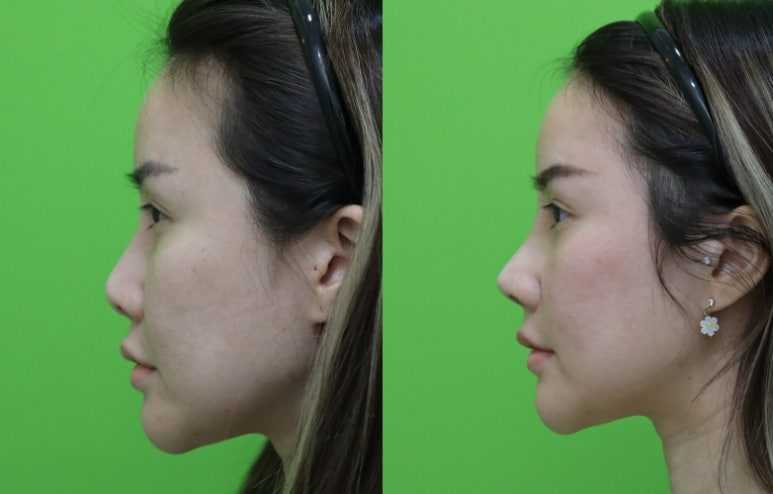
From the side, the curled nasal tip was lengthened as much as planned before the first surgery.
And the blunt nasal tip became somewhat sharper.
The patient could not visit again after that,
but she kindly sent the clinic an update photo ^^
These are photos from week 3.
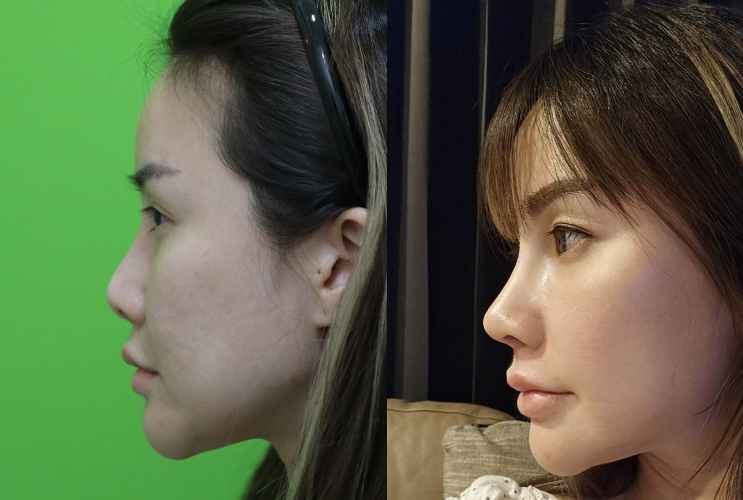
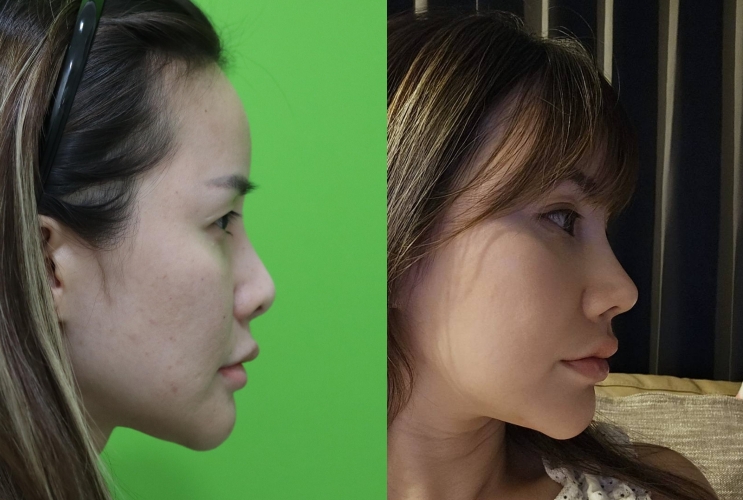
There is still a lot of swelling, so it looks a little unnatural,
but in many cases, the fine swelling subsides after about 3 to 4 months and the result becomes even prettier.
In some cases, swelling lasts longer, and it can take up to 9 months, but that is rare.
As shown above, I explained the steps a doctor predicts and plans in advance for short nose surgery.
There are 2 things patients must know.
First,
you need to make the postoperative expectations clear.
Our clinic uses a facial scanner called Morpheus 3D to show the expected before-and-after appearance directly,
and if the postoperative result is left to imagination, misunderstandings arise.
The person undergoing surgery must see it directly
and receive an accurate explanation of the realistic limitations.
Second,
I mentioned realistic limitations a moment ago,
but for example, the limitations when using ear cartilage and when using autologous rib cartilage are significantly different.
You need to choose the appropriate material that matches the expected result.
In fact, I seem to have more people coming to me for revision surgery than for their first surgery.
During consultations, most of them had not received a proper explanation during their first surgery.
Because my schedule limits the number of consultations I can usually do,
I have always regretted having limits in providing good information as well.
Even if many people receive consultations at other hospitals,
I thought it might be helpful for choosing a good hospital if they went in with proper knowledge and information,
so I wrote this post.
Next time, I will try to write again with honest and principled content.
If you want information about crooked nose surgery, please check the link below :)
https://blog.naver.com/youngkeeyoumd/223392950014
▼ Plus friend chat inquiry ▼

Roy Plastic Surgery complies with the Medical Service Act.
The photos in this post were taken under the same conditions,
and are images taken with the patient’s prior consent.
In addition, after plastic surgery and procedures, side effects such as bleeding, infection, and inflammation may occur depending on the individual, so caution is required.
#RoyPlasticSurgery #ShortNoseSurgery #NoseSurgery #SeptalExtension #AutologousRibCartilage #AllograftRibCartilage #NoseRevisionSurgery #NostrilSurgery #GangnamPlasticSurgery #ApgujeongPlasticSurgery #SinsaStationPlasticSurgery