Hello,
I’m Yoo Young-gi, the chief surgeon at Roy Plastic Surgery.
Today, I’d like to share the story of a woman in her early 60s who decided to undergo revision facelift surgery.
In fact, she had already undergone a facelift at another clinic three years ago,
and at the same time, she also had lower eyelid fat removal.
However, after about a month, she could barely feel any lifting effect,
and the under-eye fat started to protrude again, causing stress every time she looked in the mirror in daily life.
Most of all, her nasolabial folds and marionette lines became more pronounced,
and she felt that other procedures or simple lifting treatments would not be enough,
so she ultimately decided to go ahead with revision facelift surgery.
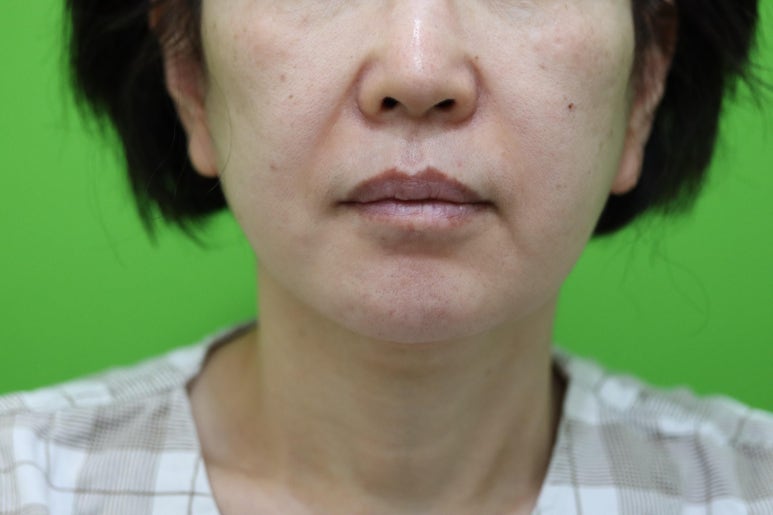
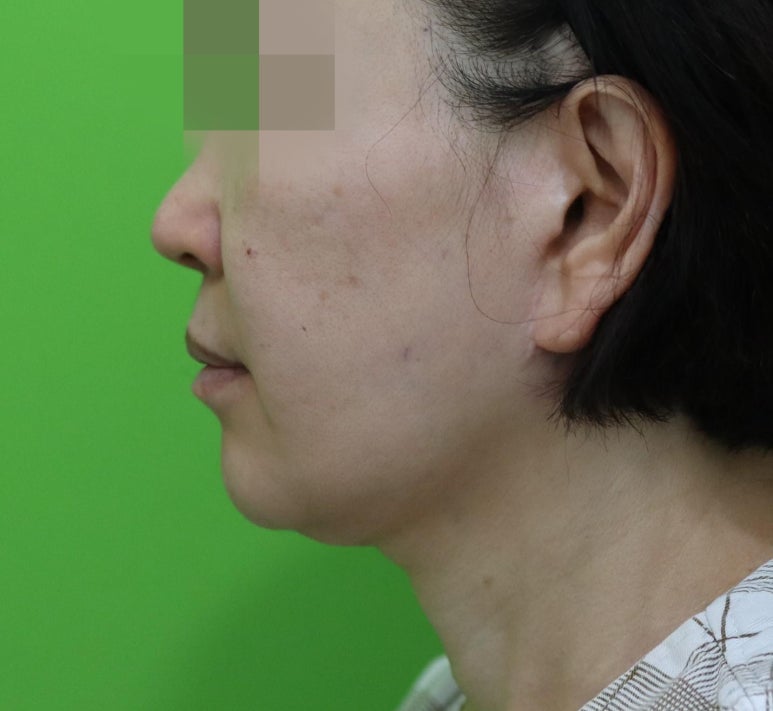
When she came to our clinic for a consultation, her biggest concern was
whether it would be possible to make the nasolabial folds and marionette lines as faint as possible.
However, because tissue adhesion from the previous surgery was expected,
we explained the available options for improvement, even though it would be difficult.
When we first met, the patient had looked up various facelift reviews online,
but since there were not many "revision surgery" cases, she felt anxious.
After examining and checking the condition of the SMAS layer damaged by the previous surgery and the degree of firm scar tissue,
I planned the surgical strategy.
Through this process, I explained in advance that the marionette lines could become much fainter than they are now,
but the nasolabial folds would not disappear completely and would only become shallower than before.
How Difficult Is Revision Facelift Surgery?
The first surgery was already a big decision,
and I was told that revision facelift surgery is even more complex.
Is that really true?
Many people ask this.
In fact, if you look at facelift review cases, there are several reasons why revision surgery feels much more difficult than the first surgery.
- SMAS Layer Damage
• In a previous surgery, the dissection process may not have been done properly,
or too much tissue may have been removed.
• In this patient’s case as well, the SMAS layer had already been significantly weakened,
and scar tissue was mixed throughout the area.
- Adhesions and Scar Tissue
• As the tissue heals after surgery, strong adhesions can form internally.
• Scar tissue is usually hard and tough, and it creates significant resistance during revision dissection.
- Difficulty of Tissue Dissection
• The most important thing in revision surgery is
"how to deal with the scar tissue caused by the previous surgery."
• We need to safely release the necessary areas,
while also removing improper adhesions and securing tissue that can be lifted again.
For these reasons, revision facelift surgery takes longer than the first surgery,
and it must be handled delicately by an experienced specialist.
That said, if the areas that truly need to be released are properly dissected,
and everything is firmly fixed, the result can be better than expected.
Can Scar Tissue Be Used Instead of the SMAS Layer?
– The Core of the Surgical Strategy
In this surgery, many areas of the SMAS layer were especially damaged,
and the scar tissue was very firm.
One reason some facelift review posts say,
"Revision surgery inevitably has weaker pulling power,"
is because of the damaged SMAS layer and scar tissue that must be lifted.
However,
scar tissue is not entirely a bad thing.
- Using tough scar tissue as a connection point
• Even if the SMAS layer is damaged, well-formed scar tissue can
help maintain lifting force.
• During surgery, we appropriately connected this tough tissue with the SMAS layer,
so it could be lifted firmly.
- Deep Plane Dissection
• To improve the marionette lines and nasolabial folds,
safe dissection must be performed down to the deep plane.
• However, going too deep too aggressively can increase the risk of tissue damage,
so the key is to dissect "only the necessary areas with precision."
- Durability of the Lift
• Rather than simply pulling hard,
what matters is "releasing what needs to be released clearly, and firmly fixing what needs to be fixed," which is
a core point not only in revision facelift surgery but in facelift surgery in general.
• This helps minimize the risk of the initial postoperative appearance looking improved
only to quickly return to the original state.
Postoperative Course: 13 Days, 2 Months, 6 Months
This patient personally documented her facelift recovery with photos
from right after surgery.
For comparison, we also reviewed the photos taken before surgery, at the time of suture removal on day 13,
after 2 months, and after 6 months.
To summarize, the patient underwent the following procedures at our clinic:
-
Revision facelift surgery
-
Neck lift (double chin contouring)
-
Revision lower eyelid surgery and under-eye fat grafting
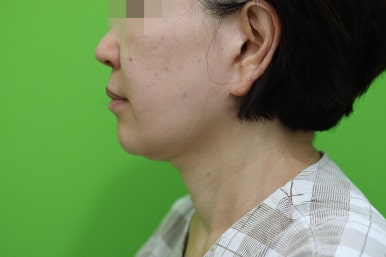
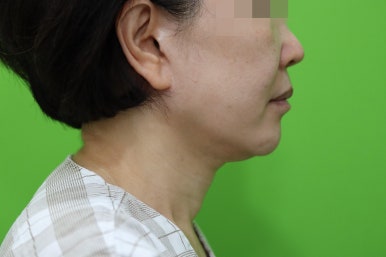
It would be good to focus on the changes in the marionette lines,
the jawline, and the double chin, which were her main concerns.
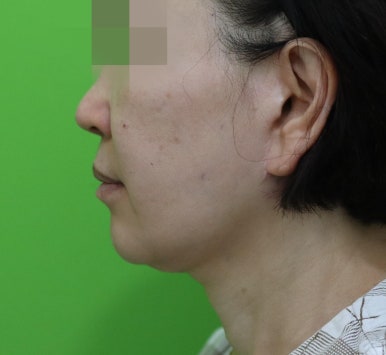
• Before surgery:
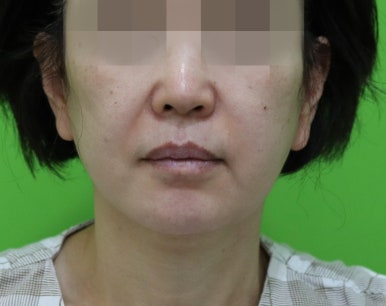
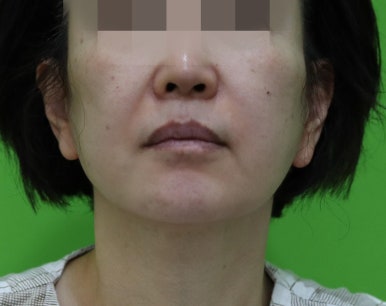
• Day 13:
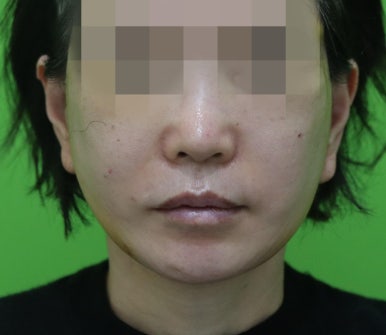
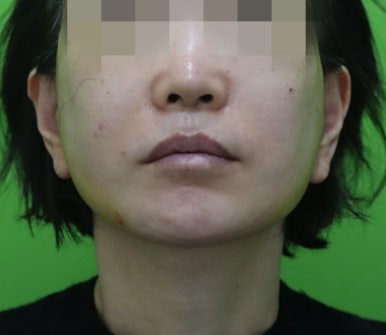
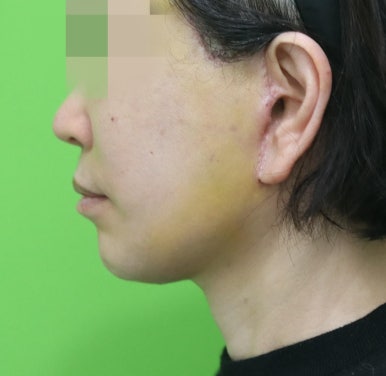
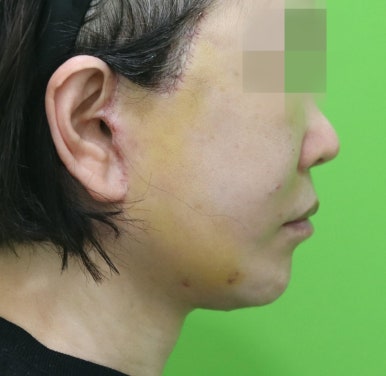
Although some swelling remains and bruising is partially visible,
the depth of the nasolabial folds and marionette lines can be seen to have become somewhat shallower.
• 2 months:
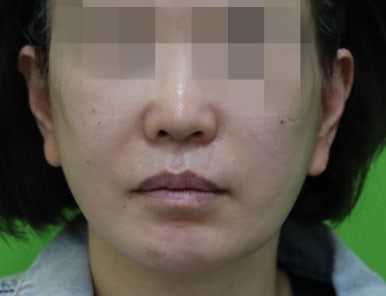
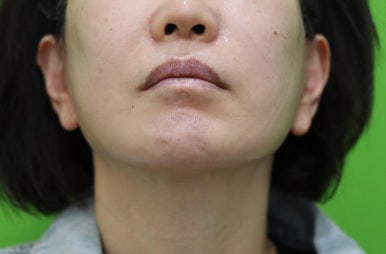
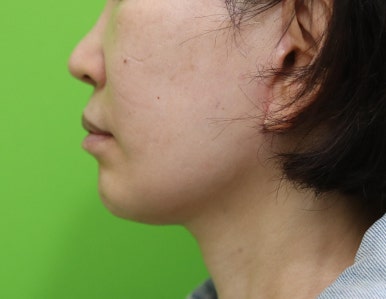
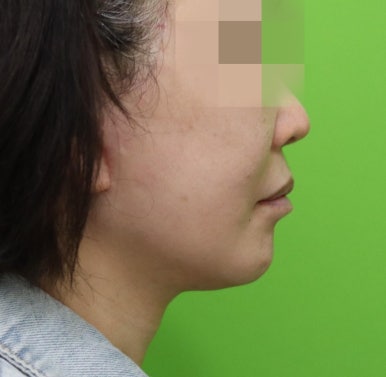
Most of the swelling has gone down, and the facial contours have settled to some extent.
The marionette lines had eased much more than before,
and she received feedback that the area around the mouth looked less heavy and more lively.
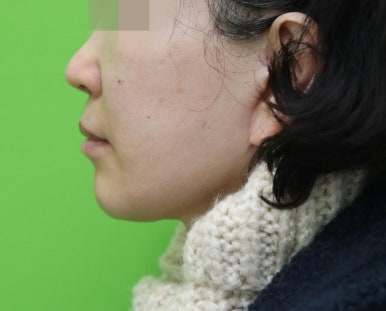
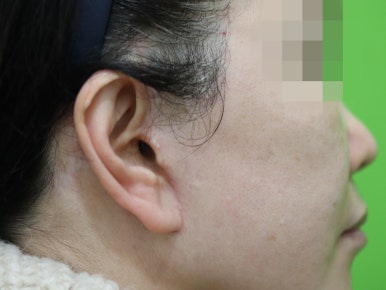
• 6 months:
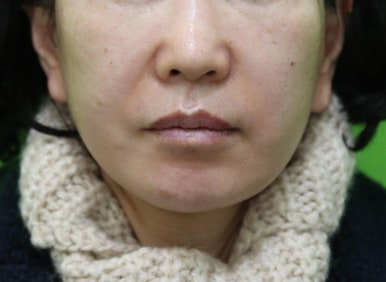
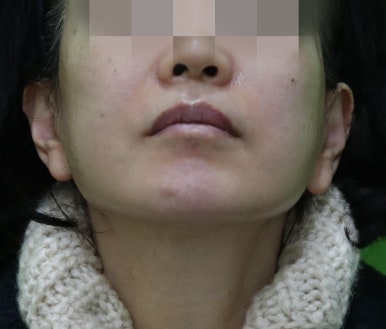
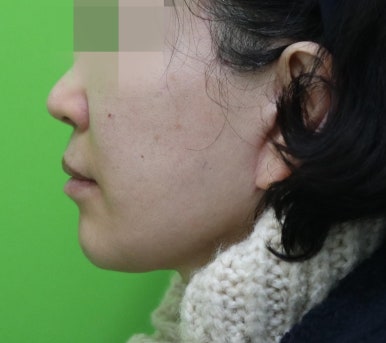
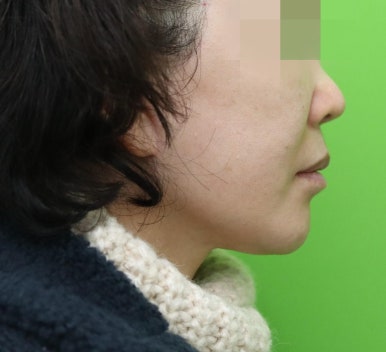
The patient said, "I’m really glad I had the surgery," and the result had a naturally stable appearance.
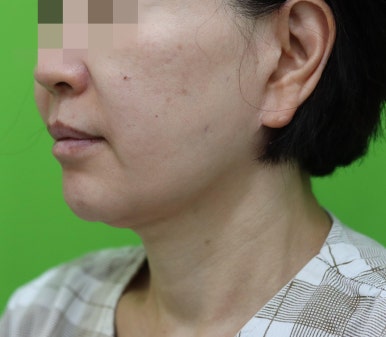
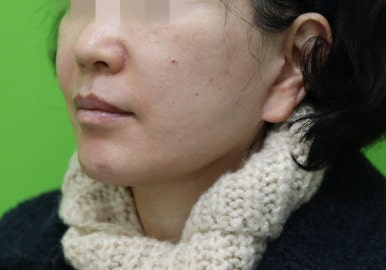
The nasolabial folds did not disappear completely,
but the clearly sunken areas became much softer, giving the overall face a brighter impression.
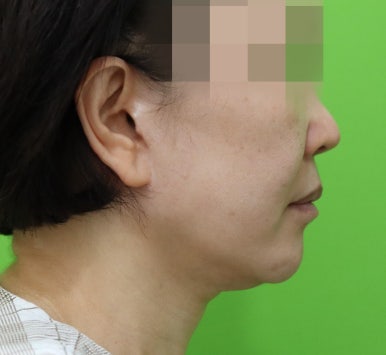
• Before surgery & 6-month comparison
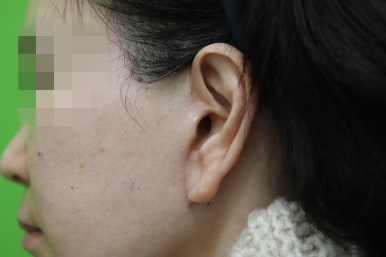
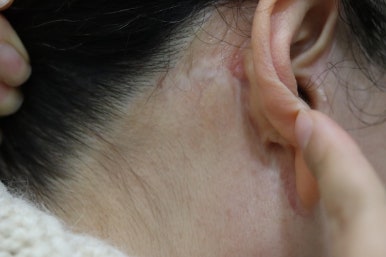
• Facelift surgery 6-month scar
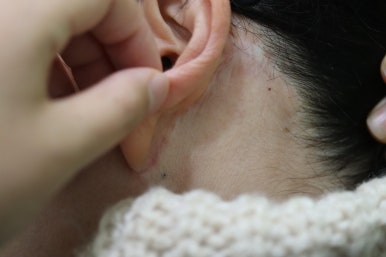
They also said that the under-eye fat no longer protrudes like it did before,
and that just like themselves when searching for facelift reviews,
they hope many people will come to know that revision surgery can improve things a lot more than expected if it is done well. : )
Revision Surgery: Proper Dissection and Fixation Are Key
To summarize,
revision facelift surgery is much more difficult than the first surgery,
but depending on how the scar tissue and damaged SMAS layer are used and connected,
the outcome can vary greatly.
In particular, areas such as the nasolabial folds and marionette lines
require deep-plane dissection,
and the key is a technique that lifts safely yet firmly.
One disappointing point in this case was that,
in order to lift the nasolabial folds more firmly,
the dissection would have needed to extend around that area as well,
but because of damage that may have occurred during the surgery at another hospital three years ago,
the connection between the muscles around the right corner of the mouth and the zygomaticus major muscle
was weakened to the point of being almost absent, and there was no scar tissue available in that area to use,
so it was difficult to lift more strongly.
I hope this patient’s case can be helpful to those who feel anxious because
"even when I look at facelift reviews, there are hardly any revision surgery stories."
If revision surgery is postponed because of immediate concerns,
and too much time passes,
there may come a point where revision surgery itself becomes difficult.
If you have already had surgery once,
when considering revision surgery, it is best to carefully evaluate the tissue condition with an experienced specialist.
The more difficult the case, the more important it is to analyze the pre- and postoperative process carefully,
and to provide the patient with realistic expectations and a thorough explanation.
If you have any questions,
please contact us and I will answer sincerely. :)
If you’re curious about facelift surgery and double chin muscle tightening reviews,
please refer to the post below :)
https://blog.naver.com/youngkeeyoumd/223723195005
Click the image below for Plus Friend chat inquiries
Roy Plastic Surgery Clinic (Sinsa Station, Line 3)
Main phone: 02-516-5525
Weekdays 10:00 ~ 19:00
Saturdays 10:00 ~ 16:00
Roy Plastic Surgery complies with medical law.
The photos in this post were taken under the same conditions,
and are images taken with the patient’s prior consent.
In addition, after plastic surgery and procedures, side effects such as bleeding, infection, and inflammation may occur depending on the individual, so caution is required.