Hello,
I’m Yoo Young-gi, CEO of Roy Plastic Surgery.
Today, I’d like to share the story of a woman in her mid-60s who underwent revision facelift surgery.
She had already received a facelift and neck lift at another hospital 13 years ago.
However, the results did not last long after surgery,
and although her face looked tighter for only a few months,
the neck and double-chin area did not improve at all.
The hospital that performed the first surgery suggested revision surgery,
but she declined because she remembered the pain and how difficult it had been, and simply continued living as she was.
Thankfully, the patient kindly agreed that all of her photos could be shared.

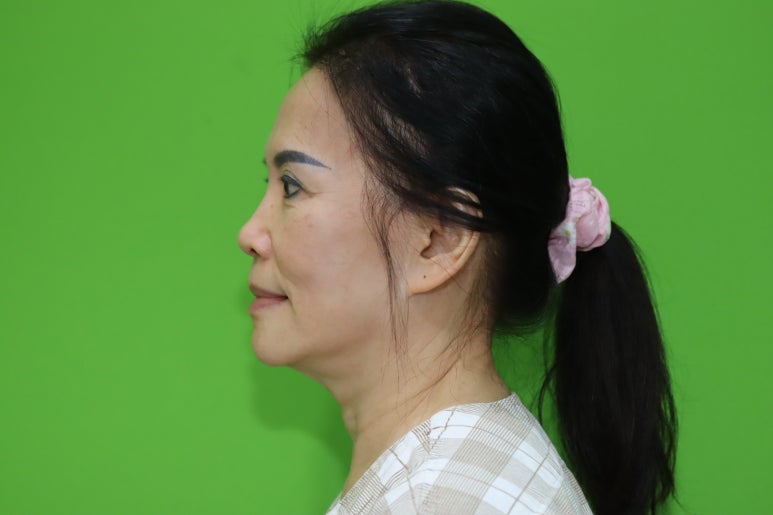
In my view, it seemed difficult to further improve the nasolabial folds or marionette lines.
The patient also said those were not much of a concern,
but she strongly disliked the sagging double-chin area when seen from the side.
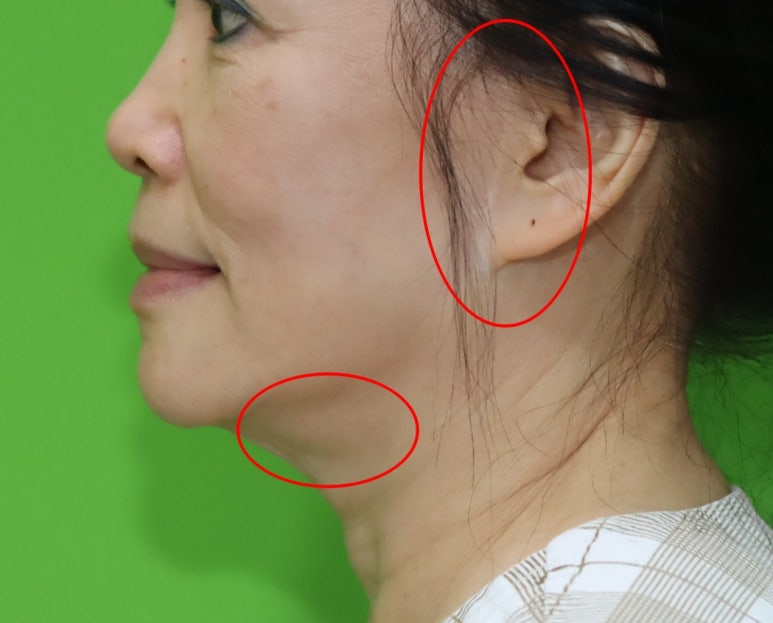 What I thought would be beneficial in her revision surgery were these three points.
- The scar was left in a very noticeable way,
so after performing a proper facelift again,
I planned to improve the scar because the extra skin to be removed would likely include scar tissue.
- The enlargement under the chin was very prominent.
There was also significant platysmal laxity beside it, so muscle tightening seemed necessary.
- The jawline around the marionette lines had collapsed,
and around the ear, the boundary between the face and neck was unclear.
When performing surgery on most revision patients,
in about 80% of cases, there is no sign that the SMAS layer was touched at all.
In about 10% of cases, it looks like the SMAS layer was pulled and sutured well
(in many of these cases, recurrence happened because the dissection was not sufficient).
The remaining 10% are complete chaos.
These are usually patients who have had all kinds of procedures, not just facelifts.
The more surgery they had in the past, the more prepared we have to be for every possibility...
This time, during the revision surgery, we found that some remnants of the threads that had been used to pull the SMAS layer during the previous surgery were still left behind.
Looking at this, I cautiously suspect that although the SMAS layer may have been fixed,
the effect was likely poor because the dissection had not been sufficient.
A facelift is not complete just by cutting the retaining ligaments
or suturing the SMAS layer.
Cutting the retaining ligaments is just the absolute basics,
and merely a basic step that must be performed during dissection.
What matters is
how far and how widely you dissect,
fully release the resistance when pulling,
and whether you can reposition the tissue back to where it was when it was younger.
And for this process,
you need to reach a deeper layer than the SMAS layer, meaning the deep plane,
in order to expect clear and lasting results.
If you remove a large amount of excess skin by pulling the skin forcefully,
it may seem like all the wrinkles will smooth out at once,
but after a few weeks or even a few days, they often return to the original state.
That is because the underlying structures have not been lifted and remain as they were.
In addition, the tension between the incision sites becomes too strong,
which can lead to the worst-case result of severe scarring.
In this revision surgery, more excess skin remained than I expected for a revision case.
If you complete proper dissection and then pull and secure the tissues,
the skin naturally follows upward,
and the excess skin left behind becomes visible.
It is best to trim only the minimum amount needed.
The patient lives in Indonesia and returned home after receiving only the basic treatment.
Later, when I visited Indonesia three months afterward, I checked her progress in person and she was very satisfied.
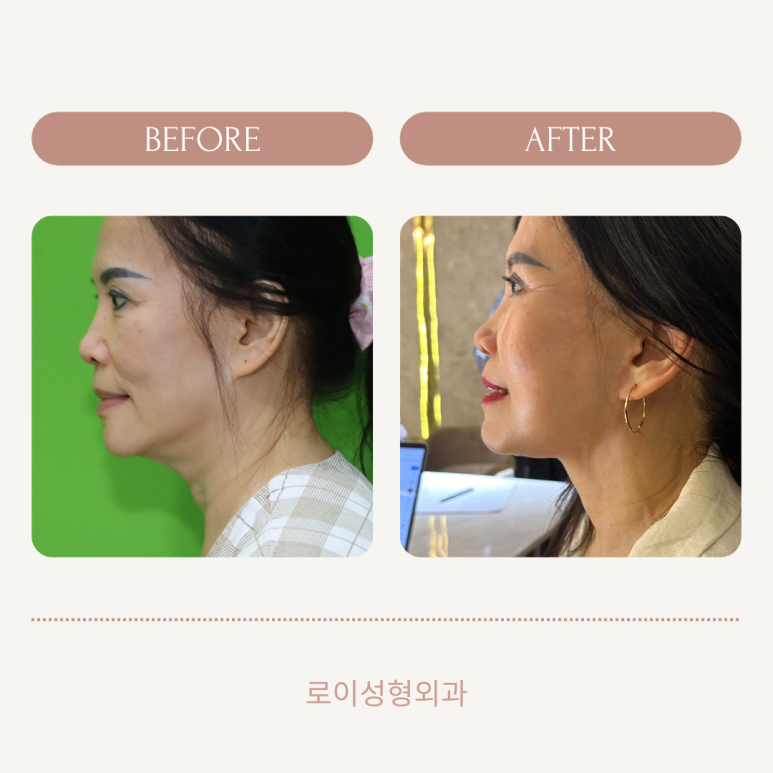
These are the photos before surgery and at three months after surgery.
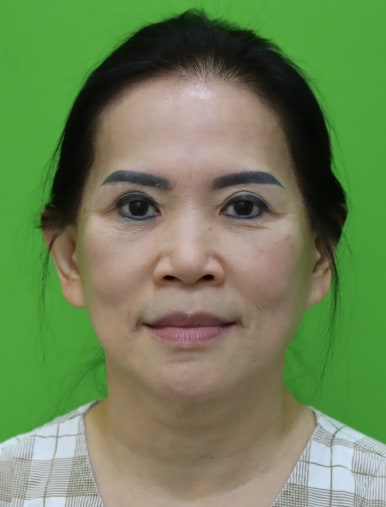
 Lifting the sagging tissue of the upper cheek and front cheek upward and outward to make the convex surface look flatter
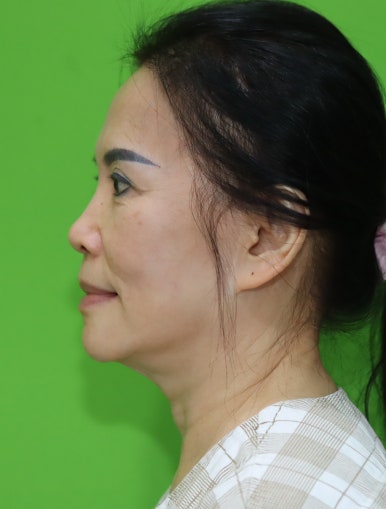
 Removal of sagging tissue under the double chin and tightening of the platysma
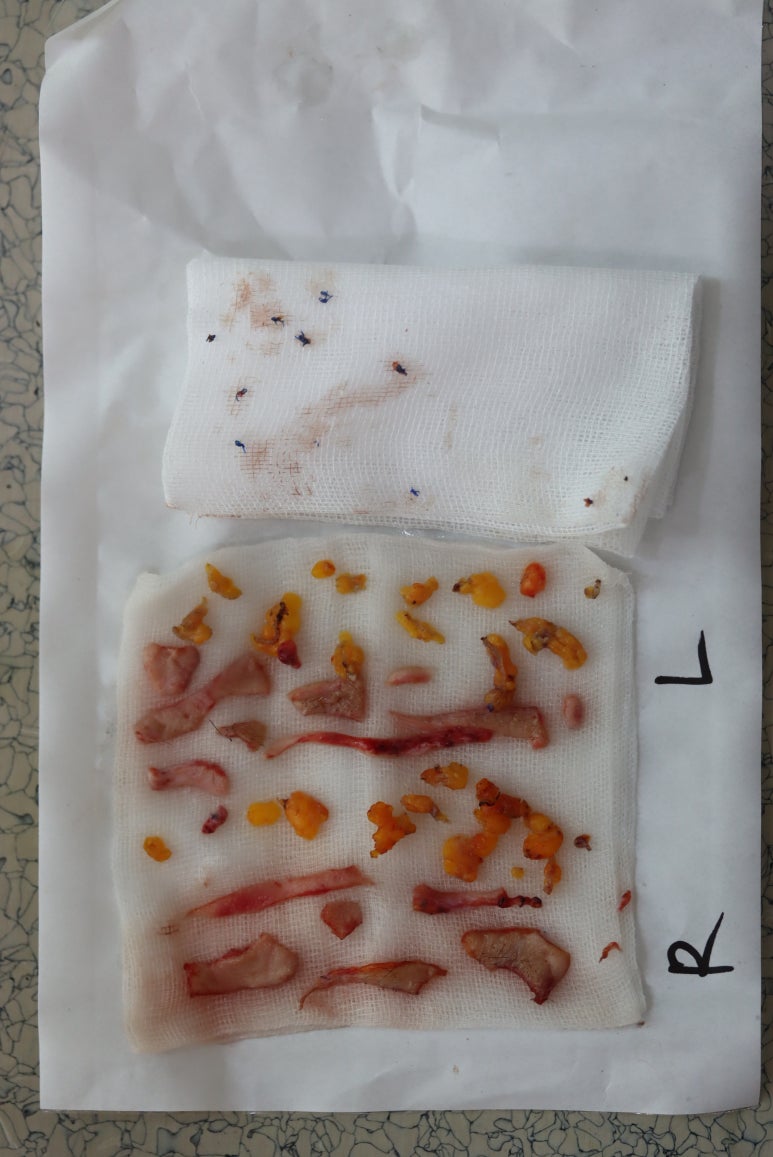
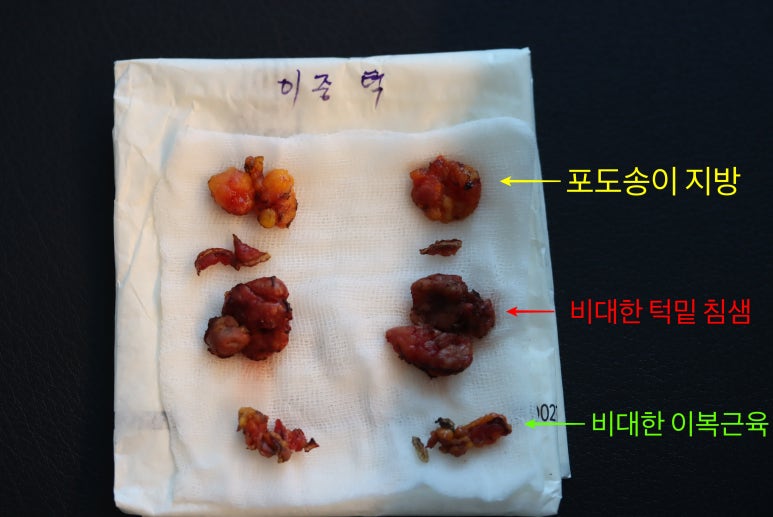 This is the grape-like fat, salivary gland, and part of the digastric muscle that were removed during this patient’s surgery.
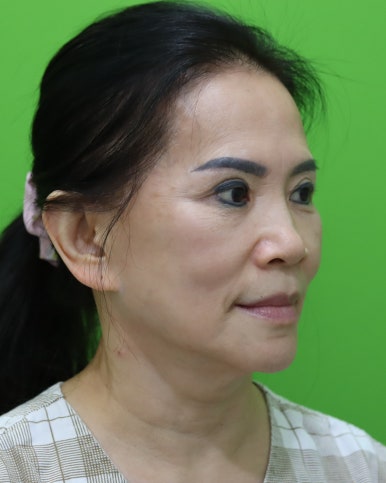
 Smoothing the irregular jawline beneath the front-cheek contour
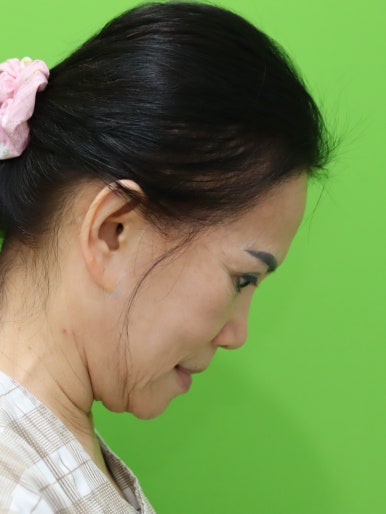
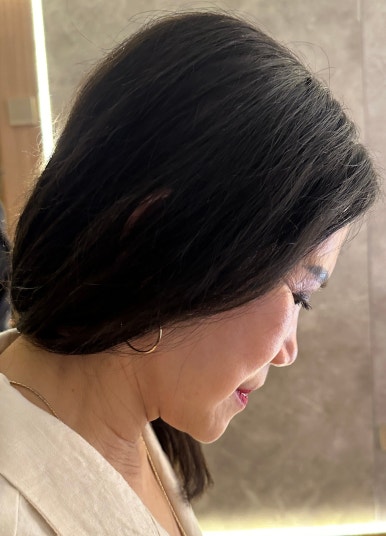 Elimination of the double chin
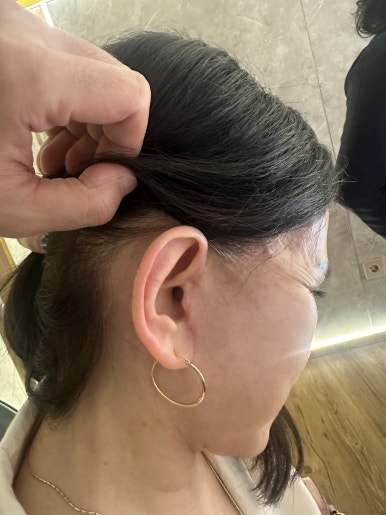
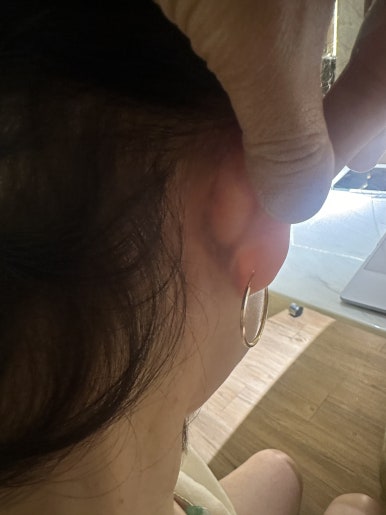
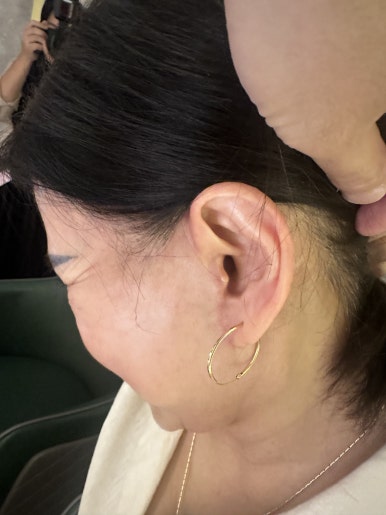
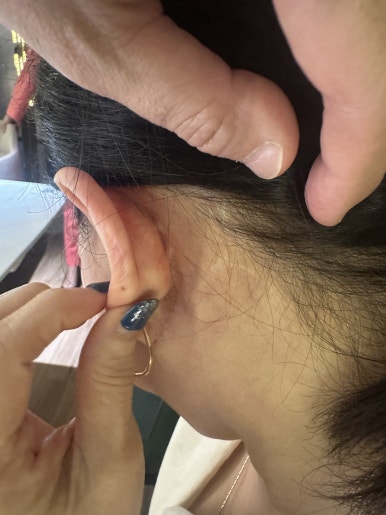
 This is the facelift scar at three months.
It becomes paler at six months,
This is the facelift scar at three months.
It becomes paler at six months,
and becomes even paler at one year.
At this point, I was able to hear the behind-the-scenes story.
The patient said that because there was no pain after surgery,
she wondered whether the surgery had really been done properly.
Later, when she looked in the mirror, she said she was extremely surprised.
As the swelling went down to some extent, people around her said she looked like she was in her 40s rather than her 60s,
and she jokingly tells her son to call her noona when they are outside. Haha
The core of a facelift is safe deep-plane (= sub-SMAS) entry and sufficient dissection.
If you are considering revision facelift surgery,
I hope you will remember that there are limits to simply cutting the retaining ligaments or suturing the SMAS layer.
How far you dissect,
how precisely you dissect,
and whether you can return the tissue to its original position
determine the longevity of the result and the minimization of scarring.
I hope this case serves as a good example that even in revision surgery, using the right method can reduce pain and improve satisfaction.
Thank you.
If you are curious about another revision facelift case,
please refer to the post below :)
https://blog.naver.com/youngkeeyoumd/223726144805
Click the image below for Plus Friend chat inquiries
Roy Plastic Surgery Clinic (Line 3, Sinsa Station)
Main phone: 02-516-5525
Weekdays 10:00 ~ 19:00
Saturday 10:00 ~ 16:00
 Roy Plastic Surgery complies with medical laws.
The photos in this post were taken under the same conditions,
Roy Plastic Surgery complies with medical laws.
The photos in this post were taken under the same conditions,
and are images taken with the patient’s prior consent.
In addition, after plastic surgery and procedures, side effects such as bleeding, infection, and inflammation may occur depending on the individual, so caution is required.