“Front teeth are visible, so of course you should get it.
But molars aren’t very visible,
so isn’t it okay not to get one?”

Hello.
I’m Lim Jong-woo, Chief Director of Gwanghwamun The Square Dental Clinic.
Today, I’d like to talk about molar implants, which many people feel “can be done or not done.”
To put it simply,
molars are not just “teeth you can’t see,”
but key structures that determine the balance of overall oral health.
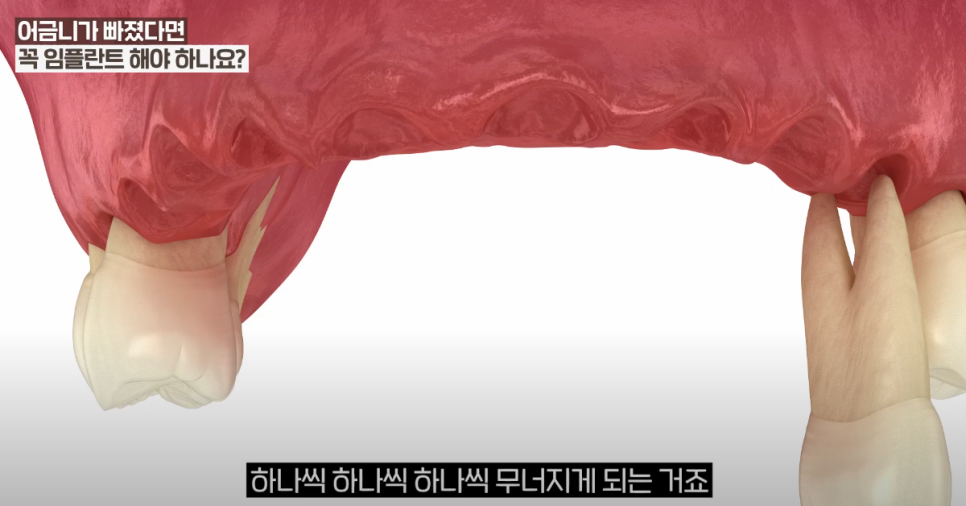
If a missing molar is left untreated,
a variety of problems that are not visible can occur.
Molars are the “center axis of chewing force.”
There are 28 teeth in total, or 32 including wisdom teeth,
and each has a different role.
Front teeth mainly cut food
and help with pronunciation,
while molars are responsible for crushing and chewing food,
handling the “mechanical force.”
If one molar disappears,
the neighboring molars,
and even the front teeth,
end up taking on more force to make up for it.

As a result, the entire remaining dentition
is subjected to overload,
and wear, cracks, and periodontal disease may progress more quickly.
Teeth are “team players that collapse when one is missing.”
When one molar is lost, the opposing tooth may come down
to compensate,
or the teeth on both sides may tilt and move into the empty space.
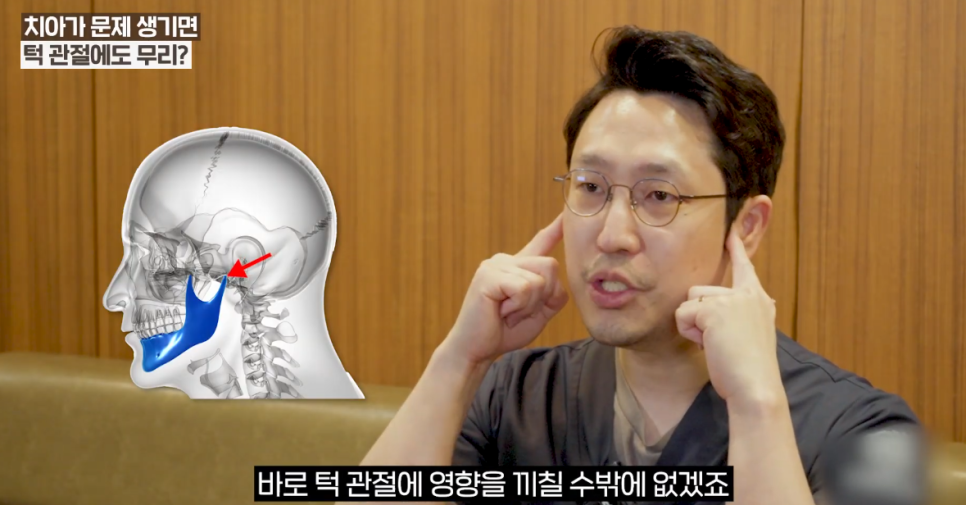
When the alignment of the teeth breaks down like this, the bite becomes misaligned,
and the temporomandibular joint is also placed under strain.
Once a disrupted bite becomes misaligned,
it is difficult to realign,
so leaving the empty space untreated can
lead to major losses over the long term.
Why implants are recommended instead of prosthetics
When a molar is missing,
the 대표적인 replacement treatments are
bridges and implants.
But bridges require grinding down the healthy teeth on both sides,
and over time, those supporting teeth often become weaker.
On the other hand, implants are a treatment that can function independently
without affecting the surrounding teeth.

In particular, in areas like molars where chewing force is strong,
implants are even more stable and the prognosis is better.
Problems that can occur if you do not get an implant
If a molar implant is not done and the area is left untreated,
the following changes gradually progress.
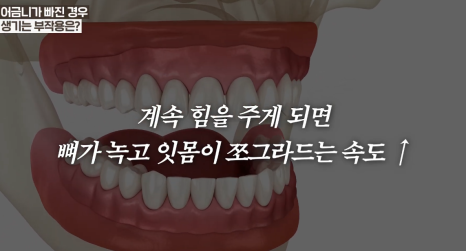


· Chewing only on the opposite-side molar creates an asymmetric chewing habit
· One side of the jaw joint is overstressed, causing pain
· The teeth shift out of alignment, leading to bite imbalance
· Even if you later try to get an implant, insufficient bone can make the procedure difficult
In other words, the thought that “one tooth is missing, but it’s not uncomfortable, so it’s fine”
can in the long term lead to greater treatment costs and
more complicated procedures.
One molar,
the key to overall oral health.


A molar implant is not about replacing “a tooth you can’t see,”
but about building the foundation of oral health.
A moment of carelessness, thinking one missing tooth is no big deal,
can affect the health of all the teeth and the jaw.
The discomfort felt when one molar is missing
may not be severe.
But if the overall alignment of the teeth and
the balance of chewing force break down,
the problems that follow can become much more complicated
and costly.
Restoring a missing molar as early as possible
is the wisest choice.
Through regular checkups and consultations,
please be sure to confirm the treatment timing and
method that is right for you.
Wishing you healthy teeth and comfortable meals today as well.
—
Sincerely,
Lim Jong-woo, Chief Director of Gwanghwamun The Square Dental Clinic