Many people go about their daily lives without even knowing they have wisdom teeth until tooth pain starts.
In fact, many people say things like,
“My wisdom teeth haven’t come in yet,”
“I guess I don’t have wisdom teeth.”
But even if they are not visible, wisdom teeth are not uncommon in being impacted in the gums or bone and causing problems.
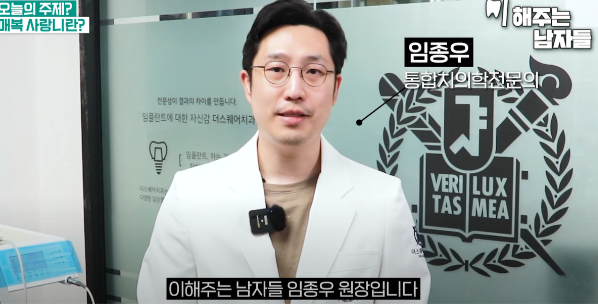
Hello.
I am Lim Jong-woo, the chief director of Gwanghwamun The Square Dental Clinic.
Today, I’ll talk about a topic many people are curious about:
‘Do impacted wisdom teeth really have to be removed?’
It is also one of the questions I hear most often from patients in the clinic.
Why are impacted wisdom teeth a problem?
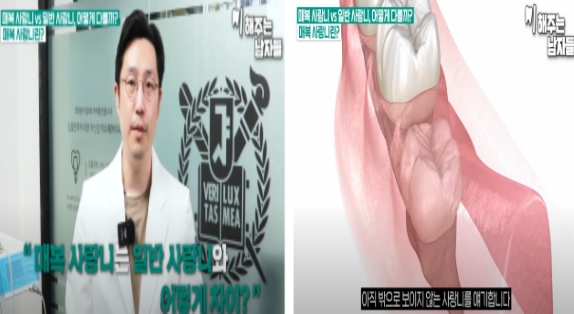
What is an impacted wisdom tooth?
Wisdom teeth are the rearmost molars (third molars),
and they usually erupt in the late teens to early 20s.
However, if there is not enough space in the jawbone,
or if the direction is abnormal,
the wisdom tooth may not come out in the correct position
and remain buried in the gums or bone.
This is called an ‘impacted wisdom tooth.’
Depending on the degree of impaction, they are divided into partial impaction (partially exposed outside the gums) and
complete impaction (fully enclosed in the gums and bone).
The problem is that even if an impacted wisdom tooth does not cause immediate discomfort,
it can quietly harm the surrounding teeth.
In some cases, removal is absolutely necessary.
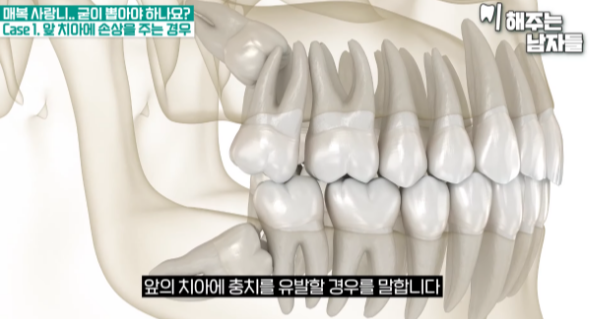
- When it damages the tooth in front
If an impacted wisdom tooth pushes against the molar in front,
or if food gets trapped between the wisdom tooth and the tooth in front and causes decay,
even a healthy tooth may eventually need to be extracted.
There have even been cases where decay reached the root of the molar in front,
making treatment impossible.
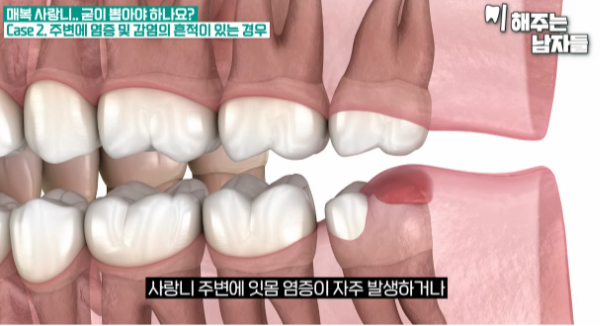
- When gum inflammation and infection recur
If the gums frequently swell, bleed, or produce pus,
an impacted wisdom tooth may be the cause of the inflammation.
If left untreated in such cases, the pain cycle may become shorter and more intense,
and in rare cases, the inflammation can spread along the jawbone
and lead to a systemic infection (cellulitis).

- When a cyst or tumor is present
If an ‘odontogenic cyst’ develops around a wisdom tooth,
it can dissolve bone and threaten the adjacent teeth.
If a lesion that appears dark on an X-ray is found,
extraction is definitely necessary.

- When it interferes with orthodontic or implant treatment
If a wisdom tooth interferes with the movement of orthodontic teeth,
or if it affects nearby structures during implant treatment,
it is advisable to remove it in advance
for the stability of the treatment.
On the other hand, in these cases, removal is not always necessary.
- When a completely impacted wisdom tooth is stable without symptoms
If it is fully buried in the bone
and does not cause inflammation or affect the surrounding tissues,
there is no need to proceed with surgery unnecessarily,
and you can simply monitor it through regular checkups.
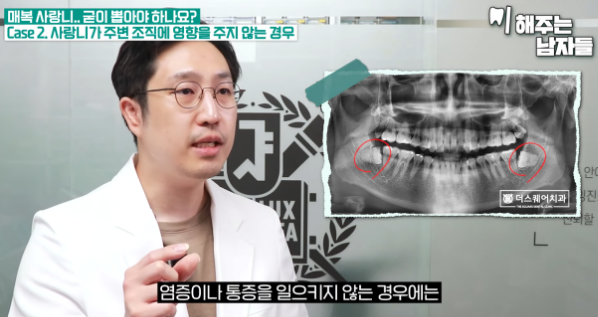
- When it is partially impacted but there is no inflammation or pain
In some cases, it is well managed and does not cause problems
for a long period of time.
However, even in these cases,
regular X-ray checkups are absolutely necessary.
Do not let your guard down just because a wisdom tooth is ‘not hurting right now.’
Wisdom teeth often damage not only themselves,
but also the molar in front of them.
In particular, impacted wisdom teeth are often
not easy to see from the outside,
so it is difficult to judge without a dental X-ray examination.
The earlier the treatment timing, the better the prognosis.
As the tissues around wisdom teeth get harder with age
and the likelihood of inflammation increases,
if there is a chance of problems,
it is wise to remove them in advance while you are young and healthy.
“Do not leave impacted wisdom teeth untreated—get them checked.
Early detection and proper judgment about extraction
are the beginning of protecting healthy molars.”
Lastly, if you are worried about pain during wisdom tooth extraction,
the doctor’s skill and accuracy,
the surgical time,
and other factors
can greatly affect pain and recovery.
If needed, referral to a university hospital can also be considered.
If you still have wisdom teeth,
or have never had an examination,
they can be checked with just one panoramic X-ray during a regular dental exam.
The power to find unseen problems in advance,
that is prevention,
and I believe it is the beginning of treatment.
Thank you.
— From Gwanghwamun The Square Dental Clinic
Lim Jong-woo, Chief Director