“Doctor, this tooth...
Do I really have to extract it?”
This is a question I hear several times a day in the clinic.
If extraction is recommended,
many people ask back like this.
Everyone wants to use their own teeth
until the very end.
Even when the root is shaky, even when it hurts,
there are those who wonder whether it might still be saved.
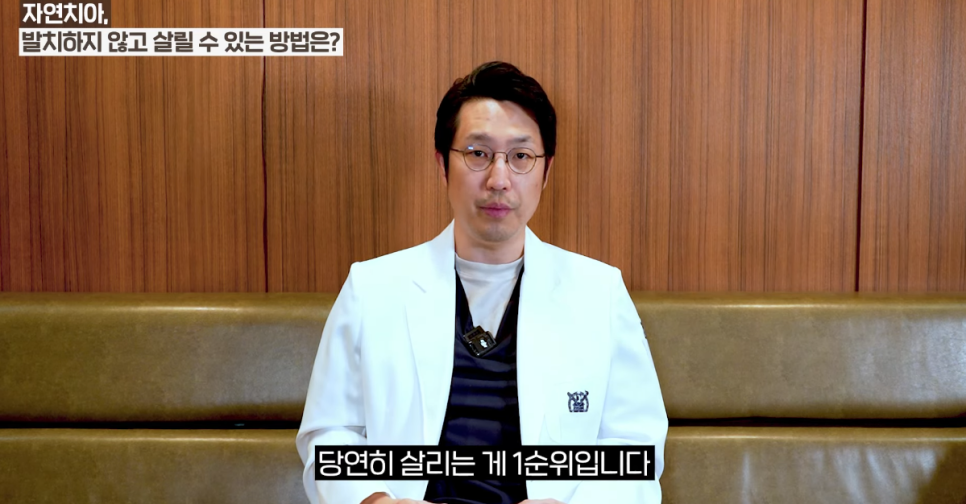
Hello.
I am Lim Jong-woo,
Chief Director of Gwanghwamun The Square Dental Clinic.
Today, I’d like to talk about “how far a natural tooth can really be saved,”
and “when it should be saved and when it should be let go.”
Why are natural teeth worth trying so hard to save?
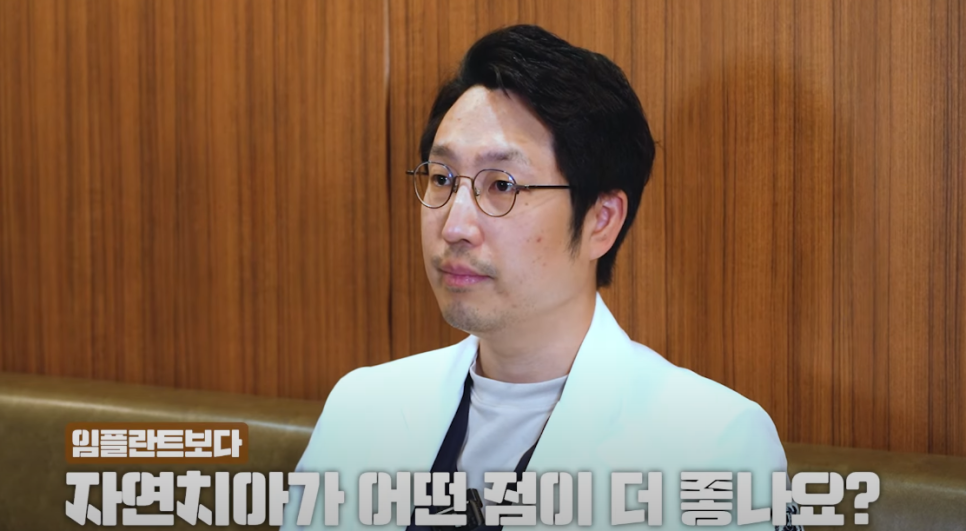
As dental technology has advanced a great deal,
implants have also established themselves as a reliable treatment.
Even so, there is a reason people find it hard to give up on natural teeth.
The biggest difference is the presence of the periodontal ligament.
A natural tooth is not simply fixed into the bone;
it is surrounded by a thin membrane called the periodontal ligament,
which absorbs impact and allows sensation.
By contrast, an implant is directly attached to the bone,
so it does not have the ability to “feel” like a natural tooth
or to move flexibly.
Another difference is the anatomical structure of the tooth.
Natural teeth have a fuller crown
and roots that spread out in multiple directions,
allowing the surrounding gums and bone to settle firmly in place.
Implants, on the other hand, are structurally narrower
and take the form of a single post, so over time
the surrounding tissue inevitably shrinks.
That is why I say,
“Implants are an excellent alternative,
but they cannot completely replace natural teeth.”
Then,
how can a tooth be saved?
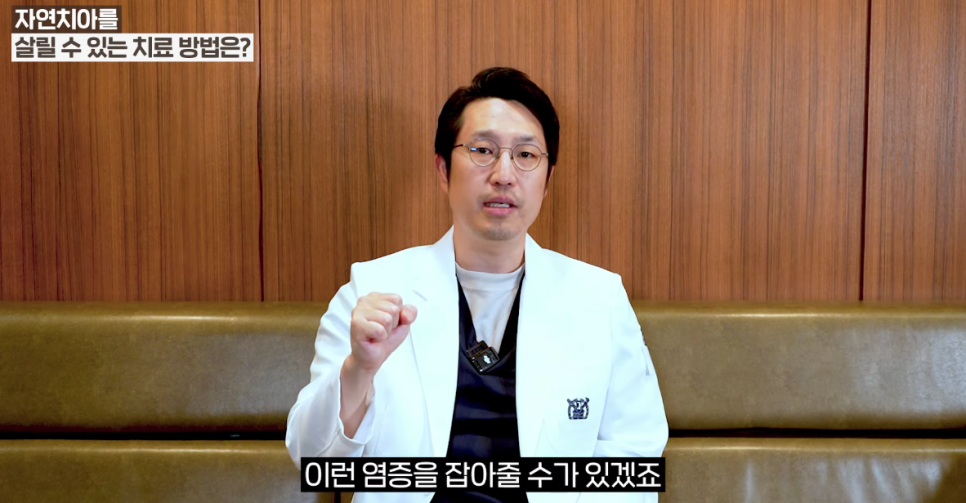
A tooth does not have to be extracted just because it hurts or becomes loose.
If there is a possibility of saving it,
we first consider the following preservation treatments.
① Root canal treatment (endodontic treatment)
This is a treatment used when inflammation develops inside the tooth.
The internal tissue is removed, disinfected,
and then filled.
This treatment, commonly called “removing the nerve,”
is the most representative way to save a tooth.
② Retreatment of the root canal
This is performed again when inflammation recurs in a tooth
that has already undergone root canal treatment.
It involves removing the existing filling material and disinfecting again,
a process that is technically more difficult and requires a delicate approach.
③ Apicoectomy
When there is a localized problem only at the tip of the tooth root,
this surgery removes just a small portion of the root tip
and scrapes out the inflamed area.
It can be considered especially for areas that are easy to access,
such as front teeth.
However, not every tooth can be saved.
The desire to “save it no matter what”
can actually become harmful.
If the problem is too severe and the tooth has already
structurally collapsed, trying to force it to remain in place
may allow inflammation to spread to the surrounding tissues
and create even bigger problems.
The criteria for deciding whether a natural tooth can be saved
are the two points below.
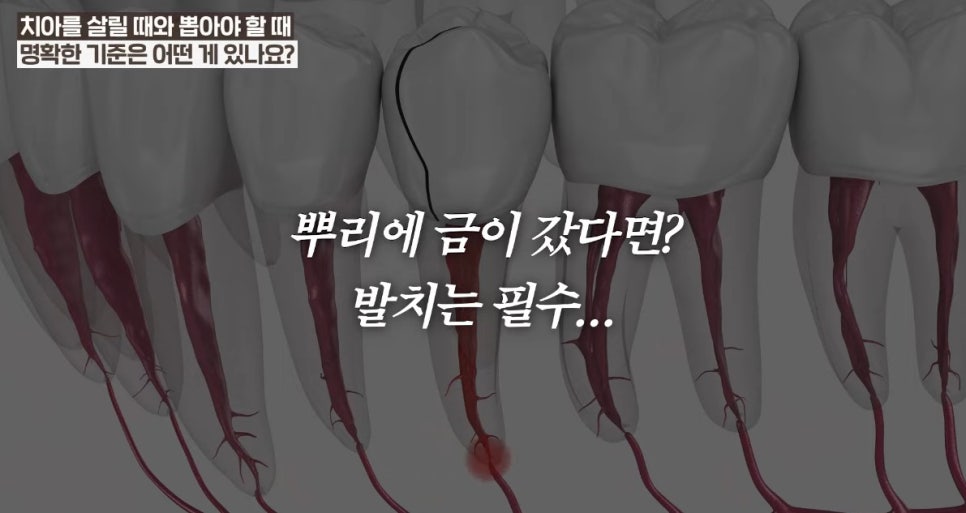
① Is the root intact?
Cavities or chips can be restored,
but if a crack extends deeply into the root,
it cannot be saved.
In particular, if the crack reaches the root tip,
extraction is the only option.
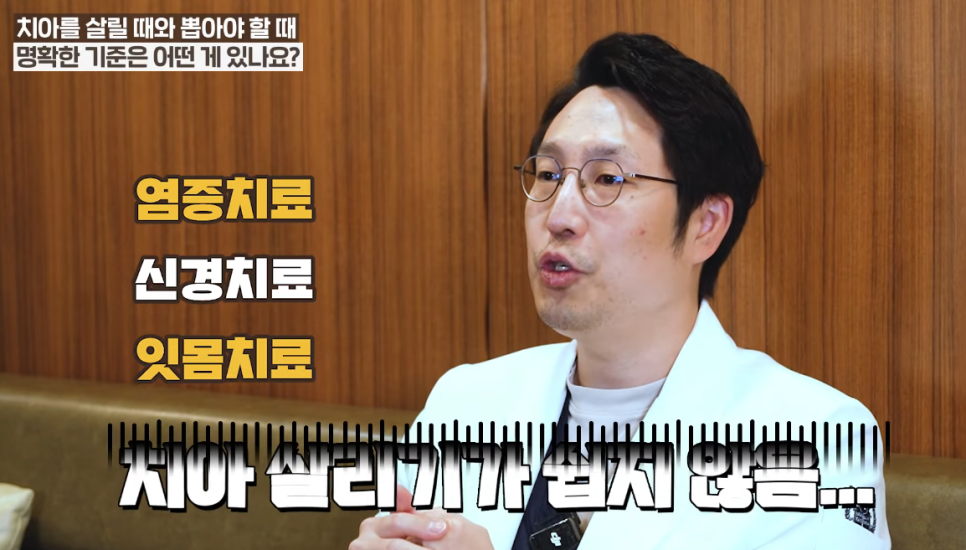
② Are the bone and gums supporting the tooth in good condition?
If periodontal disease has caused significant bone loss
and support has become difficult,
it is hard to maintain the tooth for long,
even if other treatments are combined.
Trying to keep a tooth on a foundation that has already been damaged
may be unrealistic.
Diagnosis comes first.
And then we decide together.
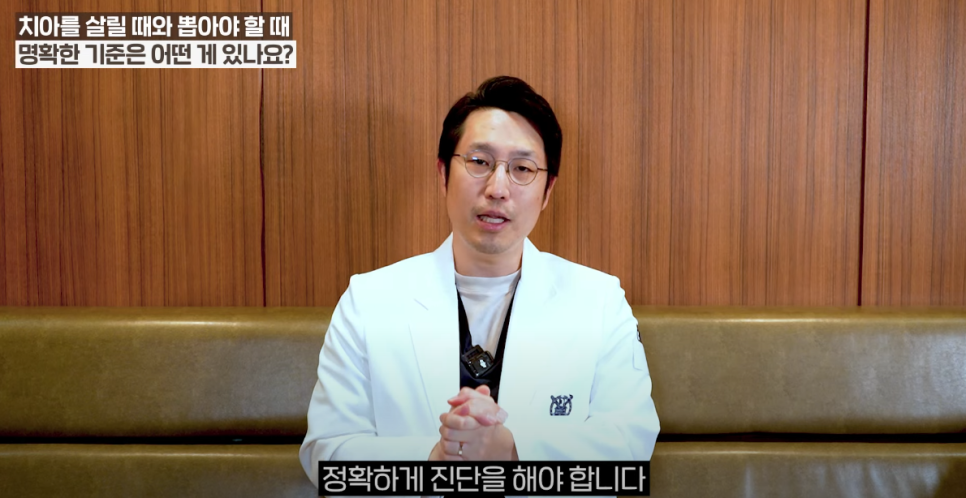
I always tell patients,
“An accurate diagnosis comes first,
and after that, it becomes a matter of choice.”
If the tooth can be saved, I explain honestly
what treatment is needed, how long it will take,
and how much cooperation will be required,
then we decide together.
On the other hand, if it cannot be saved,
I must tell you clearly.
That is the only way to prevent greater damage.
Natural teeth are still the “best teeth.”
No matter how much implants have improved,
they still cannot match the sensation, structure,
and shock-absorbing function of natural teeth.
That is why I plan treatment with a focus on saving the patient’s tooth
whenever possible.
If you want to use your own teeth until the very end,
the first thing you should do is
regular checkups and early diagnosis.
If treatment is done when the problem is still small,
you can keep your own teeth for a long time without severe pain.
Lastly, if you are reading this and wondering
whether your tooth can be saved,
I recommend that you do not decide alone
and be sure to get an expert’s evaluation.
A dental clinic is not just a place that removes teeth.
Saving the tooth if it can be saved,
that is where our care begins.
Thank you.
_
From Lim Jong-woo,
Chief Director of Gwanghwamun The Square Dental Clinic