Hello.
I’m Lim Jong-woo, the chief director of Gwanghwamun The Square Dental Clinic.
In the treatment room, I often hear questions like this.
“Doesn’t root canal treatment weaken the tooth?
Do I really have to get root canal treatment?”
Whenever that happens, I answer like this.
“Not every case requires
the complete removal of the nerve.”
Today, I’d like to talk about that
in a little more detail.
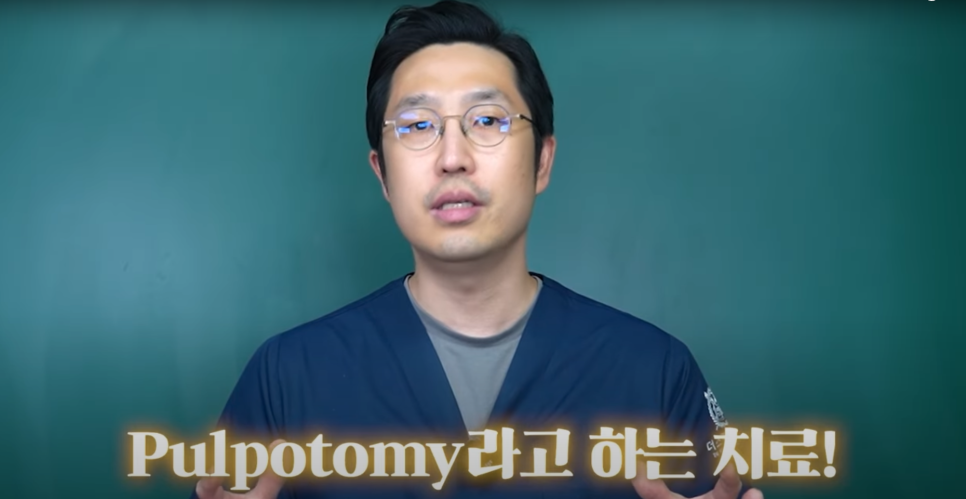
Let’s take a look at a way to preserve as much of the tooth nerve as possible:
‘Pulpotomy.’
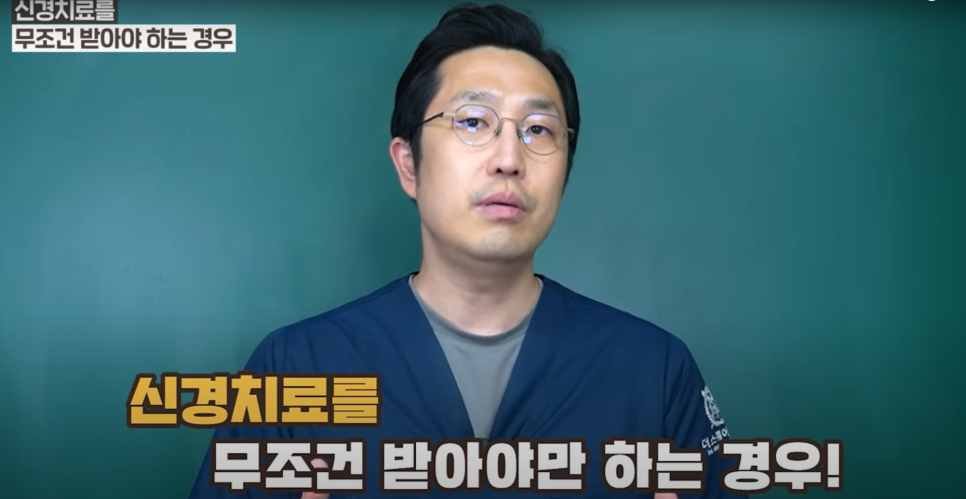
When is root canal treatment really necessary?
Inside a tooth are nerves and blood vessels.
If this area becomes infected by bacteria,
inflammation occurs,
and pain begins from that point on.
● Pain so severe that it is hard to sleep at night
● Pain that does not go away even after taking painkillers
● Sensitive reactions to cold or hot food
● On the other hand, when there is no sensation at all (the nerve is already dead)
If you have these symptoms,
the nerve is deeply damaged.
At that point, root canal treatment, which removes all the nerve tissue and cleans and disinfects the tooth,
is absolutely necessary.
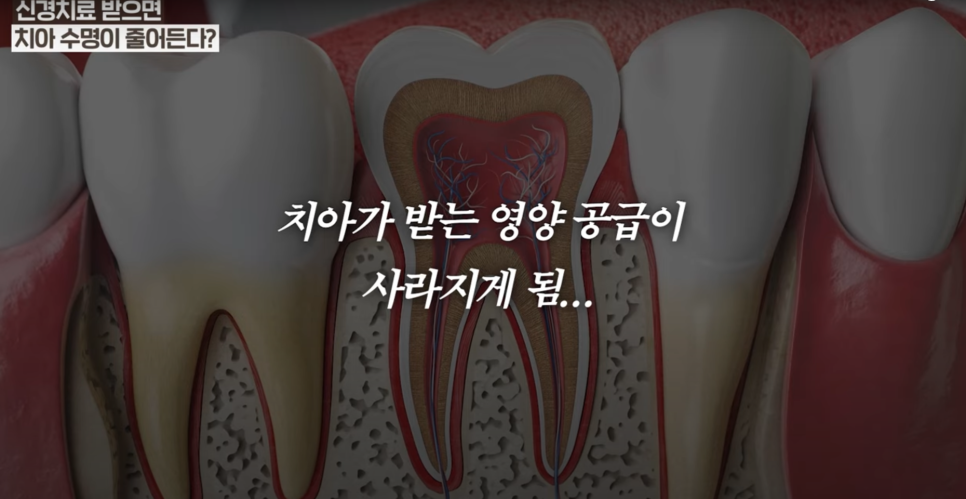 But do all nerves need to be removed?
With root canal treatment, the inflammation disappears,
but the nerve and blood vessels inside the tooth are also removed.
As a result,
the tooth may lose some of its ability to retain moisture on its own
or detect impact.
That is why many people feel,
“My tooth seems weaker than before.”
Also, when there is no nerve,
if the tooth cracks while chewing something hard,
you may not immediately feel the pain signal,
so the problem can be discovered later.
In this way, root canal treatment is necessary,
but if possible, there are times when
it is better to leave part of the nerve intact.
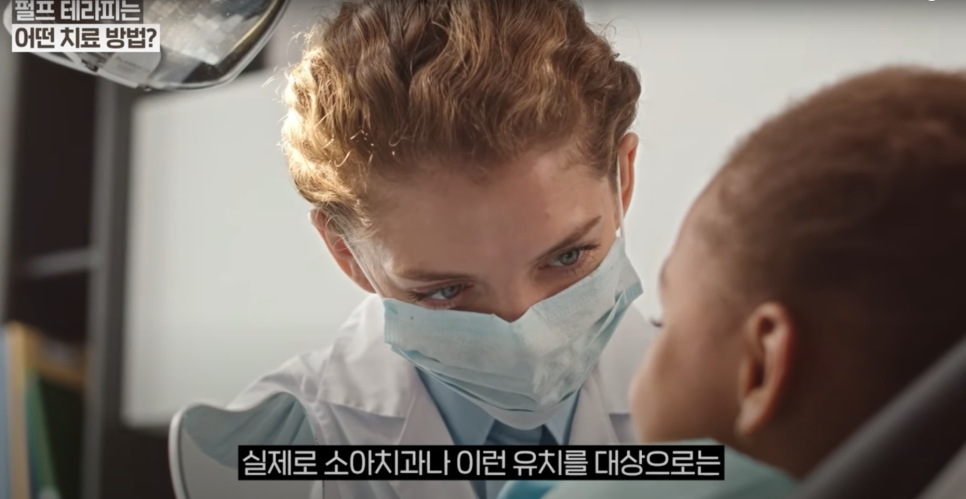 A way to preserve the vitality of a tooth: pulpotomy
Pulpotomy is not a new procedure.
In fact, it has long been used
in treatment for children’s primary teeth.
Children’s teeth
have better healing ability than adult teeth,
so even if only the infected upper portion of the nerve is removed,
the healthy root nerve can be left in place and still be maintained well.
Recently, however,
this method has also become applicable
to adult teeth.
Behind this is the development of a special material called
MTA (Material Tri-oxide Aggregate).
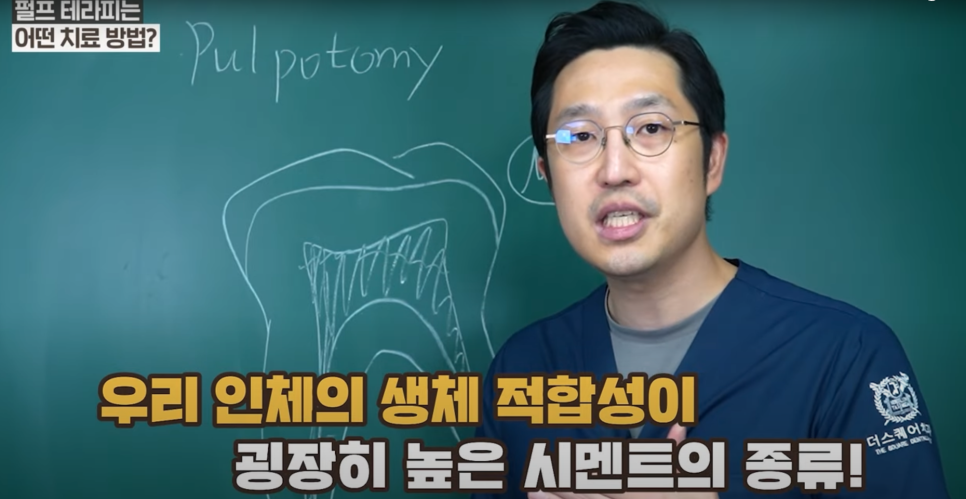 What is MTA?
It is a biocompatible cement that protects the nerve.
It tightly seals off bacteria so they cannot enter
and creates an environment
where nerve tissue can recover again.
In the past, pulpotomy for adult teeth
had low success rates,
but now, thanks to MTA,
more stable results than before are possible.
In other words, if the inflammation is still in an early stage and not deep,
it is possible to reduce pain and preserve the tooth’s vitality
without removing the entire nerve.
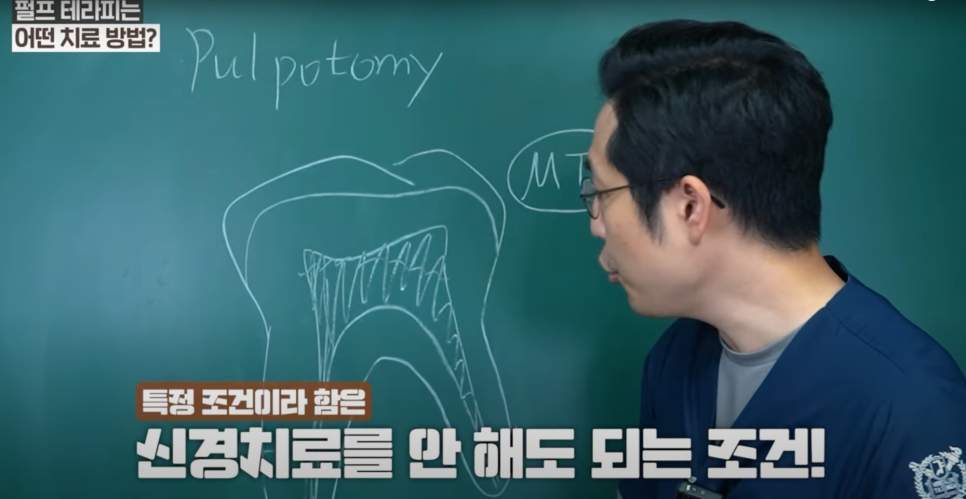
This can help in the following cases
● When there is pain but the inflammation is not deep
● When the nerve still has a response
● When you want to preserve the tooth as much as possible
In these cases, pulpotomy may be considered
instead of root canal treatment.
Of course, it is not possible for every patient.
A careful examination of the tooth’s condition through accurate X-ray imaging and diagnosis is necessary.
Another way to protect a tooth
Pulpotomy is
not a new technology that replaces root canal treatment.
It is an approach that applies a method already proven in primary teeth
to adults as a conservative treatment option.
What matters most is
“What is most appropriate for the condition of my tooth?”
Sometimes all of the nerve must be removed,
and other times only part of it can be preserved.
In the end, the goal is the same.
To use the tooth as naturally and for as long as possible.
Preserve the nerve when it can be saved,
and remove it accurately when unavoidable.
That is the wisest way to protect a tooth.
I hope today’s post was of some help
to those who are considering treatment.
Sincerely,
Lim Jong-woo, Chief Director of Gwanghwamun The Square Dental Clinic