Hello.
I am Lim Jong-woo, chief director of Gwanghwamun The Square Dental Clinic.
“Is there another option besides root canal treatment?”
That shows just how much fear and burden people feel about root canal treatment.
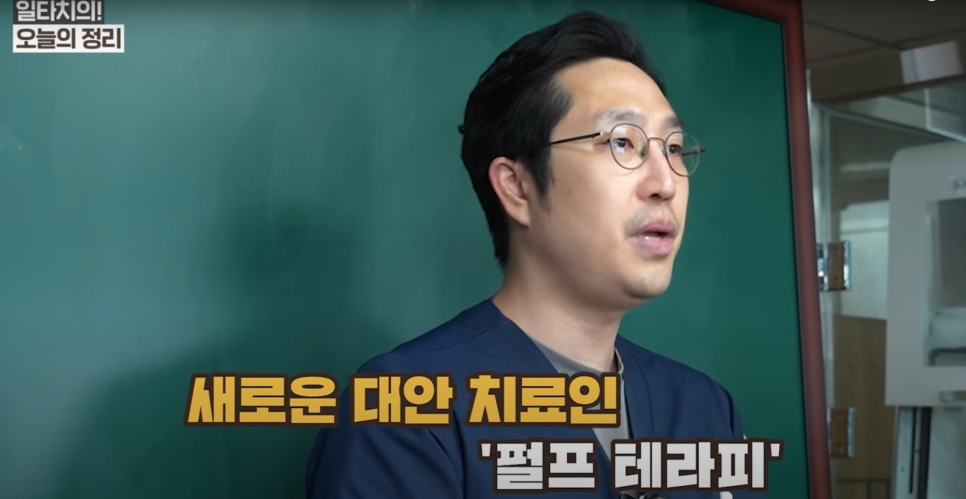
Recently, in some cases, a treatment that does not remove the entire nerve and instead preserves part of the healthy nerve has been clinically attempted. This is called pulpotomy.
Today, I will calmly talk about how the two treatments differ and in what situations each treatment may be needed.
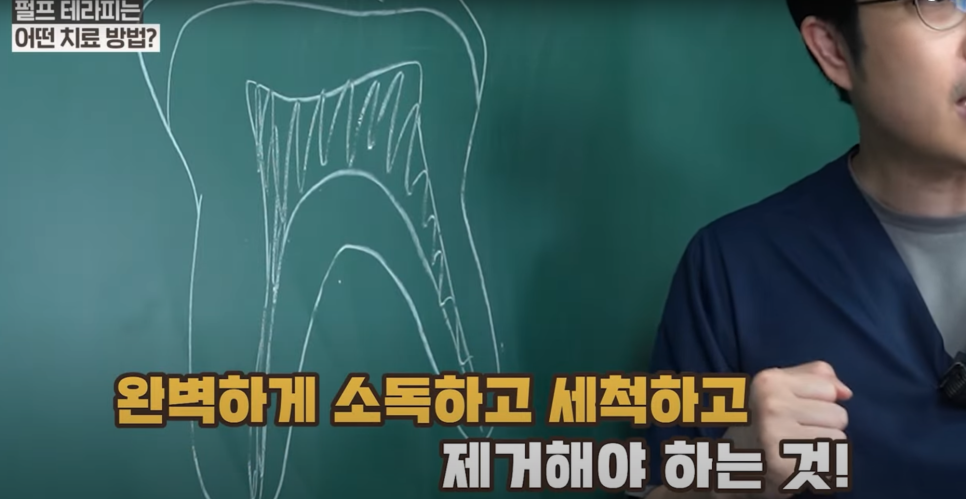
How are root canal treatment and pulpotomy different?
When inflammation occurs in the tooth nerve, how deeply that inflammation has spread determines the treatment method.
If the inflammation has spread to the apex of the root, root canal treatment is needed to remove and disinfect the entire infected nerve.
This treatment has become the standard treatment protocol for adult teeth.
It has been verified over a long period of time and shows predictable results even during retreatment.
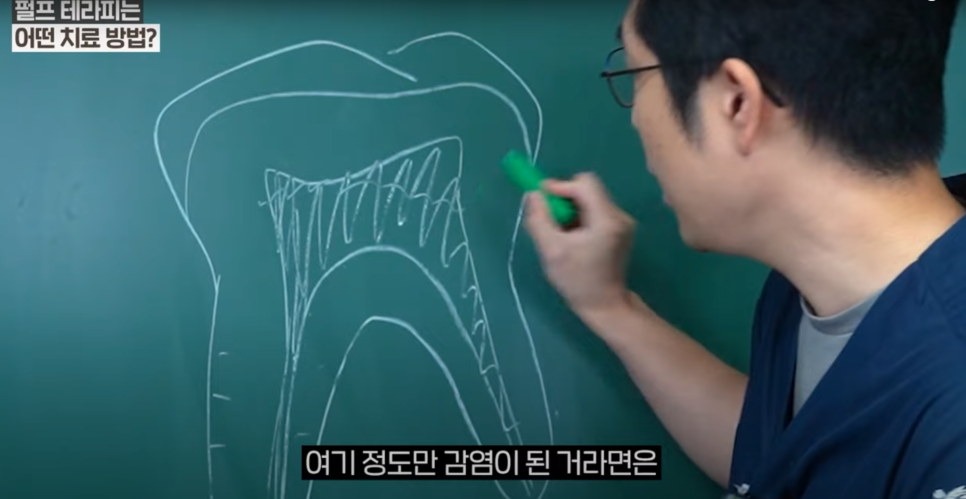 On the other hand,
if the inflammation is limited to the upper part,
there is a method that removes only the infected area and
preserves the healthy lower nerve as it is.
That is pulpotomy.
Both treatments are conservative treatments aimed at saving the tooth,
but their approaches and scope are different.
● Root canal treatment
→ A treatment that protects the tooth by removing the infected nerve and thoroughly disinfecting and filling the inside
● Pulpotomy
→ A conservative treatment that tries to maintain the tooth’s vitality a little longer by leaving the nerve that can be preserved
Pulpotomy is not a new treatment
Pulpotomy has actually been a proven treatment method that has been used stably for a long time in primary teeth (baby teeth).
Because children’s teeth have excellent healing ability, in many cases, removing only the inflamed area in the upper part allowed the lower nerve to survive.
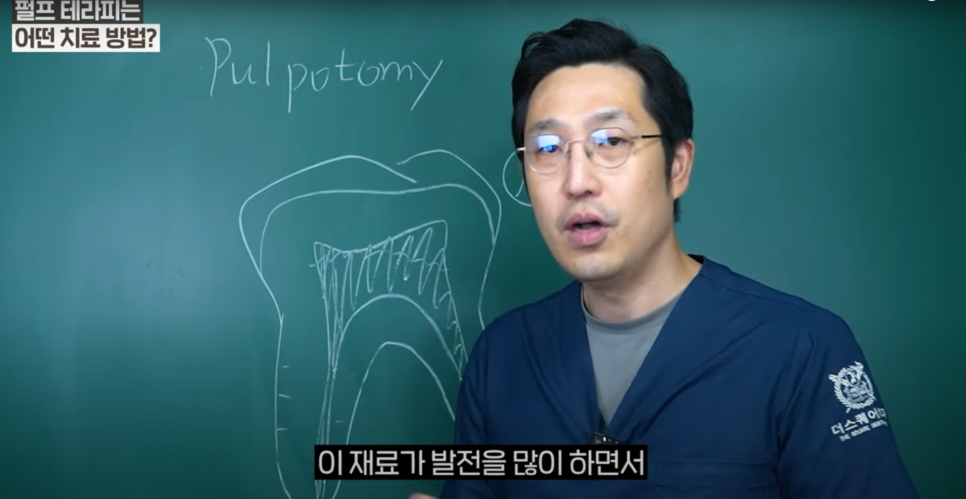
However, recently, with the advancement of a material called MTA (Material Tri-oxide Aggregate), the possibility of applying this treatment to adult teeth has opened up.
Simply put, MTA is a special biocompatible cement that protects the nerve.
It seals off the nerve area so that bacteria cannot invade again and helps the remaining nerve recover stably.
Thanks to the introduction of this material,
in adults as well, if the inflammation is not deep
and is still in an early stage,
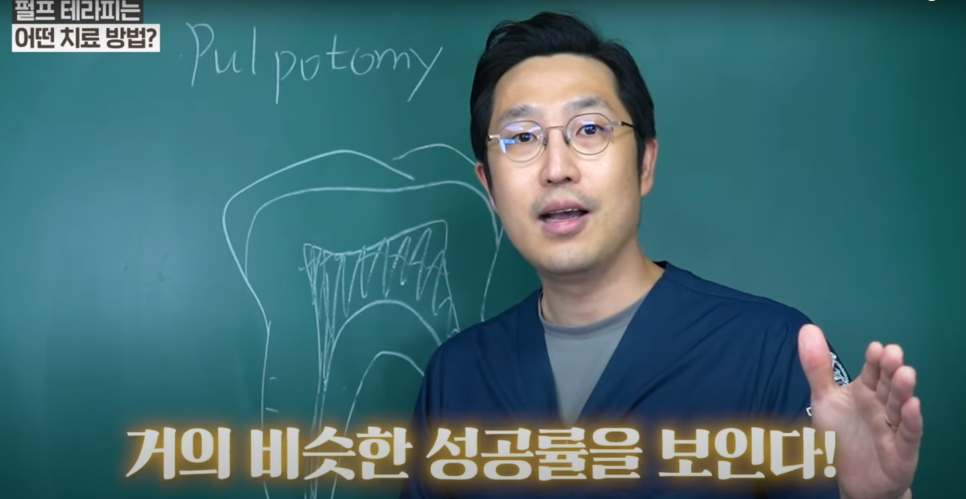
good results can be expected through pulpotomy.
However, it is not possible in every case.
If the inflammation has spread to the root apex, or if the nerve has already become necrotic, root canal treatment is still the safest and most predictable choice.
Then which treatment is better?
“Then is pulpotomy better than root canal treatment?”
In fact, there is no single answer.
The choice of treatment depends on the condition of the tooth.
● If the infection is deep and the nerve has already been damaged
→ Root canal treatment is needed.
● If the infection is limited to the upper part and a nerve response remains
→ Pulpotomy may be considered.
You should remember that pulpotomy is not something that should always be done whenever possible,
but rather another option that can be attempted depending on the situation.
The meaning of preserving the nerve
The greatest purpose of pulpotomy is to keep the tooth’s nerve alive for as long as possible.
If the nerve remains,
the tooth can respond to temperature and pressure and maintain its natural vitality.
That does not mean root canal treatment is a “less conservative treatment.”
Root canal treatment is also a treatment that removes the infected nerve and protects the inside so that the natural tooth can be used for as long as possible.
The goal of both treatments is the same.
“To avoid extracting the tooth and keep it alive as long as possible.”
However,
pulpotomy is only an option when a nerve that can be preserved is still present.
It is best understood as a more delicate conservative treatment.
Pulpotomy has been proven for a long time in primary tooth treatment,
but
recently, thanks to advances in MTA materials, it has become a conservative treatment that is also showing good results in adult teeth.

It is not a treatment that is possible in every case,
but if the conditions are right,
it can be a useful option for preserving the nerve.
The purpose of dental treatment is only one.
To use my own teeth as long as possible in a healthy condition.
An accurate diagnosis and treatment plan tailored to the current condition will be the starting point.
Gwanghwamun The Square Dental Clinic
Chief Director Lim Jong-woo