Hello.
We are The Square Dental Clinic, which studies structural criteria for making teeth last longer.

If a pillar weakens while building a house,
what should you do?
Rather than replacing it with a new pillar right away,
you first check the condition of the remaining pillar
and then decide whether to reinforce it or replace it.
Teeth are similar.
A tooth that has finished root canal treatment
is in a state similar to a hollow pillar.
It may look fine on the outside,
but structurally it is weaker than before.
That is why many people wonder,
"Is it okay not to get a crown after root canal treatment?"
However, not every case
is the same.
So from here, let’s look at those criteria
one by one.
[Criteria for Choosing Prosthetics,
This Is How It Differs]
Just because the pain is gone does not mean the treatment is over.
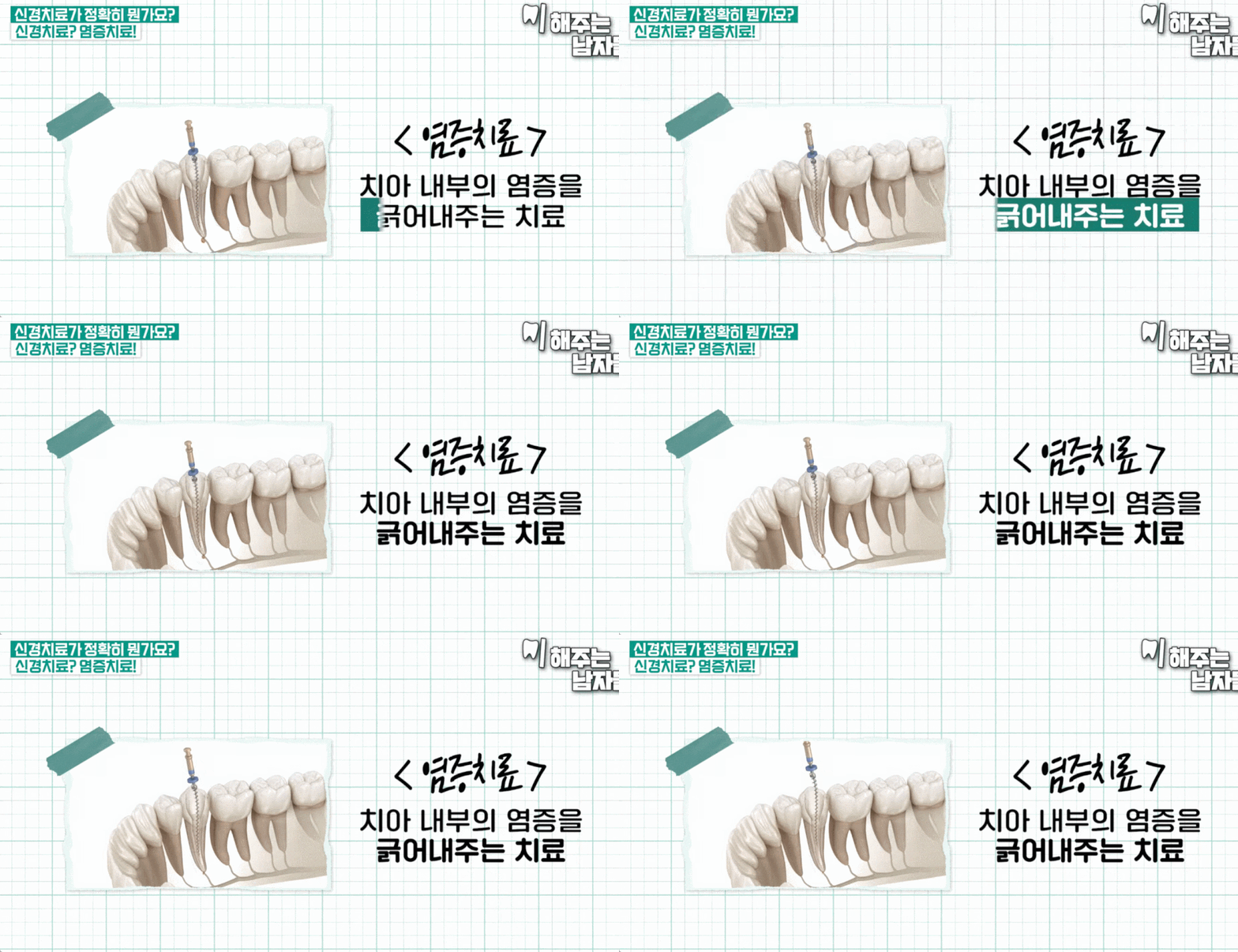
When the pain disappears and there is no major discomfort while eating,
it is easy to think,
"So everything is fine now?"
But the internal condition has changed from before.
| First, moisture decreases. |
A living tooth maintains proper moisture
through the blood vessels and nerves inside it.
However, once the nerve is removed,
nutrition and moisture are no longer supplied.
As time passes, the tooth gradually loses its elasticity
and becomes more prone to breaking.
| Second, the walls become thinner. |
During the process of removing decay
and cleaning out the internal space,
the remaining tooth walls can become thinner
than expected.
It may look fine on the outside,
but structurally it is weaker than before.
| Third, force becomes concentrated. |
The pressure applied while eating
is greater than many people expect.
On a single molar, depending on the situation,
about 40 to 60 kg of force may be transmitted.
When such a large force is repeatedly applied
to a thinned tooth wall,
it can eventually lead to a sudden crack
or fracture.
In summary,
a tooth after root canal treatment
is often in a weakened state compared with before
because of reduced internal moisture,
changes in wall thickness,
and concentrated force.
So afterward,
in order to use the tooth for a long time,
it becomes important to also consider
how to protect it.
Do you know how important
the remaining tooth wall is?
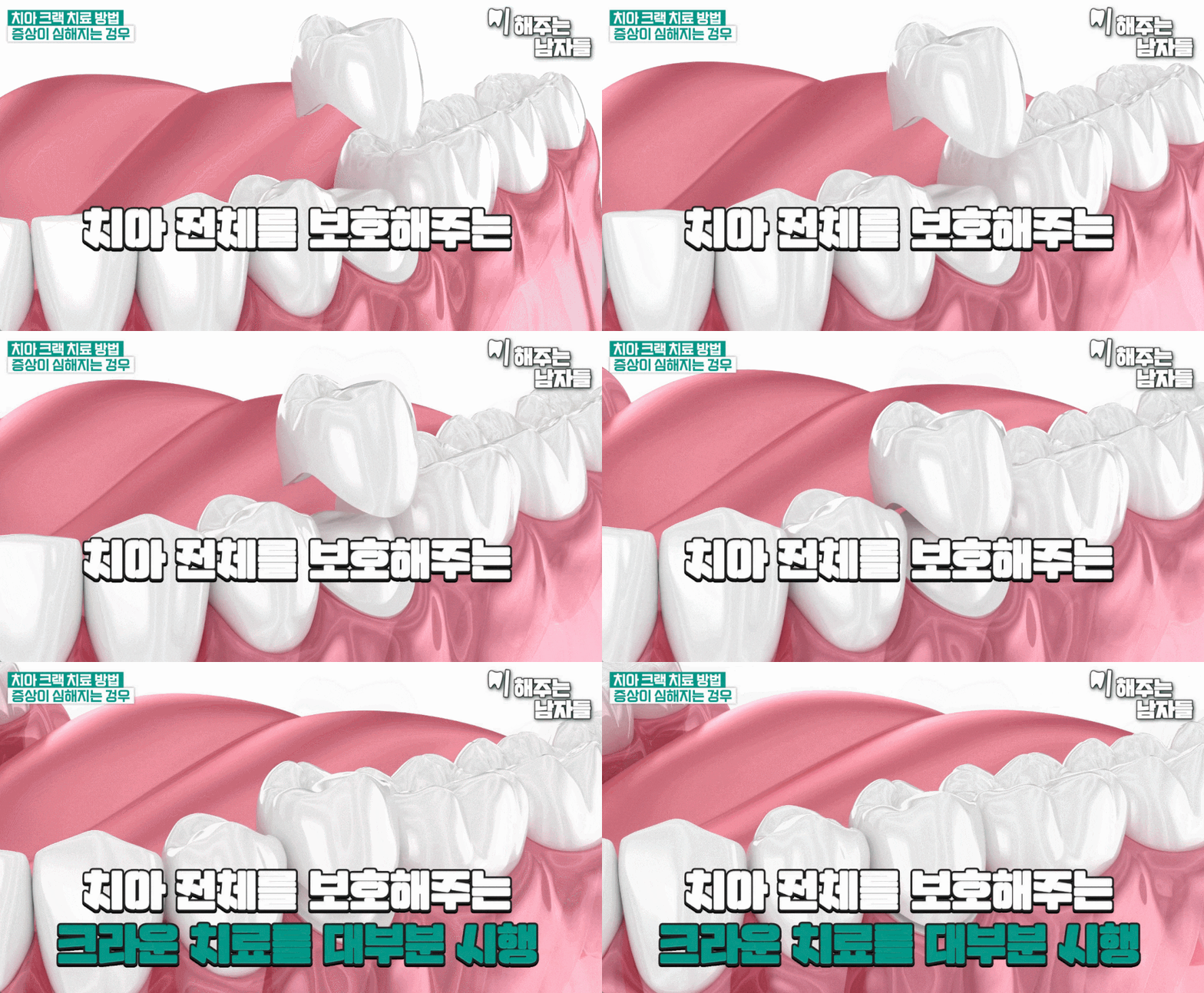
Then is a crown needed in every case?
The answer is
"No, not necessarily."
The most important criterion is the amount of remaining tooth structure.
In simple terms, it means looking at
how strong the remaining tooth wall is.
Cases where a crown is clearly needed are as follows.
| ✔ When a large amount of the tooth wall has been lost |
|---|
| ✔ Areas such as molars where strong chewing pressure is applied |
| ✔ When microcracks are already present |
| ✔ When the remaining portion is very thin |
In situations like these,
a crown that fully covers the tooth
is generally more stable.
In particular, molars are repeatedly subjected
to strong pressure every time you eat,
so if the wall thickness is not sufficient,
the risk of fracture increases.
On the other hand, in cases such as front teeth
or premolars where the structure is relatively well preserved,
it is not absolutely necessary to choose a crown.
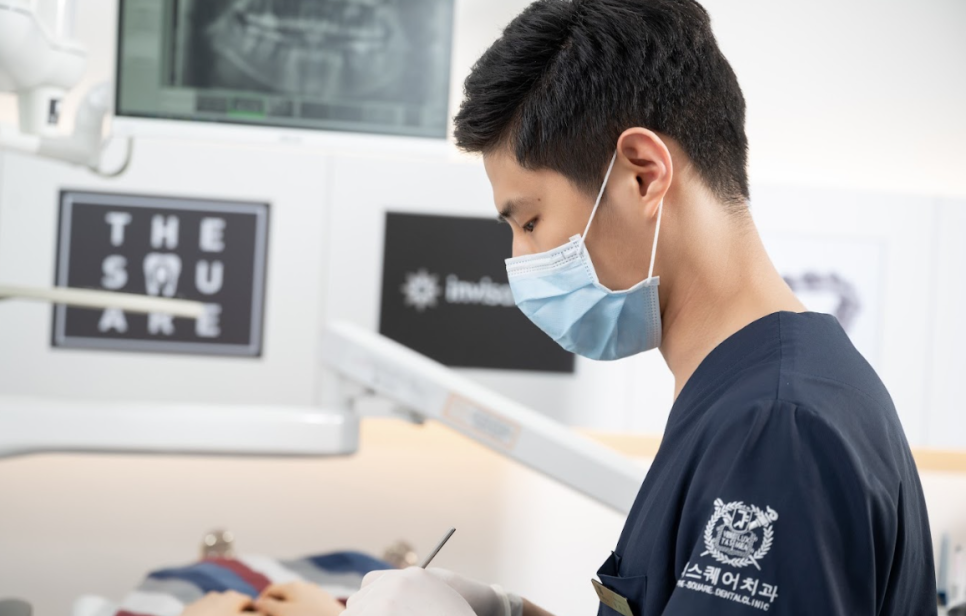
That is why at The Square Dental Clinic,
after root canal treatment we carefully check
the condition of the remaining tooth structure
through X-rays.
Even if it looks fine on the outside,
when magnified,
there are cases where tiny cracks can be found.
That is why a precise examination process is important.
There is also an approach
that reinforces only the necessary parts.
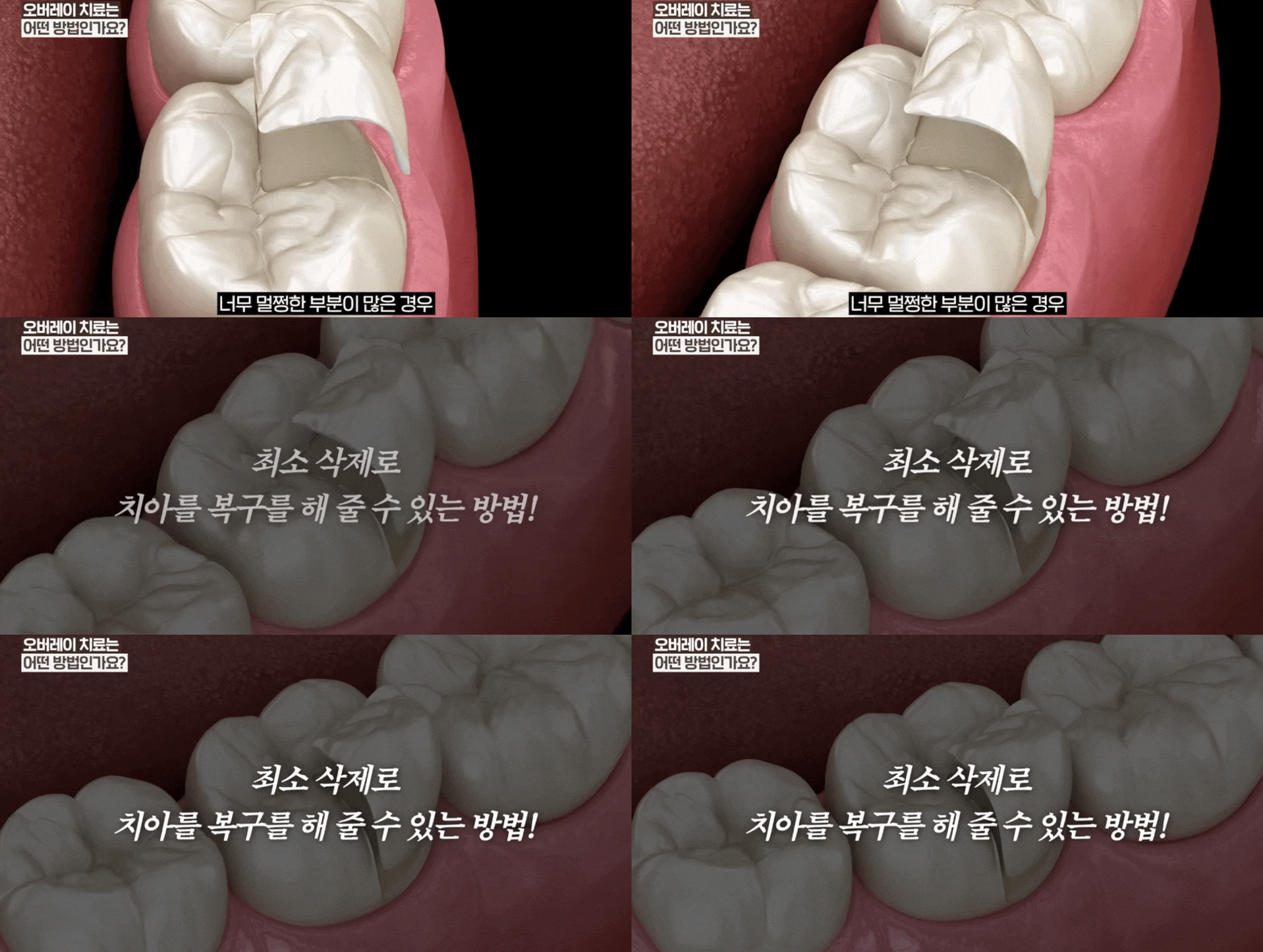
"Then are there options other than a crown?"
Yes, there is also a method called an overlay.
Rather than covering the entire tooth like a crown,
an overlay is done by reinforcing only the necessary parts.
The conditions under which this method is possible are as follows.
| ※ A sufficient portion of the tooth structure remains |
|---|
| ※ There is no fracture line or crack |
| ※ The occlusion is stable |
For example,
if the cavity is small and only the inside has been cleaned out,
and most of the outer wall remains,
then an overlay can provide sufficient protection.
However,
this kind of decision must be made
through a precise evaluation.

That is why at The Square Dental Clinic,
after root canal treatment we carry out
the following four-step evaluation.
① Measure the thickness of the remaining wall
② Check for cracks
③ Evaluate occlusal pressure
④ Analyze the risk of fracture by location
By combining these four factors,
we determine whether a crown is needed
or whether an overlay is possible.
After sufficiently explaining the features and differences
between the two methods,
it is important to guide patients so they can choose
after fully understanding the content.
[Before Proceeding,
We First Organize the Criteria That Must Be Checked]
It is true that if you do not get a crown after root canal treatment,
the risk of fracture may increase.
However, this does not apply
in exactly the same way to every case.
Depending on the remaining structure, location,
and occlusal condition,
there are cases where a crown is needed
and cases where an overlay is sufficient.
So what matters most is accurately understanding
the current condition.
Rather than simply deciding,
"Get a crown,"
it is necessary to understand why it is needed,
whether other options are possible,
and what the characteristics of each option are.
That is why we place importance on explaining everything
so that you can make your choice
after understanding it fully.
If you still have questions,
feel free to contact us through Naver TalkTalk.
Thank you for staying with us to the end of this long post today.
This has been The Square Dental Clinic.
[We Have Collected
Actual Visit Reviews]
[If you have questions,
feel free to contact us through TalkTalk]
[We have provided
detailed directions here]
| This article was written in compliance with the Medical Service Act (Article 56, Paragraph 1) so that you can obtain accurate information. Rather than simple promotion, we wanted to transparently share what actually happens in the treatment room. Please do not contact us right away after reading this article; simply obtaining accurate information from it is enough. |