Hello.
We are The Square Dental Clinic, which first thinks about how to use teeth for as long as possible.

Let me start by sharing a story from the clinic the other day.
There was a patient who came in with discomfort after one side of a molar had chipped.
But while we were talking, the patient cautiously asked this question.
"Wouldn't that mean grinding down too much of the tooth?"
This is also a concern we hear often.
That is because once tooth structure is removed,
it does not grow back.
Perhaps because of this, when planning molar prosthetics these days,
we also look together at how to reduce the extent of tooth reduction.
From that perspective,
one of the methods discussed is the overlay crown approach,
which considers minimal tooth reduction.
So today, I will explain what criteria it may be helpful to look at first when deciding on molar prosthetics.
[Tooth Preservation,
How Far Is Possible?]
The difference between a crown and an overlay lies in the area covered.

As mentioned earlier,
many people are concerned about the extent of tooth reduction.
At times like this, the methods often compared are overlay and crown.
Both overlay and crown are prosthetic restorations,
but they differ in the area and structure they cover.
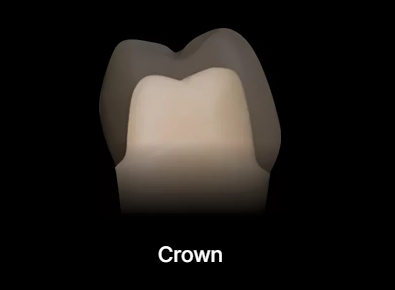
First, a crown is a restoration that covers the entire tooth.
It works by shaping the tooth within a certain range and then covering it to protect the form.
So when the extent of decay is wide
or the tooth structure has become significantly weakened,
a method that fully encases the tooth is necessary.
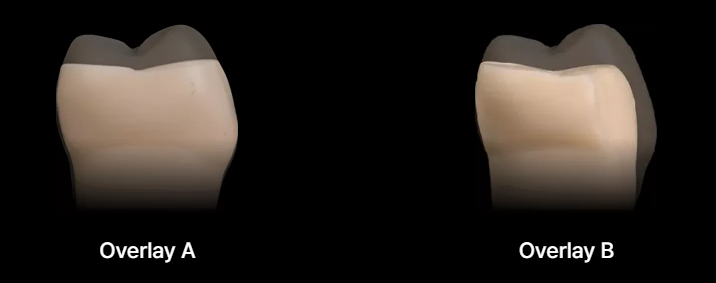
By contrast, an overlay does not have a structure that covers the entire tooth,
but instead reinforces the damaged area.
Let me explain a little more simply.
Rather than building a house from scratch,
it is similar to reinforcing only the broken part of the roof.
So if the tooth structure remains relatively intact,
it may be possible to use a partial reinforcement approach rather than a full coverage approach.
The amount of tooth reduction is not determined by the same standard in every case.
When talking about molar prosthetics,
many people first think about how much will be covered.
But in reality, many people also wonder how the extent of reduction is decided.
A tooth is not simply a structure for matching shape;
it is a place that must continue to withstand chewing forces.
That is why, when planning a prosthetic,
we also look at how the tooth will bear those forces.
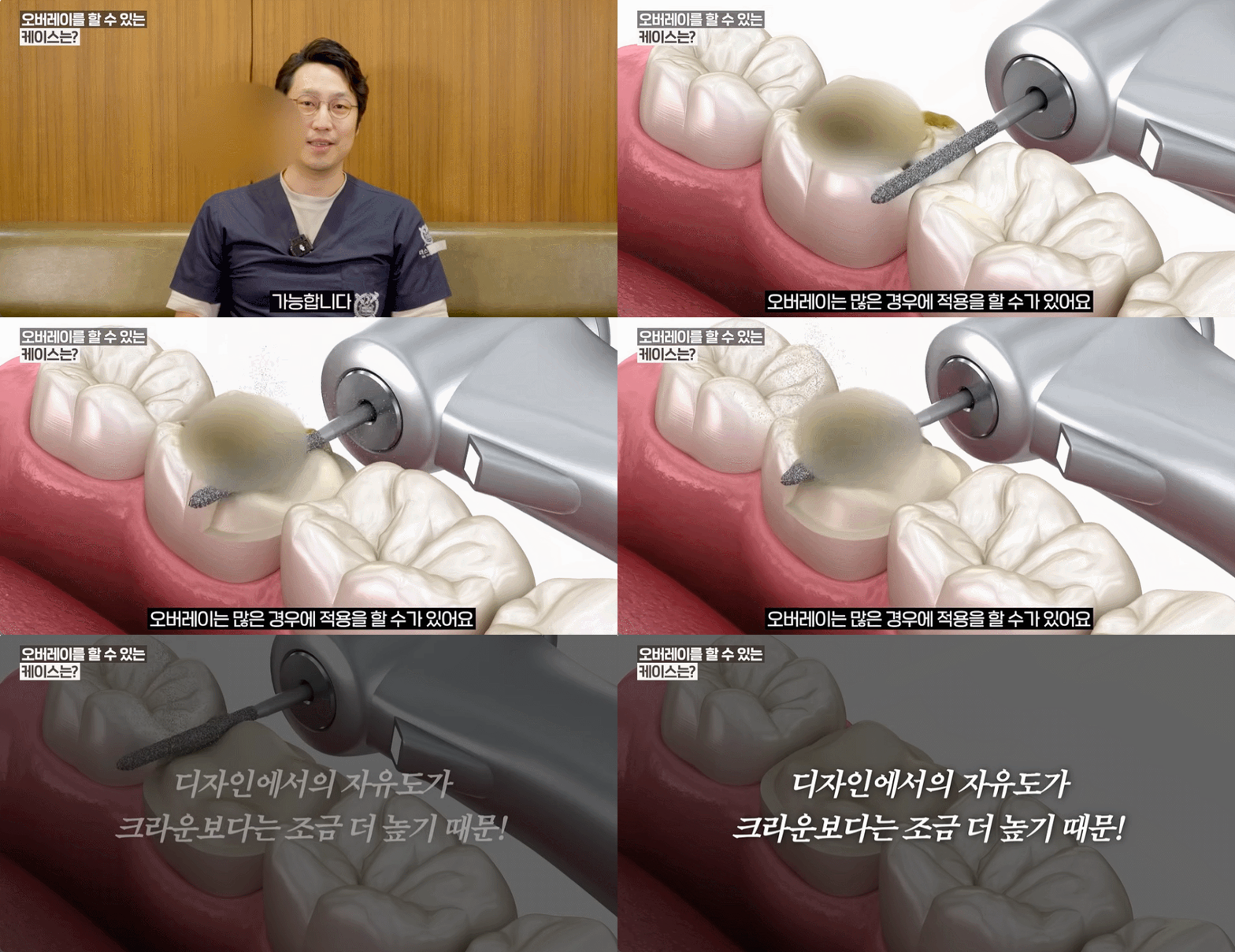
For example, if there is a part where chewing force is concentrated,
we consider a shape that can distribute that force.
We also check whether the remaining tooth walls are in a condition that can support that force.
In this way, when planning molar prosthetics,
it is necessary to look at the flow of force and the tooth structure.
So the extent of reduction is not determined only by the name of the prosthetic;
it changes depending on the current structure of the tooth and how it is supporting itself.
Even with the same molar,
the treatment direction may differ depending on the location of the chip and the remaining shape.
Before touching the tooth,
we do a rehearsal first.
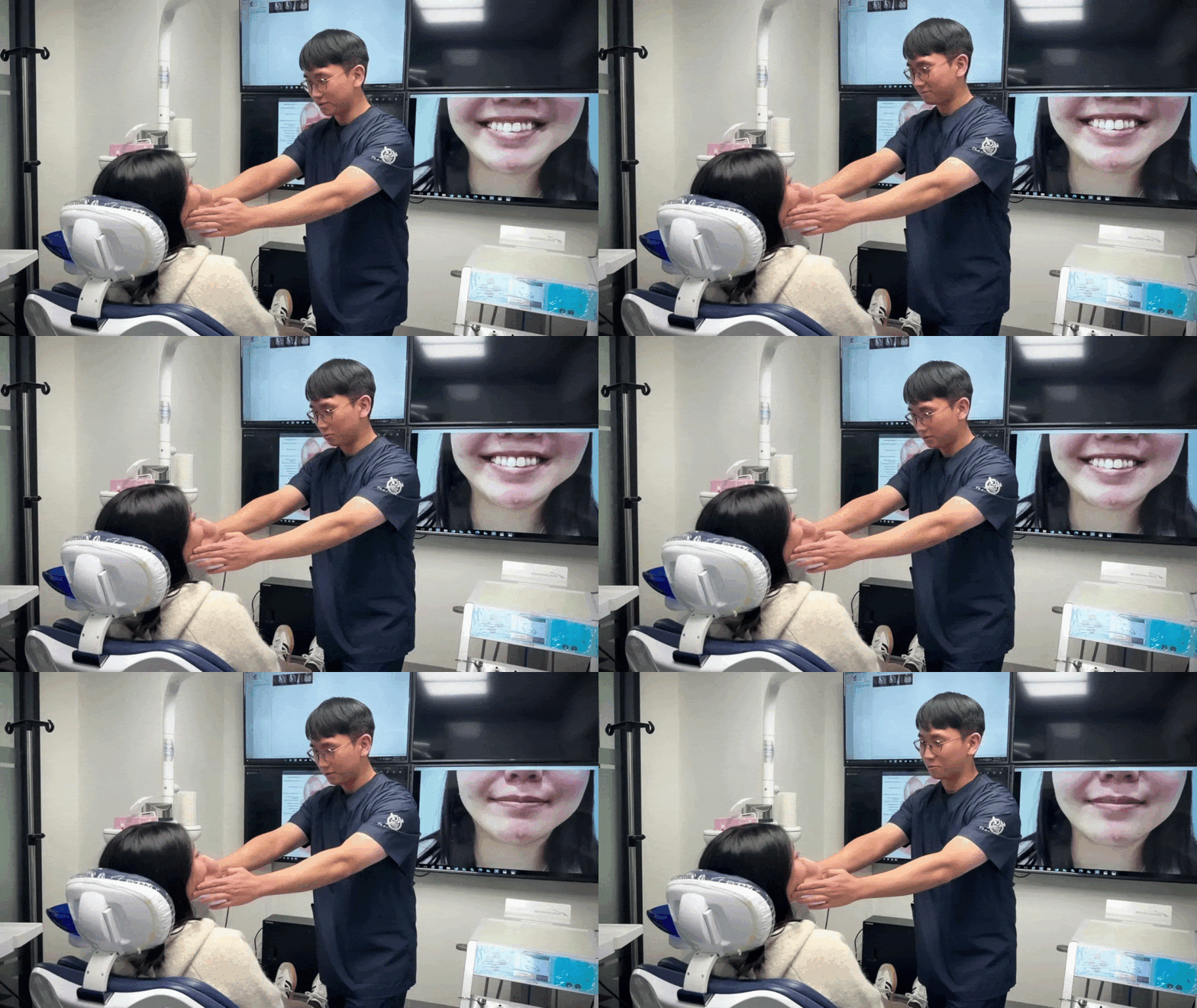
The Square Dental Clinic does not decide on a prosthetic method first.
Instead, we begin by checking the tooth structure.
That is because it is difficult to accurately tell, based only on the visible shape,
how the tooth is withstanding force.
So we first look at several criteria.
The representative criteria we check are as follows.
| Design 기준 in 0.1 mm units |
|---|
| Design to reduce approximately 1/4 of the tooth structure range |
| Rehearsal process before reduction |
| Bonding-based prosthetic design |
Among these,
the process we particularly value is the rehearsal stage.
Rather than reducing the tooth right away,
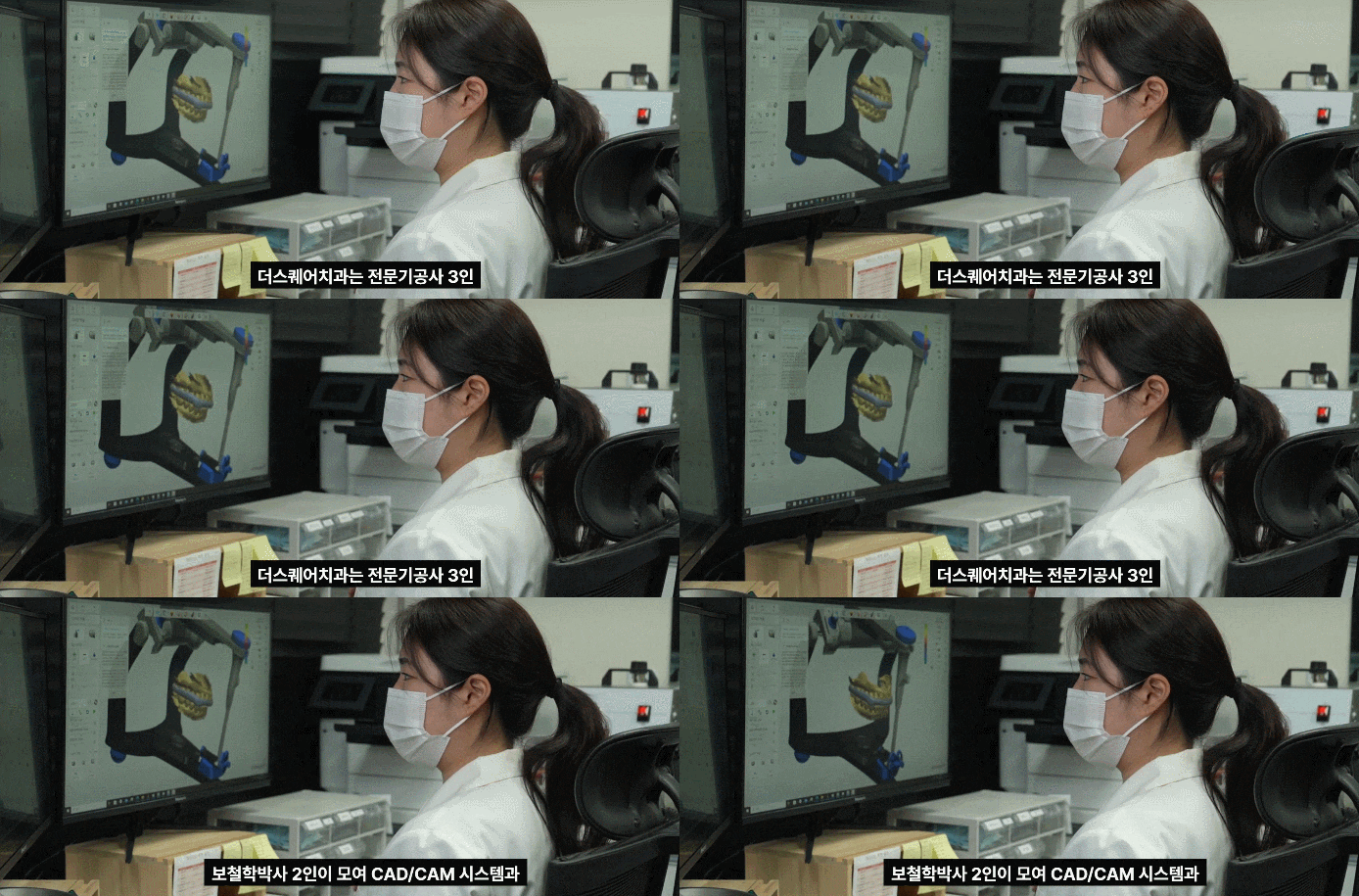
we first examine the range of reduction through a 3D virtual model and virtual design.
In other words, before actually touching the tooth,
we go through a process of checking in advance what shape the prosthetic will take.
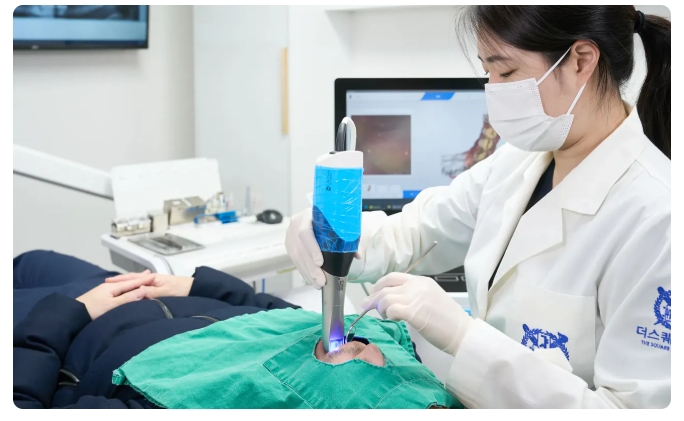
So the treatment sequence is a little different as well.
In general, the process often goes
reduction → prosthetic fabrication.
But at The Square Dental Clinic, we organize the direction in this order:
rehearsal design →
structure check →
determine reduction range →
prosthetic fabrication
Through this process,
we look together at how much of the current tooth structure can be preserved.

Also, by going through the rehearsal process,
we can preview the shape the prosthetic will have once it is placed.
So rather than rushing,
we think the process of organizing the direction that matches the tooth structure is more important.
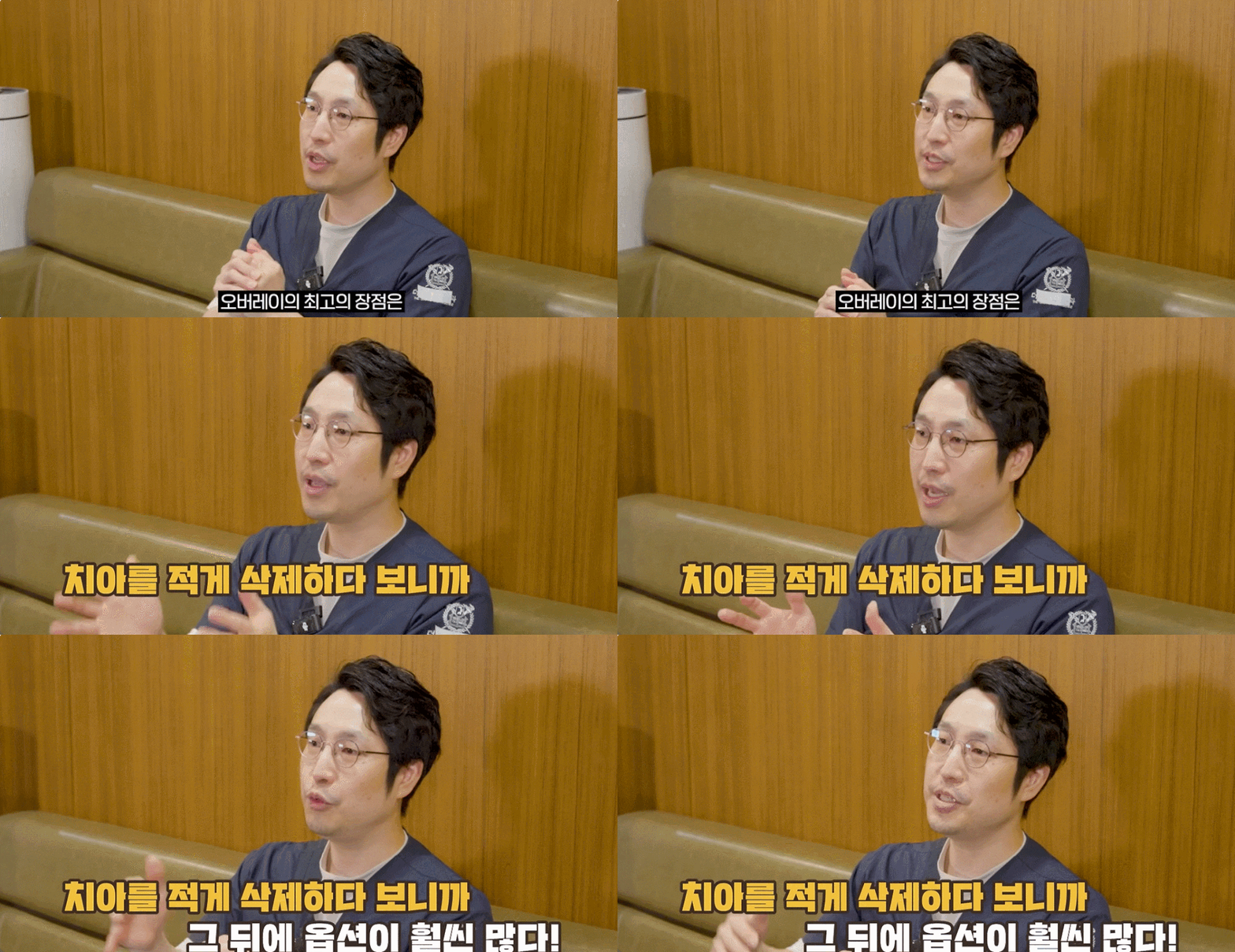
Today, we talked about "Before molar prosthetics,
please check the overlay crown first."
When planning a prosthetic,
rather than deciding the direction simply by the name,
it is also good to check whether the clinic looks at the tooth condition and structure together.
Through this process,
if you organize the direction that suits your current tooth,
you may be able to consider your options with a calmer 마음.
If you have any questions while reading,
please leave them in the comments or through Naver Talk Talk :)
Thank you for reading to the end.
This has been The Square Dental Clinic.
[Many people can view honest records
at a glance]
[We have opened the Naver Talk Talk window
so you can easily inquire]
[Located on the L floor of D Tower
in the center of Gwanghwamun]
| This article was written in compliance with the Medical Service Act (Article 56, Paragraph 1) so that you can obtain correct information. We wanted to transparently share the processes that actually take place in the clinic rather than simply promote. Rather than contacting us right away after reading this article, it is enough if you simply take away accurate information. |