Hello.
We are D Square Dental Clinic,
where we first look at the structure and balance of the teeth.

Sometimes, while looking through old photos,
you may have this thought.
"My front teeth seem a little shorter than before..."
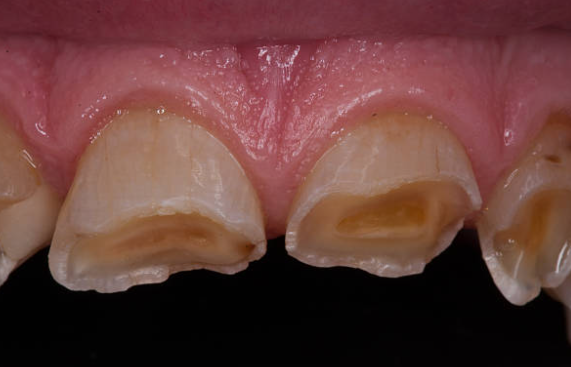
In fact, as time passes, the ends of the teeth can gradually wear down.
This condition, in which the tips of the teeth gradually become worn, is called incisor wear.
However, the reason teeth wear down
is not simply because they have been used for a long time.
The direction of the force applied to the teeth
and the bite structure also play a role.
So today, we will talk about
why incisor wear occurs,
and by what criteria
we look at the condition of the teeth.
[It is not simply a matter of filling it in]
If the shape of the tooth tip looks different,
it should be examined.
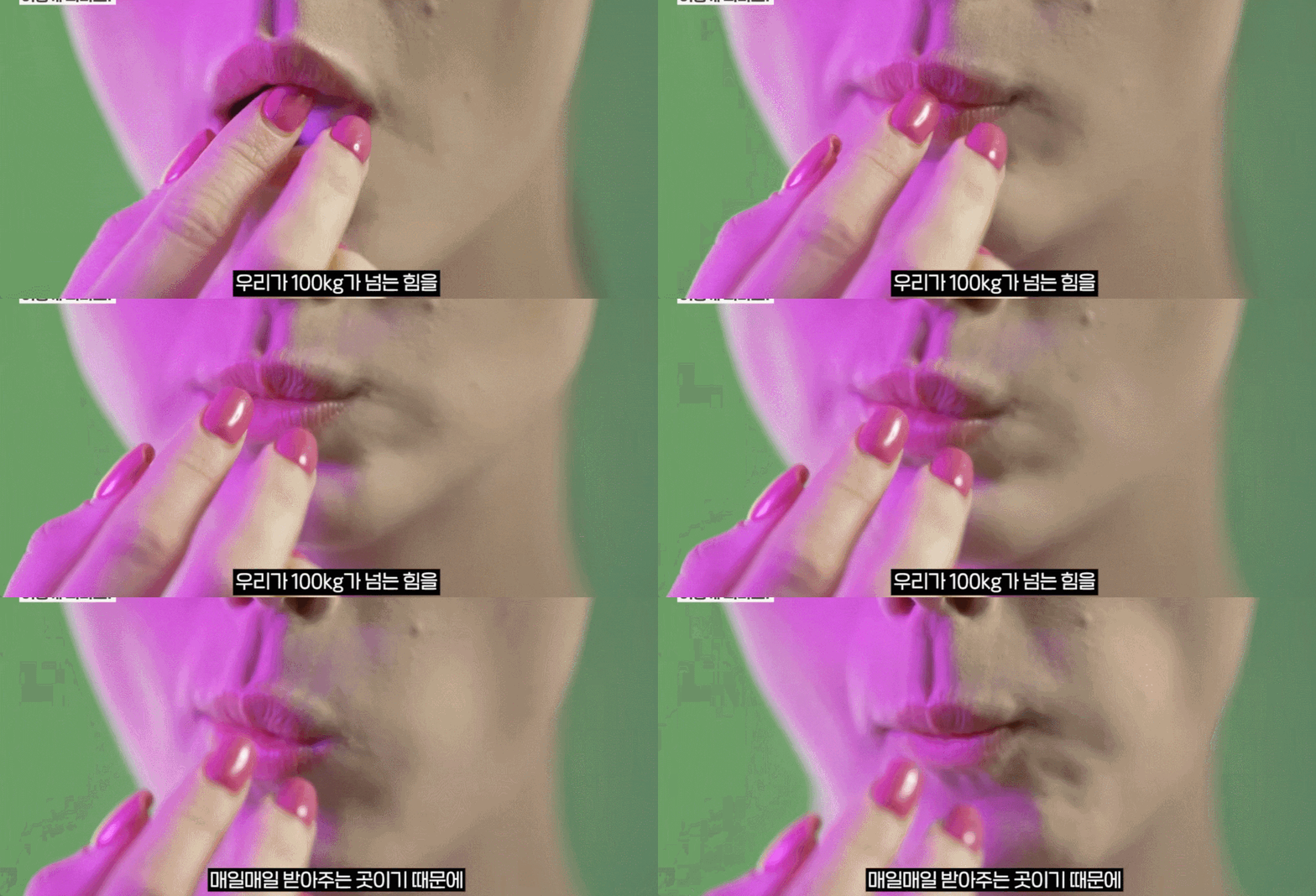
Teeth are structures used for a lifetime.
They cut food,
help produce speech,
and also play a role in controlling the force used during chewing.
So over a long period of use,
the tips of the teeth can gradually show wear.
A front tooth that used to be pointed
may at some point look flat.
Most of these changes appear
as the outermost layer of the tooth,
called enamel,
wears down.
Enamel is the hard outer layer
that protects the tooth.
But when repeated force is applied,
this layer also gradually wears away.
In the early stages,
there is usually little to no pain.
So many people notice this kind of incisor wear only late.
Because there is no pain,
it is not uncommon for it to be overlooked.
But if the shape of the tooth tip
looks different from before,
or if it looks shorter when compared in photos,
wear has already progressed.
If you see the following signs,
we consider incisor wear to have started.
| ✔ The tooth tips look flat and worn ✔ Fine wear lines appear on the tooth surface ✔ The front teeth look shorter than before |
So if the visible shape has changed,
it is necessary to examine the current condition.
Looking at the tooth structure helps us understand the reason.
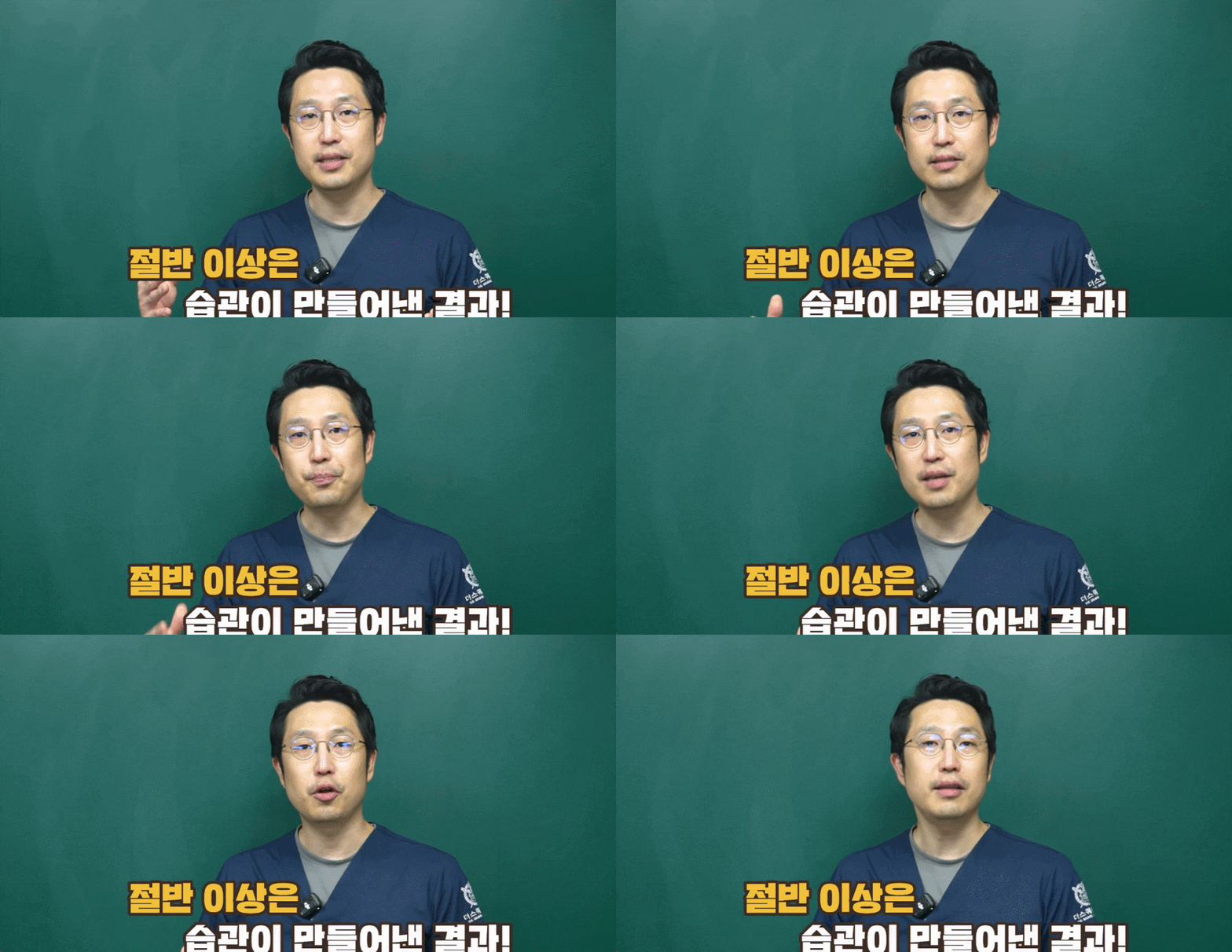
If we look at why front teeth wear down,
it is not simply a change caused by long-term use.
When we check tooth conditions in the clinic,
incisor wear is mostly related to the direction of force applied to the teeth.
The following habits are often involved.
| The habit of grinding teeth during sleep |
|---|
| The habit of clenching the teeth unconsciously |
| A bite condition in which the teeth are not properly aligned |
| The habit of frequently biting food with the front teeth |
In these situations,
repeated force is applied to the teeth.
Then the enamel on the outermost layer of the tooth
begins to wear down little by little.
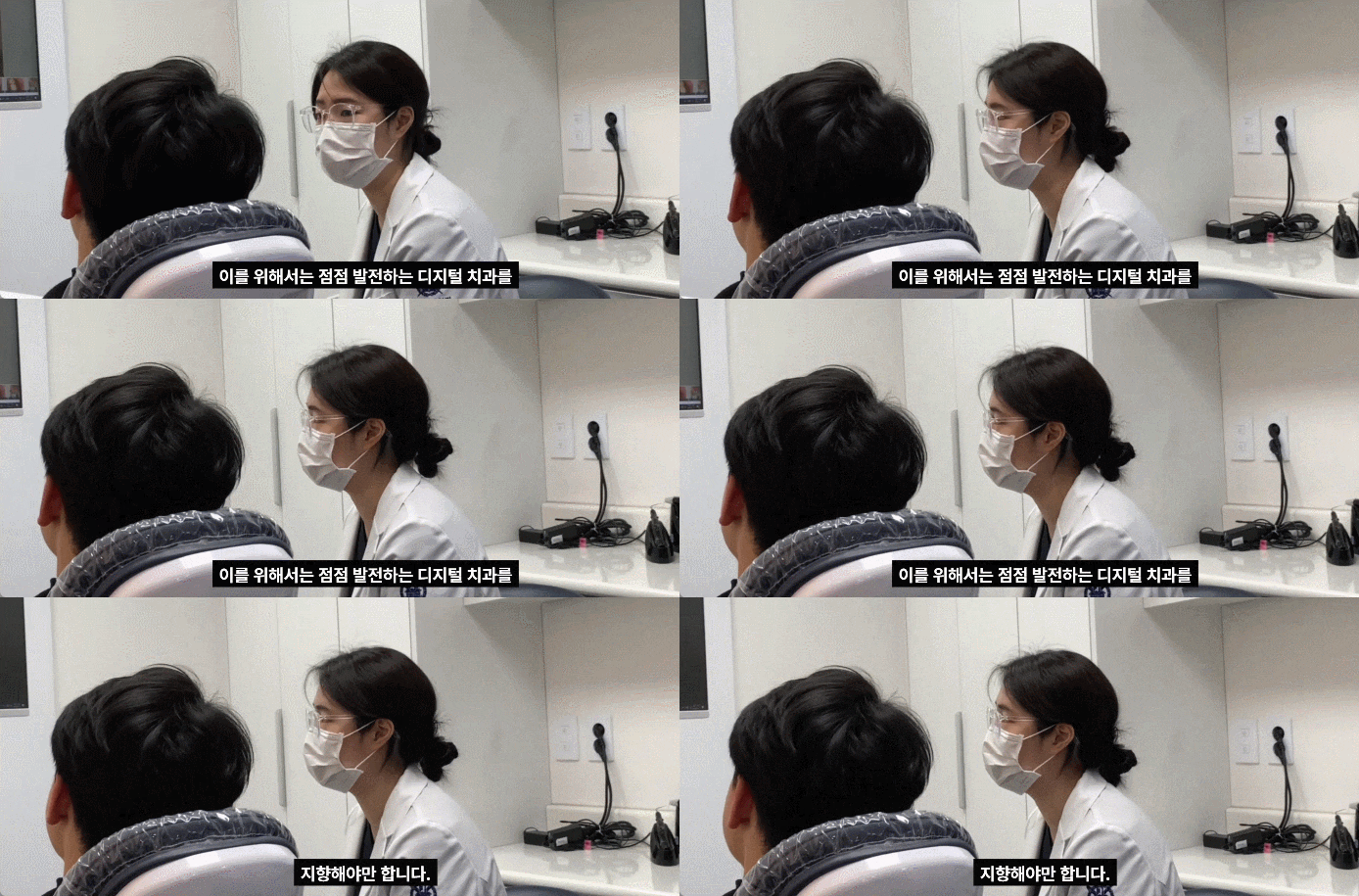
Looking at the tooth structure,
enamel → dentin → nerve
It is made up of several layers like this.
At first, only the enamel wears down,
so in many cases there is no particular discomfort.
But as the wear progresses a little further,
the dentin beneath the enamel becomes exposed.
From this point on, the tooth becomes
more sensitive to external stimuli.
So
when drinking cold beverages,
you may feel sensitivity,
and compared with old photos,
the teeth may look shorter.
Changes like this in the front teeth are
not simply a matter of appearance.
If the front teeth look worn,
we also need to look at what kind of force is being applied to the teeth.
You should not look only at the worn area.

When addressing incisor wear,
we do not approach it by simply restoring the worn part.
That is because if the cause of the wear
remains in place,
the same change can happen again.
Even if the shape of the front teeth is corrected with resin,
if the direction of force causing the wear
or the usage habits remain the same,
with time, the same area may wear down again.
So when checking the front teeth,
we do not look only at the visible area;
we also examine several structural criteria.
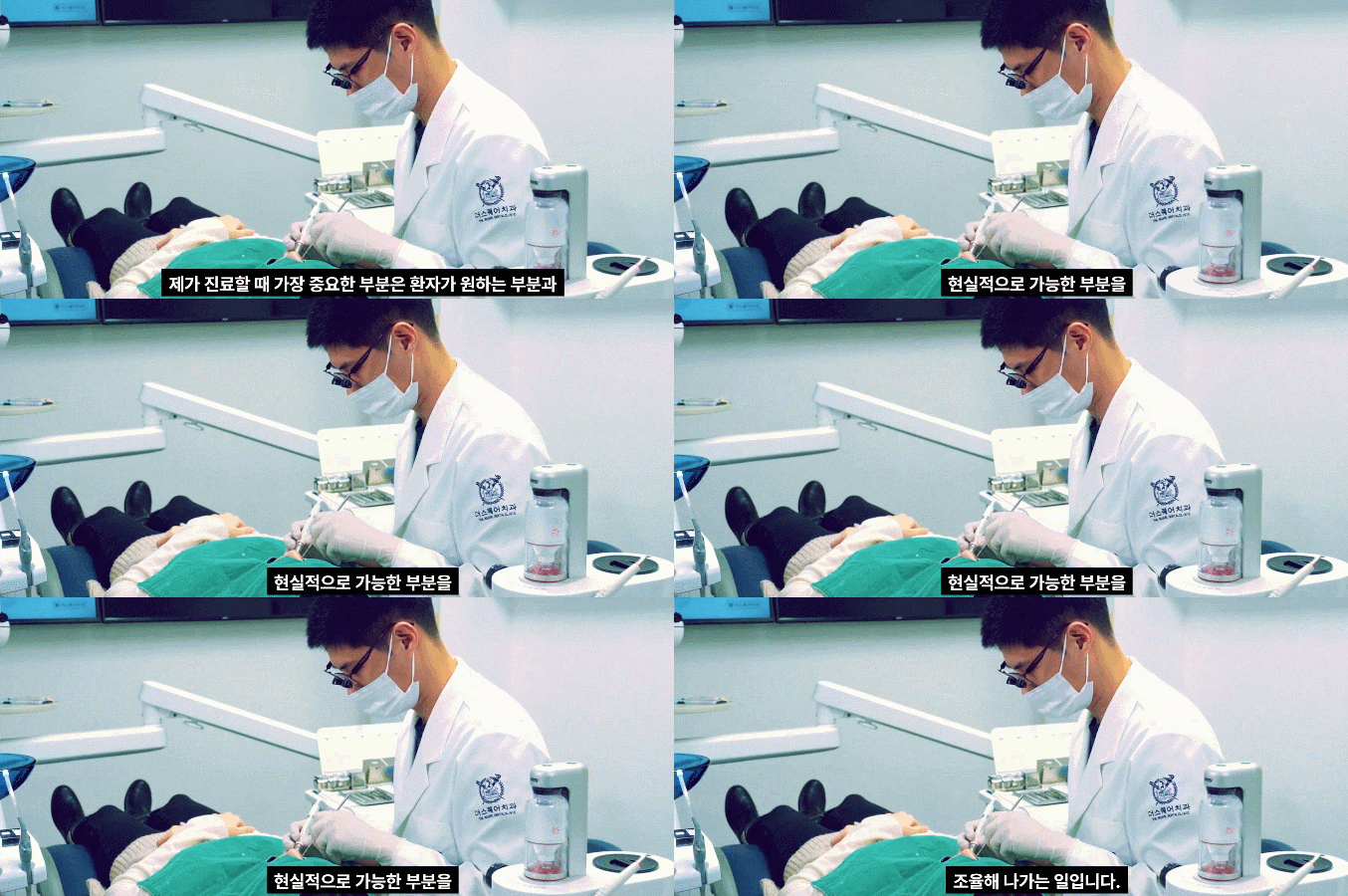
At D Square, when checking the front teeth,
we look at the following factors.
✔ Depth of wear
✔ Relationship of how the teeth fit together
✔ Direction of chewing force
✔ Changes in tooth length
✔ Tooth alignment and overall balance
By looking at these criteria together,
we can understand more clearly whether
we are not simply tidying up the worn area,
but whether the front teeth are in a condition
that can be used stably going forward.

So far, we have talked about "incisor wear: if your front teeth look shorter than before, you should check them."
Just because the front teeth look worn
does not mean every case will immediately
lead to a major problem.
However, once tooth wear begins,
changes may continue little by little
depending on the force used and daily habits.
So if the tips of your front teeth look
flatter than before or if a sensitive feeling keeps recurring,
it may help to check what stage your teeth are currently in.
This is because even small changes
in the front teeth can alter your appearance.
Please refer to what we discussed today
and take a look at your current dental condition.
Thank you for reading this long post.
This was D Square Dental Clinic.
[You can view the visit reviews left by many people]
[Please leave your questions conveniently via Naver TalkTalk]
[Directions to our clinic]
| This post was written in compliance with the Medical Service Act (Article 56, Paragraph 1) so that you can obtain accurate information. Rather than simple promotion, we wanted to transparently share what actually happens in the treatment room. Please do not contact us immediately after reading this post; simply obtaining accurate information will be sufficient. |