Hello.
This is The Square Dental Clinic, where we explain the 기준 for using your teeth for a long time.

When you look into treatment for the front teeth,
you naturally start by worrying,
"Won’t they have to shave away a lot?"
That is probably why the term minimally invasive laminate veneers stood out to you.
But a standard based only on reducing less
is not enough to explain it.
So today, instead of focusing on the amount of reduction,
I’ll explain under what conditions it is possible
and walk through that process.
There is a reason to look at something before the amount of reduction.
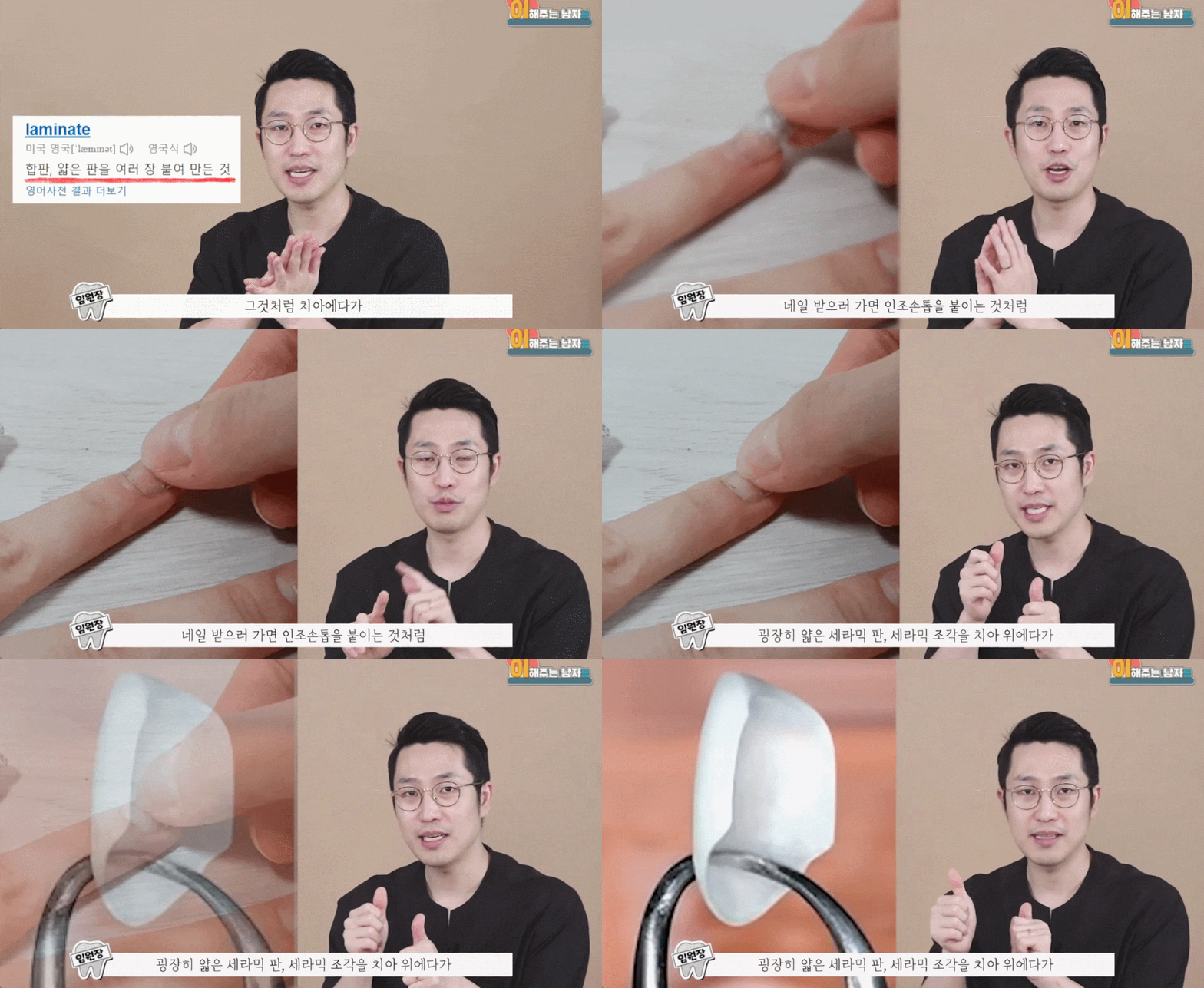
The outermost layer of a tooth
is a hard layer called enamel.
Once this part wears down or is removed,
it does not return to its original state.
So when working on the surface of the front teeth,
what matters more than how much was reduced
is what condition is being maintained.
And at this point,
the concept of bonding comes into play as well.
Laminate veneers are bonded to the tooth surface.
On enamel,
they maintain a more stable condition.
On the other hand, when the work goes deeper inward,
the bonding conditions change,
and differences can appear over time.
That is why a standard based only on having touched less
can be insufficient.
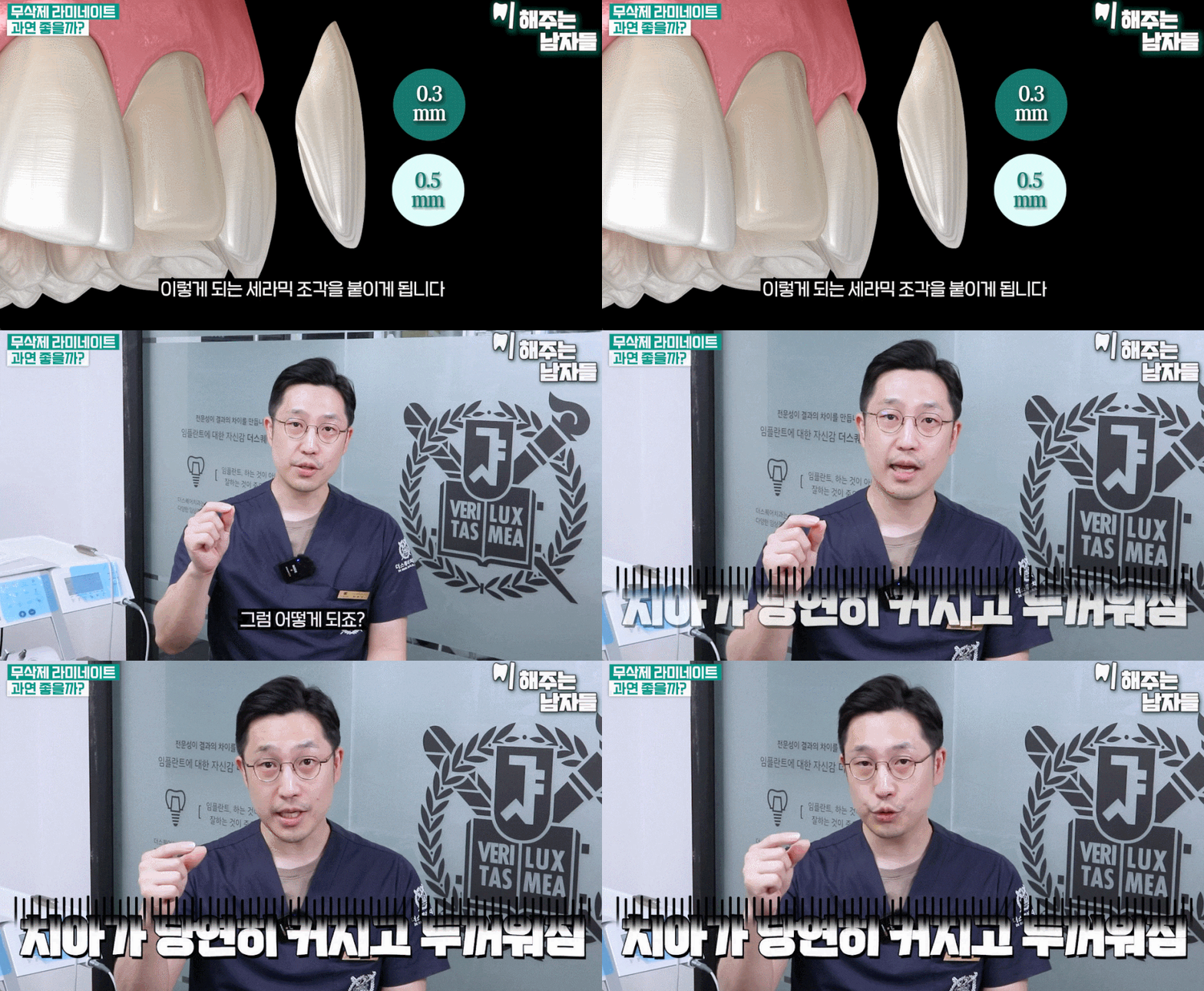
It may help to think of it more simply.
Sticking something to a clean window
is different from sticking it to a wet wall.
They may look similar on the surface,
but the conditions for adhesion are different.
Differences like this become clearer over time.
So if you judge only by the number of millimeters reduced,
there will be parts you miss.
You need to first look at what surface it is bonded to
and what condition that surface is in.
Minimally invasive:
it is not the same condition for everyone.
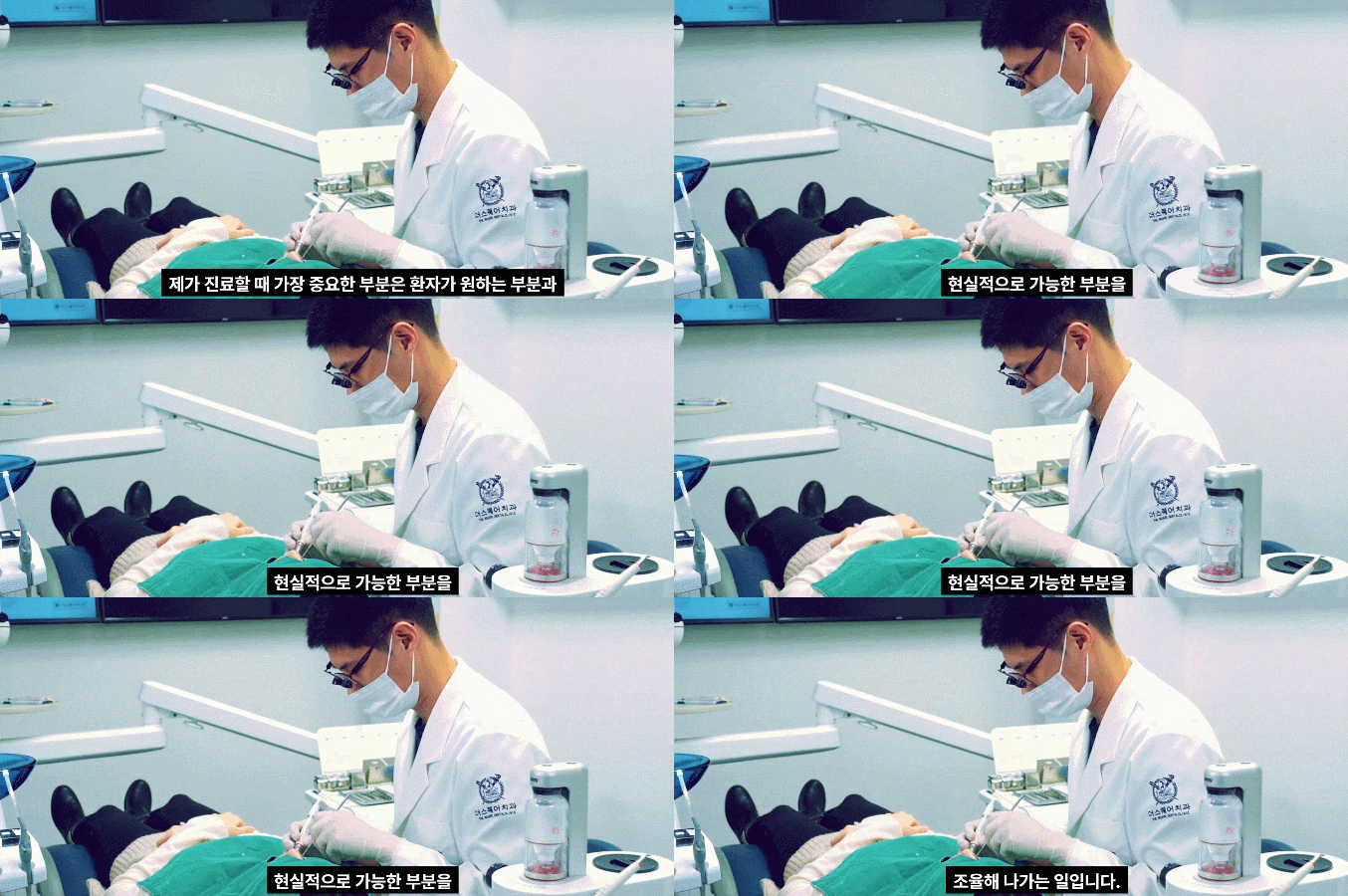
We hear this question often in the clinic too.
"Can’t you just make it a little thinner and do it for everyone?"
In reality, the 기준 are divided into more branches than you might think.
In conventional methods,
the reason the amount of reduction increases
is that space has to be secured first.
If the front teeth protrude forward,
if the alignment is uneven,
or if thickness needs to be adjusted,
you need room to shape the form.
That is why the teeth often need more reshaping.
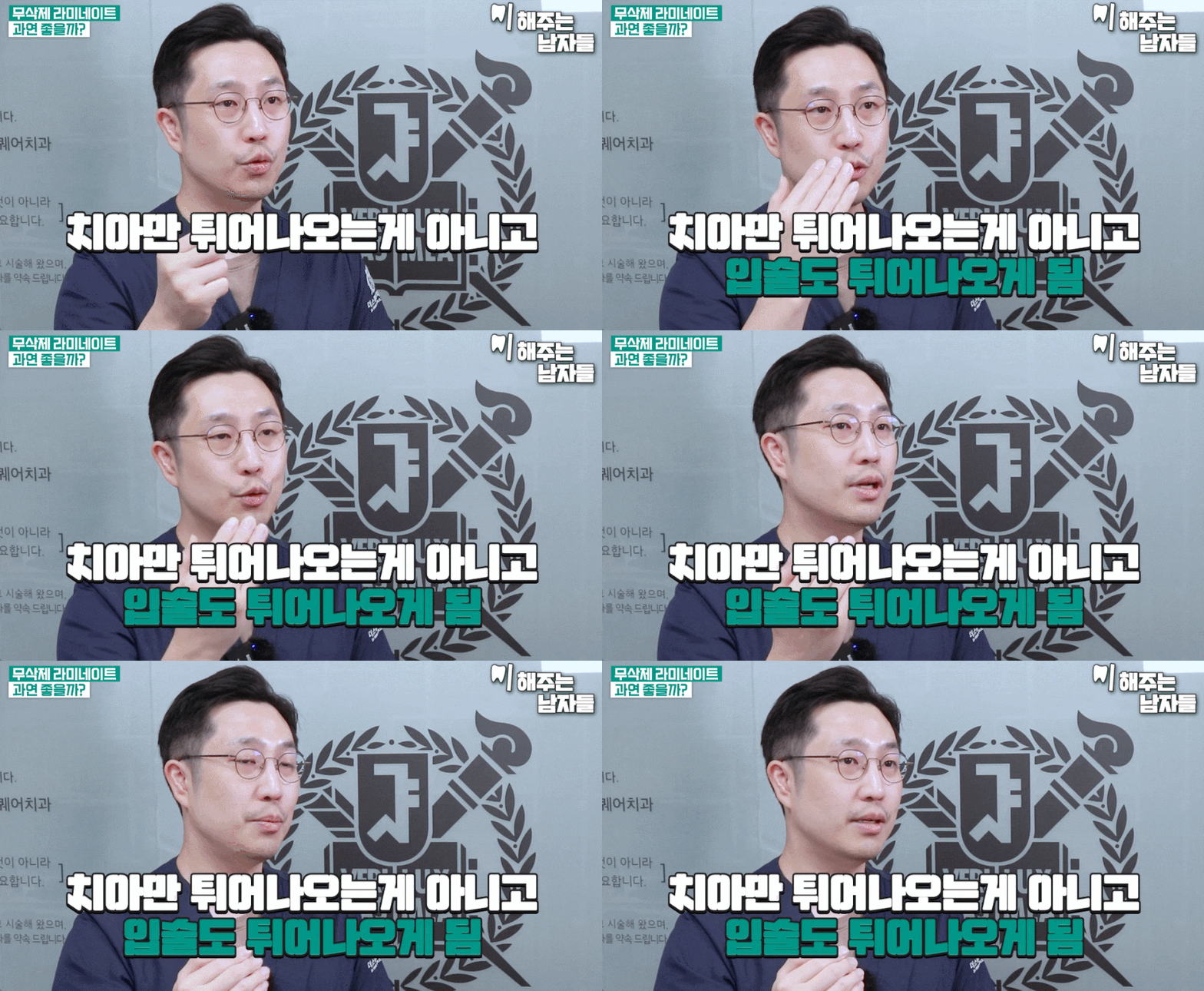
On the other hand, there are conditions
where a more conservative approach is possible.
✔️ Whether the biting force is stable,
✔️ whether the angle at which the front teeth meet is not excessive,
✔️ whether the tooth position has not shifted too far,
✔️ and whether enough enamel remains on the surface
These criteria all need to be met together.
This is where the judgment often begins to differ.
※ If you clench your teeth often,
※ if you grind your teeth while sleeping,
※ if one front tooth seems to touch first,
※ or if there is already another restoration on the front teeth,
then the approach changes.
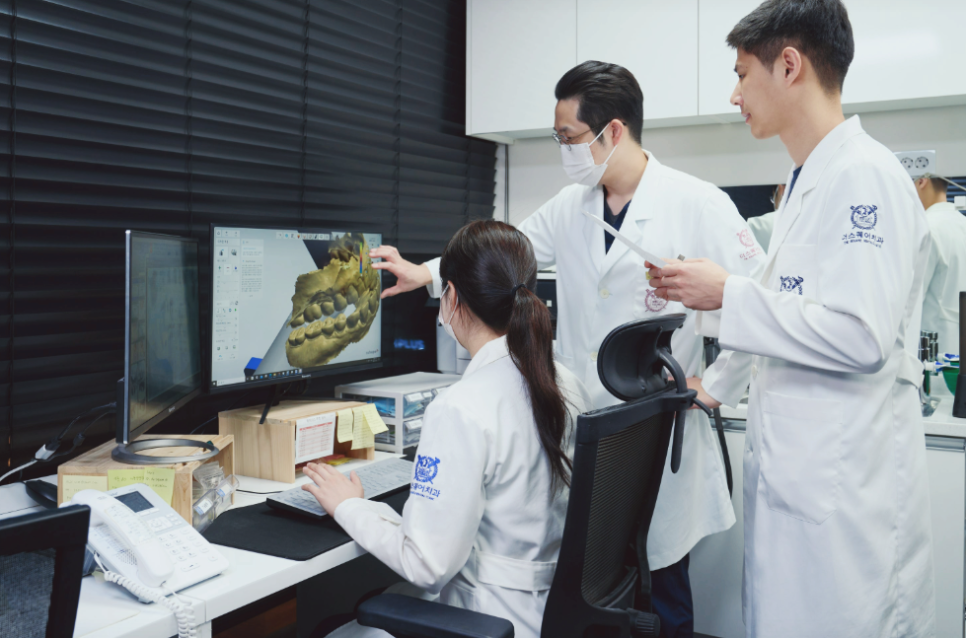
That is why it is important to check your current condition once.
| Whether the front teeth stand out especially much when you smile, whether one side seems to touch first when you eat, whether your front teeth often bump into each other, whether you have a habit of putting tension in your jaw |
These factors become 기준 for judgment.
Even with the same laminate veneers,
the approach changes depending on these conditions.
How much can be preserved is the criterion.
Here, the 기준 becomes clear.
We do not decide the amount of reduction first.
We first check the tooth position,
and then check the bite.
How force is applied to the front teeth,
which area touches first when chewing,
and whether the force is not concentrated on one side
—these are the first things we look at.
After that, we check how much enamel suitable for bonding remains.
Why does this order matter?
Because even the same 0.3 mm
can be a stable choice for one person
and a burden in another case.
Even if the number looks the same,
if the starting point is different,
the result will be different.
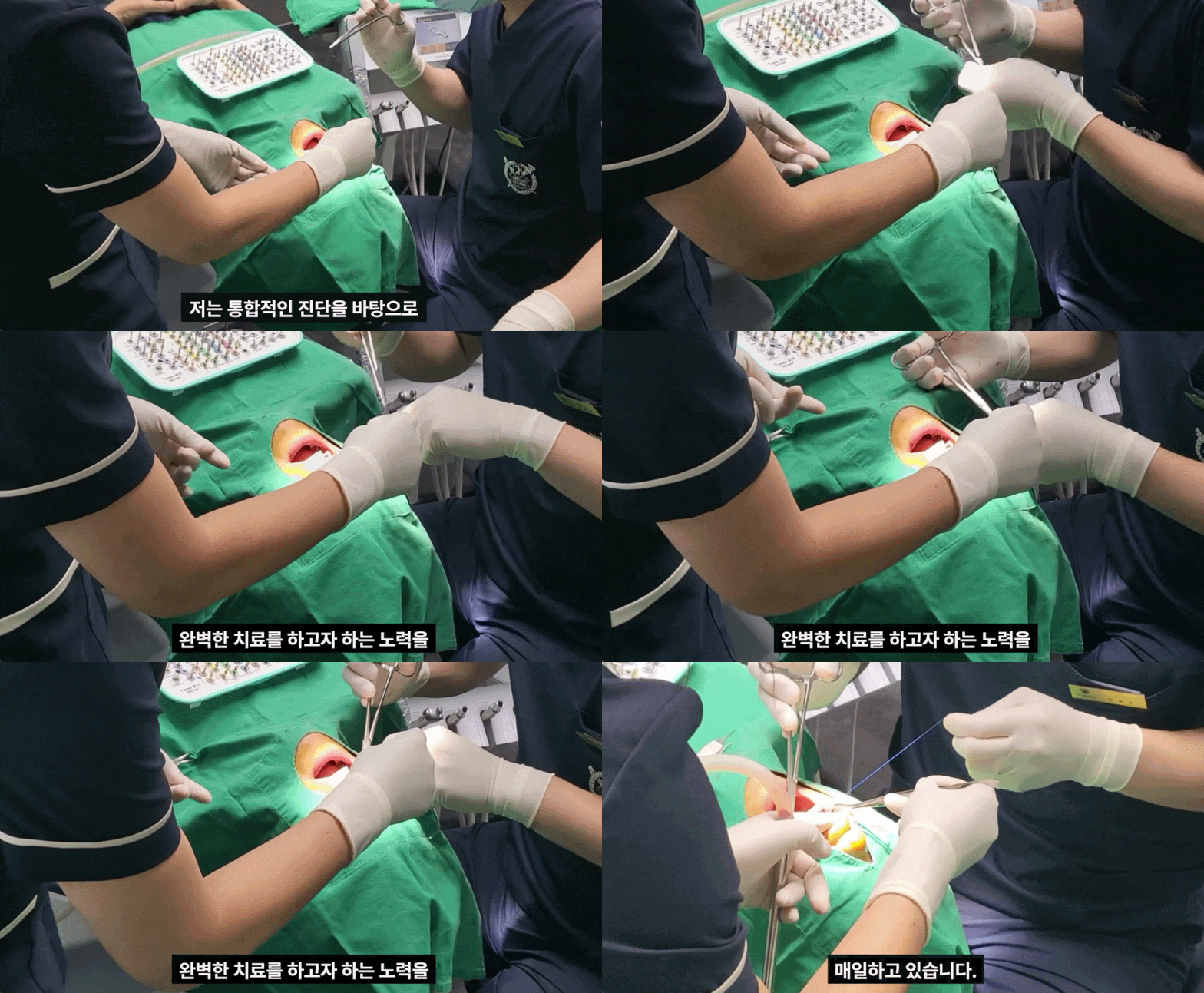
Timing also matters.
At an early stage,
there is still room to approach it in a way
that preserves more enamel.
But when the impact extends deeper inward,
the bonding conditions change,
and the scope of reshaping naturally becomes wider.
Enamel does not regenerate.
You should definitely keep this in mind.
Even if the condition now seems relatively simple
and the direction can be decided,
if you miss the timing,
your options may become more limited.
That is why we do not approach this based only on doing less.
We first look at whether the conditions are suitable,
and within those conditions, we judge to reshape only as much as needed.
The goal is not to do less,
but to look toward a direction that can be maintained for a long time.
[Methods to reduce the amount of reduction,
there are other choices as well ]
Minimally invasive laminate veneers are not so much a method of doing less reshaping
as they are closer to a result that naturally appears
when the conditions are right.
What matters more than how much was reduced
is how much can be preserved in the current tooth condition,
and how force is being applied.
So rather than judging based on the word reduction alone,
it is better to first check
what direction is appropriate in your current condition.
There is one thing I hope you will remember.
I hope you will check at least once
whether this is a place where the reason for that judgment is clear
and whether the 기준 used to determine the direction are explained clearly.
If you have any questions while reading,
please feel free to leave them in the comments or through Naver TalkTalk.
Thank you for reading this long post.
This was The Square Dental Clinic.
[Check out real visit reviews and the process together]
[Feel free to leave even simple questions without 부담]
[Before visiting,
it may help to check the location.]
| This post was written in compliance with the Medical Service Act (Article 56, Paragraph 1) so that you can obtain accurate information. Rather than simple promotion, we wanted to transparently share what actually happens in the clinic. Please do not contact us immediately after reading this post; obtaining accurate information alone is sufficient. |