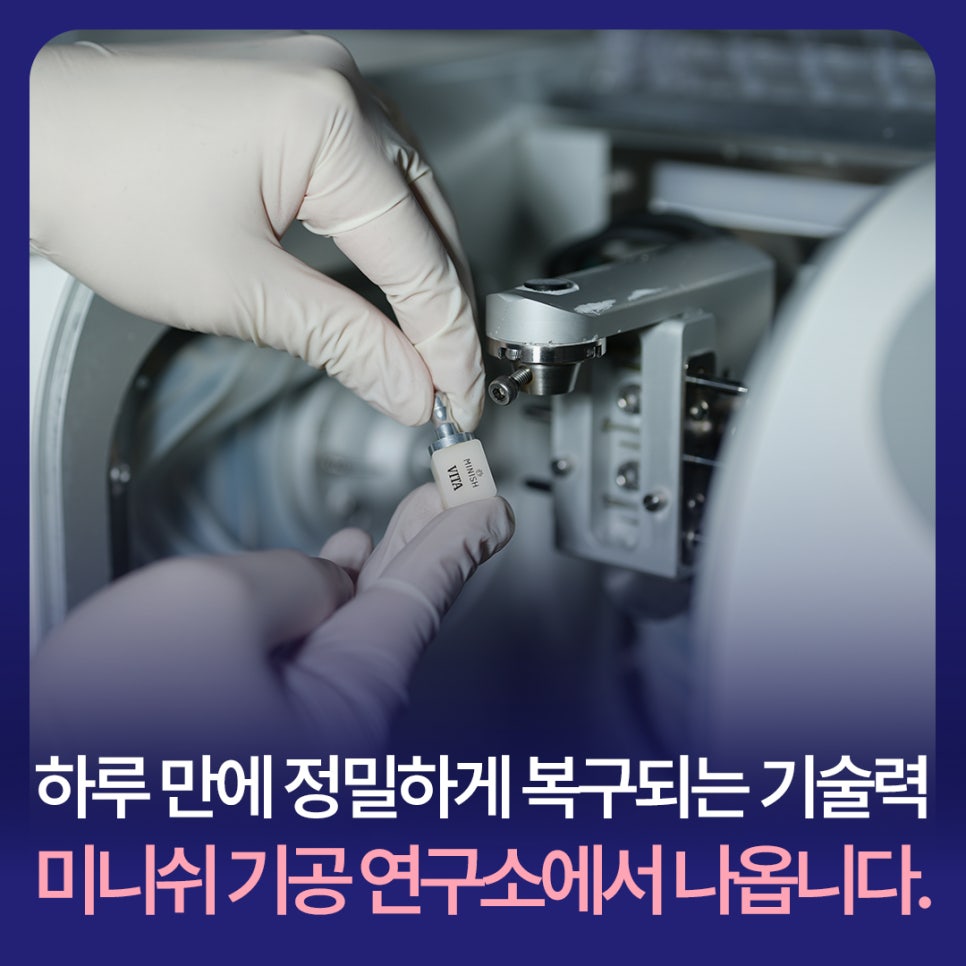
Have you heard that Minish can precisely restore teeth in just one day? If you have ever wondered, “Is that really possible?”, the place that can answer that question is the Minish Dental Laboratory Research Center. The Minish Dental Laboratory Research Center is more than just a dental lab. It is where state-of-the-art equipment and experienced technicians work together to create customized Minish restorations tailored to each patient. In this post, we’ll take a close look inside the Minish Dental Laboratory Research Center and explain in detail how Minish can create teeth quickly and with precision.
Systematic Laboratory Infrastructure
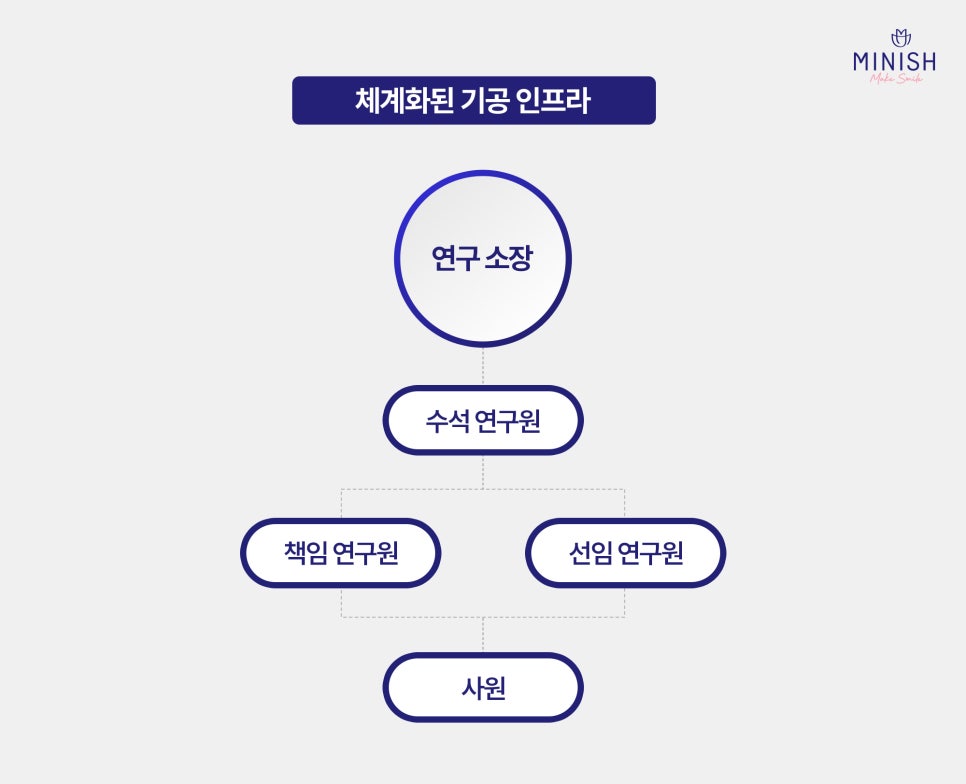
The Minish Dental Laboratory Research Center is the largest digital dental laboratory in Korea, led by a director with more than 20 years of experience. It operates with 20 specialists, including chief and senior researchers with an average of more than 15 years of experience, and maintains a systematic and stable production environment. Through step-by-step, highly segmented tooth design work, it produces results that are both fast and highly refined. In addition, three dedicated technicians are assigned to each of the eight Minish production units, making fast, precise, and flawless Minish fabrication possible.
Minish Blocks Co-Developed with Germany’s VITA
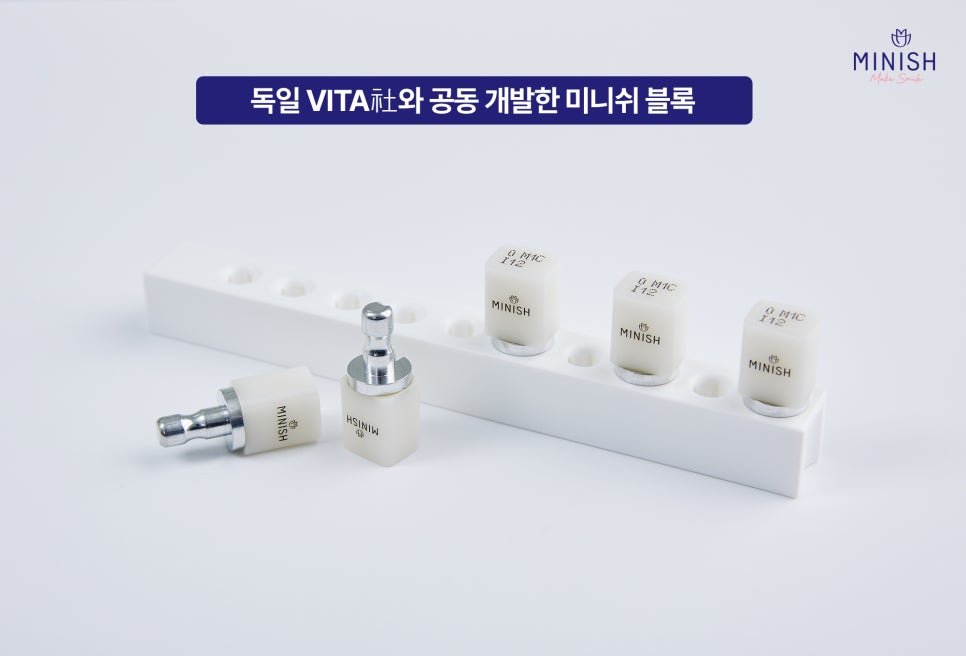
Because these materials were developed in collaboration with VITA in Germany and are exclusively produced and supplied, they can reproduce the color, texture, and strength most similar to natural teeth. The advantages of Minish blocks are as follows.
✔ Properties most similar to natural teeth
✔ Color and texture almost identical to natural teeth
✔ High biocompatibility
✔ Natural light transmission
Cutting-Edge Tooth Fabrication Equipment
The Minish Dental Laboratory Research Center has advanced, state-of-the-art equipment and a systematic workflow. This enables a fast yet stable tooth fabrication environment. In particular, Minish uses only globally recognized equipment from leading CAD/CAM companies such as Dentsply Sirona in the United States, Ivoclar Vivadent, and Kulzer in Germany.
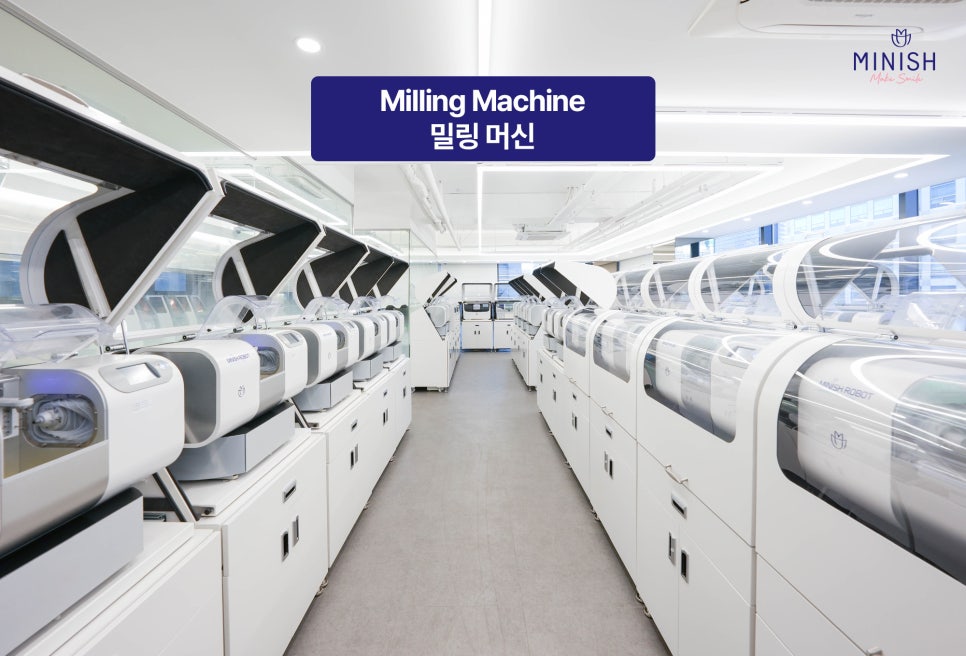
Milling is the process of finely carving a block from multiple angles, like sculpting it, so that the Minish block can be reproduced exactly as designed. The equipment responsible for this process is the milling machine. At the Minish Dental Laboratory Research Center, Minish is produced using Dentsply Sirona’s InLab MC Xl, which is one of the most expensive milling machines available and is known for its fast speed and outstanding precision.
Minish is also developing a dedicated milling machine in collaboration with Korea’s leading semiconductor robotics company. This equipment is capable of completing conventional prosthetics in just 15 minutes and offers both speed and precision, making it ideal for one-day treatment systems. Currently, about 50 milling machines are operating in the Minish Dental Hospital laboratory, and based on these advanced machines and technologies, Minish restorations are made with unmatched precision and quality.
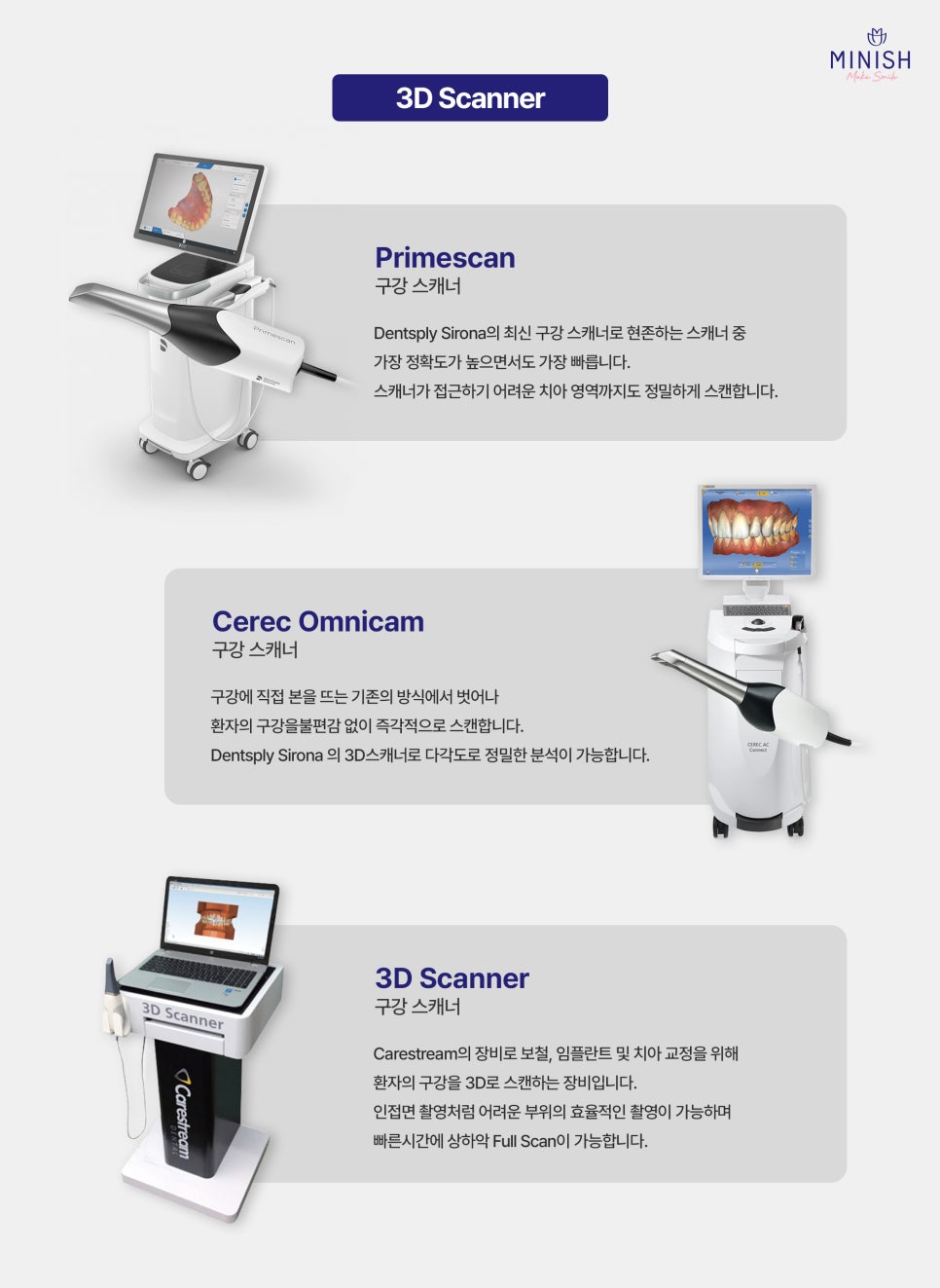
In the past, it was common to first create a model by taking an impression of the patient’s oral cavity and then scan it again. However, this process was cumbersome and could introduce errors. At the Minish Dental Laboratory Research Center, the latest 3D scanner is used to directly scan the patient’s oral cavity, and the data is sent straight to the design PC. This makes faster and more precise design work possible.
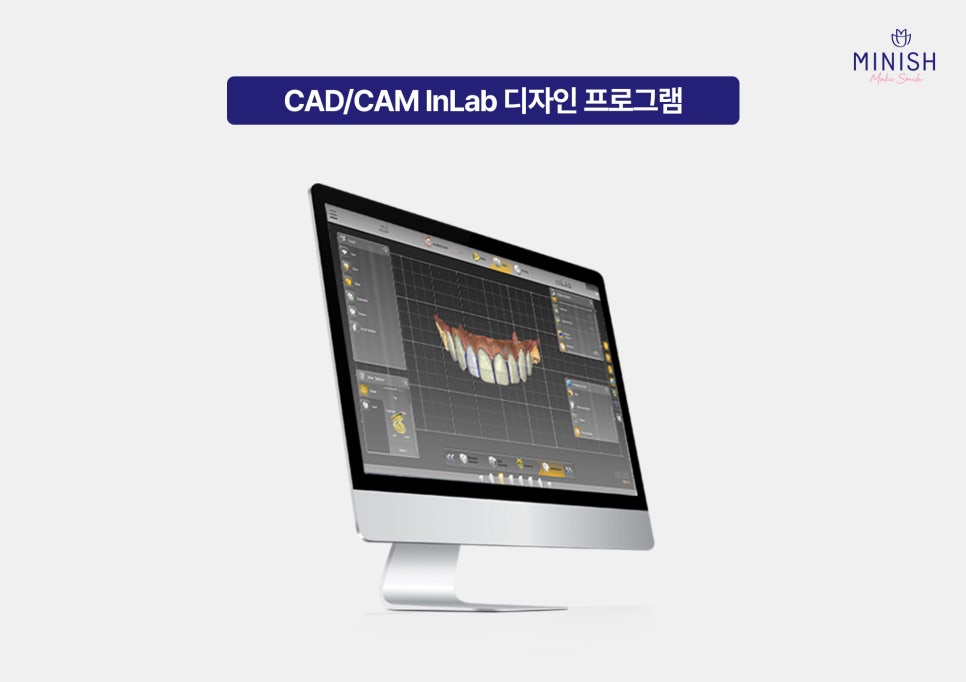
- CAD/CAM InLab Design Program
The CAD/CAM InLab design program is a dedicated PC and software used to delicately design the oral model for 3D printing and the Minish block for milling. It can be said to be a key tool for precise fabrication. In particular, by using software from Dentsply Sirona, a premium equipment manufacturer, even the smallest details can be designed with precision. This makes it possible to create natural-looking Minish restorations tailored to each individual patient.
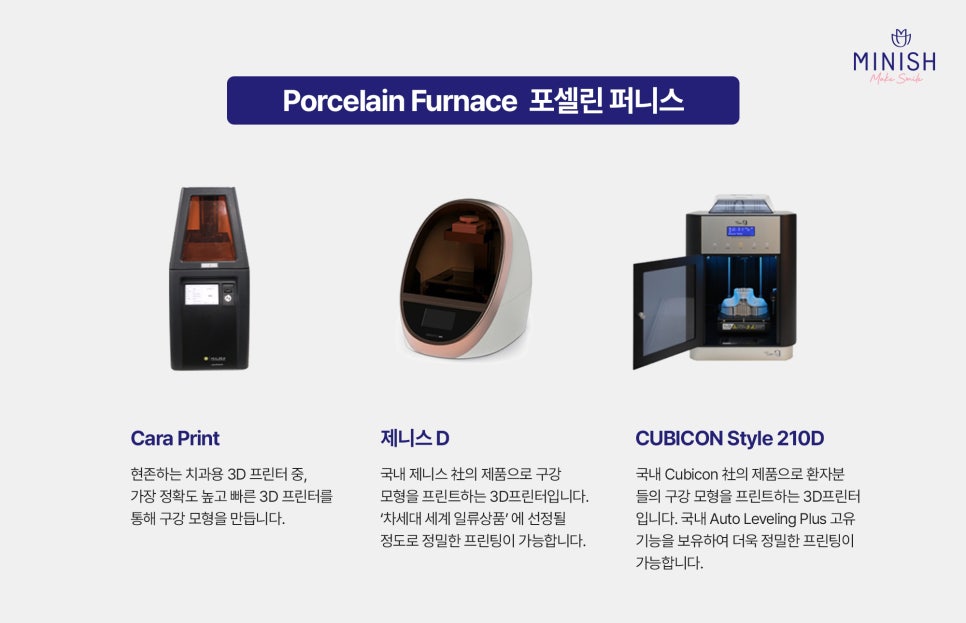
A 3D printer is a device that outputs an actual model based on scanned oral data from the patient. This makes it possible to reproduce the designed content with greater precision. The Minish Dental Laboratory Research Center uses a variety of cutting-edge 3D printers, including Cara Print, Zenith D, and Cubicon Style 210D. Each of these devices offers high accuracy and fast printing speeds, allowing for the production of precise oral models tailored to each patient.
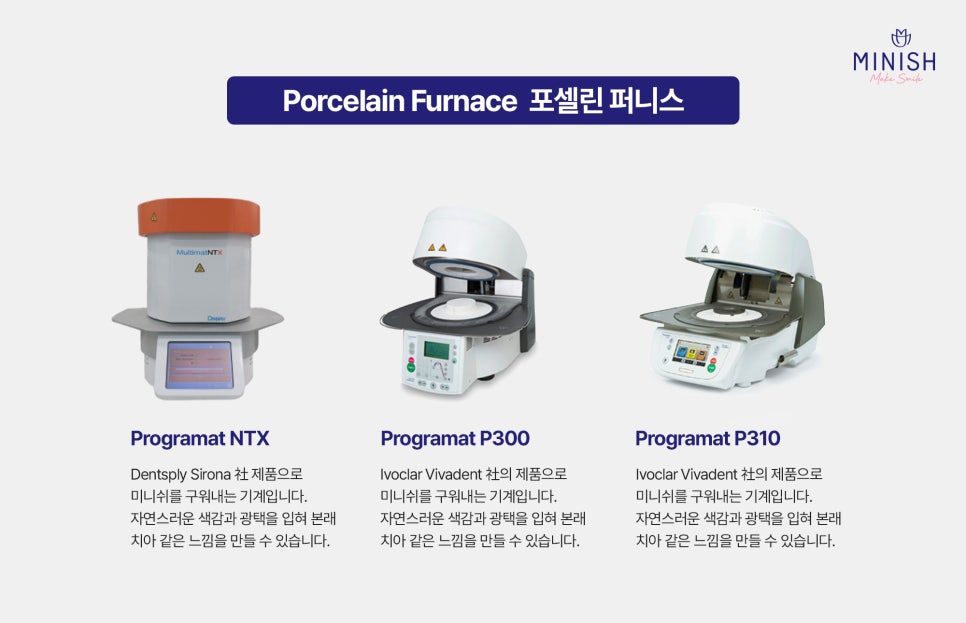
A porcelain furnace is used for layering and glazing dental prosthetics. Through this process, it is possible to create not just a simple prosthetic, but a form and texture very similar to natural teeth. The Minish Dental Laboratory Research Center uses porcelain furnace equipment from Dentsply Sirona and Ivoclar Vivadent. By precisely applying color and gloss, it creates a look like original teeth and delivers results that are even more natural and esthetic.
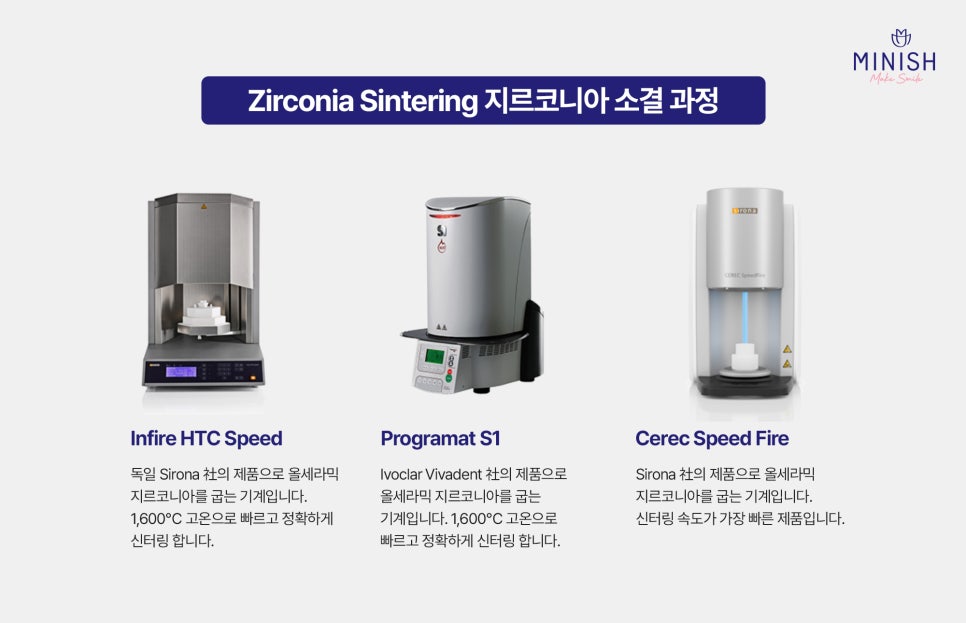
Zirconia is a material so hard that it is often called a kind of artificial diamond, making it one of the strongest materials used in dentistry. Sintering is the process of heating zirconia at a high temperature of about 1,600°C to make it even harder and more stable.
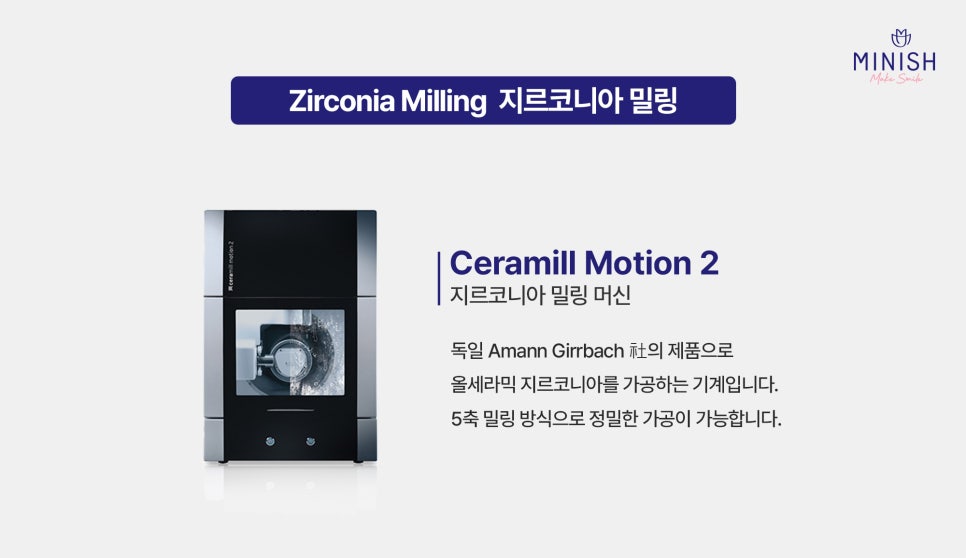
A milling machine processes zirconia blocks into the desired shape by precisely cutting them from multiple angles.
Ceramill Motion 2
Researchers Who Continue to Study
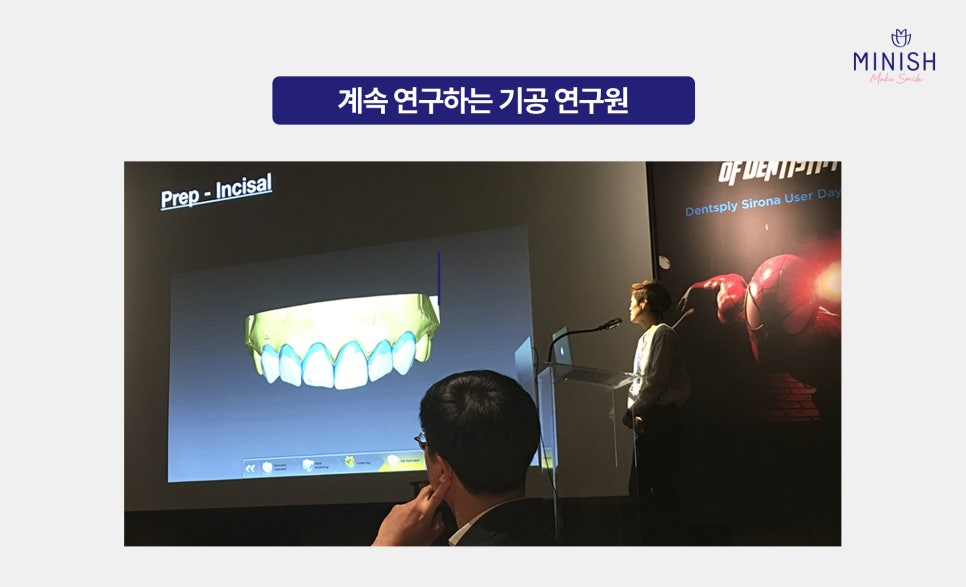
The processing capability of the latest equipment alone cannot create a high-quality result. What creates delicate results is the precise skill of the laboratory researchers. Minish laboratory researchers participate in internal and external seminars to keep advancing their technology, and they also work hard on training programs to spread their original ultra-precision processing techniques. Through this, they continuously cultivate professional talent and produce even more refined results.
One-Stop Collaboration System
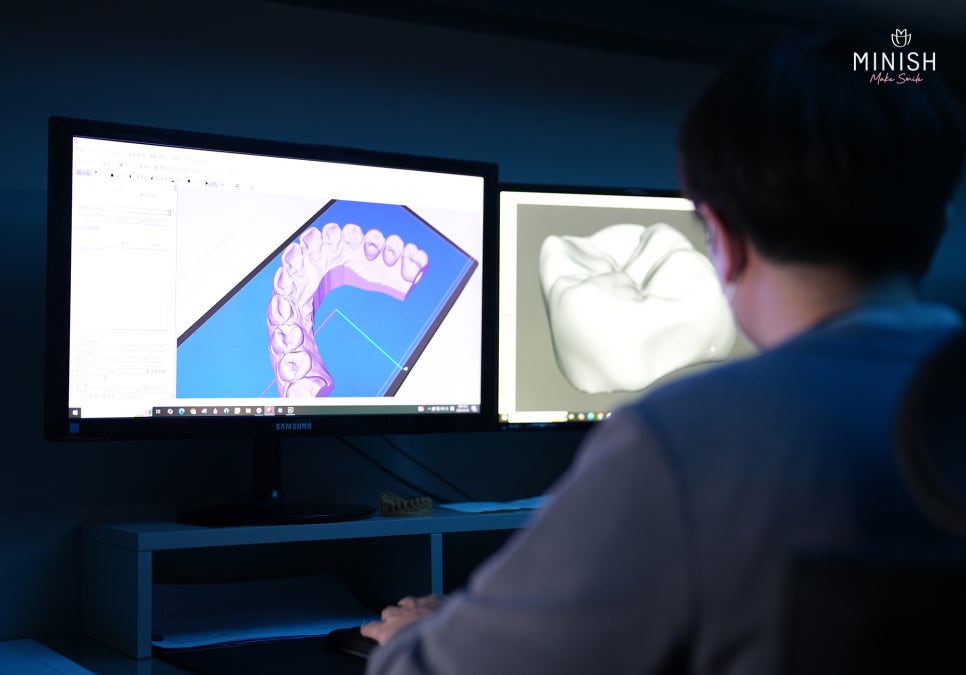
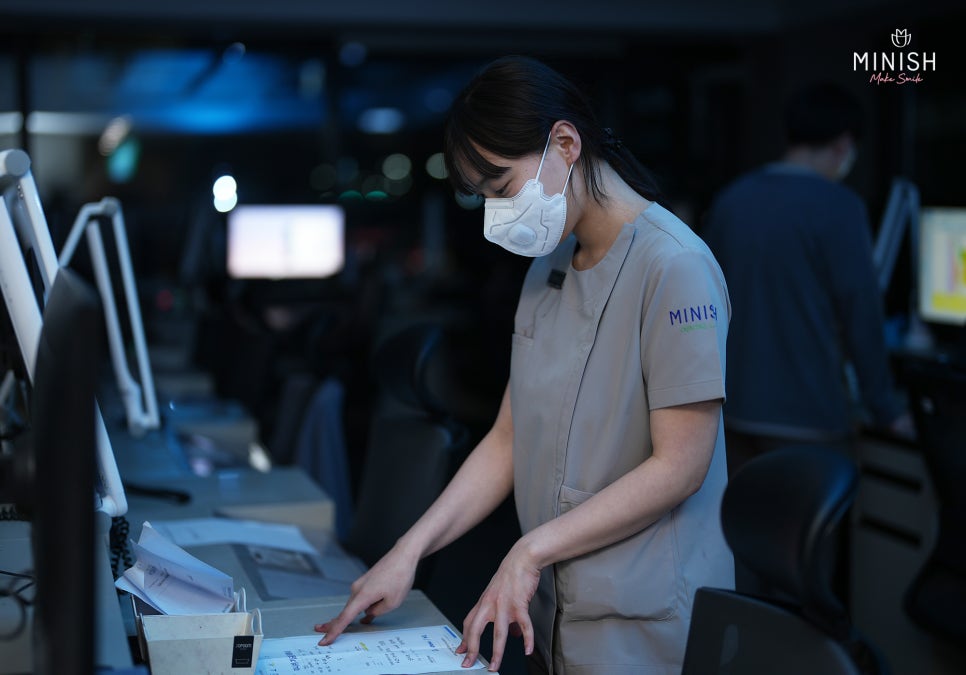
At Minish, clinicians and laboratory researchers work closely together throughout the prosthetic fabrication process. If any requests or adjustments arise after the teeth are applied, they can be addressed immediately through a one-stop collaboration system that allows quick and accurate responses after discussion.
Minish Can Be Applied to All Teeth
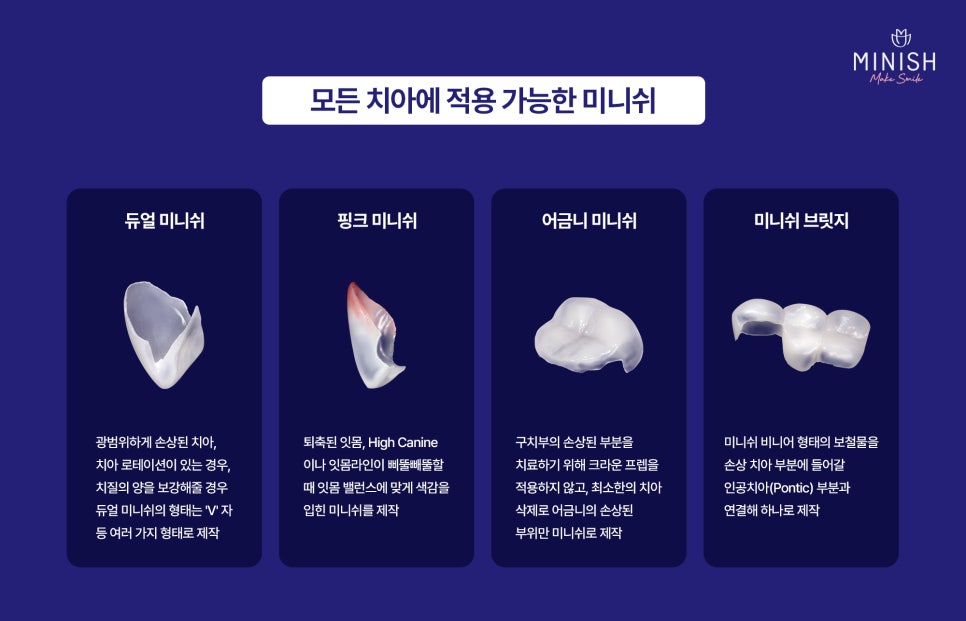
Because molars are subjected to more than three times the force of front teeth due to chewing function, prosthetics that are not precise can easily fracture. However, Minish can be applied not only to front teeth but also to molars, missing teeth, and gums, across all teeth.
Minish Dental Hospital provides each patient with the best possible treatment based on state-of-the-art equipment and precise technical expertise. As a laboratory recognized as Korea’s only VITA-certified lab, it will continue to develop without stopping and lead patient-centered, innovative care.