I’ve summarized only the key points, focusing on the stories you hear while consulting at different dental clinics and the questions commonly asked by people who actually visit Minish.
- What is the difference between Minish and laminate?
Minish and laminate already differ greatly in many aspects, including materials, manufacturing methods, and the developer. But the most important criterion for distinguishing the two is the range of teeth to which they can be applied. This is because the purpose of the two methods is fundamentally different.
-
Minish: Can be applied widely, from front teeth to molars
-
Laminate: Can only be applied to front teeth
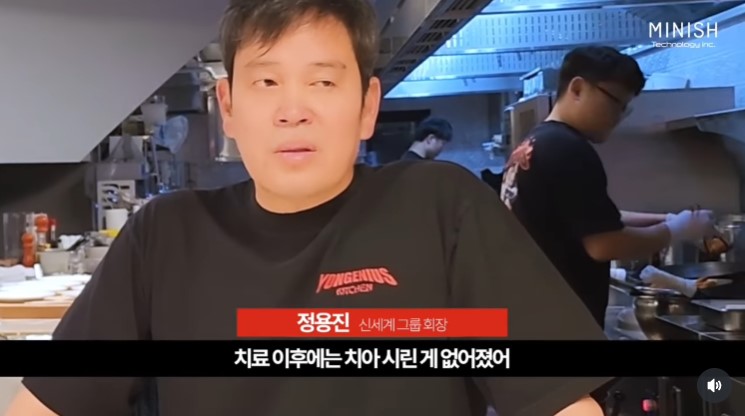 Chairman Chung Yong-jin’s Minish Source: https://buly.kr/6131AVY
- Minish: Aims to restore the weakened or damaged enamel protective layer. Healthy enamel naturally has a transparent white tone, so when restoration is done, the teeth appear naturally brighter and healthier.
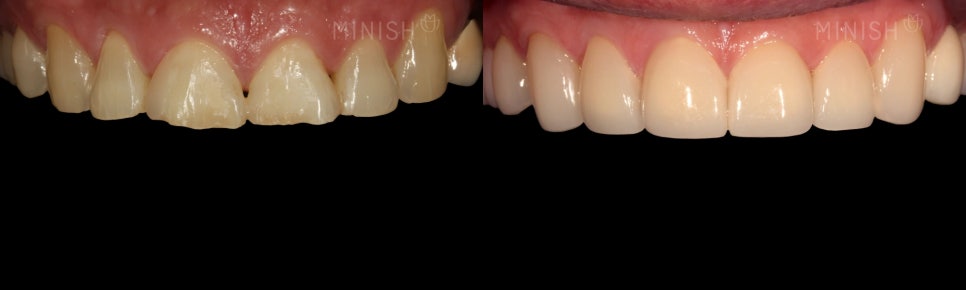 Minish for front teeth
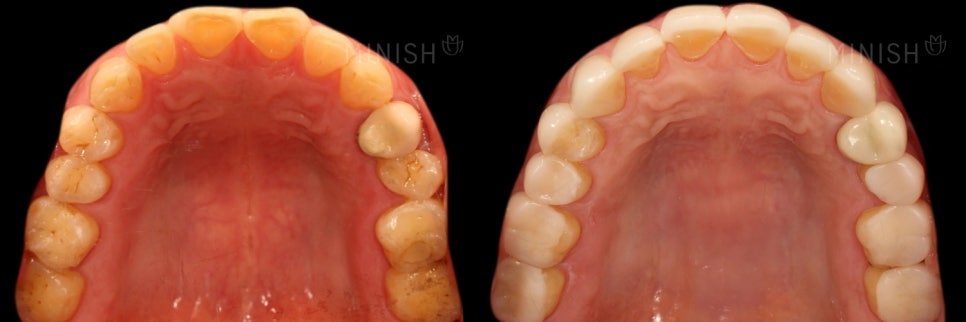 Minish for front teeth - molars - full mouth
- Laminate: Has the purpose of designing the front surfaces of the front teeth so they look bright and even.
- What is the difference between no-prep laminate and Minish?
As the name suggests, no-prep laminate is a method performed without removing tooth structure. In reality, however, cases where no removal is needed are very rare. The special situations in which no-prep is possible are as follows.
In most other cases, some removal is inevitably involved in order to secure space and area. If the teeth are large or angled incorrectly, there simply isn’t room for the laminate to fit. The same reason applies in orthodontics, where extraction or stripping is used to create space on the sides of the teeth.
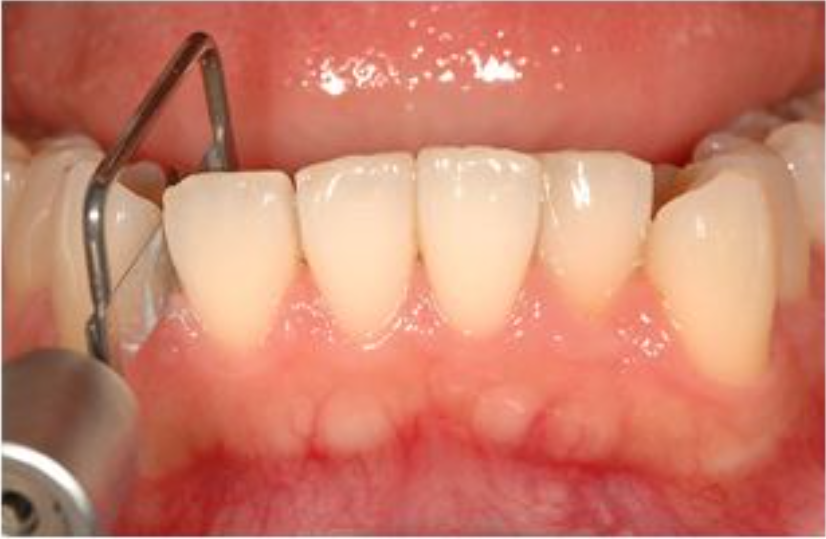 Stripping, where teeth are shaved to secure space during orthodontic treatment
- Is One-Day done carelessly just because it’s made quickly?
Some people say,
"Laminate takes a long time, so it’s made with care, while One-Day is a method that makes it quickly."
But the important standard is not how long it takes, but precision and accuracy. For example, suppose you entered an operating room.
The answer is clear. The key is an accurate and precise process; taking longer does not necessarily make it better. The reason laminate takes 2–3 weeks is to block bacterial penetration with a temporary tooth, but since a temporary tooth is only temporary, there is still concern about bacterial exposure and increased sensitivity.
- Does Minish not involve tooth removal?
Minish includes a process of smoothing the tooth surface. Because tooth surfaces can be rougher than expected or have tiny cracks, the surface needs to be refined so that Minish can adhere precisely, helping prevent bacterial entry, reduce unnecessary side effects, and improve bonding strength.
It is the same principle as makeup not sitting well when dead skin is present.
- Do dentists also get Minish?
Yes. In fact, dentists themselves often choose Minish. There are dentist reviews available on YouTube, and many medical professionals receive it quietly at partner clinics. If you include not only dentists but also people working in various medical fields, more than 100 people have already experienced it.
- I heard laminate needs to be replaced every 10 years. What about Minish?
Laminate does not necessarily need to be replaced every 10 years, but this idea arose because shrinkage and expansion occur at various stages during the manufacturing process.
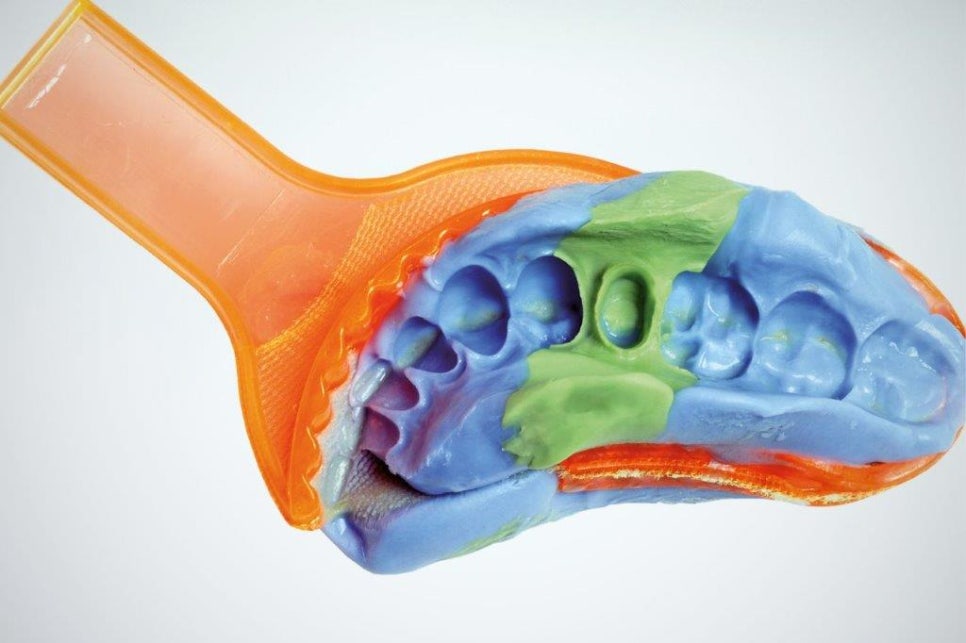
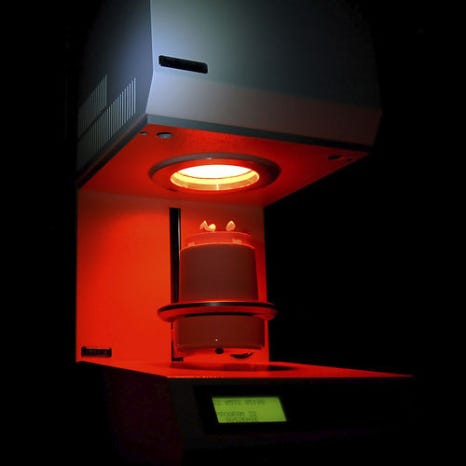 The main cause of side effects in (no-prep) laminate
For example,
As these are repeated, laminate develops a structural limitation that makes it difficult to fit the tooth perfectly at the final stage.
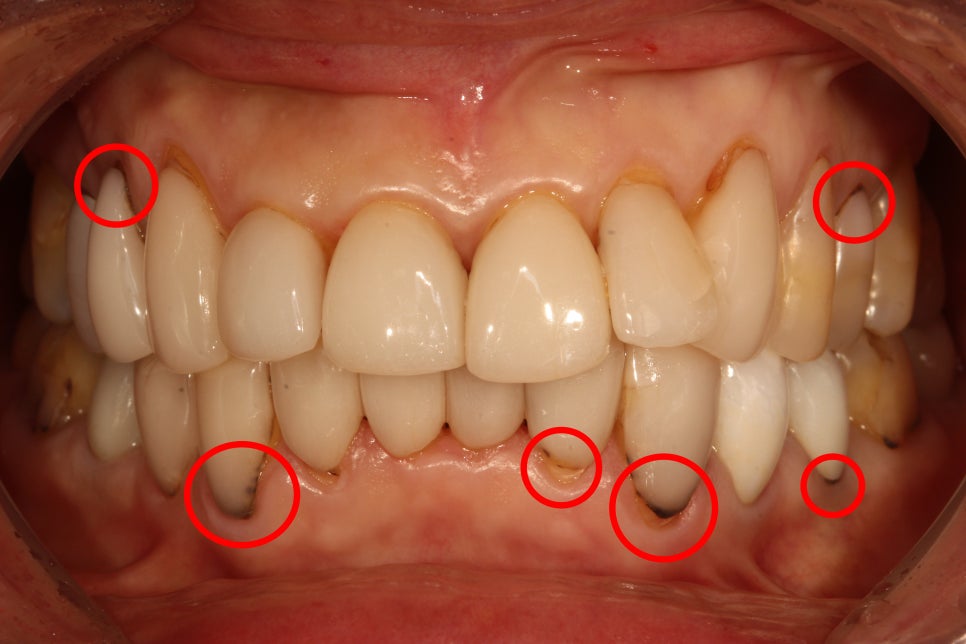 Laminate side effect - decay that developed inside the tooth
If bacteria enter through these gaps, decay, discoloration, and detachment can follow, which is why the phrase “replacement every 7–10 years” naturally came about.
By contrast, Minish does not involve impression taking or high-temperature heating, so there is almost no volumetric change and it remains stable. Minish currently has data spanning more than 18 years, and the warranty period is up to 15 years. Once additional data is secured, the warranty period is expected to be extended as well.
- Is a 15-year Minish warranty actually possible?
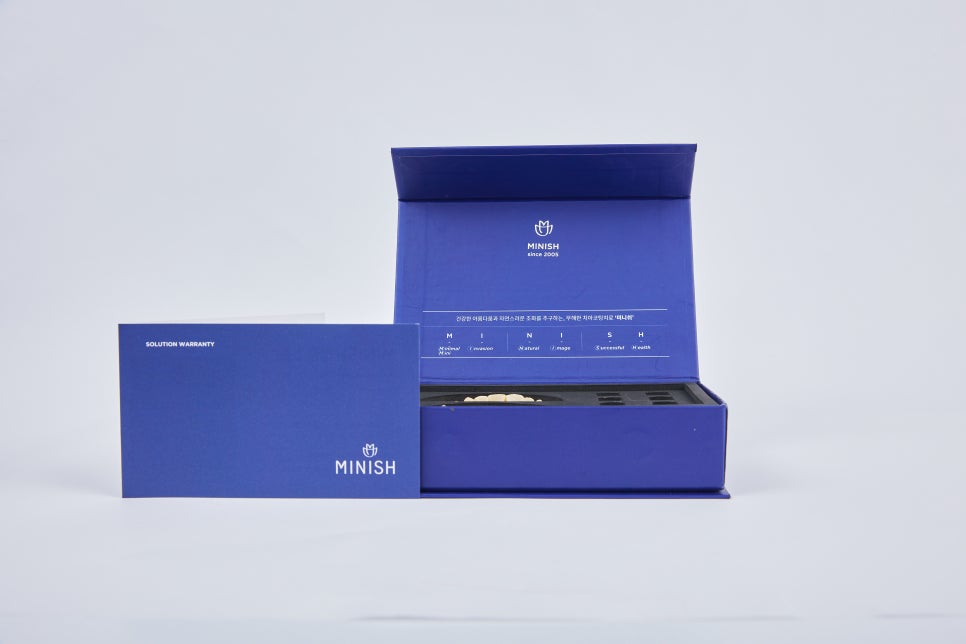 Minish warranty box
Yes. It is possible. Two important points:
- A clinic itself cannot provide a warranty for a medical procedure.
If a clinic says it will guarantee laminate, that would violate medical law. The reason Minish can be warranted is that it is an independent technology developed by Minish Technology Co., Ltd. and supplied to clinics.
- Be sure to check the clinical period.
It is logically impossible to offer a 10-year warranty when cumulative data only covers 5 years. Teeth are not consumables, so they cannot be approached as items meant for replacement.
- Is lithium disilicate (e.max) a premium material?
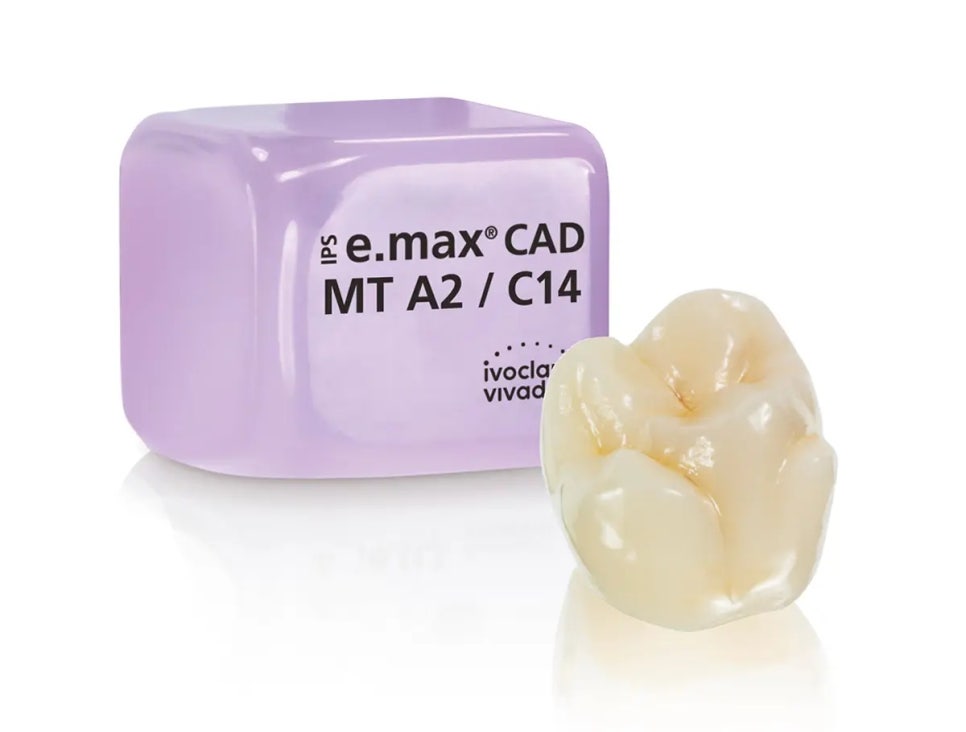 Lithium disilicate e.max block
Lithium disilicate is a material often used in (no-prep) laminate. It is purple before heating and becomes translucent after vitrification (high-temperature heat treatment). However, Minish does not use this material. There are two reasons.
- Inevitable shrinkage caused by high-temperature heat treatment
Shrinkage creates gaps, and those gaps can eventually lead to bacterial entry and problems.
- Much higher wear than natural teeth
The material is so hard that there is a risk of wearing down the natural teeth that come into contact with it. It is similar to a situation where an egg (natural tooth) collides with a rock (laminate).
- Is harder material always better?
No. The most ideal material is one with properties as close as possible to natural teeth. Zirconia and lithium disilicate, which are widely known, share a common feature: they have high wear resistance and are much harder than natural teeth. Because of this, over time, the natural teeth they contact may wear down.
In fact, even though the problem lies with a material that is “too hard,” people often mistakenly assume that the worn natural tooth was weak to begin with. But in reality, this happens because the material’s properties are too different from those of natural teeth.
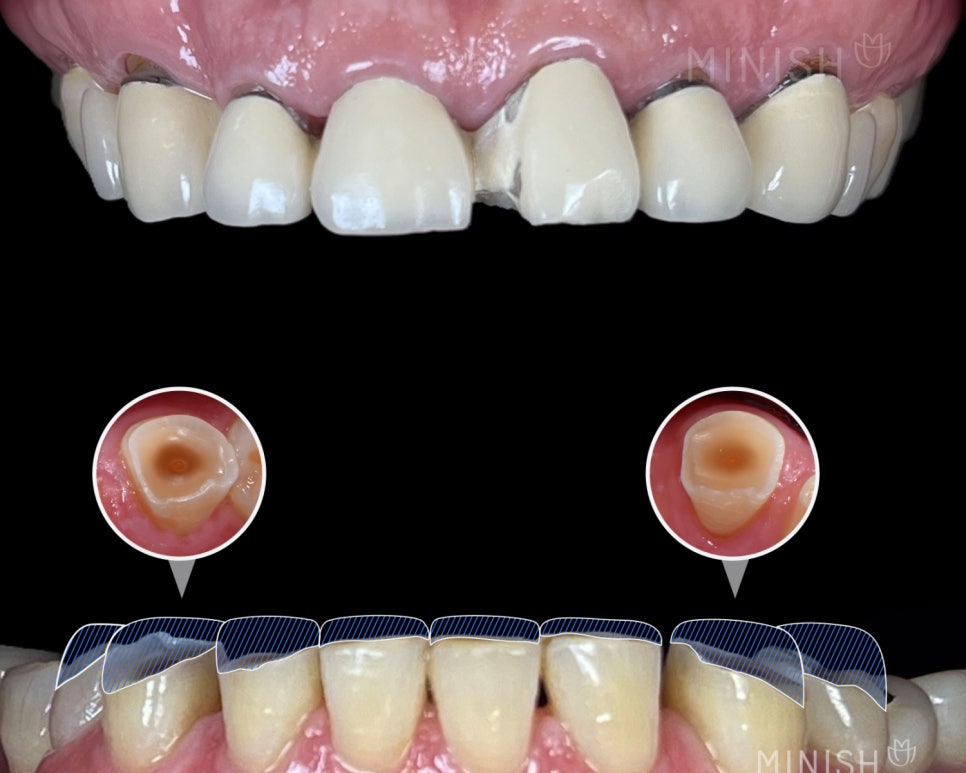 Worn tooth condition
For this reason, even material companies have recently been improving products by lowering their strength, but they are still harder than natural teeth.
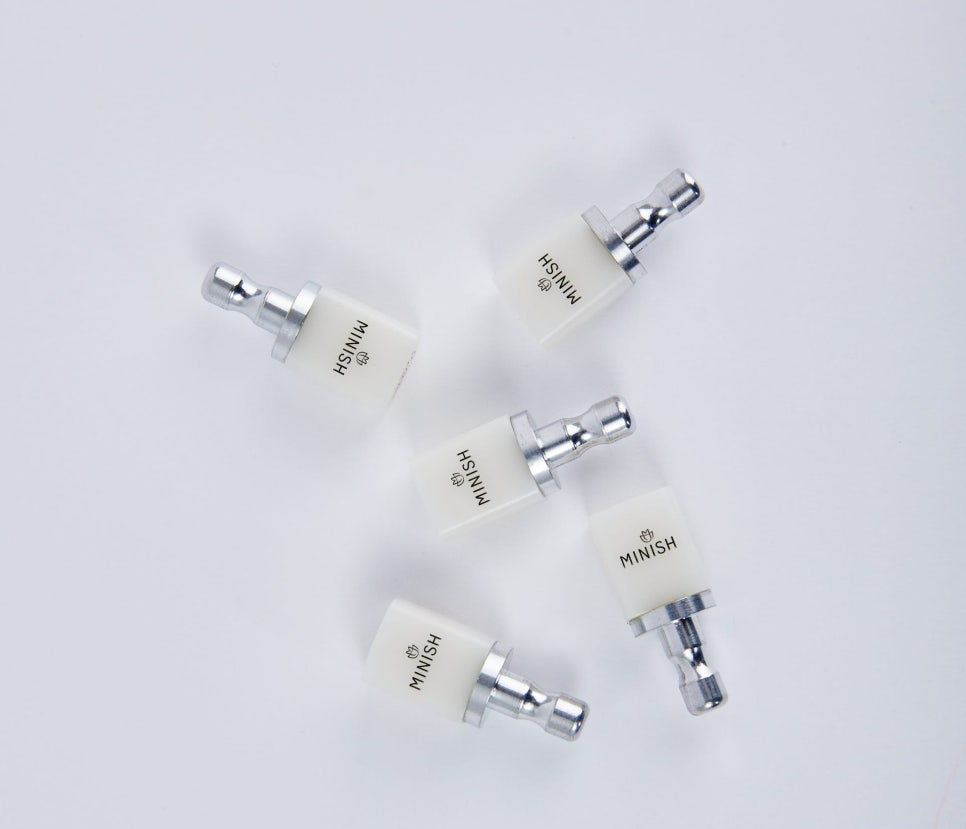
By contrast, Minish blocks are designed to have properties similar to those of natural teeth, including strength, hardness, thermal expansion, wear resistance, and translucency.
- When removing Minish, do you shave down the natural tooth?
Of course not. No dentist would intentionally damage a healthy natural tooth.
- Minish is thin, so doesn’t it break?
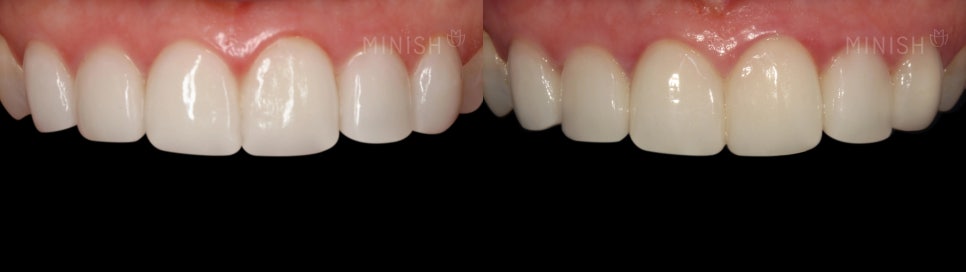 Same person, photographed in 2014 (left), photographed in 2022 (right)
This is a question many people have.
Minish is based on patented technology that bonds with the tooth as one. Just as one sheet of paper is weak but becomes stronger when multiple sheets are layered together, it does not easily break once sufficient bonding has been achieved. Front-tooth Minish has remained trouble-free for over 18 years, and molar Minish for over 10 years.
Minish and laminate differ in purpose, approach, and the technology used. Rather than asking which one is better, the most important thing is to understand what suits your tooth condition and goals. The more information there is, the more confusing it can become, but if you understand the basic principles and differences correctly and compare them, it becomes much easier to make your own judgment.
I hope the summary above helps with your decision. If you have any further questions, please feel free to contact us anytime. We will continue to provide accurate information so that your teeth can stay healthy for a long time. 😊