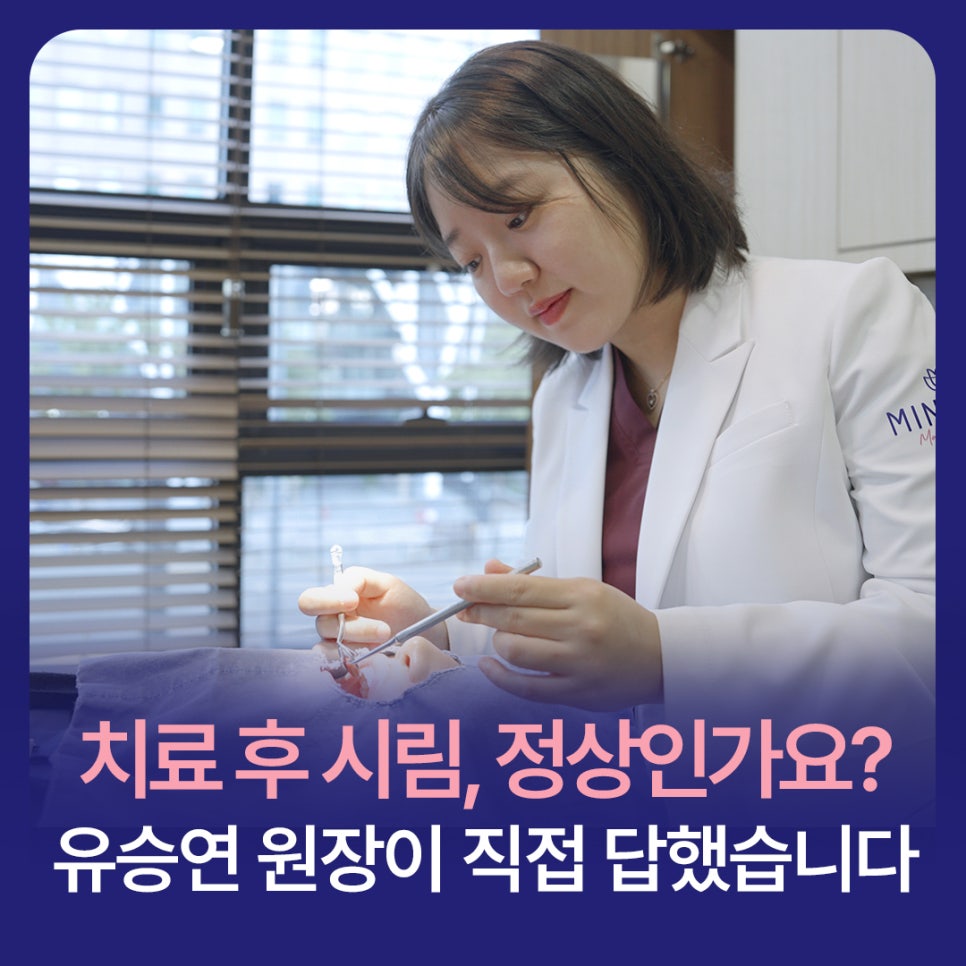
Many people say, “My tooth feels sensitive” after dental treatment. It can be worrying to wonder whether something went wrong, but in most cases, this is a natural part of the tooth’s recovery process. Just as a wound can sting while it heals, sensitivity after treatment may also be temporary. In this post, Director Yoo Seung-yeon directly explains the causes of sensitivity after treatment and how to manage it.
Causes of sensitivity after treatment
① Inflammatory response inside the pulp
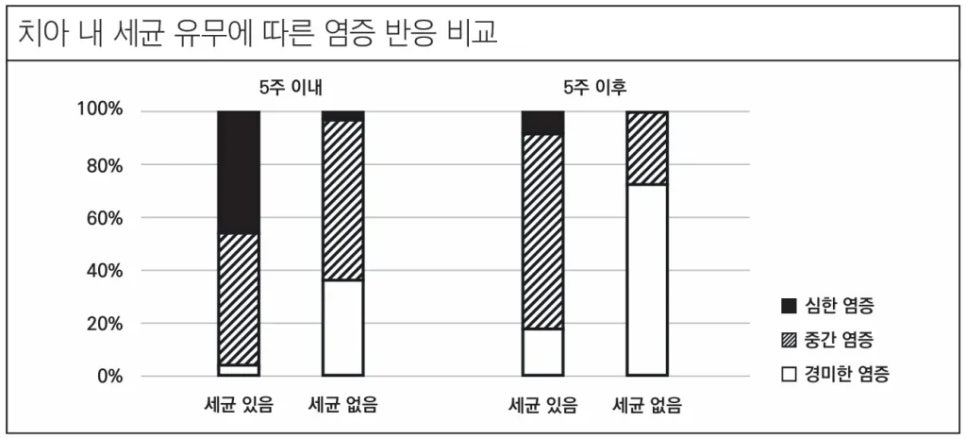
If bacteria are present, severe inflammation (black) continues even after 5 weeks, but if there are no bacteria, most cases decrease to a mild response (white) after 5 weeks Source: J Camps, Dent Mater, 2000
During treatment, if thermal stimulation is applied to the inside of the tooth (the pulp), if the remaining dentin is thin, or if bacteria remain, an inflammatory response in the pulp may occur. If at least 1 mm of dentin remains, most cases can recover naturally, and the sensitivity usually improves in about 4 to 5 weeks. In particular, teeth that had cavities may have longer-lasting inflammation due to bacterial penetration. According to a 2000 study by Camp and colleagues, teeth with remaining bacteria maintained inflammation for more than 5 weeks, while in teeth without bacteria, inflammation decreased sharply. In other words, the main cause of persistent sensitivity is more likely residual bacteria than the amount of tooth reduction.
Causes of sensitivity after treatment
② Formation of a pathway for external stimulation
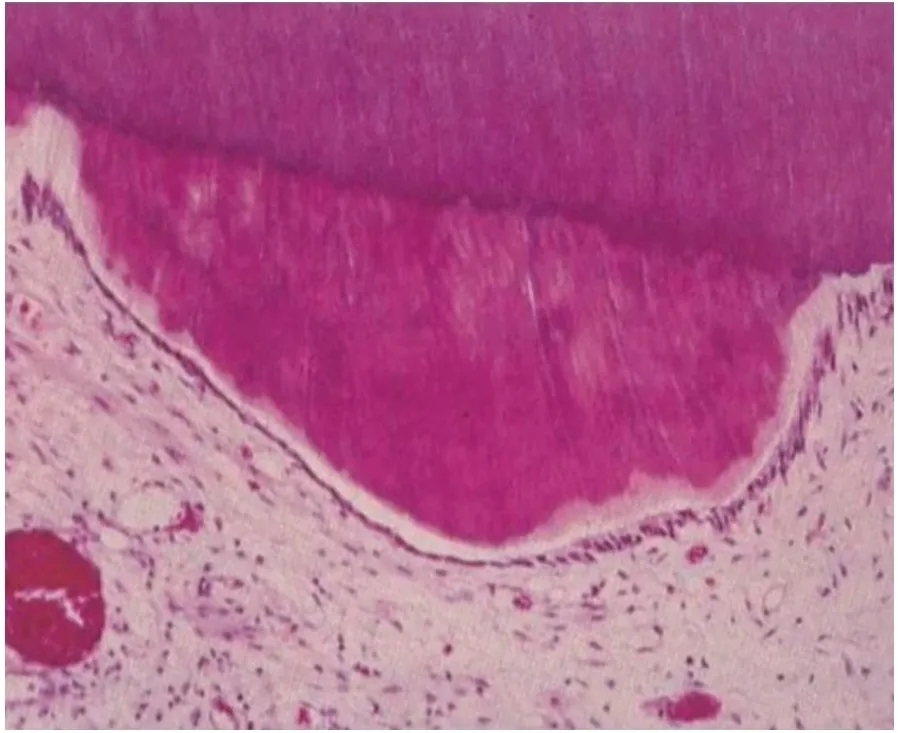
The appearance of tertiary dentin (pink area) formed by the tooth in response to stimulation. As this layer forms, it blocks external stimulation from being transmitted to the nerve
The second cause is when a structure forms that allows external stimulation to be transmitted to the nerve (pulp). If, during treatment, the neck area of the tooth is irritated and the dentinal tubules (tiny channels) are exposed, outside temperature or food-related stimulation can easily be transmitted inward, causing sensitivity. Sensitivity can also appear if microleakage occurs between the restoration and the tooth. At this time, the tooth tries to block the transmission of stimulation by forming tertiary dentin on its own. Tertiary dentin begins to form actively about 4 to 5 weeks after treatment, and pain is likely to decrease after about 3 months.
Care methods to reduce sensitivity after treatment
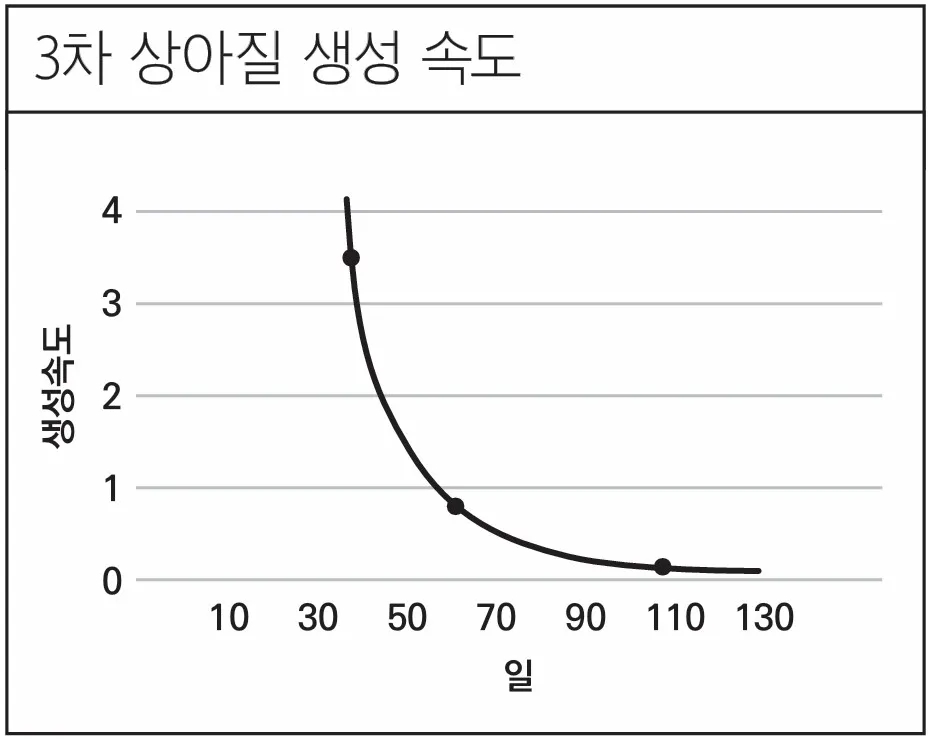
It begins to form quickly from day 30 after treatment, and after day 90, the formation speed slows significantly. This shows that 3 months is an important milestone for recovery.
To reduce sensitivity, additional stimulation should be minimized.
-
Avoid cold or hot foods
-
Avoid hard or irritating foods
-
Do not chew strongly with the sensitive tooth
-
Use lukewarm water when brushing
-
Brush gently with a soft toothbrush
With these measures alone, most cases stabilize within a month and recover within 3 months. However, if sensitivity continues or worsens even after 3 months, you must visit the clinic to check whether retreatment or root canal treatment is needed.
Director Yoo Seung-yeon
“Sensitivity after treatment is a natural recovery process”

Director Yoo Seung-yeon of Minish Dental Hospital
Director Yoo Seung-yeon explains that “sensitivity after treatment is mostly a temporary physiological phenomenon, a process in which the tooth adapts to stimulation and recovers.” Therefore, rather than worrying excessively, it is important to give it enough time and develop habits that protect the tooth. However, for safe recovery, an “accurate diagnosis” is also necessary. Sensitivity after treatment usually settles over time, but if it lasts longer than 3 months or becomes more uncomfortable, it is better to receive an evaluation from a specialist. The sooner the tooth is checked, the more accurately the direction of recovery can be determined.