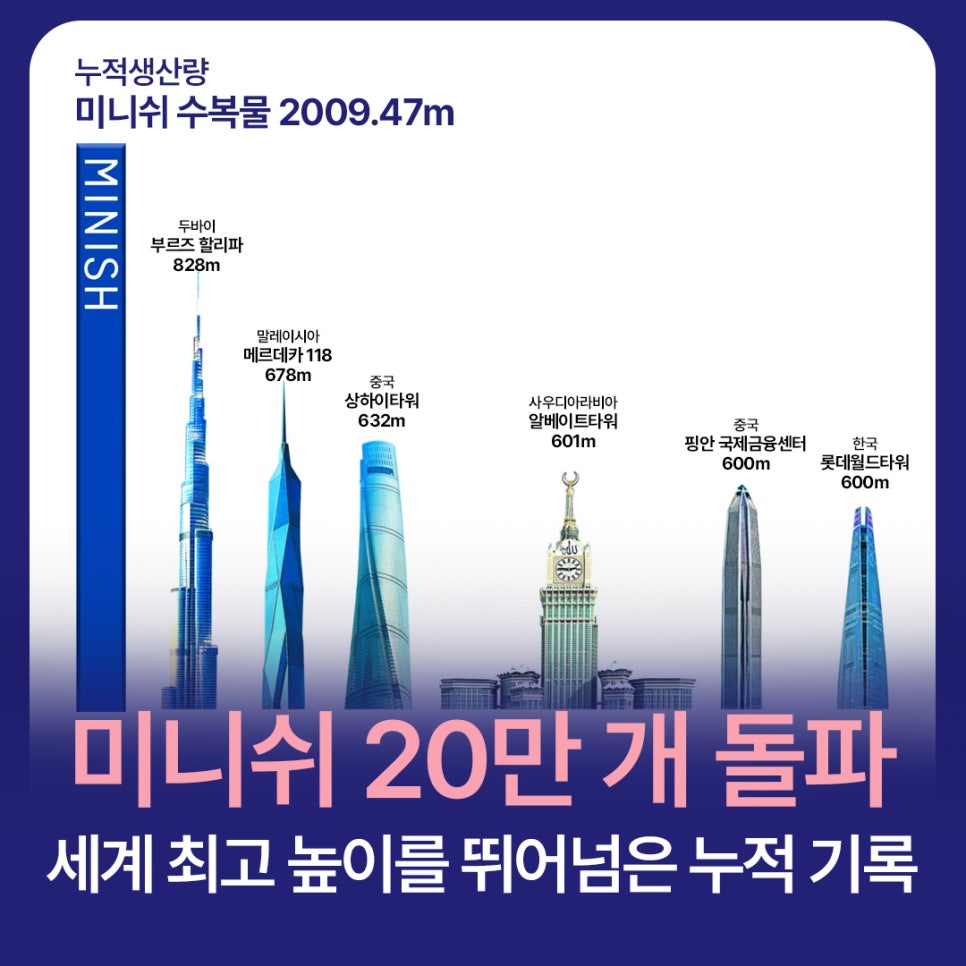
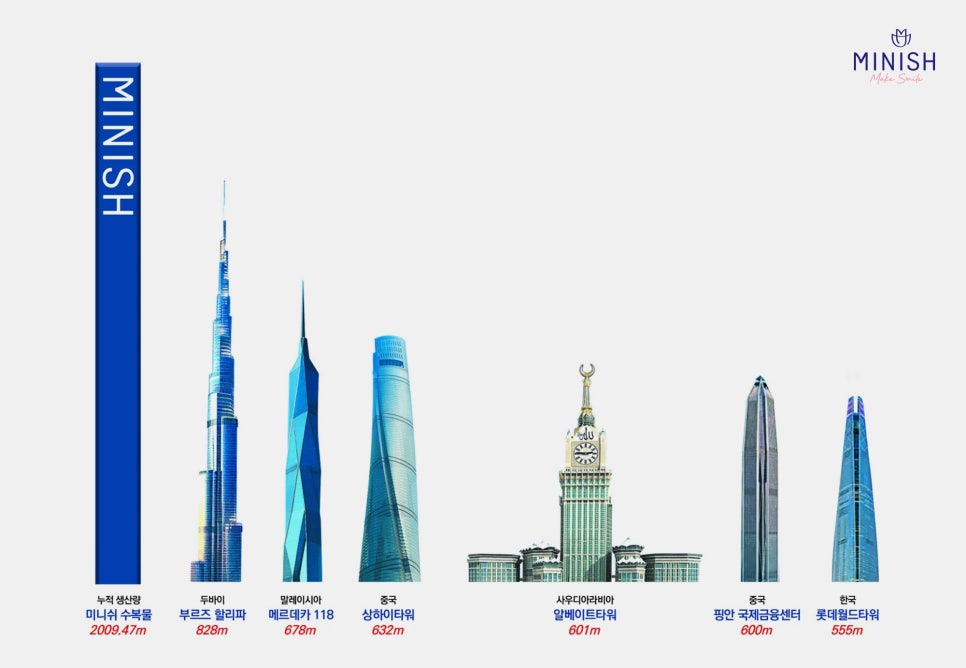
As of the December 5 count, the cumulative production of Minish restorations has reached 200,947, surpassing 200,000. This is the result of about 13 years of accumulated technology and experience since production began in 2012. The figure has doubled in just three years since reaching a cumulative total of 100,000 in November 2022. If all the Minish blocks, the material used for restorations, were stacked together, the height would reach about 2,009.47 meters. That is about 2.4 times the height of Burj Khalifa (828 meters), known as the world’s tallest building. It is a measurable achievement that reflects 13 years of continued challenge and innovation.
From 2012 to 2016, during the early years of Minish restoration production, only highly skilled dental technicians and researchers could carry out the work. It was a stage in which a small number of elite researchers built up experience and laid the foundation for production. The first major leap came with the introduction of 3D printing technology in 2017 and the relocation of Minish Dental Hospital to Nonhyeon-dong in 2018. The accumulated skill and experience over the years created synergy with advanced equipment, and production nearly doubled.
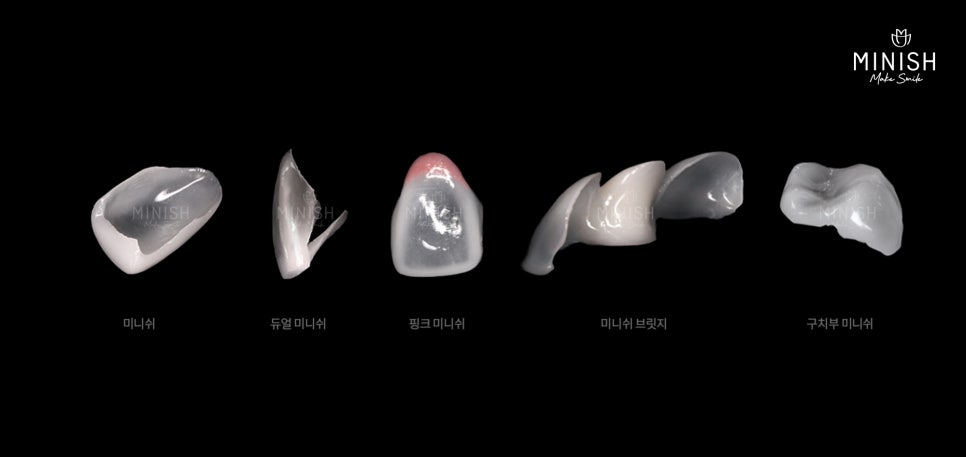
In the process of advancing ultra-precision processing technology, Dual Minish, Pink Minish, Minish Bridge, and Molar Minish were introduced, completing the current Minish One-Day system.
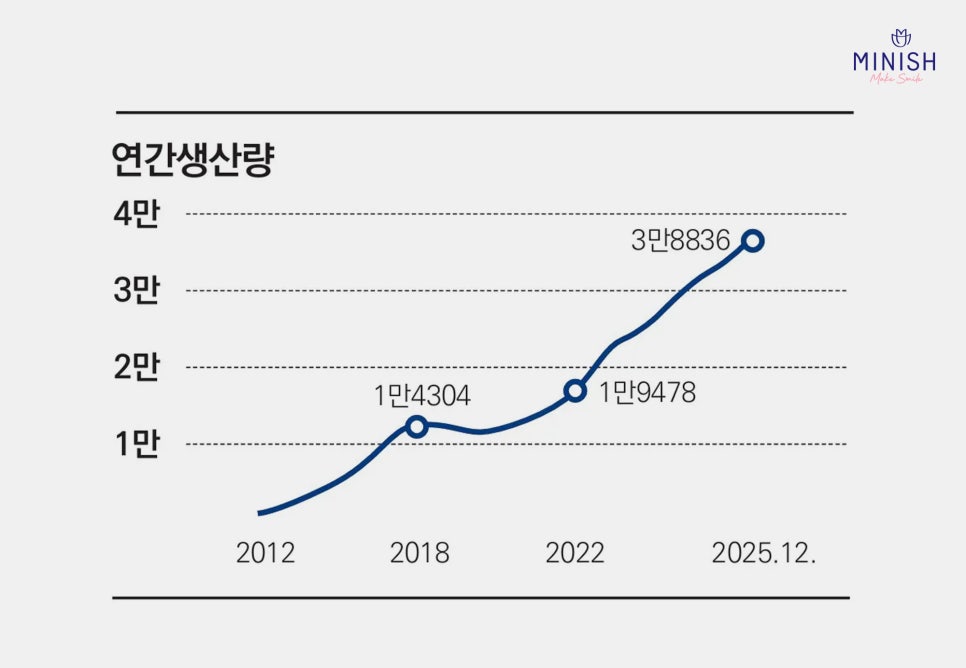
From 2019 to 2021, annual production showed a stagnant trend at around 16,000 units on average. This was a period when patient visits declined due to the COVID-19 pandemic. However, this period was used not merely as stagnation, but as an opportunity to strengthen the foundation. Staffing was actually increased in preparation for the post-COVID era, and as a result, full-scale growth began in 2022. In 2023, production increased by more than 7,000 units, making the growth trend clearly visible.
The background of this growth includes the division of labor in the production process and technical improvements. When one person handles the entire production process, understanding of the patient is high, but in an environment with short turnaround times, there were limits to productivity. Through division of labor, researchers were able to increase expertise in each part, improving efficiency while maintaining quality. Work stress also eased.
Through improvements in the prep method, the amount of tooth reduction was reduced while the fit of the prosthetic was improved, and the time required for post-processing decreased by more than 20%. As unnecessary tooth reduction was reduced, adjustment work also decreased. The establishment of a systematic training system led to increased production.
2024 production reached 30,074 units, and in 2025 the annual production trend is approaching 40,000 units. This is the result of strengthening production capacity by expanding the number of milling machines to 50. Expanded external collaboration also contributed. In the past, the proportion of in-house production at Minish Dental Hospital was high, but since 2023, orders from domestic and Japanese providers have increased, and external production now accounts for more than 20% of the total.
Minish Dental Laboratory is expanding its workspace from the existing two floors to four floors in preparation for continued growth, and is also focusing on increasing staffing. Director Jung Yu-mi said, "Even if digital equipment advances and technology becomes more sophisticated, what ultimately matters is winning the patient’s trust," adding, "While actively introducing new technologies such as AI and robots, we will continue to preserve the value created by the human touch."