I’ve often been told that my teeth decay faster than other people’s. When I was younger, I simply thought it was because I brushed carelessly, and later I comforted myself by saying it was just my natural constitution. But as time passed, I came to realize much later that it was not just a matter of habit or constitution, but the result of being left untreated for a long time. While I was working and using busyness as an excuse, I would endure pain, and if my gums swelled or bled, I would brush it off as nothing serious. As a result, one day, my teeth began to become loose one by one, and in the end I lost several teeth. Even when I first lost one, I thought, “Well, losing one molar isn’t going to cause a big problem right away,” and since it wasn’t visible, I ignored it. But that was a big mistake. Once one tooth is gone, the tooth next to it starts to tilt, and the opposite molar takes on more biting pressure, and that’s how the overall balance begins to collapse. That process was faster than I expected.
This kind of tooth loss is not simply the problem of losing one tooth. Because it has a chain effect on the surrounding teeth, chewing ability, aesthetics, and overall bite alignment, it can go beyond inconvenience while eating and affect overall health and quality of life.
As people enter their 50s, it is surprisingly common to lose teeth here and there. It does not happen because one tooth suddenly falls out. Rather, a tooth that was neglected for a long time due to decay collapses, a tooth loosened by weakened gums is extracted, and before long, gaps appear between the upper and lower teeth, on both sides of the molars, and among the front teeth.
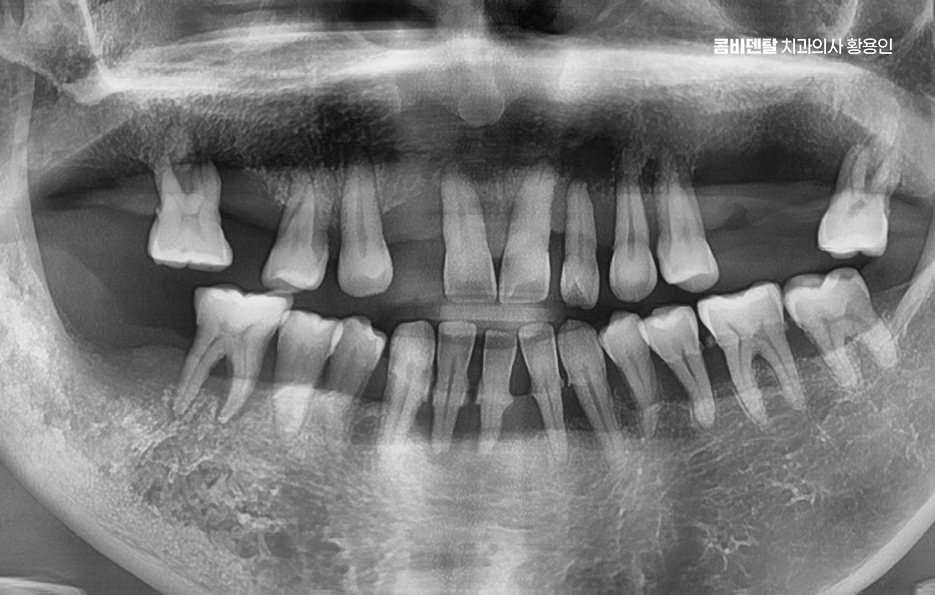
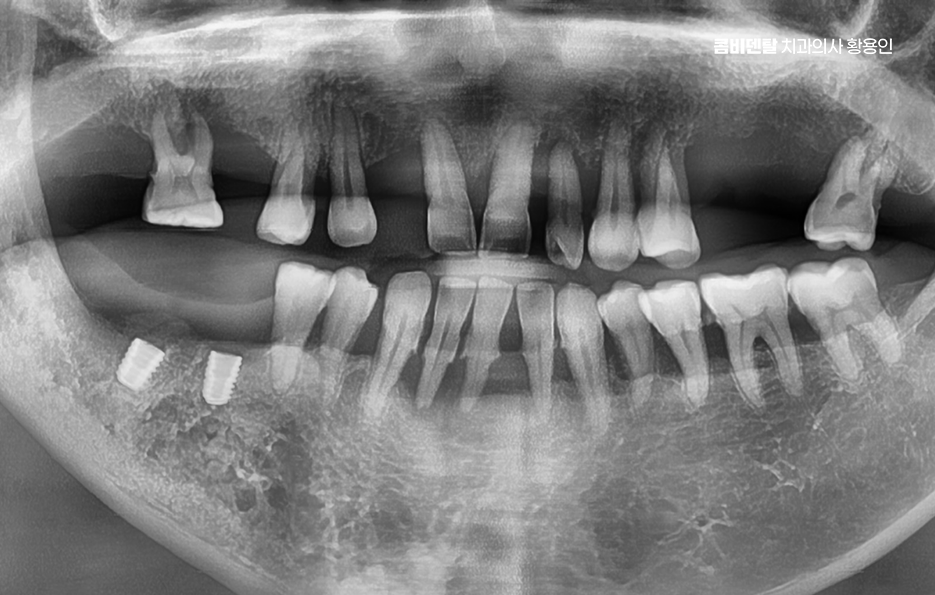
This condition is called “partial edentulism,” and when planning dental implant treatment for people in their 50s in this state, it can become a complex treatment that requires redesigning not just the entire dental arch but also function. So when several teeth have been lost in your 50s, an implant treatment plan may need to be approached not as a simple “tooth replacement,” but as the concept of full oral reconstruction.
If gaps from missing teeth are left untreated, the problem can grow out of control. The teeth on either side of the gap begin to lean in as if collapsing, the opposing tooth comes down, and the entire bite becomes destabilized. As the remaining teeth continue to bear excessive force, even otherwise healthy teeth can eventually become damaged one by one.
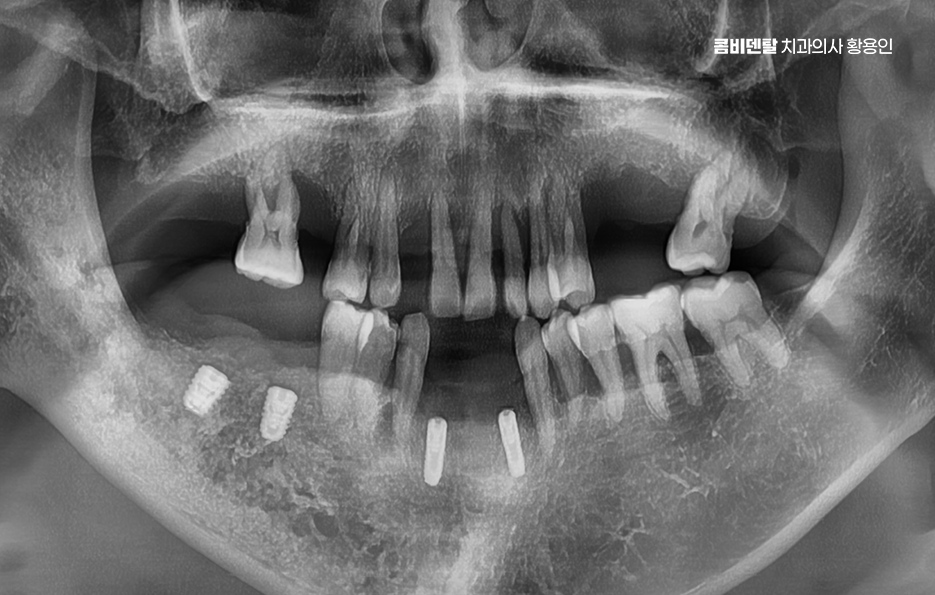
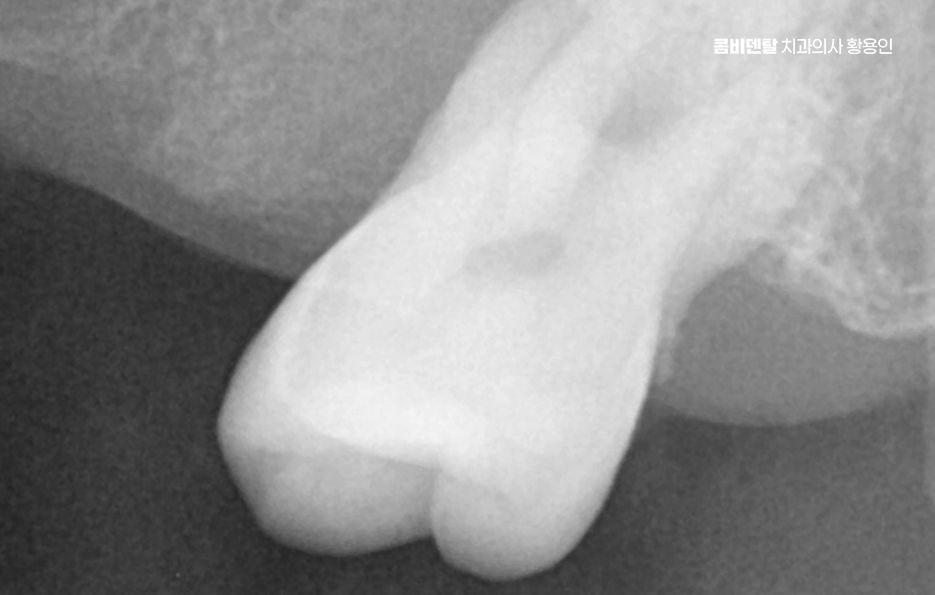
Eventually, if the remaining teeth also need to be removed and multiple teeth have been lost, 50s dental implants can become a necessary treatment to protect the teeth that are still left.
Before starting implant treatment in your 50s, a precise diagnosis must come first. It is not simply a matter of looking at the empty spaces and placing an implant in each one. The condition of the jawbone, gum height, distribution of biting force, and imbalance in the overall bite all need to be considered for the treatment to be stable and long-lasting.
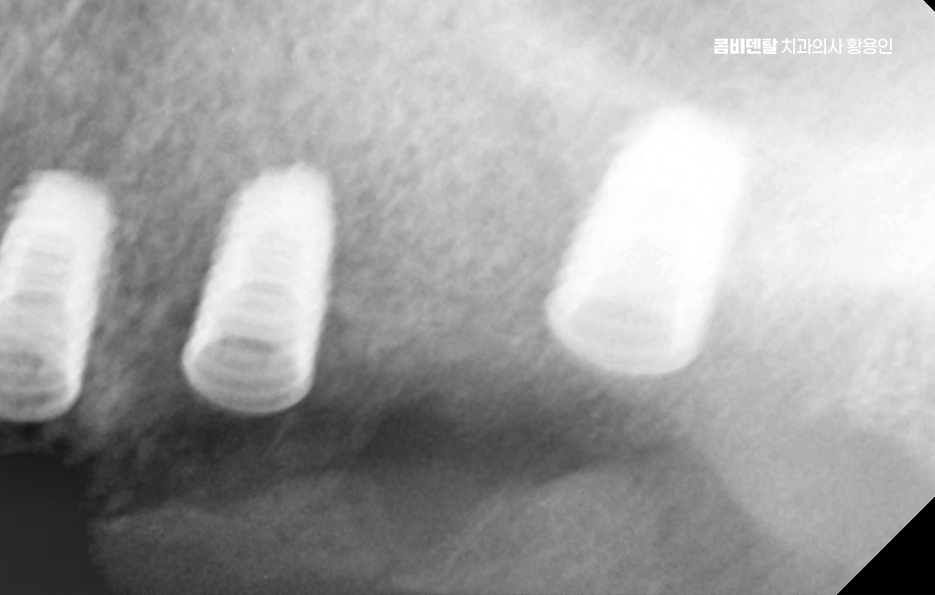
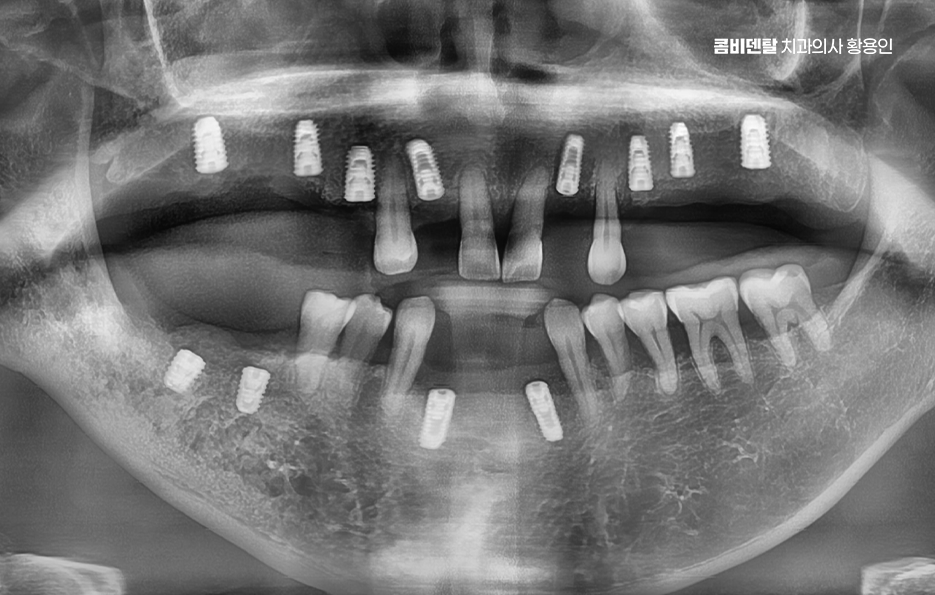
That is why a CT scan is used to precisely check the thickness and density of the jawbone and the position of the nerves, and to plan the location and angle of each implant. In your 50s, overall health must also be considered. If you have chronic conditions such as diabetes, high blood pressure, or osteoporosis, the speed of gum healing or the response of osseointegration during implant treatment may differ. Therefore, sufficient consultation with medical staff is essential, and the timing and method of treatment need to be planned on a one-to-one customized basis, taking medication use and healing ability into account.
It is possible to place implants one by one for all the missing teeth, but that is not always necessary. For example, if three molars are missing, it may be possible to place only two implants and connect the space between them with a bridge. Such treatment planning is not based only on efficiency or cost. It must be determined comprehensively by considering each person’s gum and bone condition, implant placement position, angle, and post-treatment care. That is why it should be decided after thorough consultation with an experienced dentist.
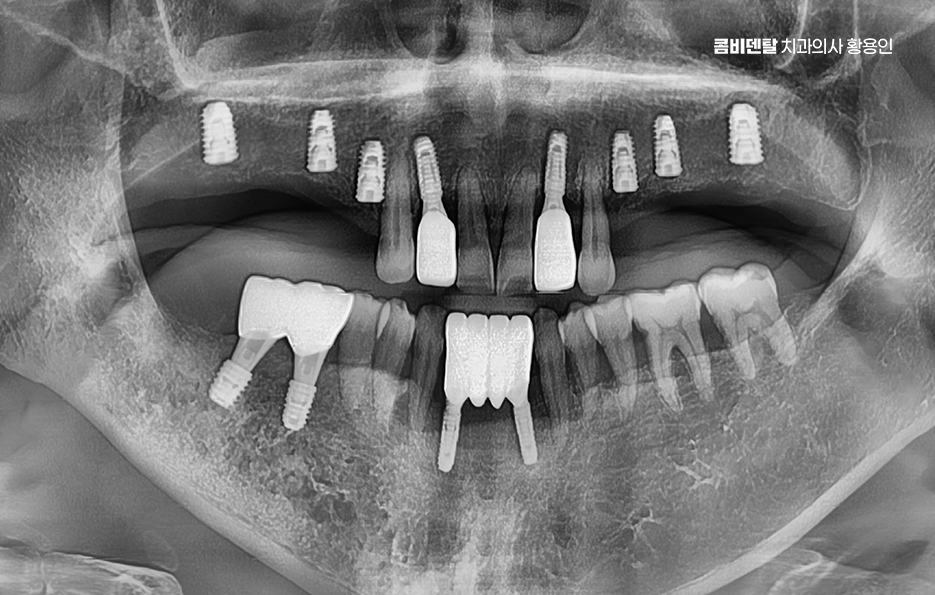
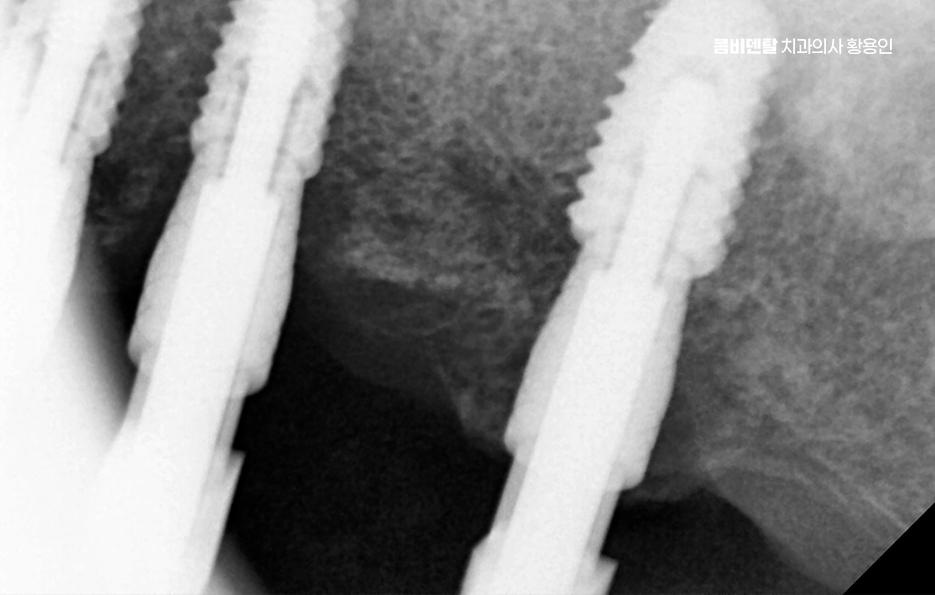
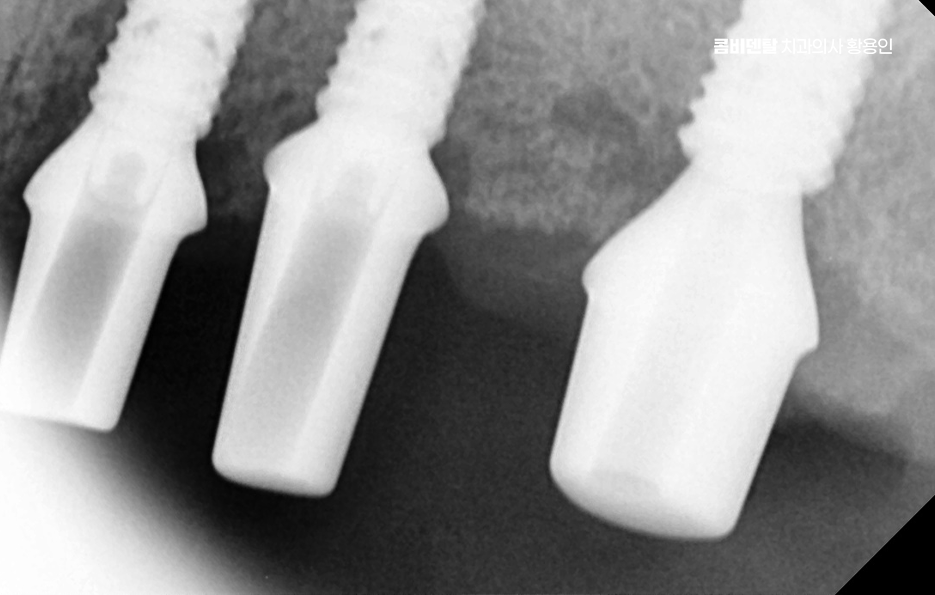
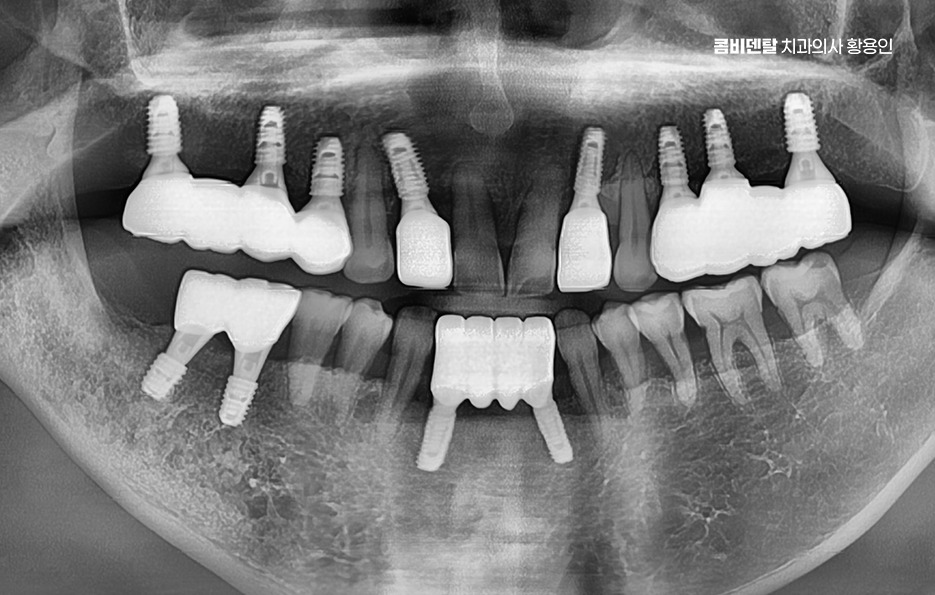
A 50s dental implant treatment is not over once the procedure is finished. From that point on, maintenance becomes extremely important and can determine the lifespan of the implants. Since implants are not a permanent treatment and their lifespan varies depending on how well they are managed, regular checkups and scaling should be done consistently. At home, you should also pay attention to the spaces between the gums by using a soft toothbrush, interdental brush, dental floss, and, if necessary, a water flosser. In the beginning, it is best to avoid foods that are too tough or hard, and to develop the habit of chewing evenly on both sides. Such care can determine how long the implants can be used, so it is also important to choose a dental clinic that you can continue with for the long term.
In conclusion, losing teeth here and there in your 50s may no longer be just a “partial problem.” It can mean that the entire oral structure needs to be redesigned. A proper implant treatment plan is not simply about placing teeth, but requires a comprehensive perspective that restores overall function, health, and appearance. With that in mind, I hope you will carefully plan your 50s dental implant treatment.








 Previous image
Next image
Previous image
Next image




 Previous image
Next image
Previous image
Next image
 Previous image
Next image
Previous image
Next image

 Previous image
Next image
Previous image
Next image