When I first got a crown on my front tooth, to be honest, I never thought that treatment would end up lingering in the back of my mind like a burden for such a long time. It was just a problem with one front tooth, and at the time, while getting the crown treatment, I thought, “This is good enough.” When I looked in the mirror, the color matched well and it looked like there were no functional problems, so I felt relieved and then went on without paying much attention to it. Even after time passed, I had no real pain or discomfort for a long time, so I hardly ever thought that something might go wrong with the front tooth crown. But the real problem came one day, suddenly, while I was going about my life as usual. At some point, I started to feel a strange pulling sensation around the front tooth, and discomfort began to appear, like the tooth was sensitive or water was subtly seeping into it. At first, I did not think it was a major sign and just let it pass. But as time went on, it became oddly noticeable when chewing food, the sensitivity became more frequent, and I started to feel something unfamiliar inside my mouth. That was when I gradually realized this was not just a simple sensation problem.
In this way, prosthetic restorations that were treated in the past can develop problems after a long time, but if you forget about them because they have not hurt for a long while and there seemed to be no major issues, the problem can become bigger later.
In other words, if you have an old prosthetic restoration on a front tooth, there will come a time when it absolutely needs to be checked, even if it looks fine on the outside.
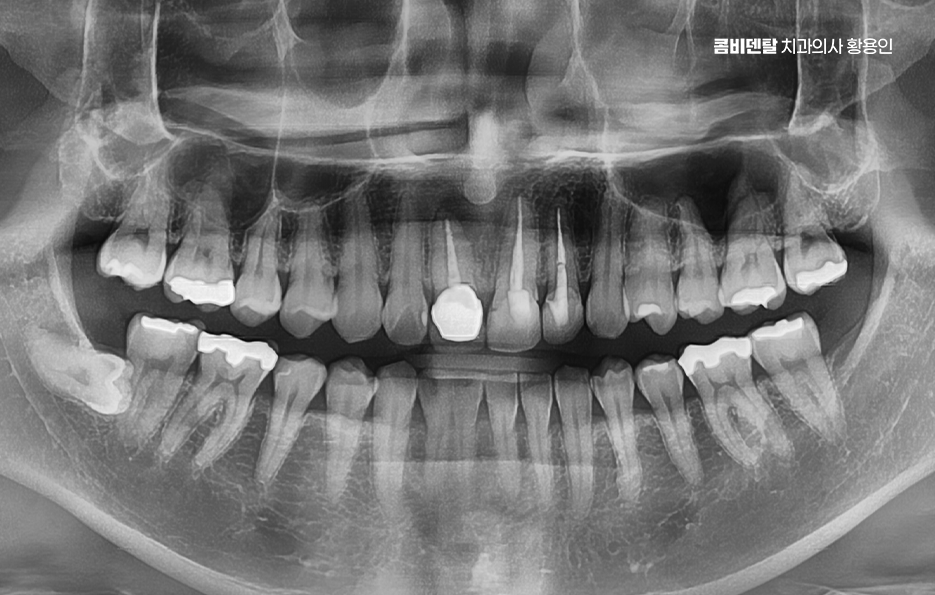
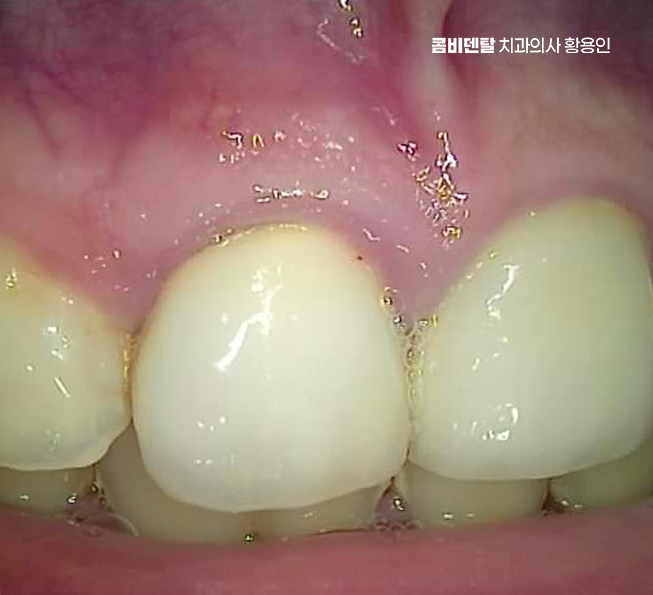
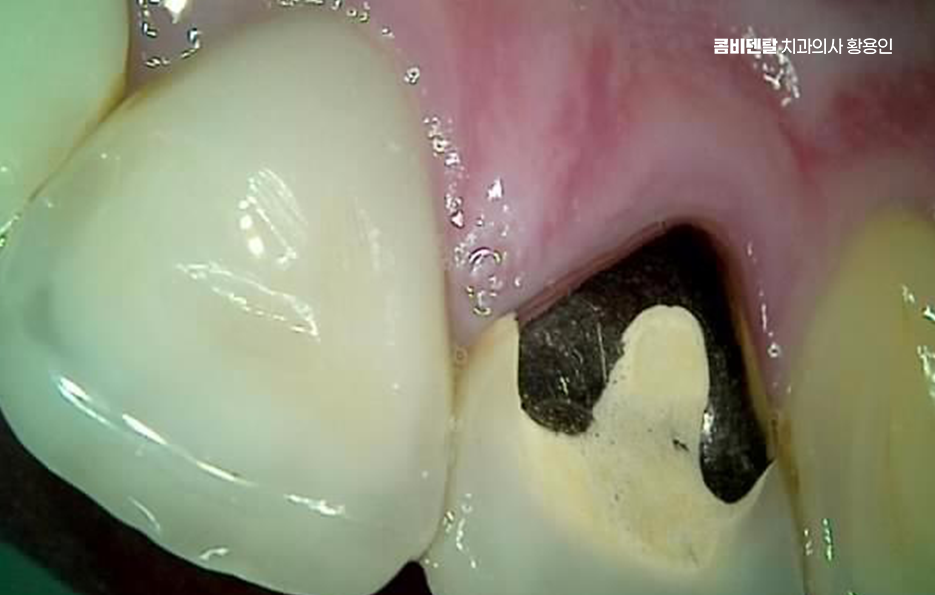
The color may still be fairly white, and it may still seem to function without any problems, but the fact that a restoration is old also means there is a high possibility that problems are hidden inside or around it. In particular, areas like the front teeth, where both aesthetics and function matter, can make even small changes feel significant. If a problem is left untreated for too long, it can eventually lead to retreatment of the root canal or even extraction.
Front teeth are in a place that is seen first when you smile or speak, so in the past, treatment was often done with aesthetics as the top priority, or only within the limits of what was technically possible at the time. As time passed, the gums could recede, exposing the edge of the restoration or revealing a gray line, and problems such as secondary decay could appear.
In such cases, it may begin with mild symptoms like swollen gums or bleeding, but beneath that, the tooth inside the restoration may already be decaying, or decay may have progressed under the restoration. In particular, older restorations often have adhesive that has already worn down or a reduced fit, making it easy for bacteria to invade. Because this kind of secondary decay is not visible to the eye, people often do not notice it until the problem has become quite serious.
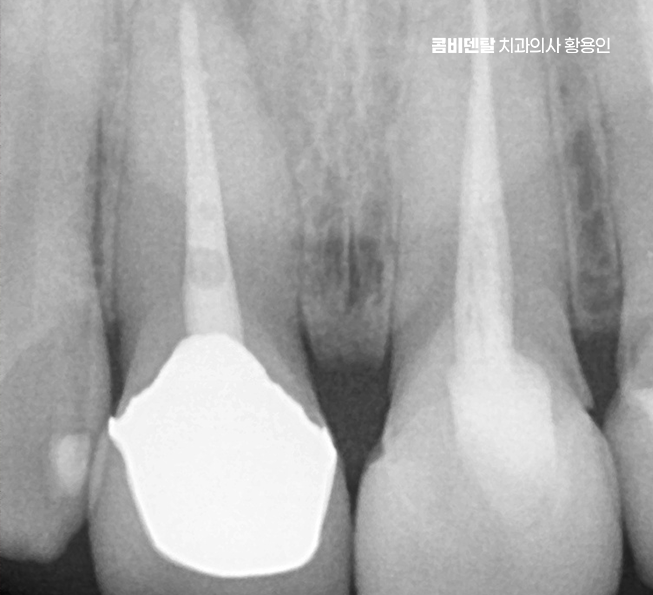
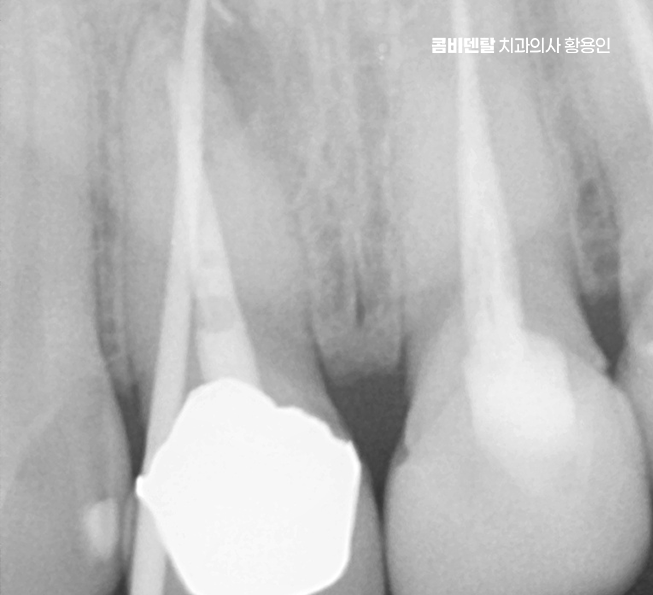
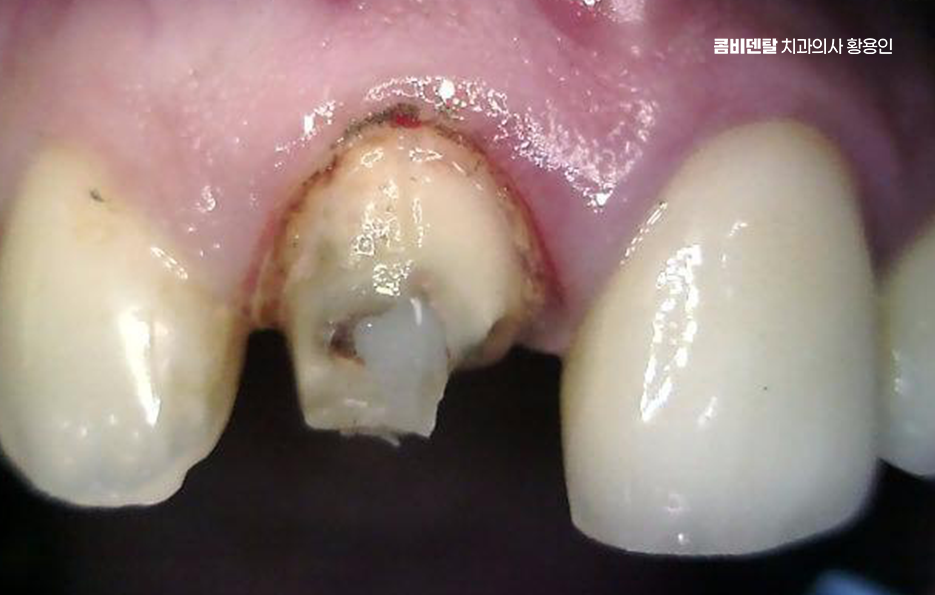
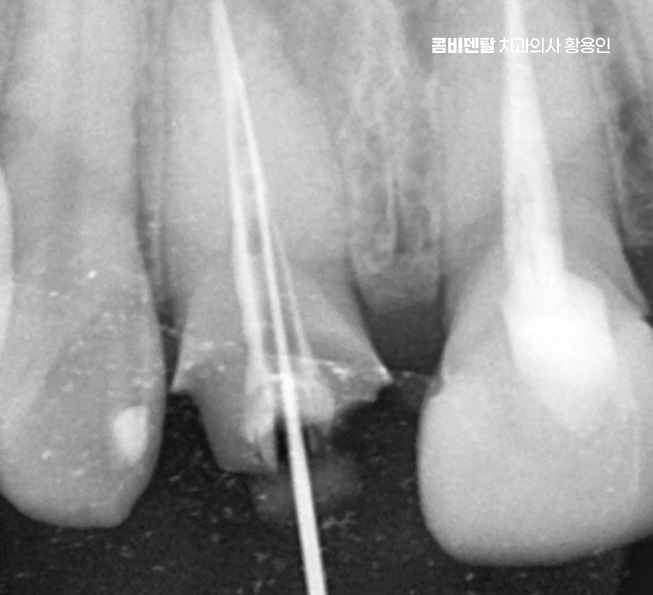
When the problem becomes severe, bacteria eventually reach the nerve, causing pain and sensitivity to cold water, a tingling or throbbing ache, and in some cases a small pimple-like bump on the gums. If there is a heavy, dull tenderness when you simply press with a finger, there is a high chance that root canal treatment is already needed. In such cases, the existing restoration may need to be removed, the internal decay checked, and root canal treatment started first.
Root canal treatment removes the inflamed or infected nerve inside the tooth and disinfects and seals the root canal. Front teeth usually have only one root, so the procedure is relatively simpler than for molars, but because teeth that have already been restored are structurally weaker, careful treatment is needed. There is also a possibility that part of the root is weakened or has a crack, so in such cases precise root canal treatment is necessary. If the infection is severe, treatment may be carried out over two to three visits and completed once the condition stabilizes.
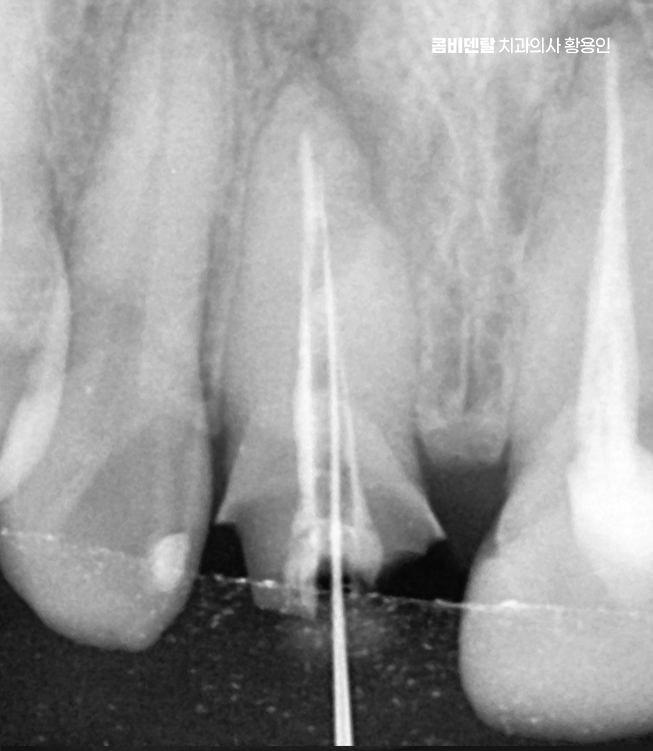
After root canal treatment is finished, the next step is crown treatment. Since front teeth are different from molars in that appearance matters, material selection is important when choosing a crown. All-ceramic crowns are commonly used, and zirconia crowns are also widely used when durability is more important. In front tooth treatment, translucency and color, like a natural tooth, are important, and light reflection must also be considered. That is why choosing the right crown type for a front tooth after root canal treatment can be important.
For a front tooth crown after root canal treatment, aesthetics and function must both be satisfied, so the treatment plan must also be carefully made. Shade selection is important, and the shape, length, and angle must all harmonize with adjacent teeth, so it may be necessary to discuss the plan carefully with an experienced dentist.
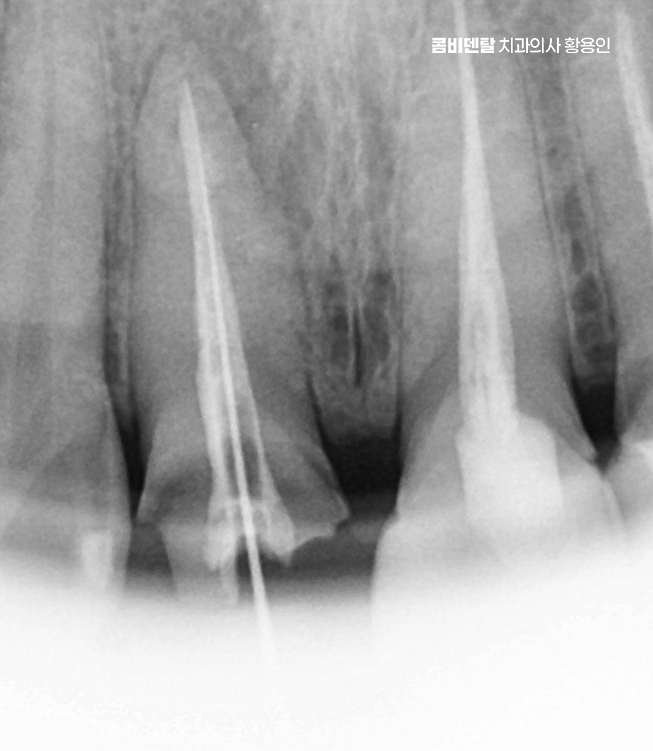
In the end, front tooth treatment also requires careful consideration of post-treatment care. Because a tooth that has undergone root canal treatment has reduced sensation, there are many cases where no pain is felt even if a problem develops. For that reason, it is necessary to take X-rays regularly and check the root condition, and please do not forget that scaling for gum care should also be received regularly.
In conclusion, an old front tooth restoration is not simply a matter of “how it looks on the outside.” If the problem happening inside it is not detected early, you could even lose the tooth itself. So if your front tooth restoration is old, you should get it checked even if there is no pain, and if a problem has developed, I hope you remember that quickly making a plan for repair is an important way to preserve the natural tooth.










 Previous image
Next image
Previous image
Next image









 Previous image
Next image
Previous image
Next image









 Previous image
Next image
Previous image
Next image









 Previous image
Next image
Previous image
Next image