The first time I got a front tooth crown was already several years ago. I don’t remember the exact year, but I can still clearly recall the scene of the dental impression being taken. Back then, the tooth hadn’t broken; there was a cavity that had spread somewhat deeply, so I was told that crown treatment would be a good option both functionally and aesthetically. When it was finished, I remember feeling relieved, thinking that my front teeth looked straighter and more even. Of course, I thought that was the end of it. I believed that once a crown was placed, it would usually last a lifetime, and since I didn’t use it in any extreme way, didn’t neglect brushing, and did receive checkups occasionally, I never expected there would be a problem with that tooth again. But one day, I started to feel a strange foreign-body sensation in my front tooth. At first it felt like the inside of the crown was slightly lifting, and then I began to notice a subtle clicking sensation when brushing or chewing something hard. After looking into it more closely, I was told that the adhesive had weakened and a gap had formed, and that if time passed, inflammation could spread to the inner nerve. It was described as secondary decay. To treat it, the existing crown would need to be removed, and depending on the case, root canal treatment might also be necessary. The moment I heard that, I felt so discouraged. That was because I had thought of a front tooth crown as nothing more than a finishing touch, and believed that if it was cared for properly, there would be no problems. But I learned that a crown is not a permanent structure, and especially when the bonding weakens or decay develops inside, retreatment may be necessary even if everything looks fine from the outside.
In this way, after crown treatment, if the treatment has finished well and there is no particular discomfort, many people tend to stop paying attention to it. But dental prosthetics, including crowns, have a lifespan, and the replacement timing varies slightly from person to person. In the case of front tooth crown replacement in particular, the prosthetics commonly used for front teeth are ceramic-based and can be prone to chipping. If someone grinds their teeth, they may break sooner, and there is also the risk of secondary decay.
In general, the average lifespan of a front tooth crown or bridge is around 7 to 10 years, and with good care some people use them for more than 15 years. But this is literally just an average value, and it can vary greatly depending on the patient’s oral hygiene habits, chewing habits, the material, and the precision at the time of treatment. If proper care is not maintained, there are cases where retreatment for front tooth crown replacement becomes necessary within just a few years.
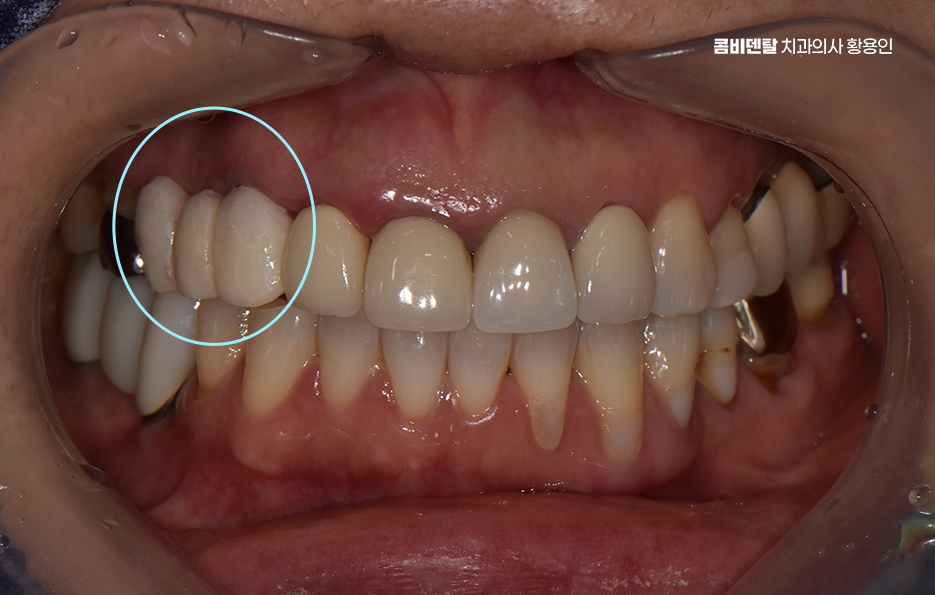
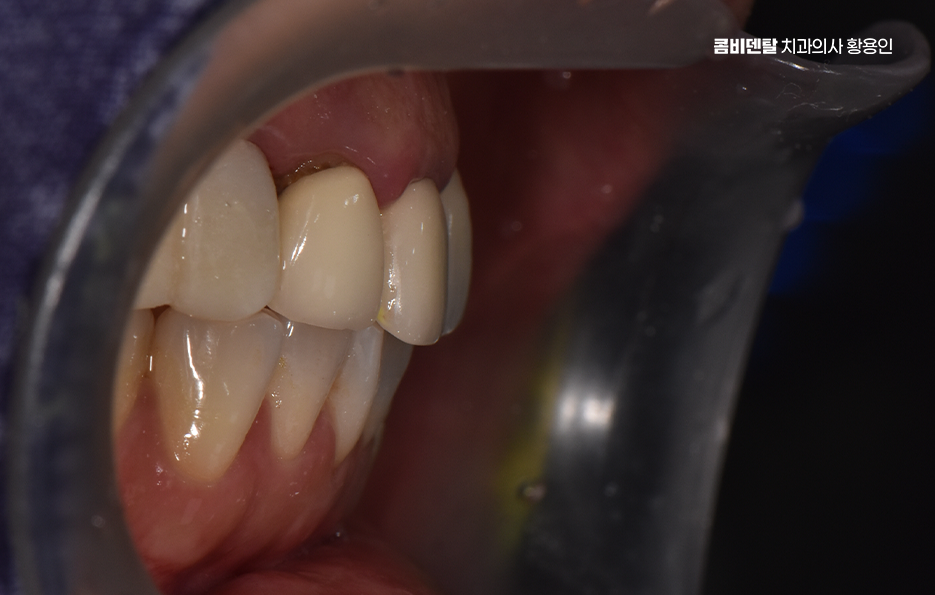
One of the representative cases requiring front tooth crown replacement is when decay develops around or inside the prosthetic. Crowns or bridges may look fine from the outside, but if decay develops at the bonding margin or in the tooth underneath, replacement becomes unavoidable. If decay progresses beneath the prosthetic, it is difficult to detect without a detailed examination, and many cases are discovered only after sudden sensitivity or the feeling that food keeps getting stuck, even though there is no pain at first. In particular, bridges have a structure in which there is no tooth in the middle and they are connected to the teeth on both sides, so they receive force like a lever, placing a lot of strain on the adjacent teeth. As a result, decay or cracks can develop more easily.
Another case is when the prosthetic becomes detached or breaks. The front teeth are not the area that receives the greatest force, but crowns can crack or come off due to hard foods, teeth grinding habits, or frequent biting of objects with the teeth.
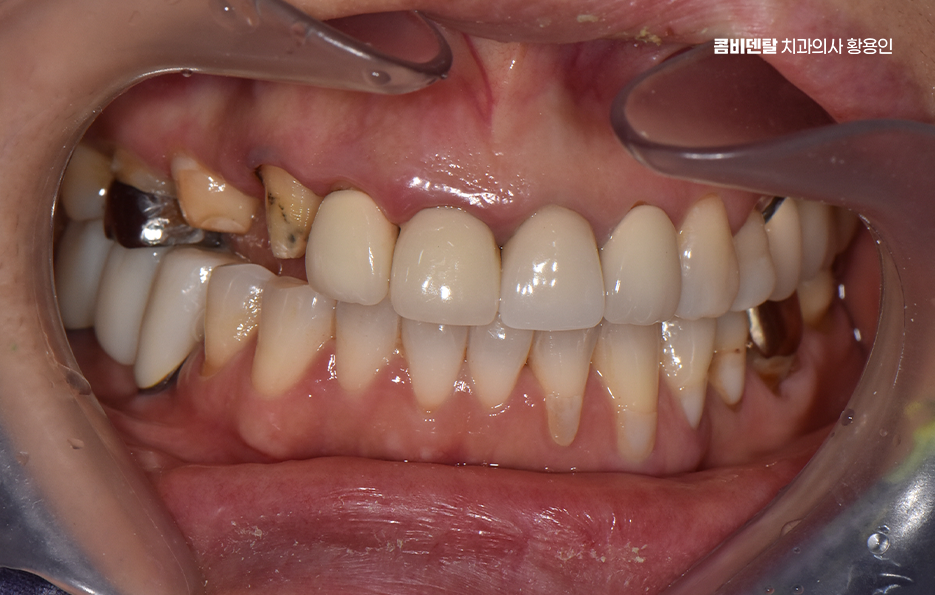
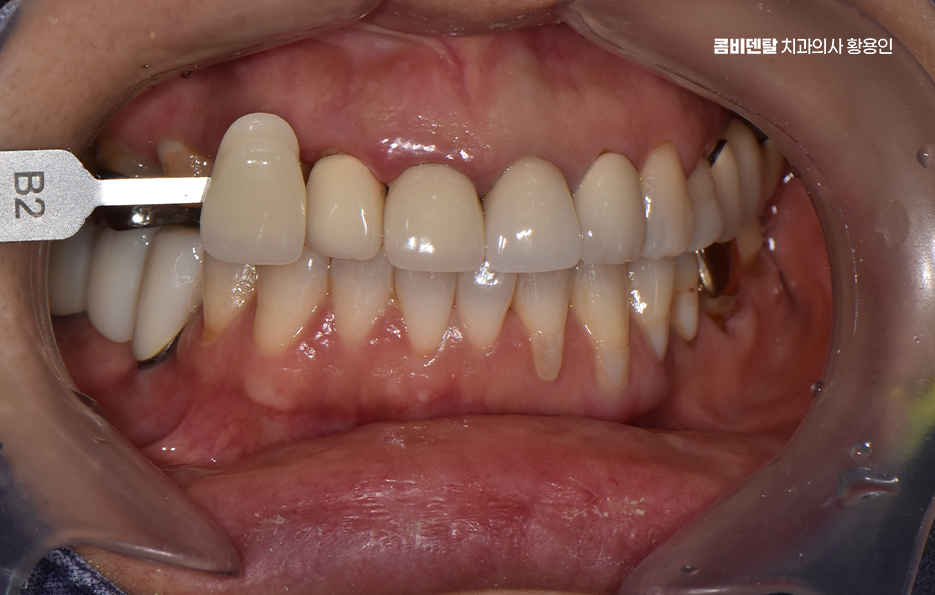
In particular, older prosthetics can lose their bonding strength and fall out on their own. In such cases, it is necessary to diagnose whether re-bonding is possible, and if not, front tooth crown replacement with a new prosthetic is needed.
Another important case is when the gums recede or the tooth structure changes. As people get older, the gums naturally lower a little. The problem is that this can create a black gap between the prosthetic and the gums, or space that causes food to get trapped. In such cases, even if the prosthetic itself looks fine, it continues to bother and inconvenience the patient, and depending on the resulting aesthetic or functional issues, front tooth crown replacement may be necessary.
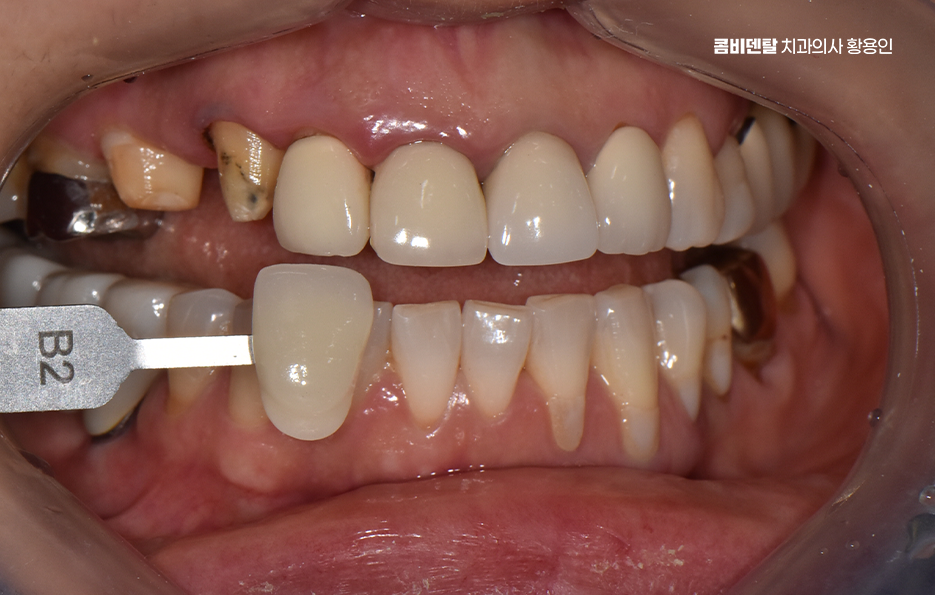
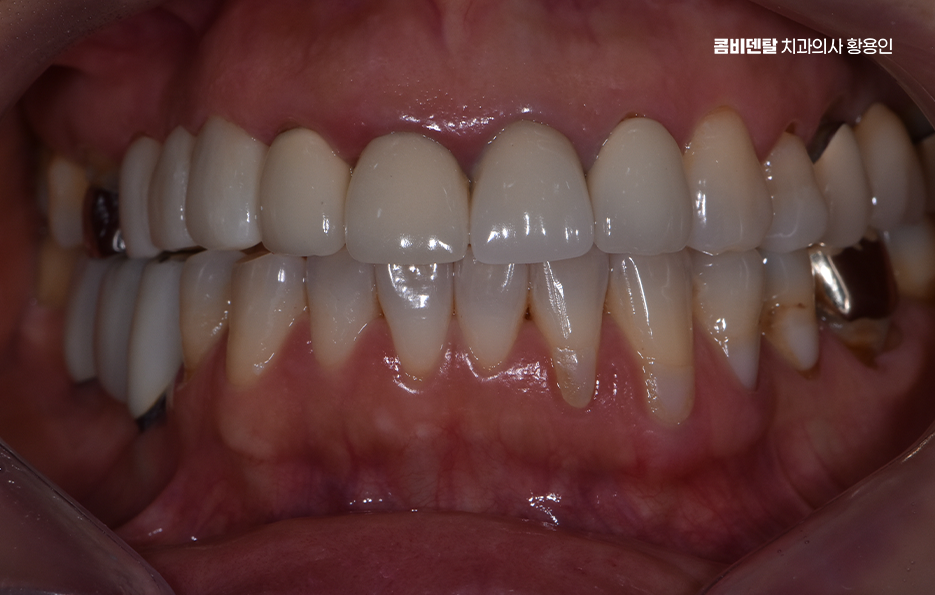
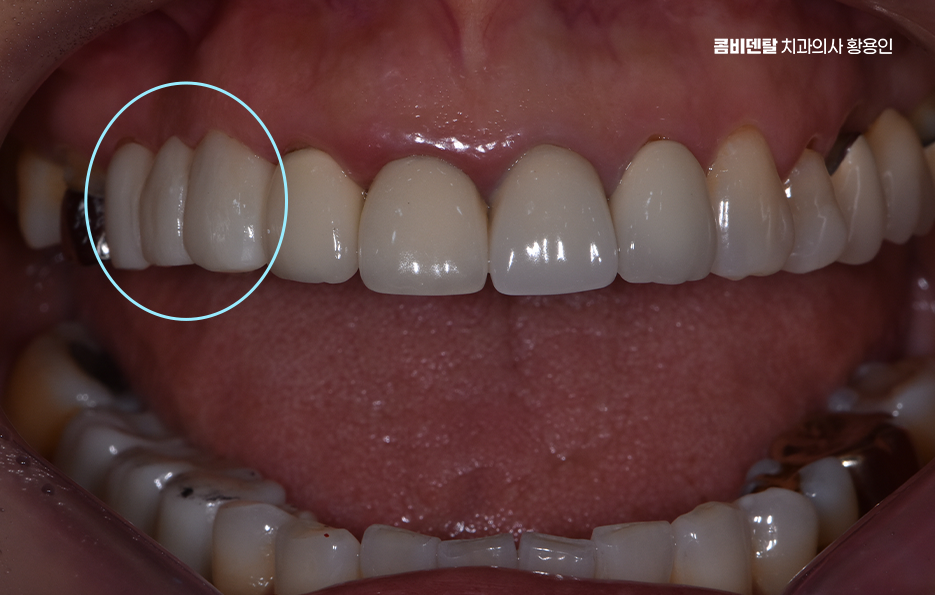
Then you may wonder how front tooth crown replacement is carried out. To replace it, the existing prosthetic must first be removed, and in that process, how much healthy natural tooth remains is important. If decay or cracks are too severe, root canal treatment may be necessary, and if the tooth is broken, a post may need to be built up again and reinforced before placing a crown.
In the case of bridges in particular, both adjacent teeth need to be worked on again, so it is not a simple procedure. Recently, digital methods have been widely used in the replacement process as well. By using more precise 3D scans than before to accurately analyze tooth shape and the gum line, and by selecting ceramic materials with colors and translucency similar to the patient’s, it is possible to complete a more natural-looking and longer-lasting prosthetic. Since light transmission and color are especially important for front teeth, a meticulous treatment process can be important.
Ultimately, there is no fixed rule for when a front tooth crown or bridge must be replaced. The right judgment is based on whether the current condition is affecting oral health, causing aesthetic discomfort, or creating functional problems. But even if there is no discomfort in daily life, I hope you will remember and practice regular dental checkups so that any issues with the prosthetic can be managed before they become serious. This is the shortcut to preventing the situation from progressing to root canal treatment or even extraction if the crown replacement timing is missed, and to protecting your natural teeth.










 Previous image
Next image
Previous image
Next image









 Previous image
Next image
Previous image
Next image



 Previous image
Next image
Previous image
Next image






 Previous image
Next image
Previous image
Next image