
It had been a long time since the partially impacted wisdom tooth first started causing problems. At first, it was only a heavy, uncomfortable feeling deep in the gums. When I brushed the back area, my gums felt a little sore, so I thought it was no big deal and let it go. I had heard that wisdom teeth can be painful while they are coming in, so I figured that was probably what was happening to me. I told myself it would be fine in a few days and went back to daily life as if nothing was wrong.
But the discomfort gradually became more noticeable, and the frequency of swollen gums began to increase. One day, even opening my mouth felt uncomfortably tight, and my worries naturally grew. I had once heard that because it was not fully impacted but only partially erupted, it was in a state where problems could arise more easily. Those words suddenly started echoing in a corner of my mind like a real warning.
The first thing that made me feel something was seriously wrong was the distinctive fishy taste from the gum around the wisdom tooth. Even after brushing, an unexplained odor would soon rise from the inside of my mouth, and when I touched the wisdom tooth area with the tip of my tongue, it felt as if food had not been completely removed and had remained under the gum.
Because it was partially impacted, there was a space that toothbrushes could not reach since the gum did not fully open. I knew that food could get trapped in that small gap and cause repeated inflammation, but actually feeling that condition in my own mouth brought a different level of anxiety. It was not just discomfort; I kept feeling as though the inflammation could get worse at any time.
In this way, people often think of wisdom tooth extraction as something to consider only someday, but when ongoing discomfort develops into pain and inflammation, the need to make an extraction plan can become an unavoidable reality.
In particular, partially impacted wisdom teeth may look like a simple case where only part of the tooth has erupted, but in reality, they often create complex problems that affect the surrounding gums, alveolar bone, and even the adjacent teeth.
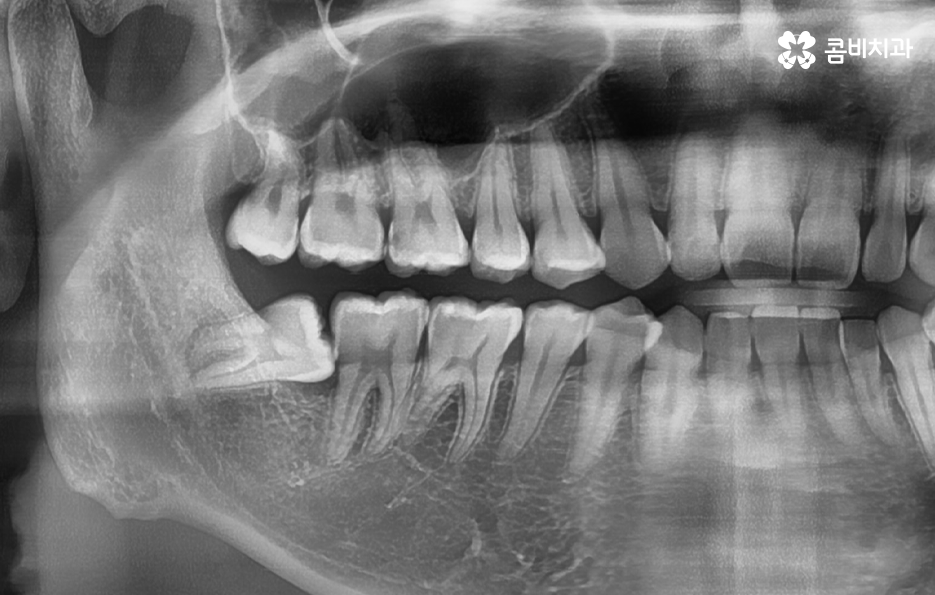
In the case of partially impacted wisdom teeth, only part of the tooth is visible, which makes care difficult and allows bacteria to accumulate easily, leading to repeated inflammation. Over time, this inflammation often damages nearby teeth and can cause bad breath, pain, swollen gums, and even cavities. Because of that, it is easy to think, “If it doesn’t hurt, there’s no need to remove it,” but in reality, the longer it is left alone, the more serious the problems become, so early extraction is often the more appropriate choice.
The biggest issue with a partially impacted wisdom tooth is its structure, which makes it easy for bacteria to collect. Since only half of the tooth has emerged outside the gum, a small pocket-like space forms between the gum and the tooth. This space can easily collect food debris, bacteria, and saliva.
Because a toothbrush cannot reach it, this area remains difficult to keep clean. As a result, gum inflammation occurs repeatedly, and pain comes and goes. Patients may sometimes assume, “It only hurts occasionally, so it must be fine,” but in reality, this repeated inflammation can gradually dissolve the bone and damage the tooth itself.
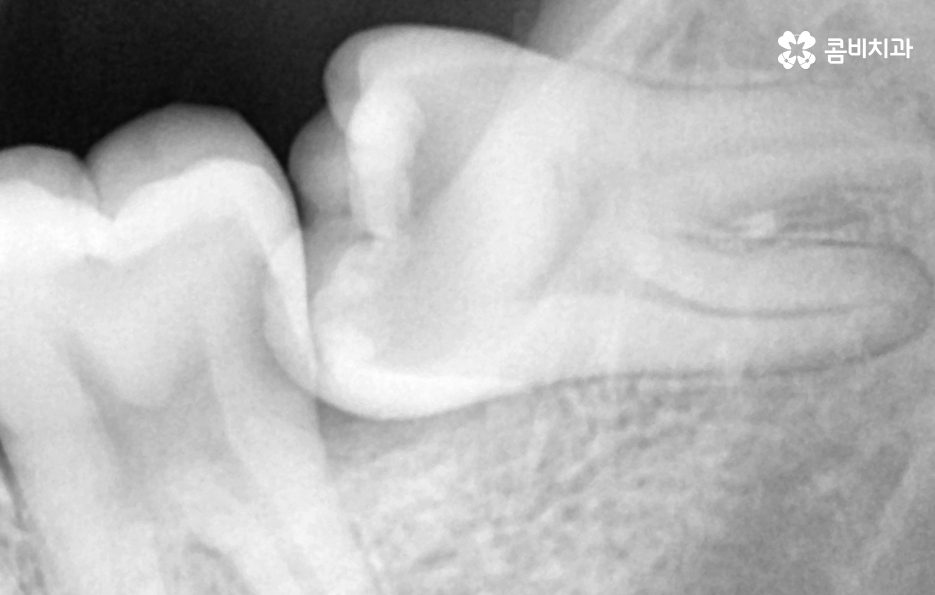
The second problem with partially impacted wisdom tooth extraction is damage to the adjacent molar and bone. Partially impacted wisdom teeth often grow in a tilted or sideways position. In such cases, the wisdom tooth can push against the root of the molar directly in front of it, the second molar, or food can continuously get trapped between the teeth.
Because food trapped in this space is difficult to remove no matter how thoroughly you brush, the front molar becomes more vulnerable to cavities. In many cases, the cavity caused by the wisdom tooth progresses to the point of requiring major root canal treatment. In more severe cases, the bone around the root of the front molar can also be lost, and even the front tooth may become loose. This means the adjacent tooth often suffers more damage than the wisdom tooth itself, which is one of the major problems of partially impacted wisdom teeth.
In addition, the gum above the wisdom tooth may remain swollen, and in some cases people may bite the gum while chewing. When this happens repeatedly, the inflammation can become chronic, the lymph nodes under the jaw may swell, the neck can feel stiff, or it may become difficult to open the mouth wide. In particular, when stressed or tired, the wisdom tooth area may suddenly throb with pain or the gum may swell significantly.
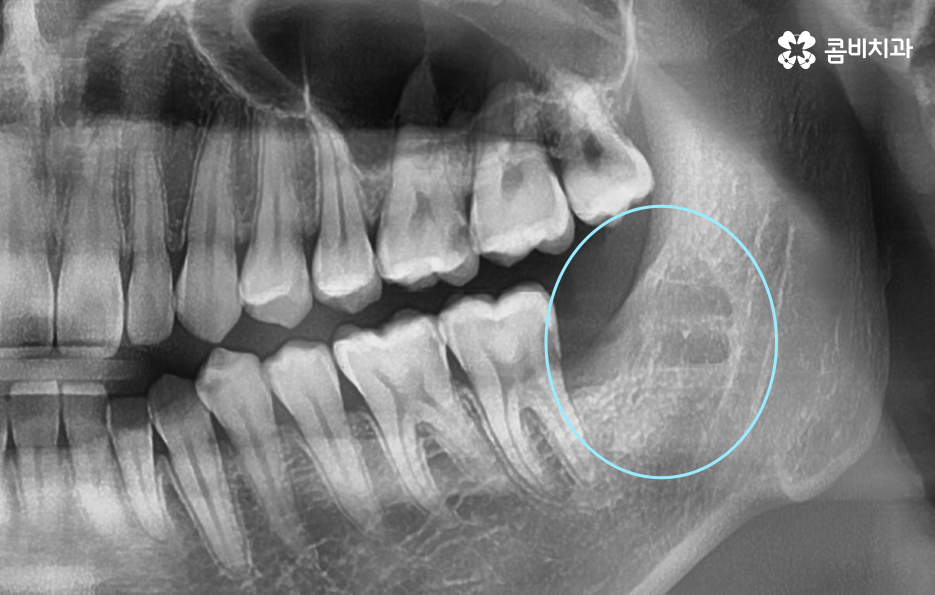
Also, because partially impacted wisdom teeth are difficult to keep clean and provide an environment where bacteria continue to multiply, they can easily become a cause of chronic bad breath. No matter how much you brush, it is hard to remove the odor from a deep inflamed pocket, so this bad breath can create psychological discomfort beyond a simple oral issue and lower confidence when speaking with others.
If we look further into how partially impacted wisdom teeth are extracted, wisdom tooth extraction is not simply pulling out a tooth. It requires careful consideration of several steps, including gum incision, tooth sectioning, and nerve protection, so the first step is an accurate diagnosis.
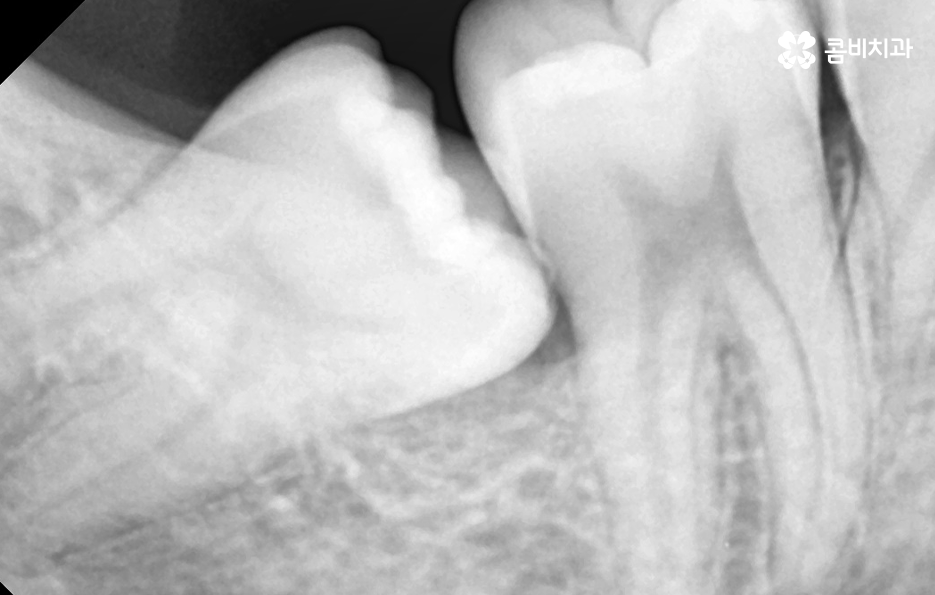
With a partially impacted wisdom tooth, the visible portion alone does not reveal the true root shape or how deep the roots go. An X-ray alone may not be enough to determine how close it is to the front molar, the distance from the nerve, or the shape of the bone. For that reason, a CT scan is often recommended. Because CT allows 3D analysis, it can reduce the risk of complications during wisdom tooth extraction and is very helpful in accurately planning the incision direction and other details.
In addition, if the gums are severely swollen, immediate partial impacted wisdom tooth extraction may be difficult. When inflammation is severe, anesthesia may not work well, and recovery after extraction may also be delayed. In such cases, it is safer to first reduce pain and swelling by prescribing antibiotics, disinfecting the gums, and treating the inflammation or infection before proceeding with extraction. In the case of partial impacted wisdom tooth extraction, because part of the gum covers the wisdom tooth, the gum must be incised to fully expose the tooth. The incision should be kept to a minimum, and a precise procedure that takes the gum line and bone structure into account is important so that recovery can happen quickly. For that reason, treatment with an experienced dentist can help make the process smoother.
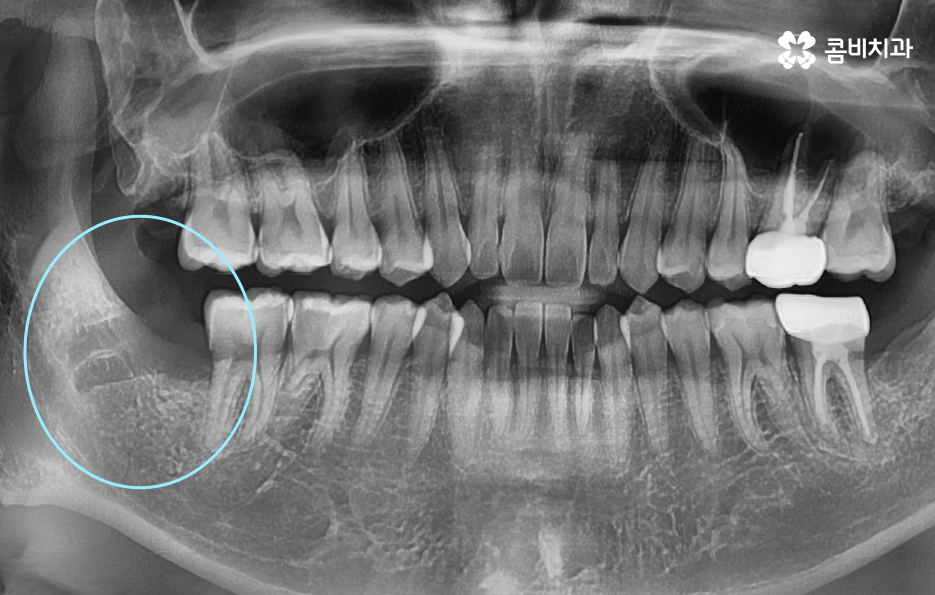
Care after partial impacted wisdom tooth extraction is also very important. Because the area often has a history of inflammation, it must be kept especially clean after extraction. During recovery, alcohol and smoking should be avoided, and using a straw should also be avoided. Doing so can help reduce complications such as bleeding and dry socket.
In conclusion, a partially impacted wisdom tooth is a more complex problem than it appears. It repeatedly causes inflammation, damages the adjacent molar, and creates everyday discomfort such as bad breath, pain, and swollen gums. Because it should be approached comprehensively—from the treatment plan to the procedure and recovery—it is better not to wait until it hurts before visiting the dentist. Instead, I hope you will prepare in advance through regular checkups and a systematic treatment plan.


 Previous image
Next image
Previous image
Next image




 Previous image
Next image
Previous image
Next image


 Previous image
Next image
Previous image
Next image


 Previous image
Next image
Previous image
Next image