
I had known since childhood that my lower teeth were not straight, but because only my upper teeth showed when I smiled, I did not pay much attention to it.
However, at some point, I began choosing only closed-mouth expressions whenever I took photos. When I saw myself laughing openly during a conversation in a video, my crooked, overlapping lower teeth stood out so much that I felt embarrassed on my own.
In particular, because the lower front teeth were positioned far inward and twisted, my toothbrush could not reach them properly. No matter how carefully I brushed, food often became trapped between my teeth, and there were frequent days when my gums became swollen. I gradually became more concerned about the difficulty of maintaining them than about their appearance.
Whenever I visited the dentist for scaling, I was told that the lower teeth overlapped significantly and could therefore accumulate tartar easily. At the time, however, I had no intention of undergoing orthodontic treatment, so I simply nodded and moved on.
After returning home, I would try diligently to use dental floss and interdental brushes, but after a few days I would become bothered by the routine and repeatedly return to my old habits.
Several people around me had started orthodontic treatment after becoming adults, and I often heard that it was more difficult than expected.
I heard that the inside of the mouth could become sore after the appliances were attached, that there could be days when it was difficult to eat properly, and that pain could last a long time if extractions were also performed. My concern about starting unnecessarily and regretting it became greater than my desire to straighten my teeth.
Starting orthodontic treatment while working was also burdensome. Because my job involved meeting people frequently, I thought I would feel self-conscious about the appliances showing when I spoke. I was also concerned that there might be foods I could not eat comfortably during company dinners or lunch appointments.
Still, the event that made me seriously consider orthodontic treatment was when the gum on the inner side of my lower teeth became severely swollen and started bleeding one day. It bled every time I brushed for several days, so I visited the dentist. After hearing that a significant amount of tartar had accumulated where the teeth overlapped, I began to think that if I continued postponing treatment, my gum condition could worsen later.
When I returned home that day and examined my lower teeth closely with a mirror, they appeared more misaligned than before. They also felt uncomfortable when I touched them with my tongue because the edges of the teeth were uneven. I realized that teeth do not suddenly deteriorate all at once but change gradually, and that my condition might have slowly worsened during the time I had carelessly ignored it.
As in this case, misalignment of the lower teeth—particularly the front teeth—is often an aesthetic concern. However, it is not merely an aesthetic issue. There have also been many cases in which the alignment becomes more irregular with age, tartar becomes more difficult to manage, and gum disease develops.
When the lower teeth are relatively severely misaligned, many people worry about extraction-based orthodontic treatment. However, crooked lower teeth do not necessarily mean that teeth must be removed. In actual examinations, the amount of tooth overlap is not the only factor considered. The width and shape of the lower jaw, the inclination of the front teeth, the thickness of the supporting bone, and the way the upper and lower teeth come together are examined together to determine whether non-extraction orthodontic treatment for the lower teeth is possible.
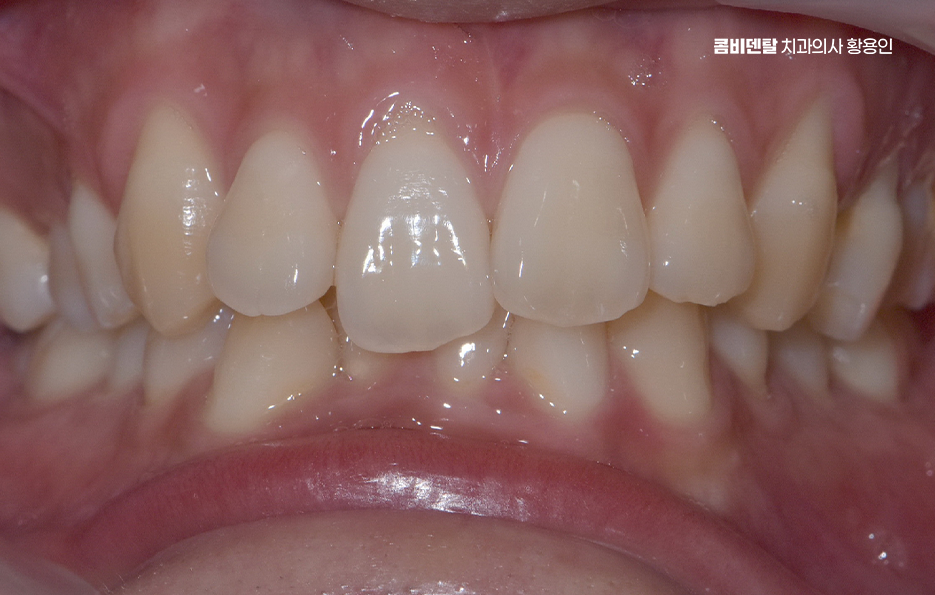
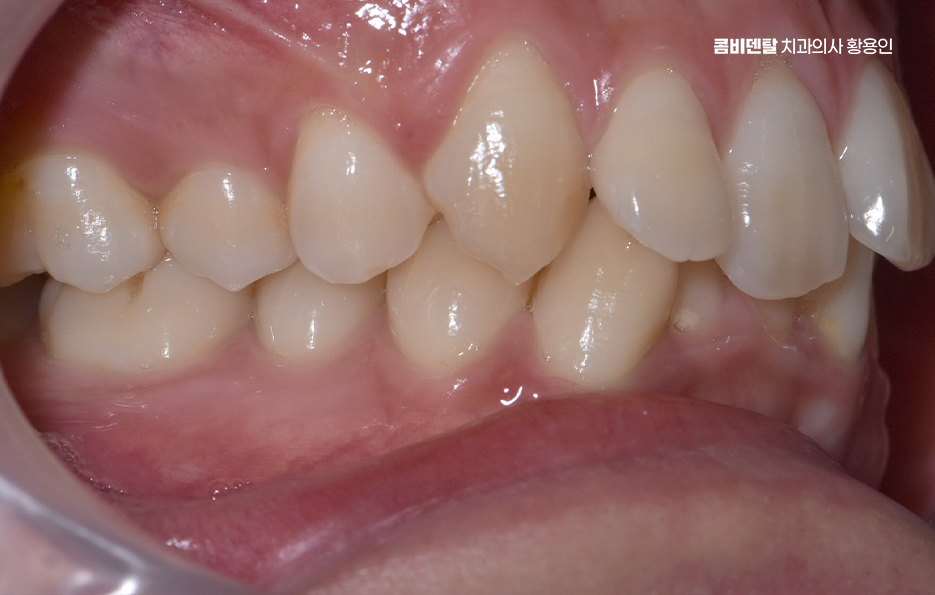
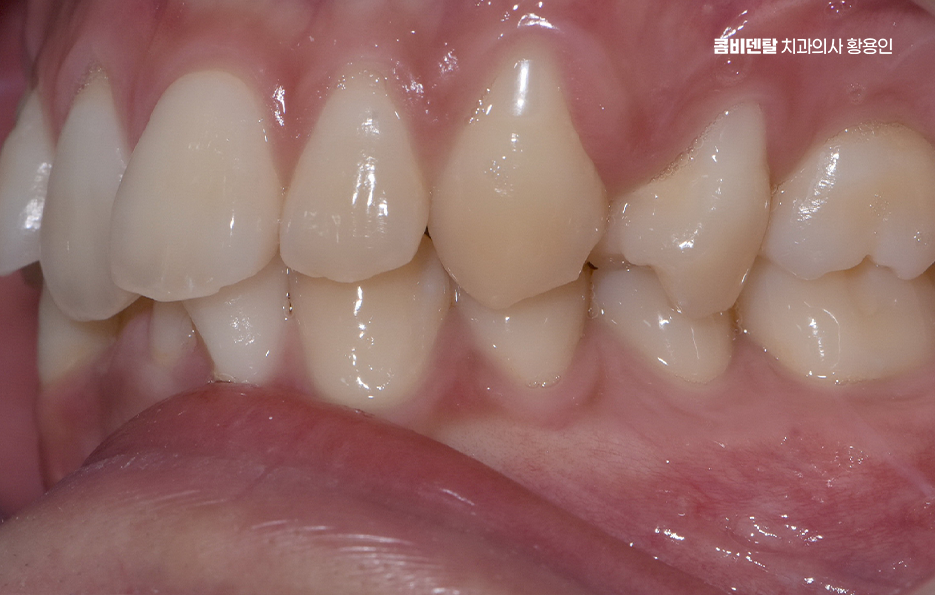
Non-extraction orthodontic treatment is relatively straightforward when the overlap of the lower teeth is mild to moderate and there is still room within the dental arch to create the space needed to move the teeth. Space can be created by slightly reshaping the areas between the teeth, moving the molars backward, expanding the dental arch, or using similar methods, allowing the lower teeth to be arranged without extraction.
The first thing to check when planning non-extraction orthodontic treatment is the actual amount of space deficiency in the dental alignment. Through a detailed examination using tools such as 3D CT imaging, the width of each tooth can be measured and compared with the current length of the dental arch to determine specifically how much space is needed.
Looking more closely at ways to create space through non-extraction orthodontic treatment, interproximal reduction may be used when the lack of space is minor. This involves carefully removing a very small amount of enamel between the teeth. When performed across several teeth, it can create space to arrange the lower teeth relatively stably without concentrating the burden on a single tooth.
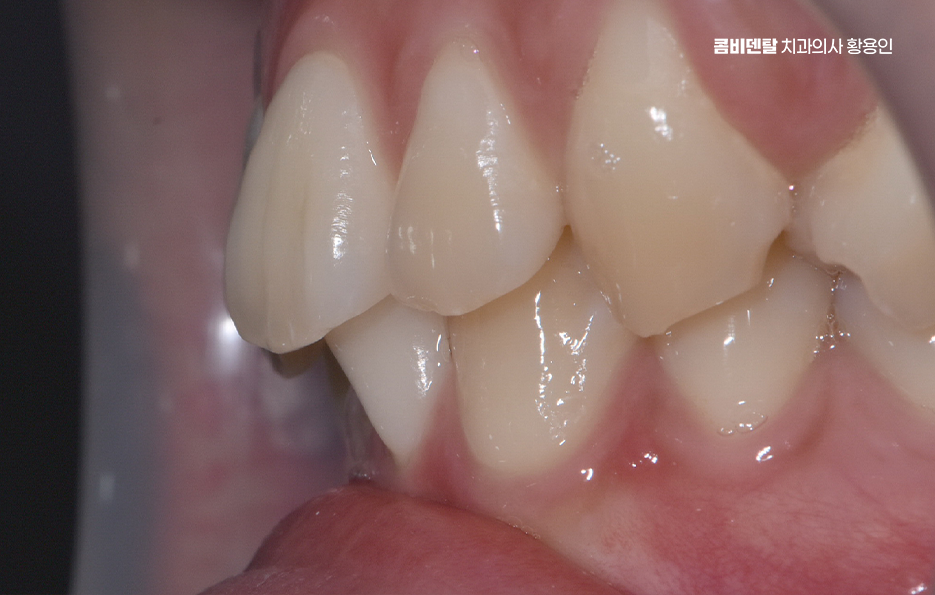
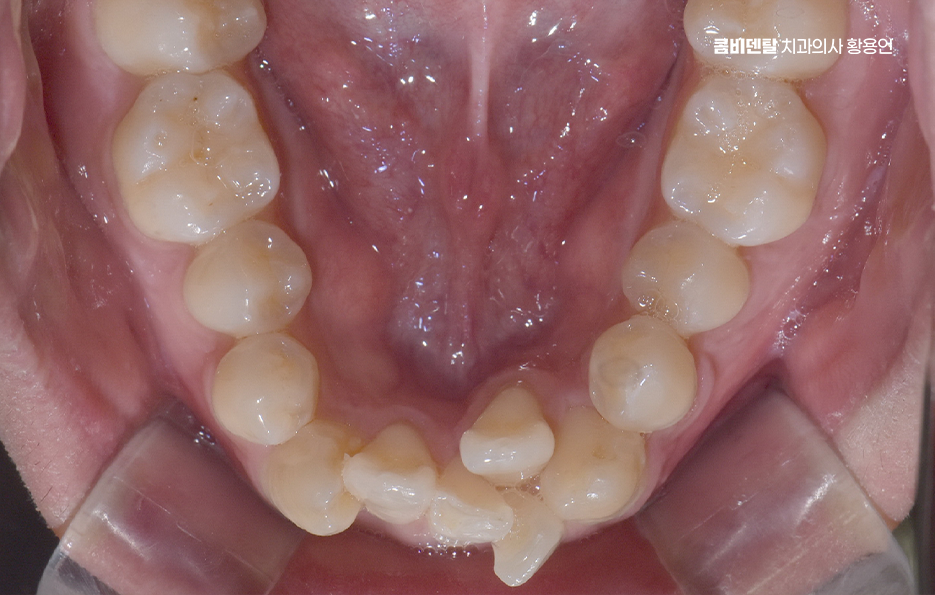
Another method is to create space by widening the dental arch overall. Depending on the case, space may also be created by moving the molars backward. This requires checking the available space behind the jawbone, the position of the wisdom teeth, the distance between the lower-jaw nerve canal and the tooth roots, and the direction in which the molars can be moved.
When correcting misalignment of the lower teeth, the treatment plan should not be based solely on the alignment of the lower teeth because the way the upper and lower front teeth meet will also change. Occlusion and harmony with the facial shape must be considered along with the dental alignment. If the lips are already positioned forward or considerable tension forms in the chin when the mouth is closed, it is necessary to assess the possibility that the teeth may appear more prominent after non-extraction alignment. Straightening the teeth and creating a natural facial profile are separate evaluation criteria.
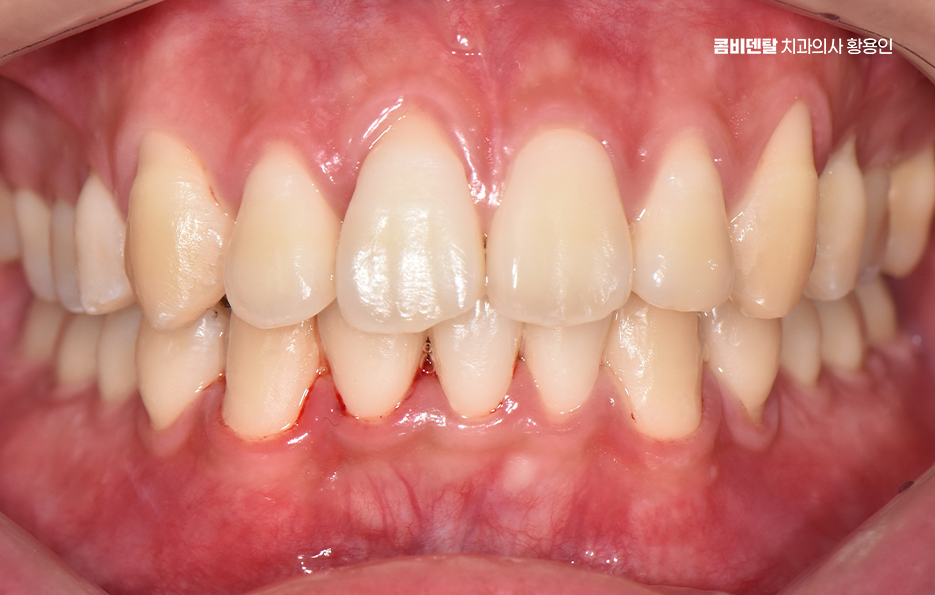
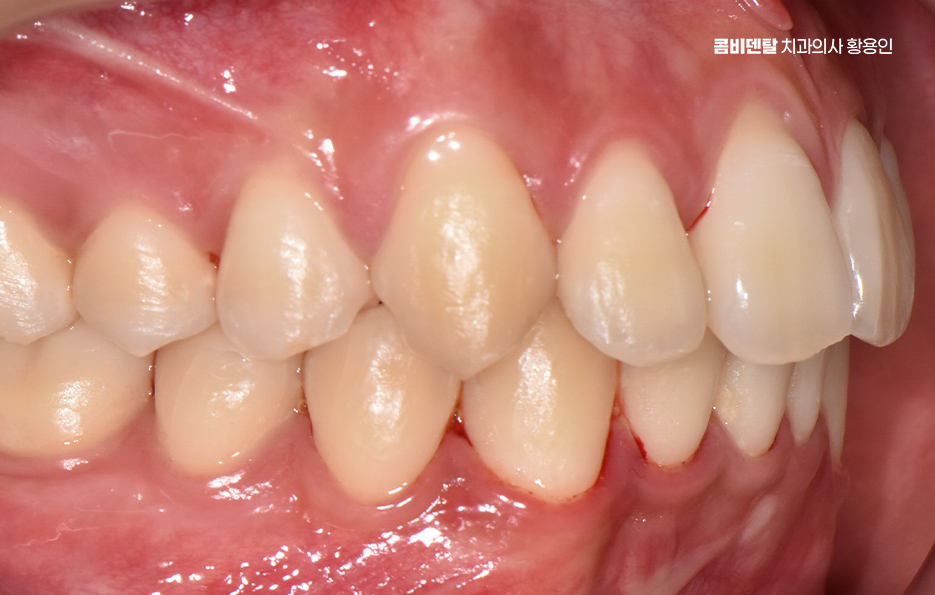
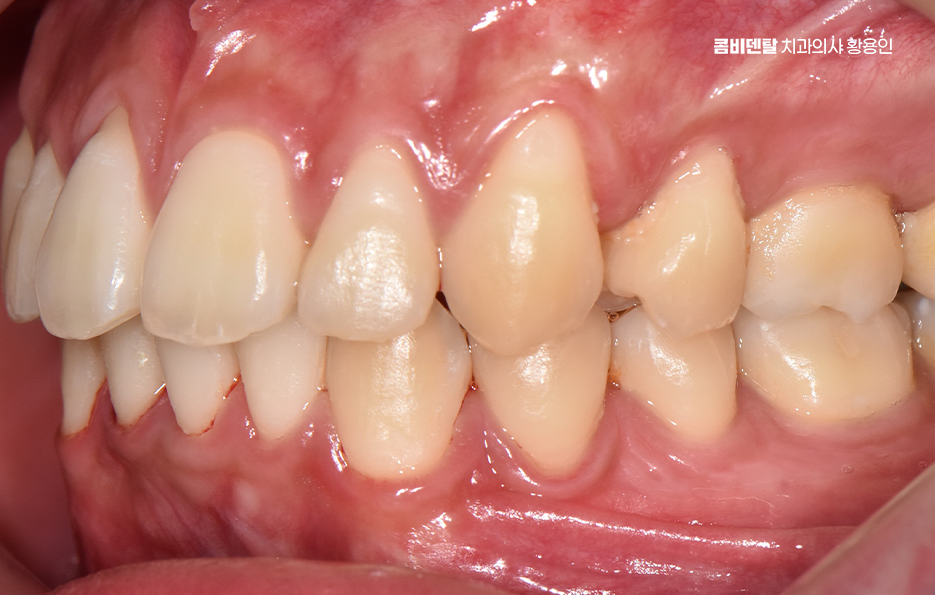
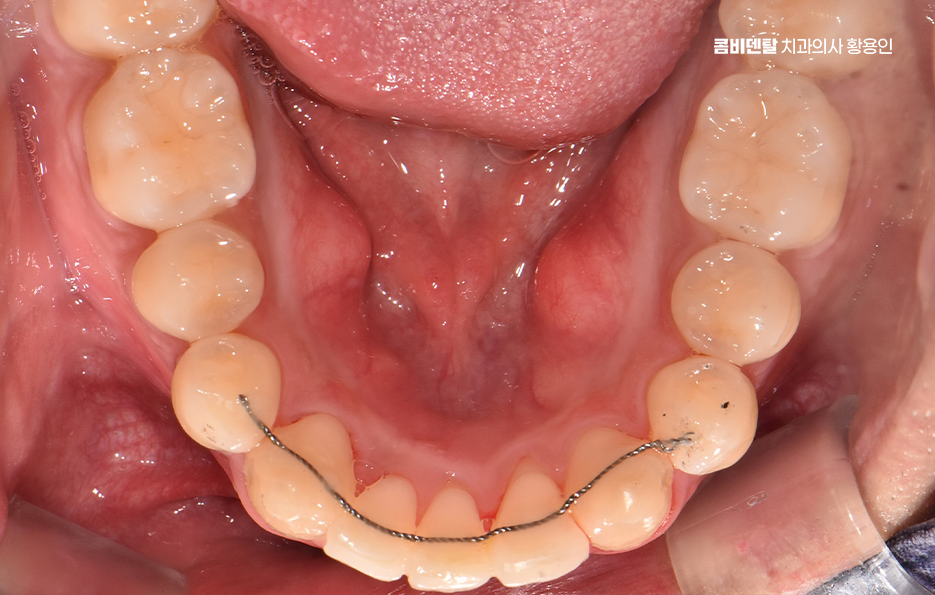
Fixed brackets are commonly used as orthodontic appliances, but clear aligners may also be used when the irregularity of the dental alignment is mild. More important than the type of appliance is determining where to create the necessary space and the order in which to move each tooth. In some cases, auxiliary appliances may be needed for complex rotations or root movement.
The lower front teeth are particularly small, with slender roots, so they may appear to move quickly. However, this is an area where rotation can recur and the teeth can easily overlap again after alignment. The treatment result can depend on precisely aligning not only the visible crowns but also the directions of the roots.
Non-extraction orthodontic treatment has the advantage of not requiring teeth to be removed, but it is not a method that can resolve every space deficiency. If the amount of space that can be created is less than the amount needed, the front teeth may protrude excessively or the alignment may become unstable, in which case extraction-based orthodontic treatment may be more appropriate.
In summary, non-extraction orthodontic treatment for crooked lower teeth involves safely creating the necessary space within the limitations of the existing dental arch while also balancing the upper and lower occlusion and facial proportions. We hope you will discuss your options thoroughly with an experienced orthodontic specialist and make a decision based on a precise diagnosis and an orthodontic plan suited to your individual needs.

Previous image
Next image
Previous image
Next image
Previous image
Next image
Previous image
Next image