
I knew that several amalgam fillings I had received a long time ago were still in my mouth, but since they only appeared as dark areas inside my molars, I did not pay much attention to them.
They were not in places that were easily visible when I smiled, and as long as they did not cause discomfort when chewing, I simply thought of them as old traces of treatment. However, at some point, I noticed that the color of the teeth around the amalgam looked increasingly dull whenever I looked in the mirror. At first, I thought it only looked that way because the fillings were old.
Since the silver-colored material was placed in the grooves of the molars, I assumed that it made the surrounding area look darker. I did not think the teeth themselves might be deteriorating. Then, the edges of the amalgam began to feel rougher than before whenever I brushed my teeth, and around the same time, I started to experience a brief, tingling sensation when drinking cold water.
I thought my gums might simply be sensitive because I was tired and that the symptoms would improve after a few days. Strangely, however, whenever a cold drink touched a particular molar, the same brief and sharp sensitivity kept recurring, so I unconsciously began taking care not to let cold water reach that side.
Because I had more than one or two teeth that had been treated with amalgam, I was not even sure which tooth was actually causing the problem.
Some days, the lower right side seemed sensitive, while on other days, the upper left side felt uncomfortable. When I felt a slight vibration around an old filling while chewing hard foods, I began wondering whether decay might be developing again underneath. I could not feel at ease even while eating.
The reason I had been putting off a dental checkup was actually quite simple. It was difficult to call the symptoms painful, and they were tolerable. I was also worried about the cost because it seemed that several teeth would need to be treated at once if I started treatment.
Even so, the discoloration became increasingly noticeable. In the past, only the amalgam itself had looked dark, but one day, when I looked closely, the surrounding tooth seemed to have a bluish tint, and some areas along the edges looked like brown lines. I felt frustrated because I could not determine on my own whether this was simply staining or whether decay had developed again.
Amalgam treatment has long been widely used for treating cavities. Although it is now rarely used because of its silver-colored appearance, many people still have amalgam fillings placed in the past, and many are curious about when retreatment or replacement is needed.
These days, many people also ask about the difference between amalgam and composite resin because resin is often used instead of amalgam, as well as whether amalgam fillings need to be replaced. Some people want them replaced for cosmetic reasons alone, while others undergo retreatment because the old filling has fallen out or because of recurrent decay. However, if the filling is well maintained and its condition is stable, immediate replacement may not necessarily be required.
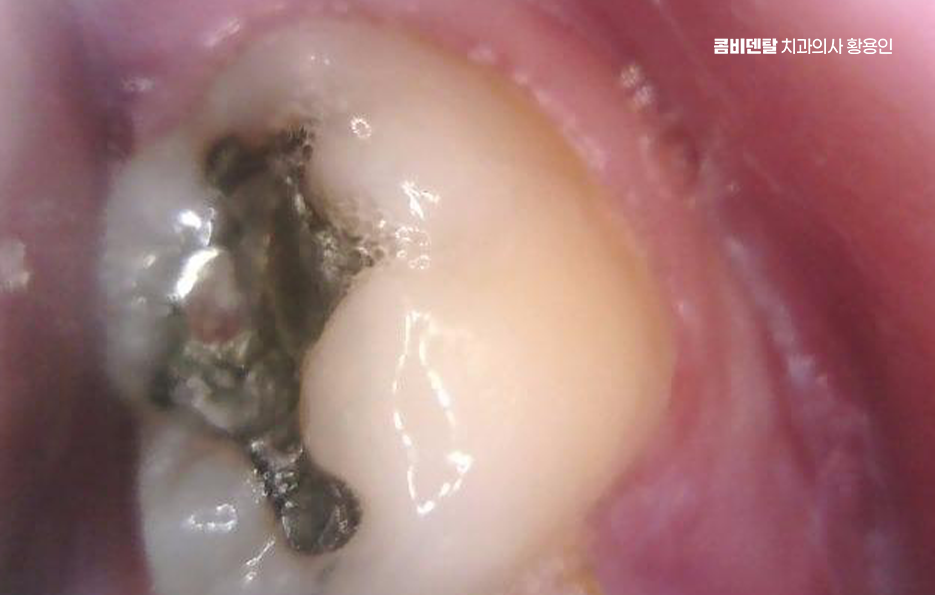
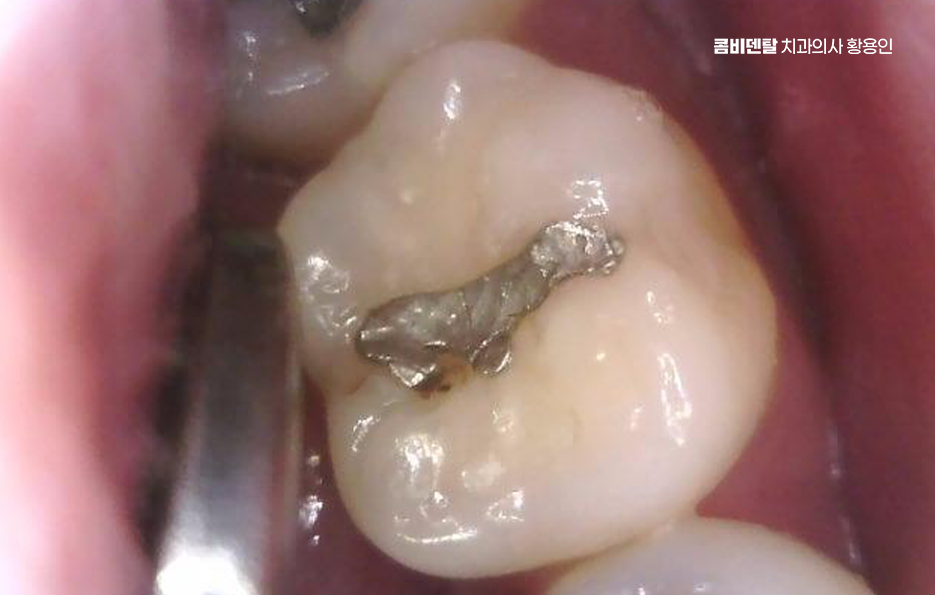
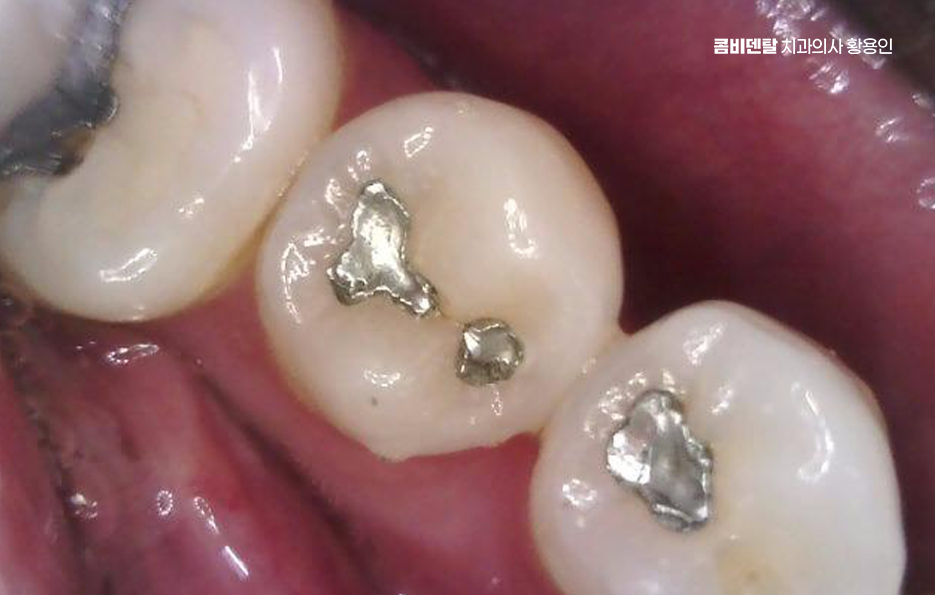
To determine whether replacement is needed, it is necessary to check together whether a gap has formed between the amalgam and the tooth, whether the surrounding tooth has fractured, whether recurrent decay is progressing underneath, and whether there is pain or sensitivity when chewing. The fact that the area around an old amalgam looks black does not necessarily mean that it is all decay. Amalgam components can leave staining on the tooth, or the metal color may show through, so distinguishing whether actual decay is present may require an accurate dental examination.
A representative situation in which amalgam replacement should be considered is when the edge of the restoration has lifted or fractured. Such gaps are difficult to manage completely through brushing, and over time, decay can penetrate into the space.
In addition, if a particular tooth feels sharp or uncomfortable when chewing or biting down on hard foods, it is necessary to examine whether a tiny crack has developed in the tooth beneath the amalgam. Because the condition inside the tooth cannot be seen through the amalgam, pain that occurs mainly when chewing may warrant suspicion of an internal tooth crack.
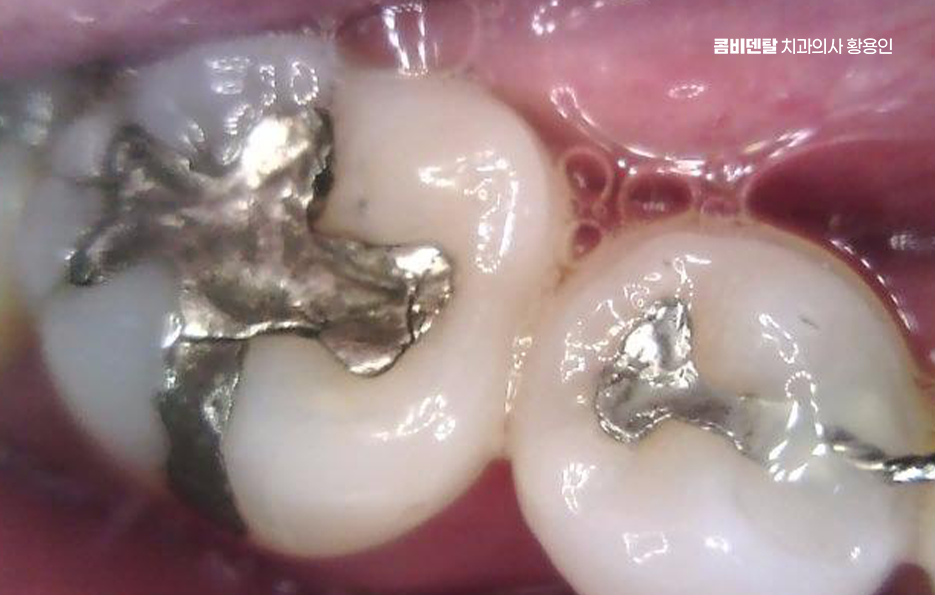
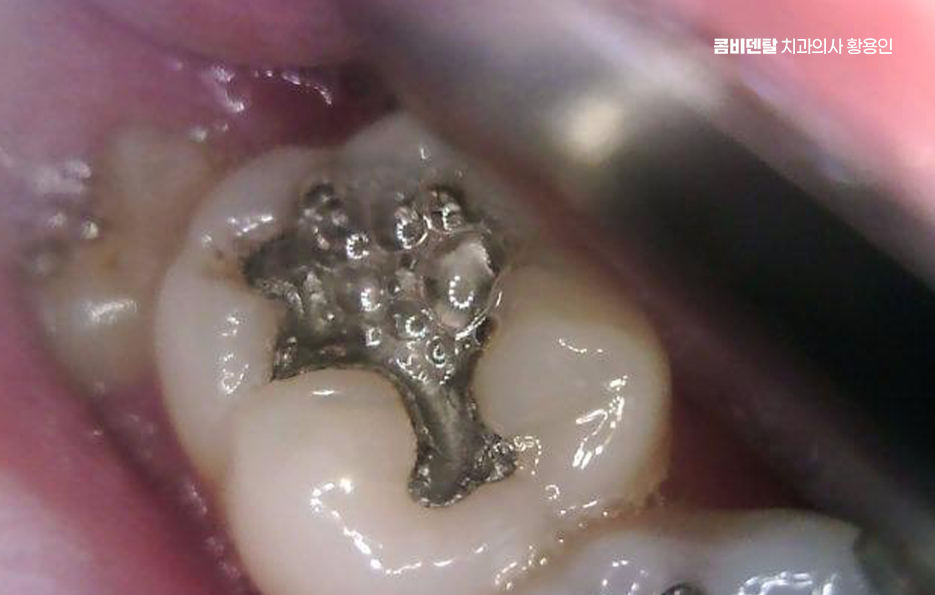
Although amalgam itself is relatively hard, its bond with the tooth can gradually weaken over time. In addition to weakening adhesion, the surrounding natural tooth may wear down or chip slightly, causing the boundary to open. In many cases, this gap becomes the starting point of a problem.
When recurrent decay develops beneath an amalgam filling, the internal damage may be extensive even if only minor changes are visible on the surface. In particular, decay that begins between molars can lead to root canal treatment if it is discovered late. Brief sensitivity to cold or sweet foods may simply be a symptom of tooth sensitivity, but if the pain continues for a long time or throbs even when the tooth is at rest, it may be necessary to check whether the decay has progressed close to the nerve.
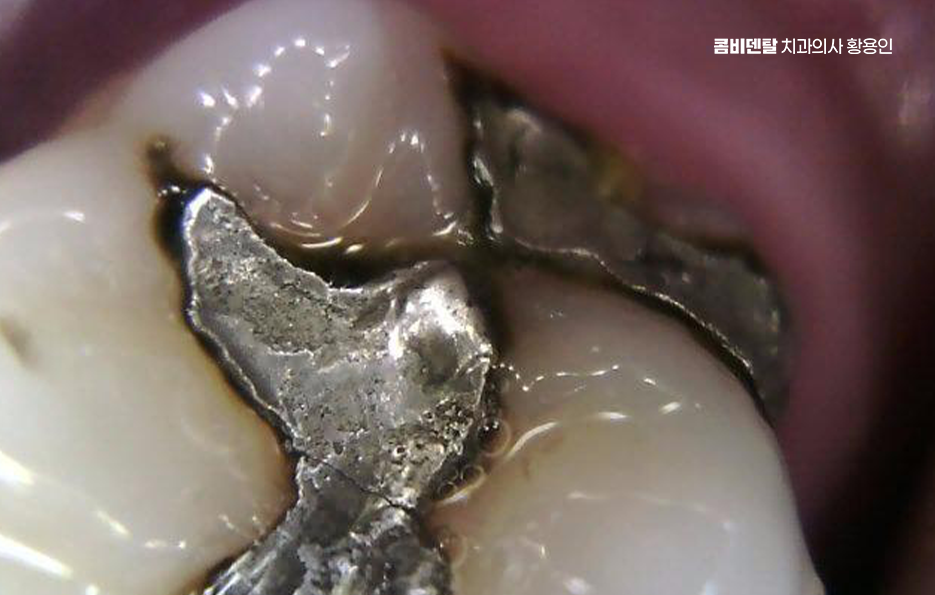
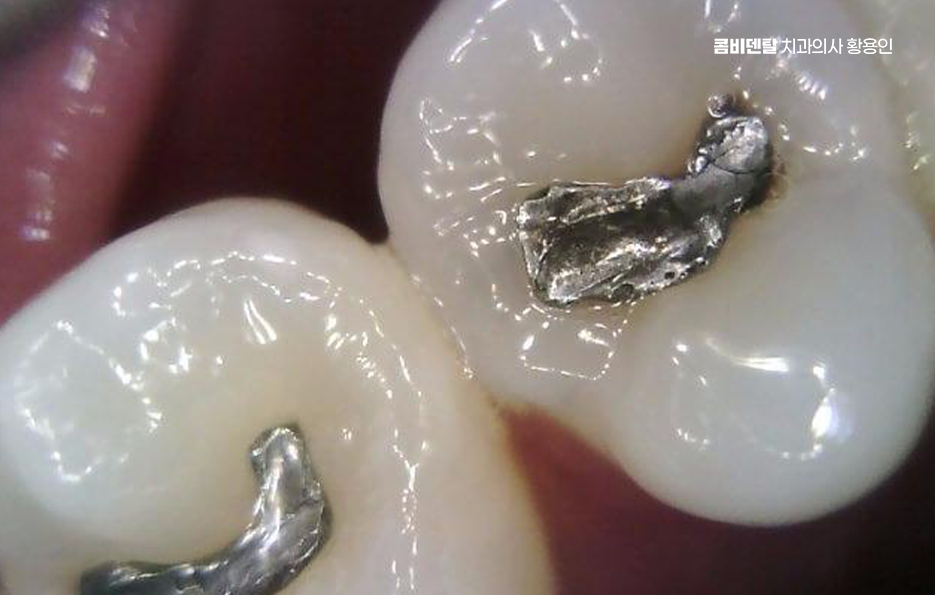
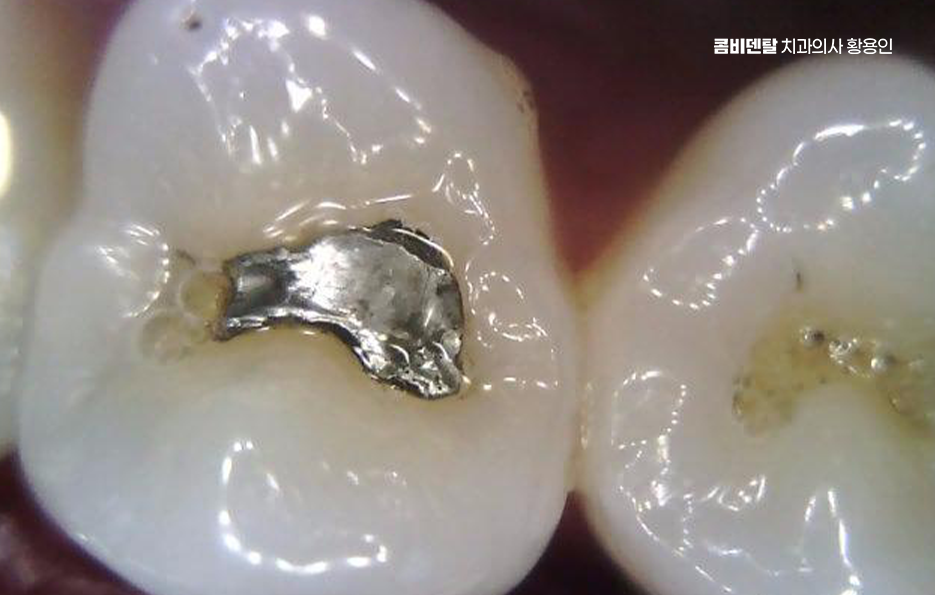
When considering amalgam replacement and retreatment, many people wonder whether retreatment can be performed simply with composite resin. Looking at the difference between amalgam and composite resin, the main differences are in the bonding method and appearance.
Composite resin can be made similar in color to the tooth and is bonded by building it directly onto the tooth. It is advantageous for small cavities, front teeth, and highly visible areas. It can also treat only the necessary areas in a relatively conservative manner and can often be completed in a single visit.
One point to keep in mind is that although resin looks aesthetic and natural immediately after treatment, staining or wear may develop over time. It can be affected by coffee and tea, smoking, and eating habits. In broad areas of molars that receive strong chewing forces, the possibility of fracture or discoloration may also need to be considered.
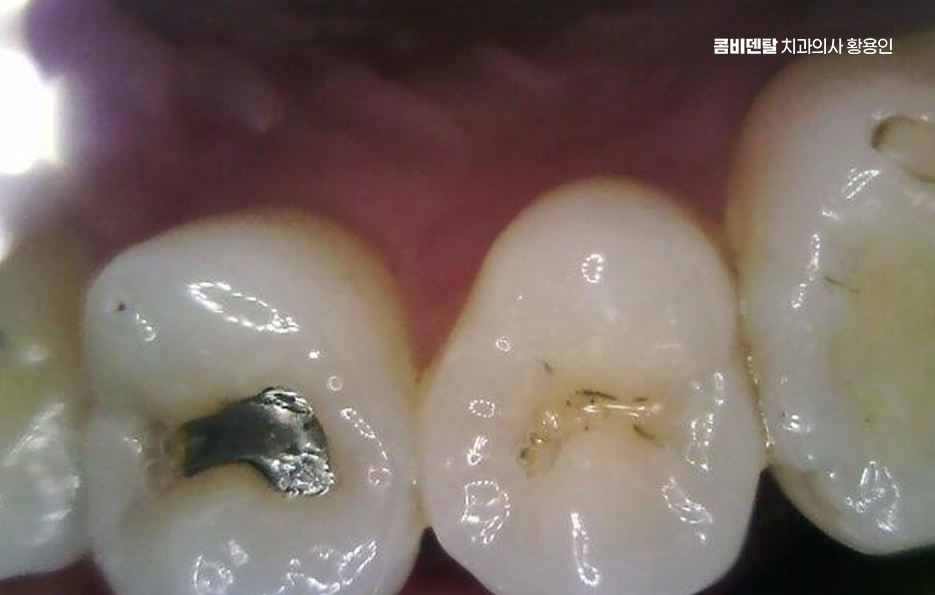
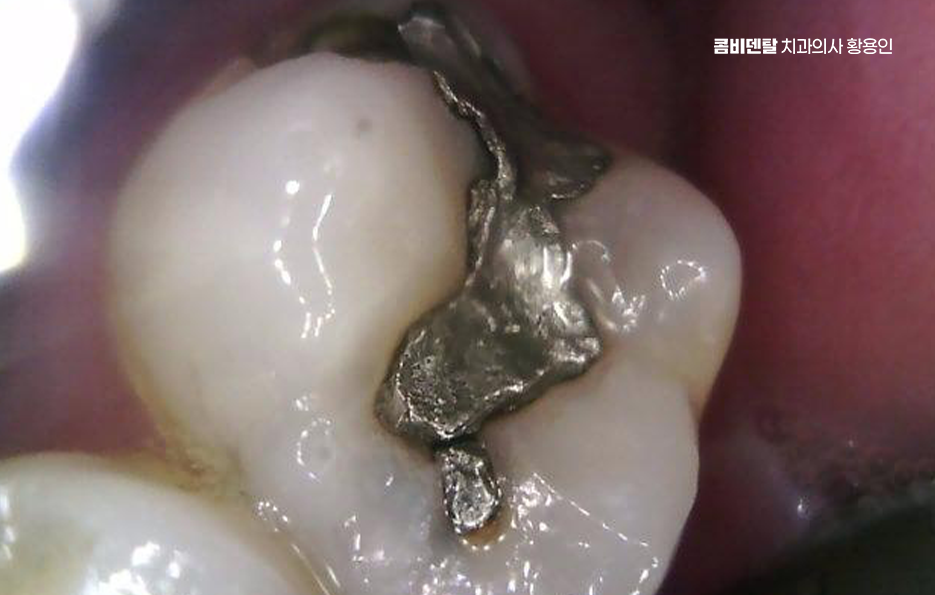
In particular, for areas such as molars that play an important role in chewing, not every deep and extensive cavity can be treated with resin. If the treatment area is broad or deep, or if it is in a location exposed to substantial chewing forces, an inlay or crown may be a more stable option than resin for protecting the tooth.
Therefore, when considering the difference between amalgam and composite resin, replacing amalgam with resin requires removing the existing material, checking the actual depth of the decay and damage as well as the thickness of the remaining tooth, and then determining the treatment extent again. During the replacement process, the inside of the tooth may turn out to be weaker than expected or the decay may be deeper than anticipated after the old amalgam is removed. In such cases, rather than insisting on resin alone, it is important to consider a restorative plan that takes the internal condition of the tooth into account. For the preservation of natural teeth, it may be important to check the condition of old restorations through regular examinations even when they do not cause pain.


Previous image
Next image

Previous image
Next image






Previous image
Next image






Previous image
Next image