Hello,
Jamsil Children’s Invisalign
Jamsil Adolescent Orthodontic Clinic
Invisalign Diamond-Level Dental Clinic
This is UPenn Bareun Dental Clinic.
How have you all been?
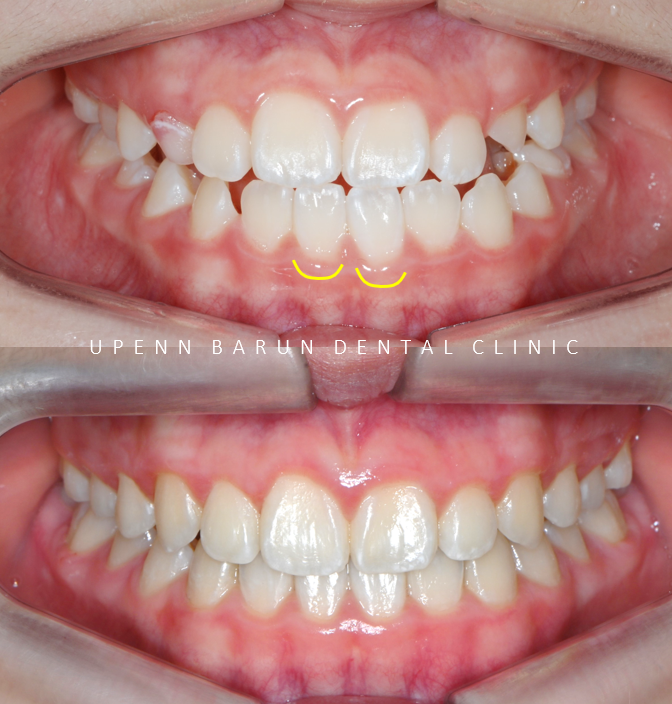
Orthodontic period 23/8~24/10
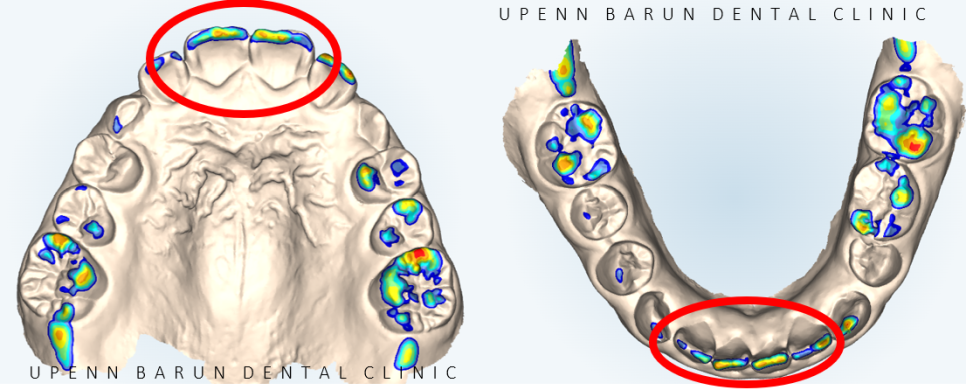
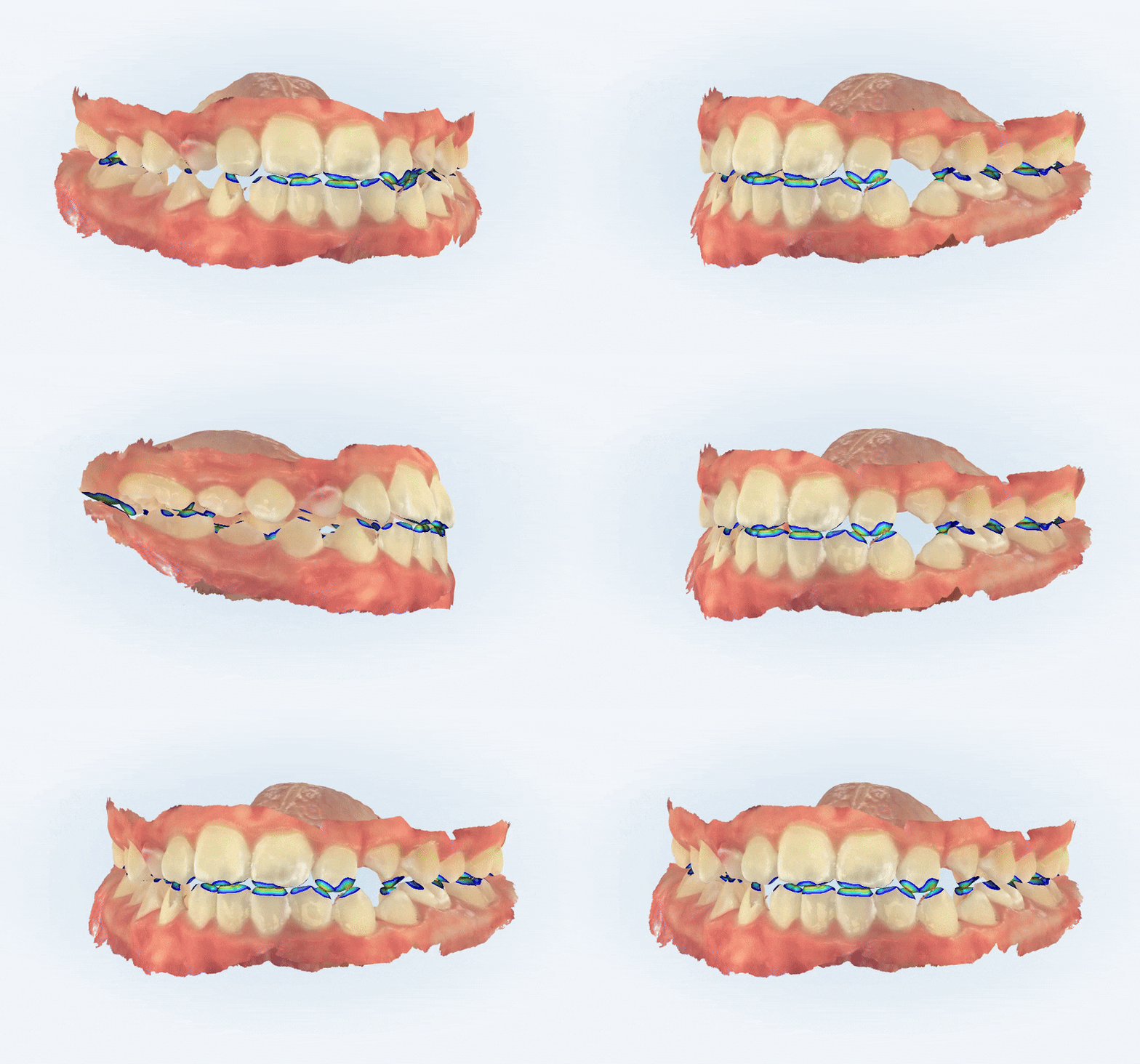
Today,
I’d like to introduce an Invisalign case involving a crossbite on the front teeth,
with the upper and lower front teeth touching each other,
and the lower front teeth
showing progressing gingival recession T^T
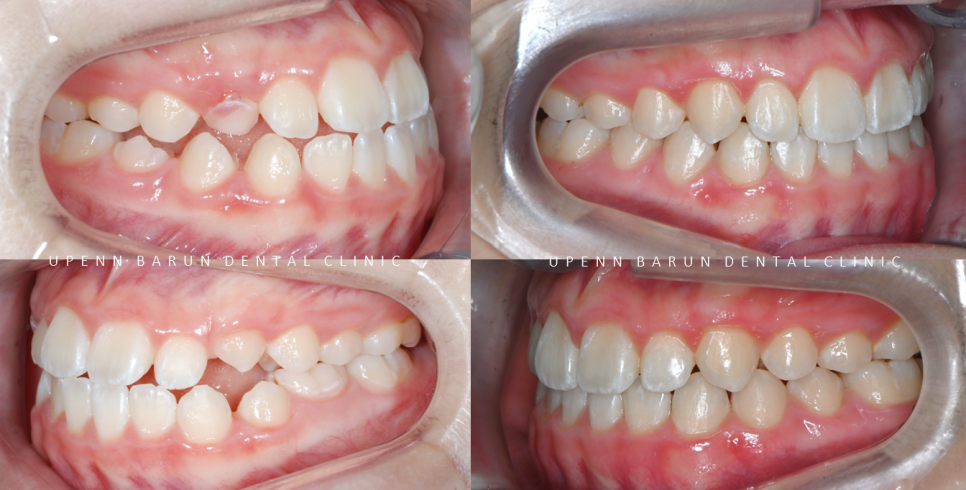
Orthodontic period 23/8~24/10
In a normal bite, the upper teeth cover the lower teeth by about 2 mm,
and the front teeth should not touch each other.
A bite where the front teeth touch each other must be corrected
not only for aesthetic reasons but also for dental health.
If malocclusion of the front teeth, called an edge-to-edge bite or crossbite, is left untreated,
the force the molars receive when chewing is transmitted directly to the front teeth as well,
which can cause tooth wear or fracture,
continuous force can lead to root resorption,
and it can affect not only the chewing function of the teeth but also lead to temporomandibular joint disorders,
and it can cause gingival recession due to occlusal trauma.
In the end, this can shorten the lifespan of the teeth T^T
To improve these problems,
at Jamsil Pediatric Orthodontic Specialty Clinic
Jamsil Adolescent Invisalign
Jamsil Invisalign Specialty Clinic
Jamsil Invisalign Diamond-Level Dental Clinic
at UPenn Bareun Dental Clinic,
we completed both first-phase pediatric orthodontics and second-phase orthodontics at once
in just 1 year and 2 months
through Invisalign First :)
What is Invisalign First (= first-phase Invisalign orthodontics)?
→ It is an Invisalign appliance specialized for children in the growth stage.
It is an orthodontic treatment mainly for children aged 6–10 in the early mixed dentition stage,
and it can identify issues related to children’s jawbone growth and erupting teeth.
By aligning the teeth and securing space at the same time,
it helps permanent teeth erupt properly.
Through Invisalign simulation,
the child’s occlusion and alignment can be evaluated and predicted to see how they will develop.
It can improve skeletal issues such as jaw growth,
and because it is removable, it is convenient for oral hygiene.
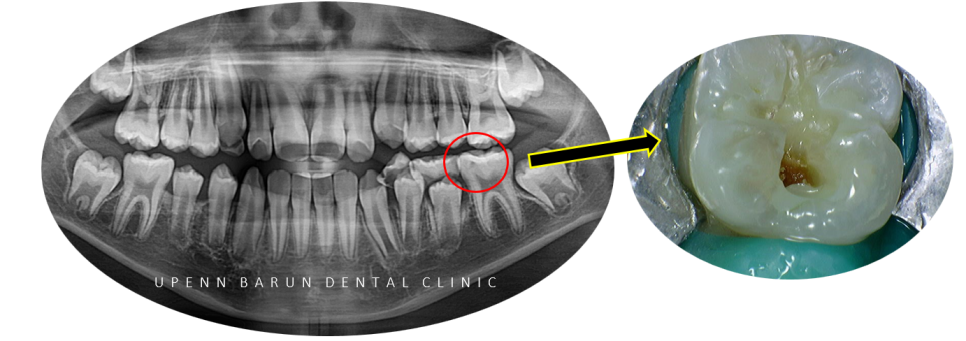
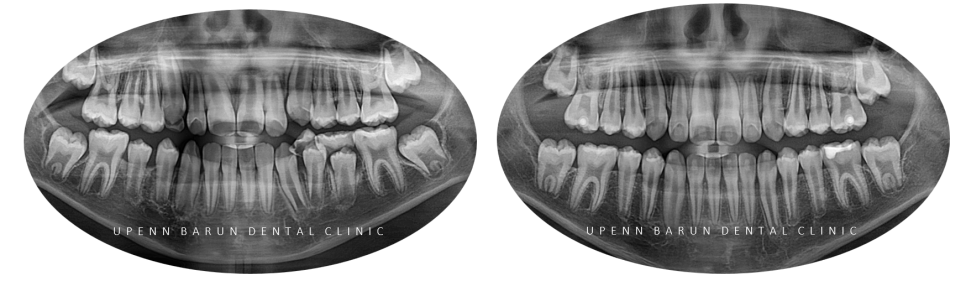
X-ray of permanent tooth decay on the lower left (#36) and intraoral photo
Before starting orthodontic treatment,
we checked the X-ray and found a cavity,
so we completed the cavity treatment before proceeding with orthodontics :)
After removing the decay, the affected area was larger than expected,
but at UPenn Bareun Dental Clinic, which pursues conservative treatment,
we finished with resin treatment :)
1st ClinCheck (30 aligners)
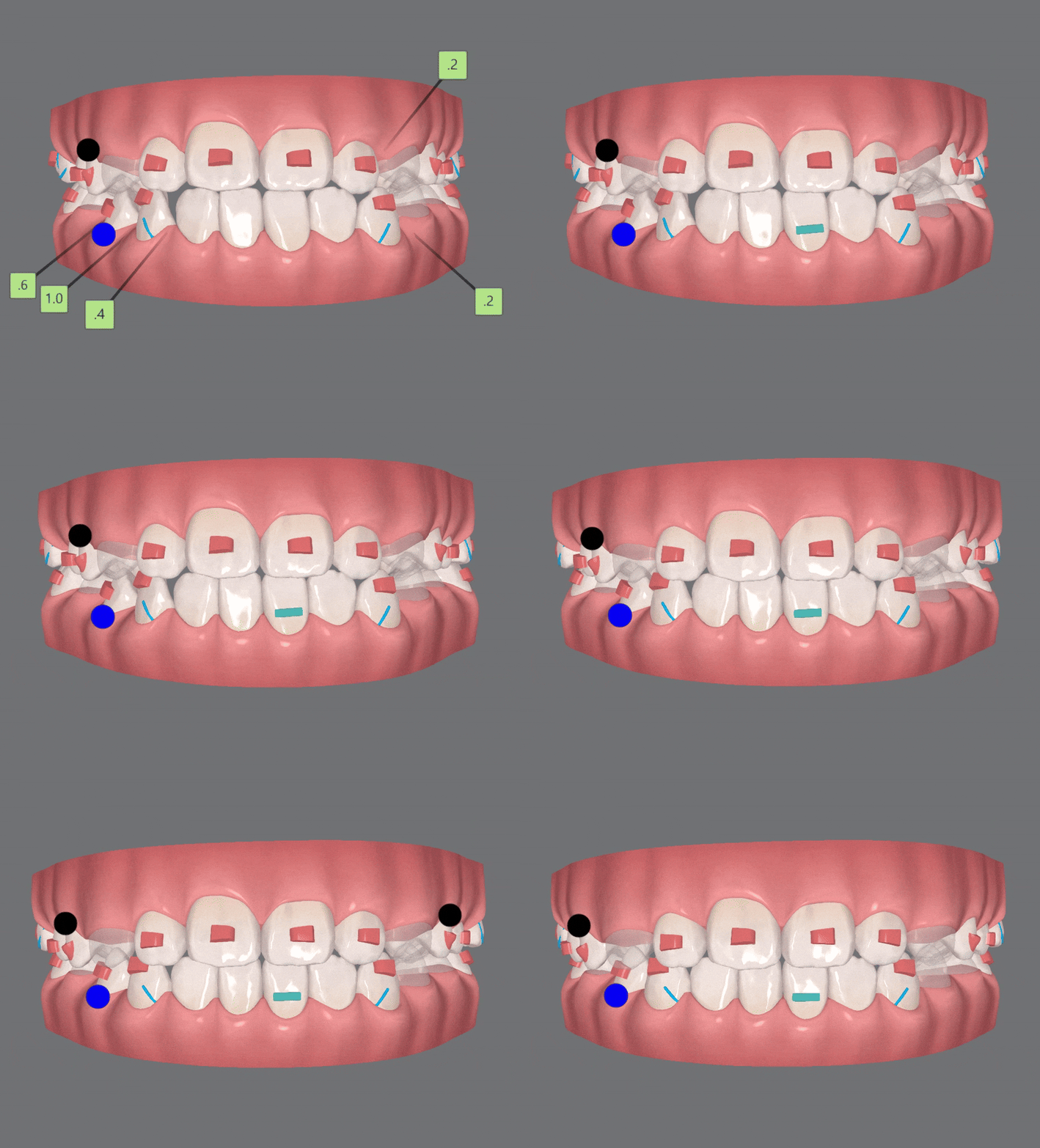
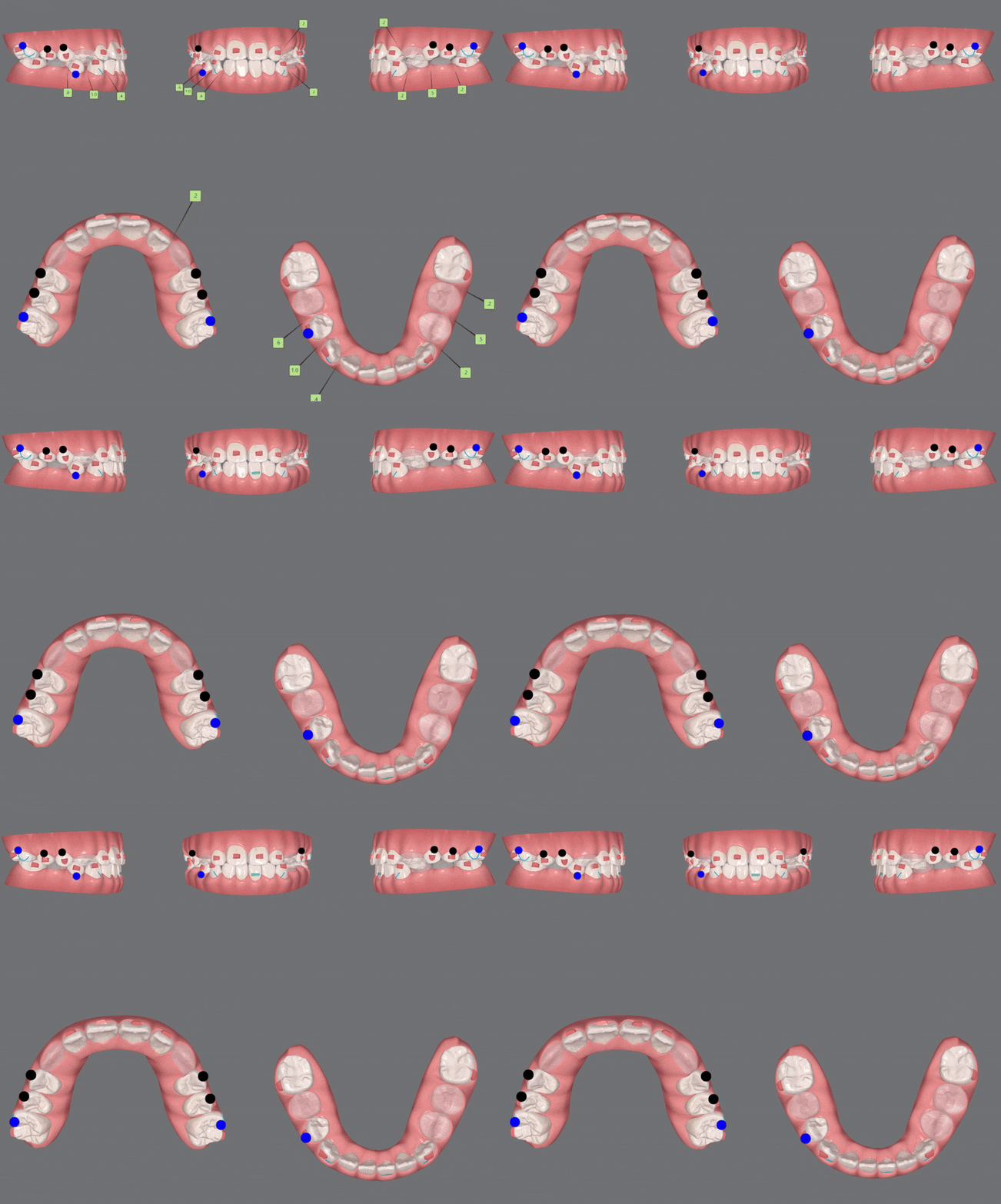
This is the video of the first ClinCheck.
One of Invisalign’s advantages is
that you can predict what the result will look like after orthodontic treatment.
Once the doctor finishes designing the ClinCheck,
you can use ClinCheck to see how tooth movement will change after Invisalign treatment.
In the first ClinCheck, we proceeded with a total of 30 aligners.
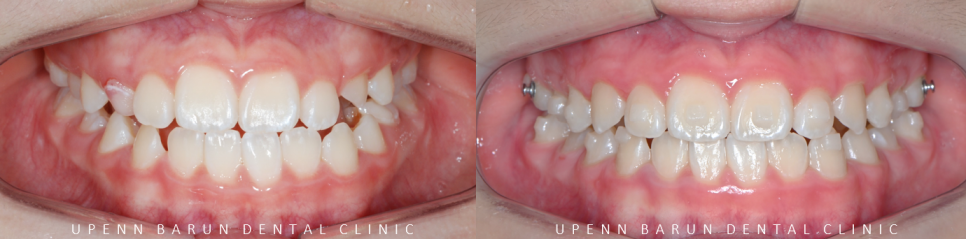
With the first Invisalign ClinCheck using 30 aligners,
the front teeth that had been touching each other were improved,
and the bite was corrected to a more normal state, where the upper teeth cover the lower teeth.
2nd ClinCheck (18 aligners)
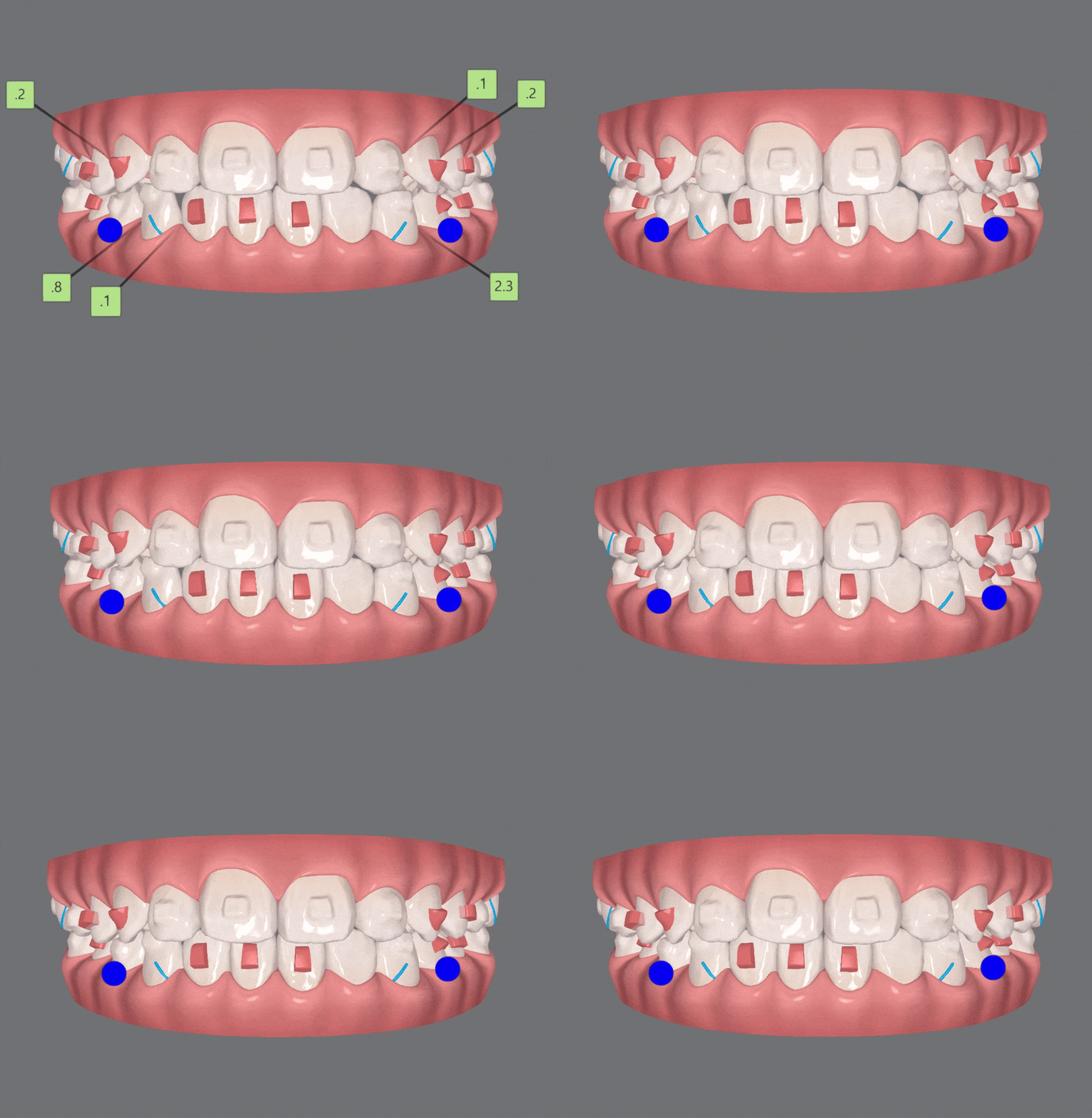
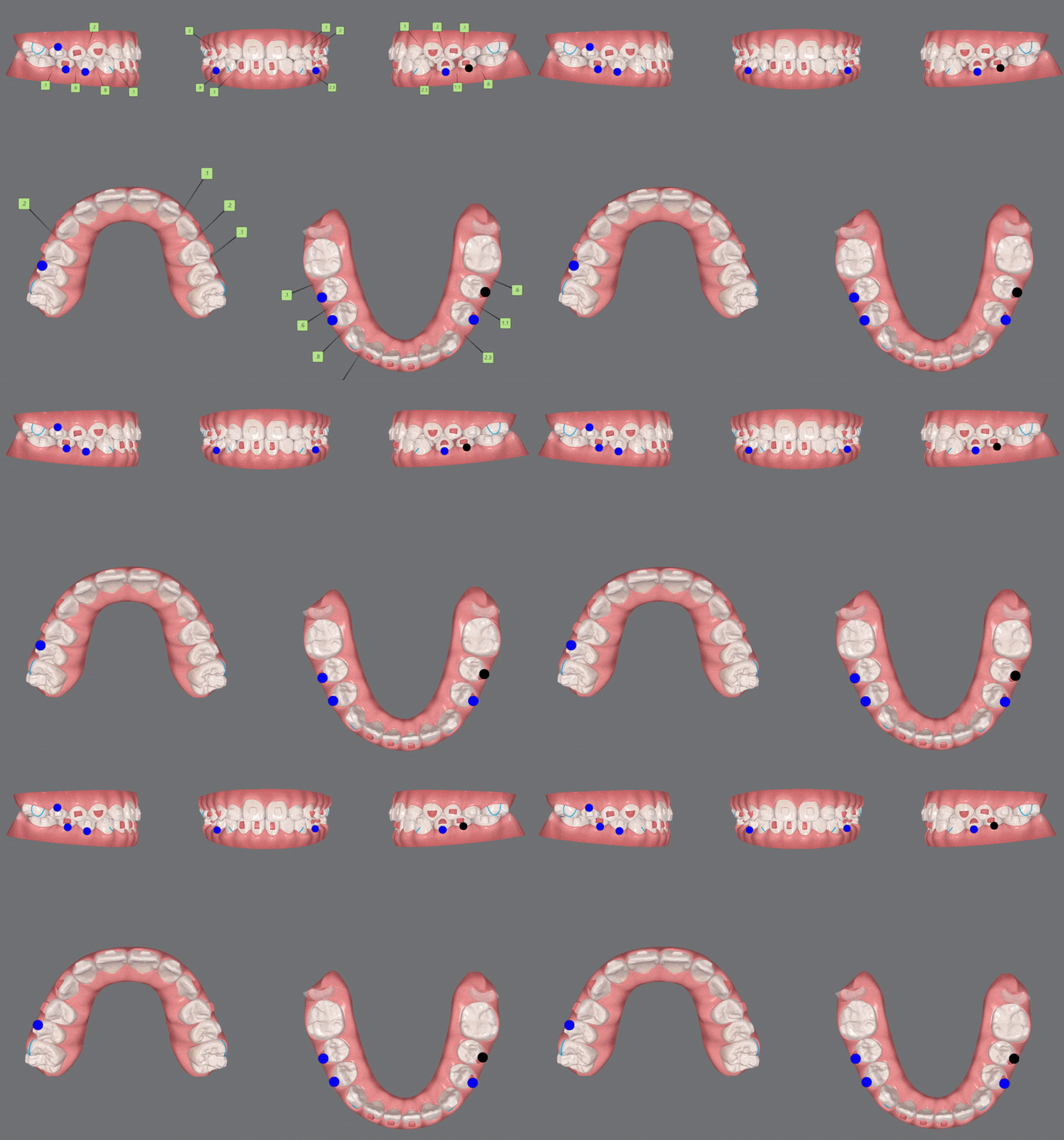
The second ClinCheck
added attachments to the first ClinCheck and improved tooth alignment with 18 aligners.
Songpa pediatric Invisalign specialist
Songpa children’s Invisalign specialist
At UPenn Bareun Dental Clinic,
the shape and position of the attachments were changed from the previous ClinCheck,
supplementing the earlier ClinCheck and improving the completeness of the orthodontic treatment.
What are attachments?
They are devices that can control tooth rotation, movement, height, and angle,
and by bonding resin to the teeth,
they help align tooth movement correctly to the desired position.
They are an essential!! element in Invisalign.
3rd ClinCheck (14 aligners)
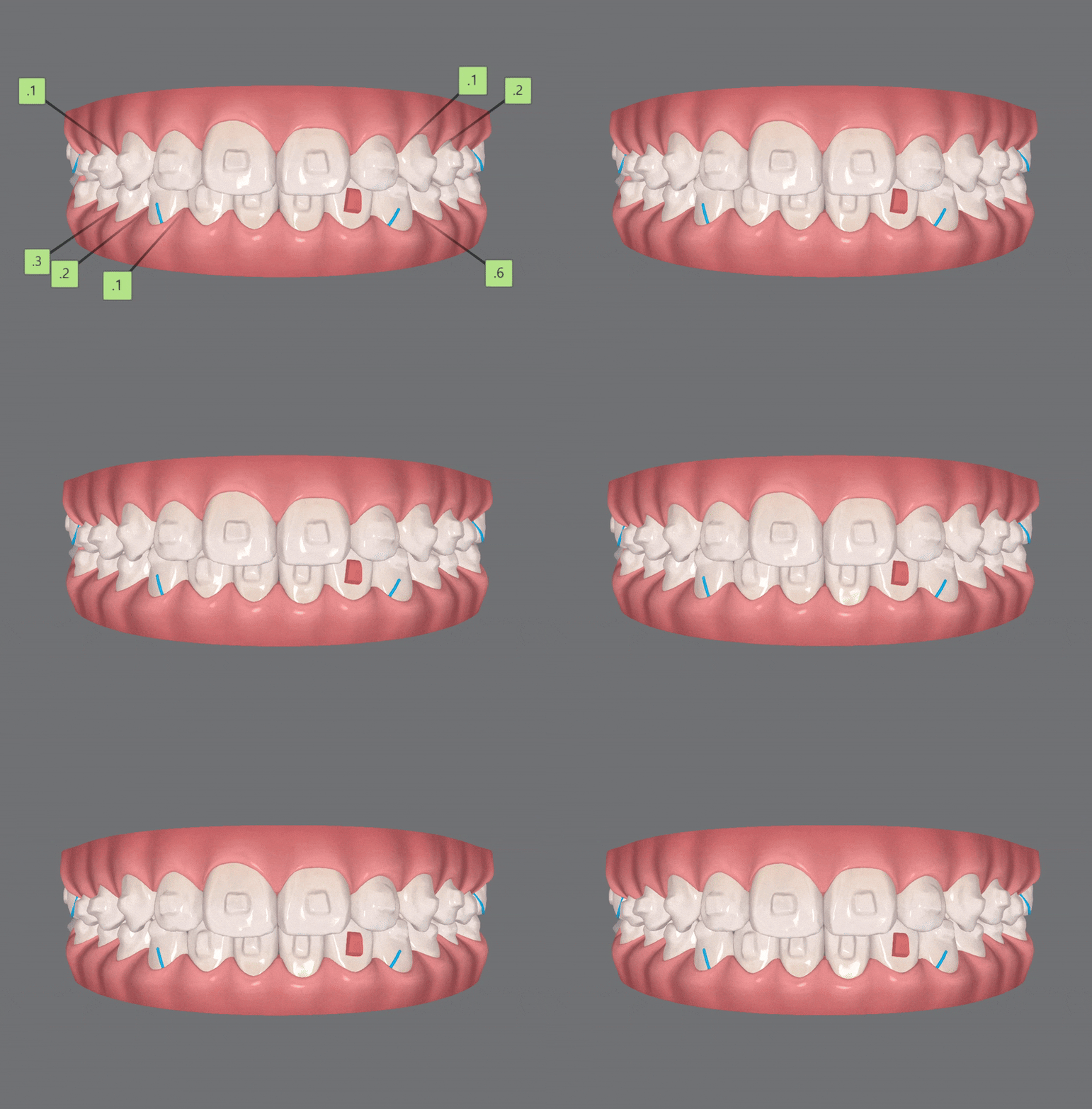
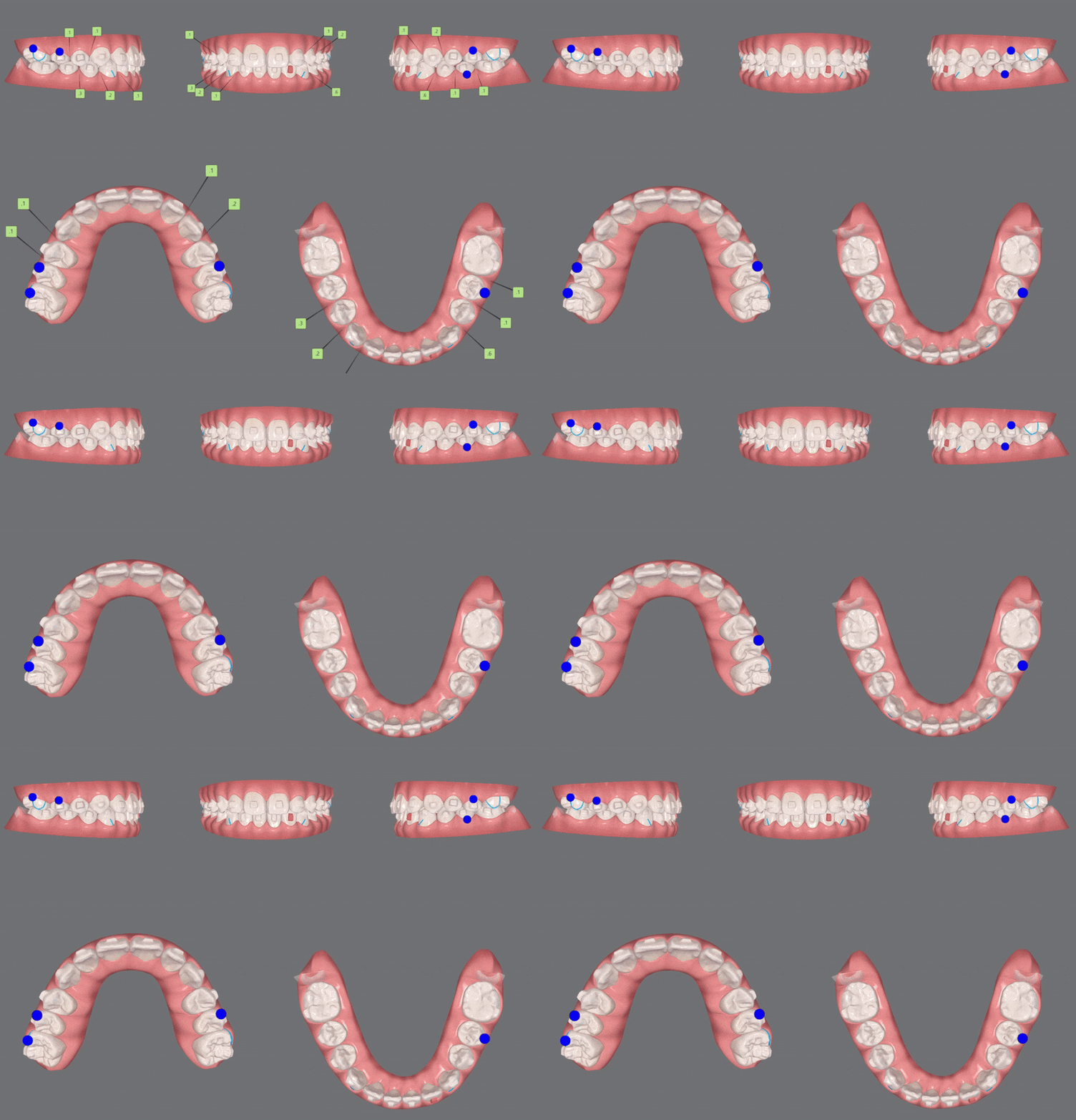
Lastly, for detailed finishing,
we proceeded with a third ClinCheck
(a total of 14 aligners).
“Invisalign First”
is custom-made to fit children’s baby teeth and permanent teeth,
and because it is replaced with a new aligner every 5 to 7 days, it is hygienic.
Compared with existing orthodontic appliances, it causes less discomfort and pain,
and because it is removable, brushing is easier, so the likelihood of cavities is relatively lower.
It is easier to manage because there is less risk even during vigorous movement or sports, and it is easy to clean.
Unlike regular bracket braces, there are few cases where a wire pokes the mouth or a bracket falls off, requiring an urgent visit to the clinic.
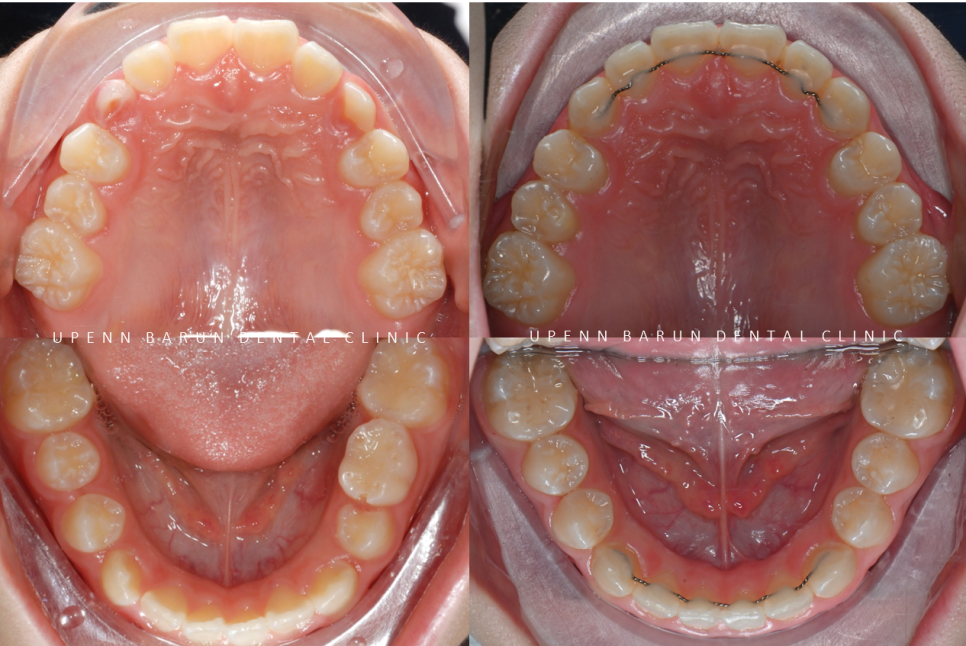
Orthodontic period 23/8~24/10
Orthodontic period 23/8~24/10
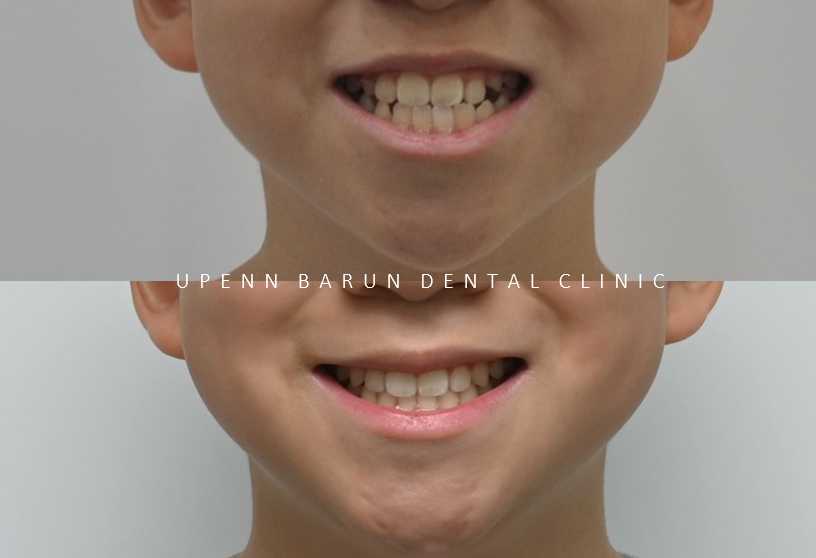
This is the photo after orthodontic treatment was completed through the final ClinCheck.
Invisalign started during the period of permanent tooth replacement
provides customized functions for pediatric patients
and is advantageous for securing space for erupting permanent teeth along with arch expansion.
In addition,
it provides treatment for a wide range of malocclusions, including development of the arch form and maintenance of space for erupting teeth.
In the case of orthodontic treatment for children and adolescents,
compared with treatment after becoming an adult,
it can shorten the treatment period by using the growth stage,
resolve skeletal malocclusion in advance,
and significantly improve appearance as well.
Therefore!
While guiding proper growth,
it is very important
to start orthodontic treatment at the appropriate time.
Orthodontic period 23/8~24/10
Orthodontic period 23/8~24/10
If you are worried about frequent dental visits
because of a busy academy and school life,
Invisalign is an orthodontic method in which aligners are changed on a set schedule,
so visits can be made every 8 weeks, or as long as every 3 to 4 months.
Invisalign for overseas residents is also possible,
and it is especially suitable for adolescents and working adults
who do not have much time.
It is also a good treatment option for soldiers serving in the military.
Invisalign First is more aesthetic than wire braces,
causes relatively less pain and discomfort,
and is the most preferred orthodontic appliance worldwide for children and adolescents.
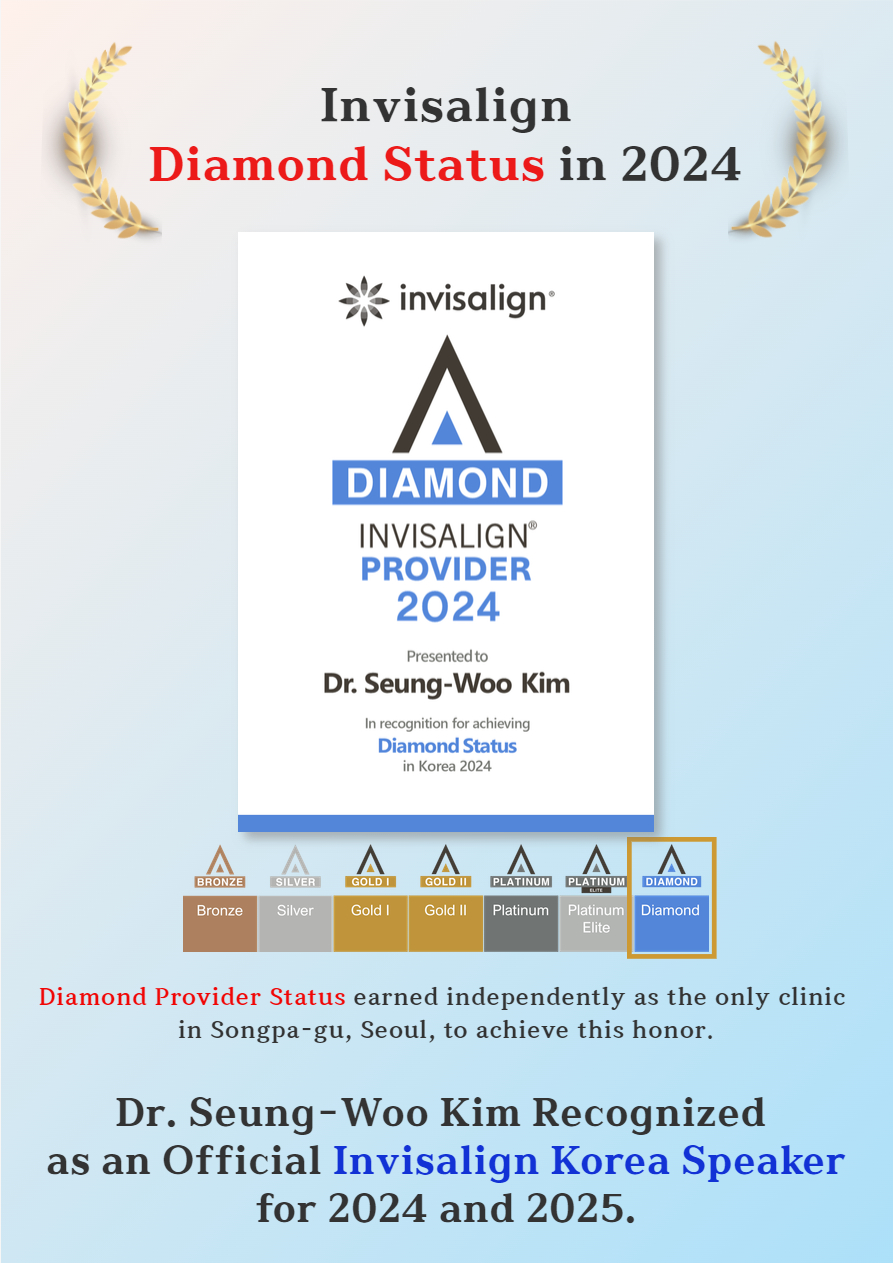
Based on the high skill and extensive experience of an ABO-certified orthodontic specialist,
why not start Invisalign at UPenn Bareun Dental Clinic,
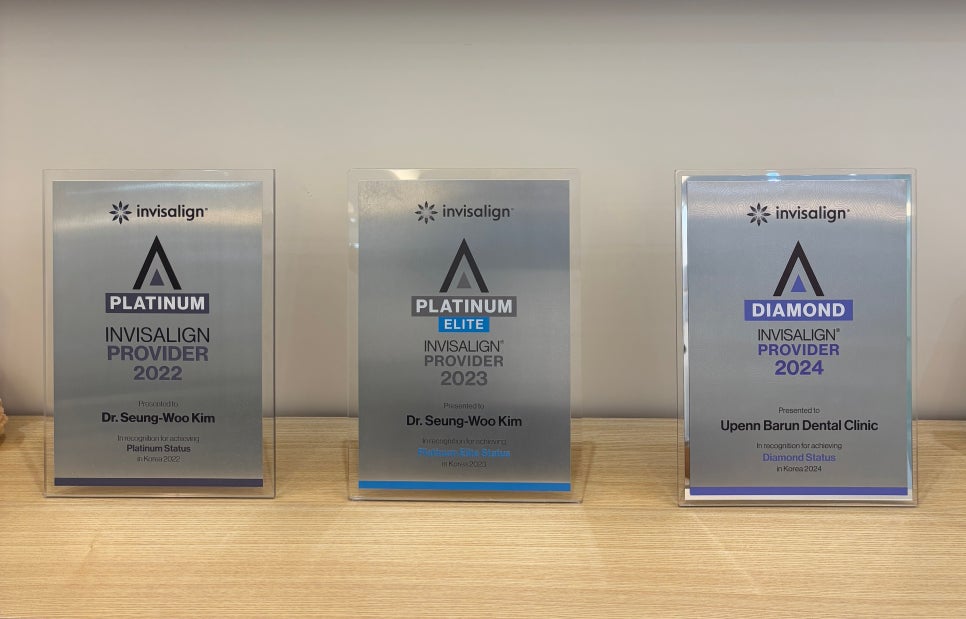
which achieved Invisalign Platinum in 2022,
Invisalign Platinum Elite in 2023,
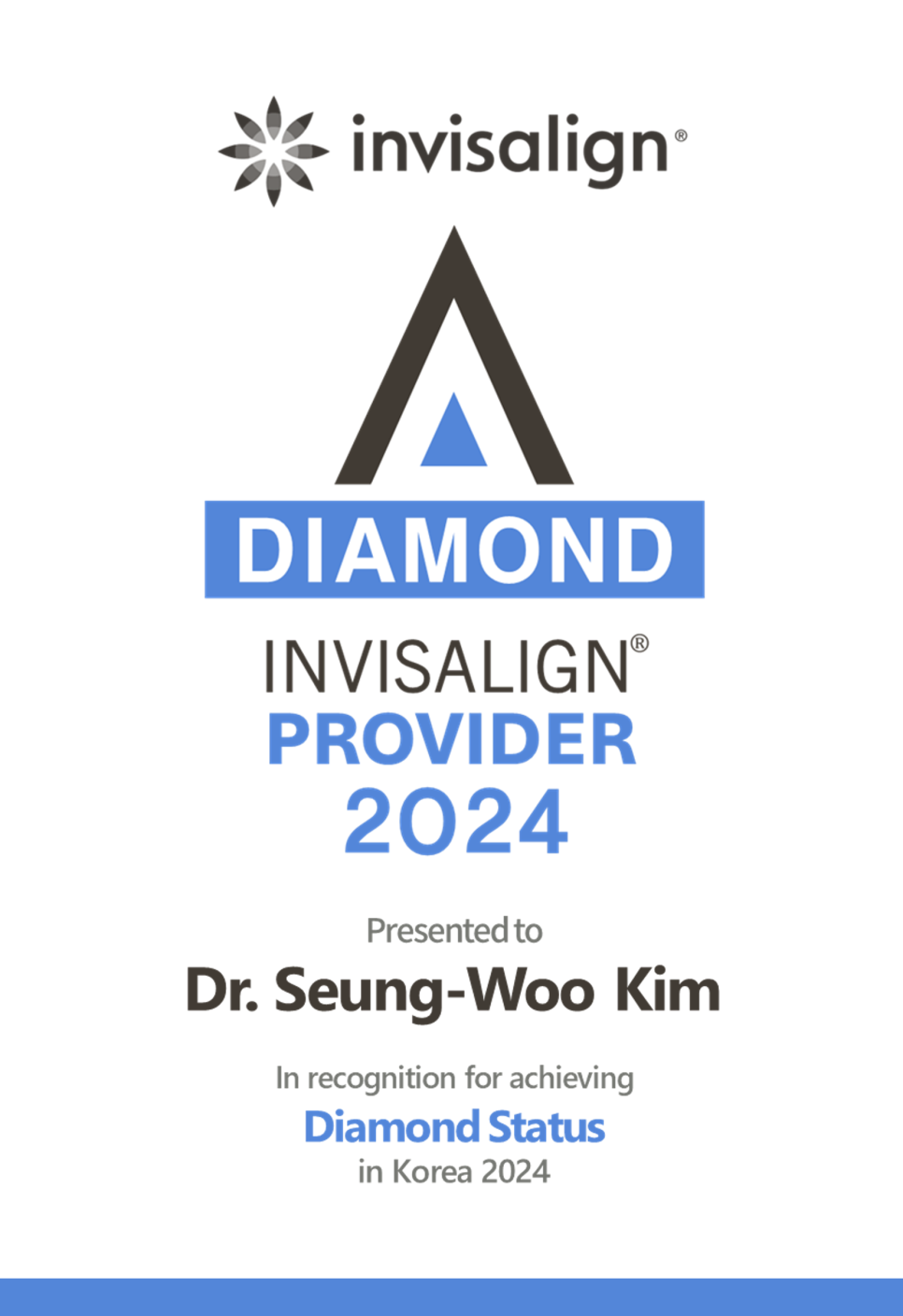
and Invisalign Diamond in 2024,
for your beautiful smile?
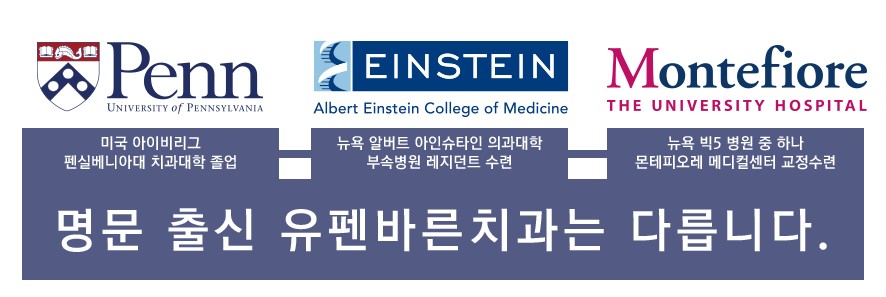
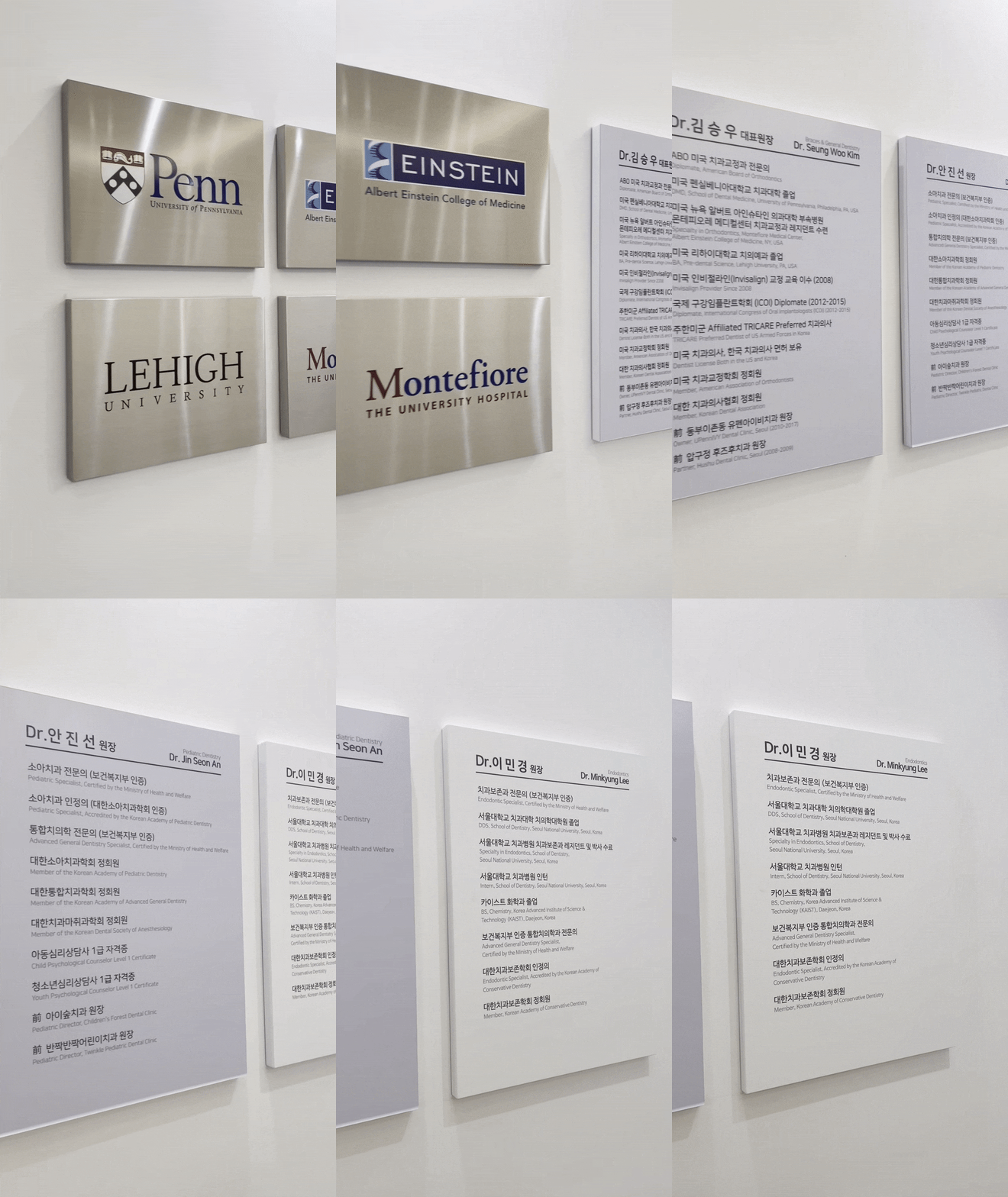
Kim Seung-woo, the chief director,
graduated from the Ivy League UPenn School of Dental Medicine in the United States,
and completed three years of formal orthodontic training at Montefiore Medical Center,
a teaching hospital affiliated with Albert Einstein College of Medicine in New York.
He is a Diplomate of the American Board of Orthodontics (ABO).
There are only 13 ABO specialists in Korea (as of February 2022), and you can experience that treatment at UPenn Bareun Dental Clinic.
At UPenn Bareun Dental Clinic, orthodontics, Invisalign treatment, general dentistry, implant and conservative dentistry specialists, and pediatric dentistry specialists work together in consultation, making pediatric care possible as well.