
Treatment period: 2024.7.11 ~ 2024.12.03
Hello,
I am Director Park Jeong-gi from the SNU Entrance Station dental clinic.
What we know as tooth decay
may seem like it simply makes teeth rotten
and causes pain once it gets deep,
but there are differences depending on how far it has progressed.
If it is limited to the outermost layer of the tooth,
enamel,
or if it is in the early stage,
we may monitor it through scaling and oral hygiene management.
This is called arrested caries,
but in any case, treating it means
we inevitably have to remove 0.1 mm of natural tooth structure.
If the decay seems to be progressing slowly
or appears to be inactive,
we monitor it as part of management
and observe the course.
However, beyond this stage,
treatment is definitely needed.
At the SNU Entrance Station dental clinic,
as explained in the introduction,
it can continue to progress and eventually deepen,
causing severe pain.
Depending on the extent and depth of the decay,
it is broadly divided into four categories:
Which treatment is done at what stage
can only be assessed and diagnosed by the attending doctor
who has directly examined the patient's oral condition.
First, let’s take a look inside the mouth
to understand the overall oral condition.
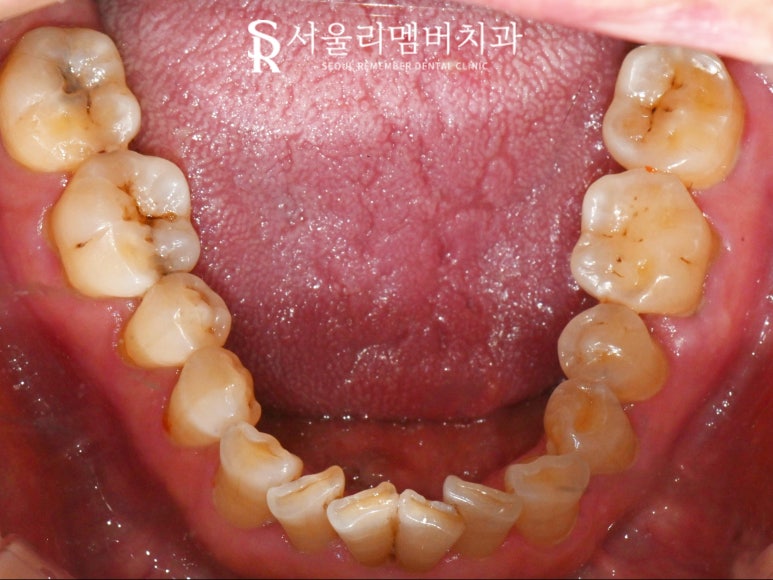
2024.07.11
Following the deep grooves on the occlusal surface
of the lower molars,
there was a decayed area,
and there was also a tooth
with a tiny crack that was not easy to see,
causing a sharp, tingling pain.
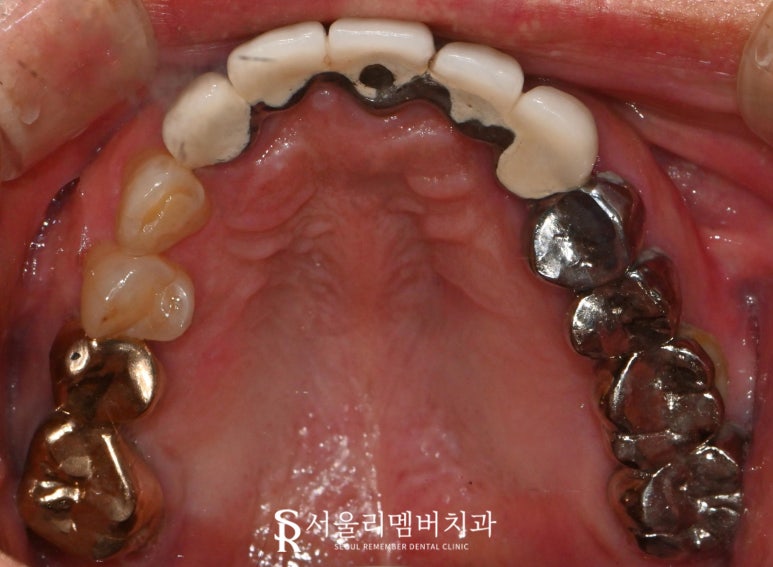
2024.07.11
The upper jaw was covered with prosthetics,
but the patient said there was a dull discomfort and pain
around the upper right molar area.
Today at the SNU Entrance Station dental clinic,
I will explain different methods
according to the degree of decay progression.
*We will skip early decay cases
that seem likely to be monitored and observed,
and explain only the teeth that were actually treated,
so please understand.*
At the SNU Entrance Station dental clinic,
according to the symptoms appearing in the oral cavity,
we take a panoramic X-ray
for an accurate diagnosis of which treatment is appropriate.
Only after going through this process
can we establish a diagnosis based on
various clinical tests,
X-ray images,
and the pain the patient reports.
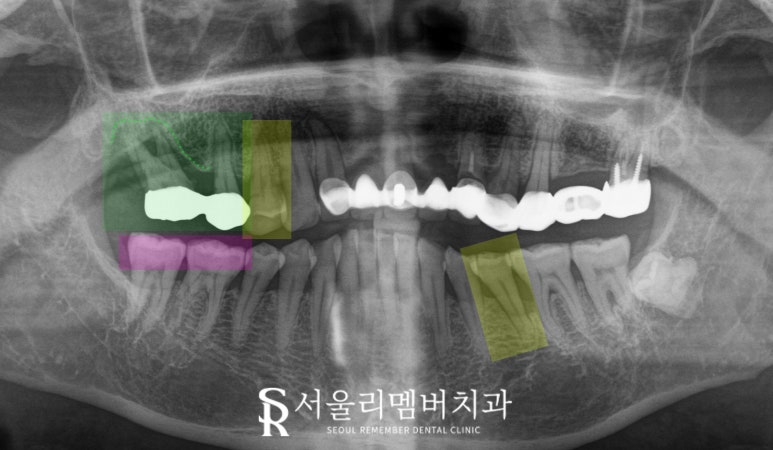
2024.07.11
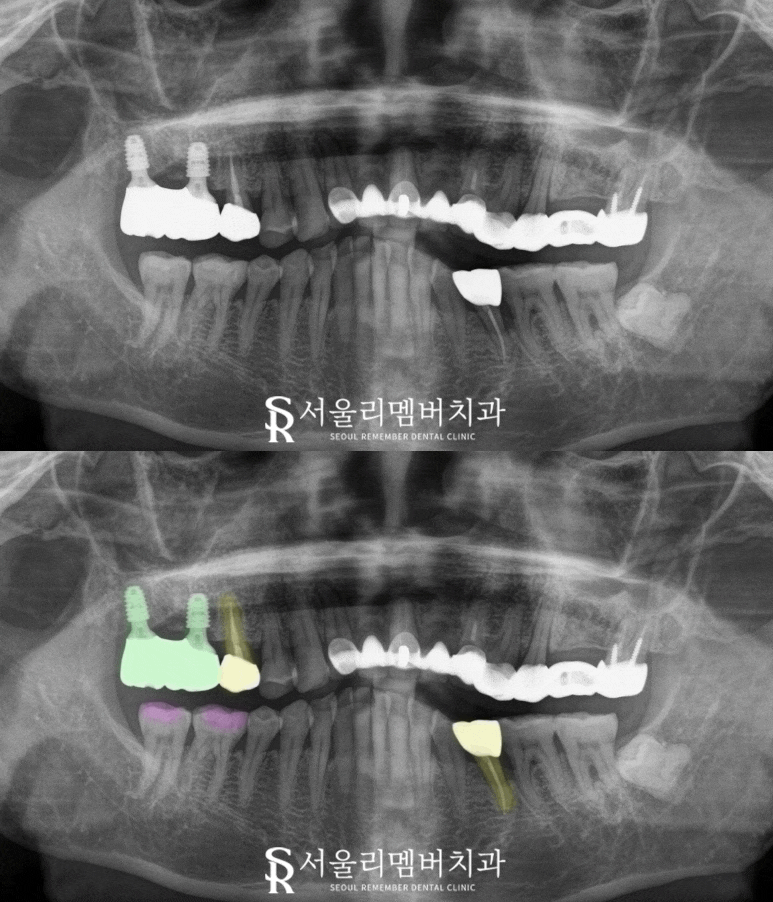
2024.12.03
problem & solution
① Upper right molar
Alveolar bone loss and secondary caries
-> Extraction followed by implant
② Suspected cracked tooth
-> Root canal treatment crown
③ Occlusal surface caries
-> Inlay
Then another question will probably come to mind here.
Which one should start first?
I’m busy with work, so it’s hard to make time.
Can you make it as fast as possible
and with the fewest number of visits?
I think I heard this question quite often
while running the SNU Entrance Station dental clinic.
Patients who are busy with work
or have family responsibilities
usually ask questions like the one above.
In most cases, you should start with the implant,
which takes the longest total treatment period.
Because implants require time for the artificial screw placed in the jawbone
and the alveolar bone to firmly integrate,
it is best to do them first.
At the SNU Entrance Station dental clinic,
we explain that the upper jaw takes about 4 to 5 months
and the lower jaw about 3 to 4 months,
though this period does vary from patient to patient.
However, after placement,
a follow-up visit is needed to check
whether the surgical site has healed well
and whether there are any complications,
so if other areas are treated at the same time,
you can significantly reduce the number of inconvenient visits.
Root canal treatment varies depending on the number of teeth,
but you need to visit about 3 to 5 times,
and it takes about one month to one and a half months
until the final crown is placed.
An inlay is completed in two visits:
one day for removing the decay,
and one day for attaching the fabricated prosthesis,
so these two treatments can be scheduled
for days when the patient is able to make time.
However, you must never stop visiting in the middle
without authorization.
Otherwise, the tooth under treatment may fracture,
or the weakened area may be irritated,
causing pain.
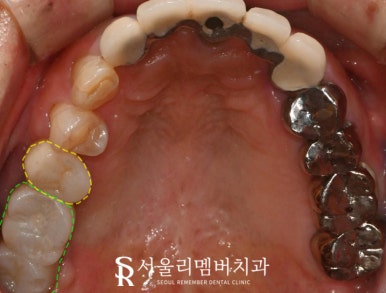
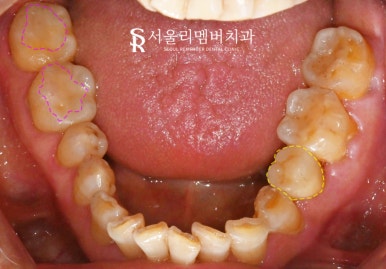
2024.12.03
In this case as well,
while the implant surgical site was healing,
we also treated the remaining areas
according to the patient's schedule.
To solve multiple dental problems,
so many things are needed,
including time, money, patience, and effort.
But among them, the most important thing may be
the patient's willingness to try
and their determination to get better.
Thank you for reading today.
This was Park Jeong-gi from the SNU Entrance Station dental clinic.